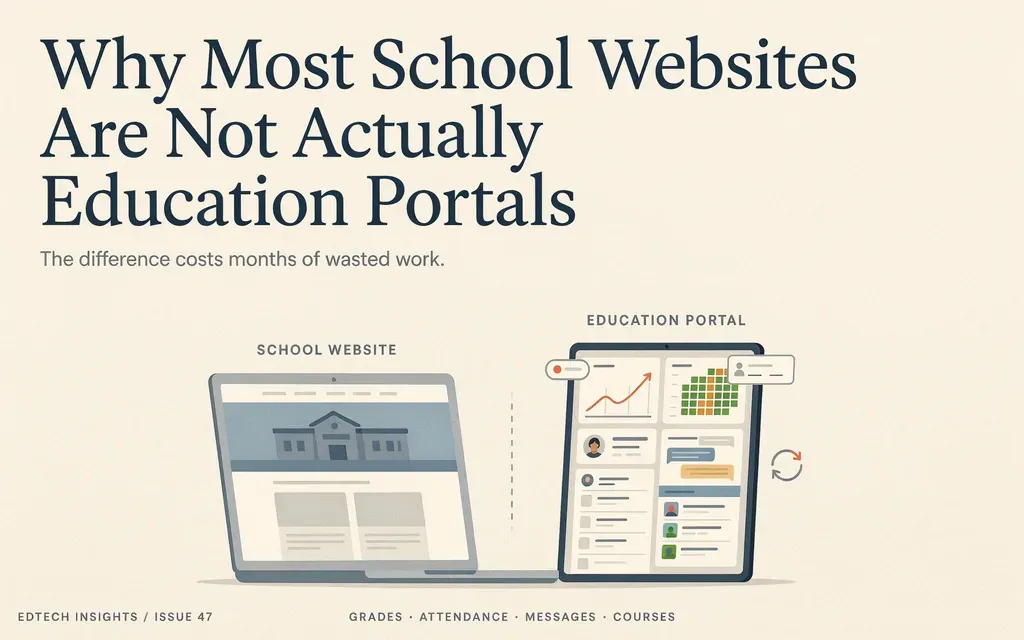

People in EdTech keep using "school website" and "education portal" like they mean the same thing. They don't, and the confusion costs institutions months of wasted work.
A website tells you a school exists. A portal lets students check grades, submit assignments, track attendance, message staff, and pull up course materials. You can build a decent school website with off-the-shelf tools over a long weekend. A portal needs user authentication across multiple role types, real-time data sync, integrations with existing admin systems, and a UX that works for parents who struggle with anything beyond email.
Most institutions try to bridge the gap with workarounds. Google Classroom for lessons. PDF grade reports emailed home. A separate attendance system nobody checks. Teachers paste it together, parents get confused, and nobody can see the full picture of how a student is doing.
I've watched three schools go through this cycle in the past year. All of them started by hiring a general web agency. All of them ended up rebuilding six months later with a team that had done portal work before.
Proper education portal development services start with a discovery phase. The team maps workflows before writing code. They ask who needs access to what, how data flows between the student information system and the parent dashboard, and how the thing should behave when a parent tries to log in at 9pm during report card week and their password reset email goes to an old address.
Schools that skip that discovery work end up with a portal their staff avoids. The ones that invest in it build something teachers open every morning without thinking about it. That gap comes down to the first eight weeks of the project, before anyone writes a line of code.


























Sign in to leave a comment.