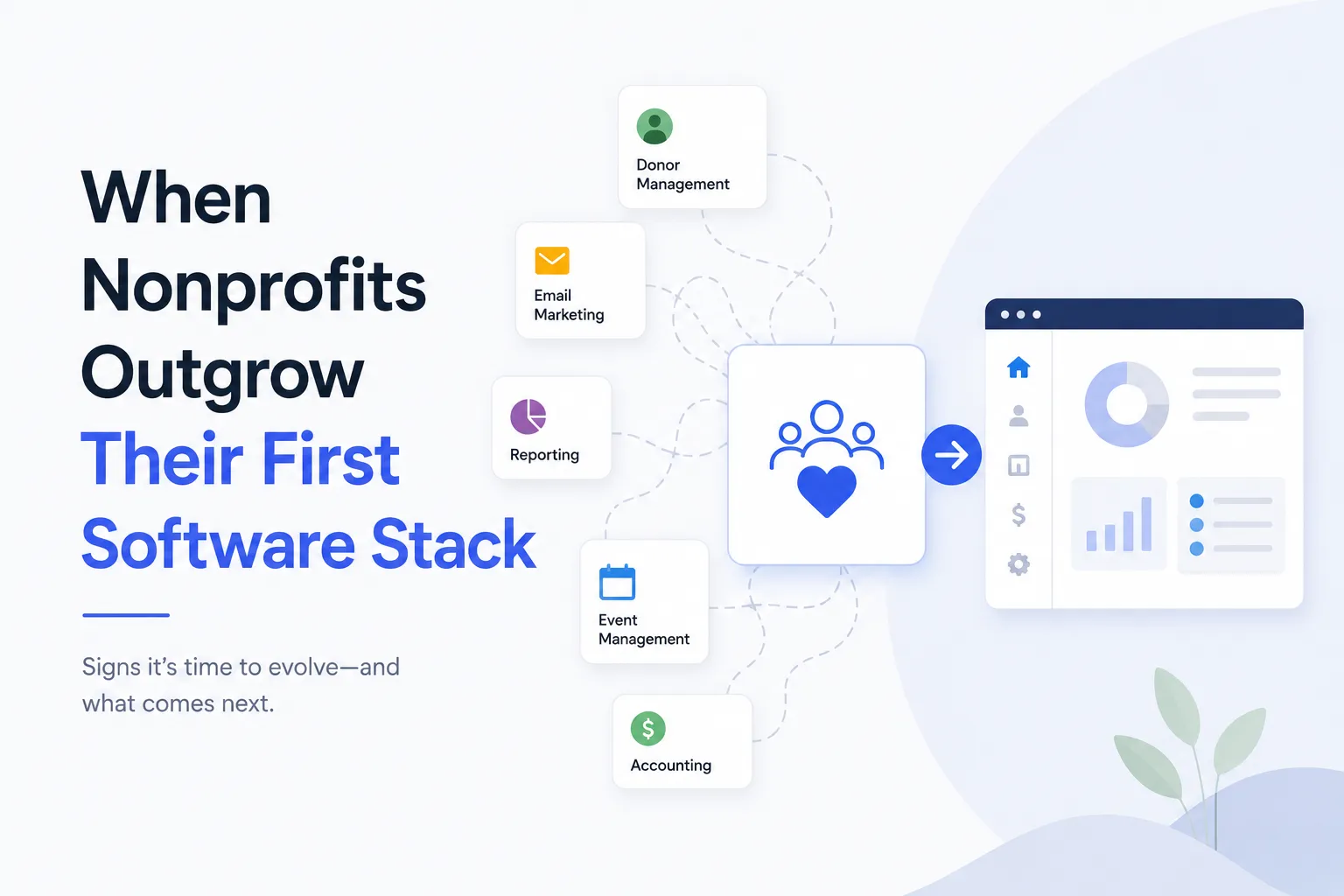

Most nonprofits I've worked with start out stitching together whatever's cheap and available. A spreadsheet for donors, a free CRM for a while, some plugin for event signups, a separate tool for volunteers. It works — right up until it doesn't. Usually around the point where someone spends two full days reconciling the same donor's name across four systems before a board meeting.
That's the moment the "just use off-the-shelf" advice stops holding up.
The tricky part isn't the software itself. It's that nonprofit workflows rarely match what commercial products assume. Grant reporting cycles, restricted vs. unrestricted funds, recurring donor tiers, volunteer hour tracking that has to satisfy an auditor — none of that fits neatly into a tool built for retail or SaaS billing. You end up bending your process around the software instead of the other way round.
This is where it pays to talk to a team that has actually shipped in this space. A group of nonprofit developers who've dealt with donor privacy rules and grant-compliance quirks before will flag the problems you haven't hit yet, which is worth more than the code itself, honestly.
A few things I'd push for before committing to any custom build:
Map your real reporting requirements first. Not what you think funders want — pull three actual past reports and work backward from those fields.
Ask about data ownership up front. Some vendors make export painful on purpose.
And start smaller than feels comfortable. One clean integration between your CRM and accounting beats a big rebuild that stalls at 60%.
The organizations that get this right treat software as an ongoing relationship, not a one-time purchase. Their systems grow as the mission does — and nobody's manually deduplicating donors the night before the board meets.





















Sign in to leave a comment.