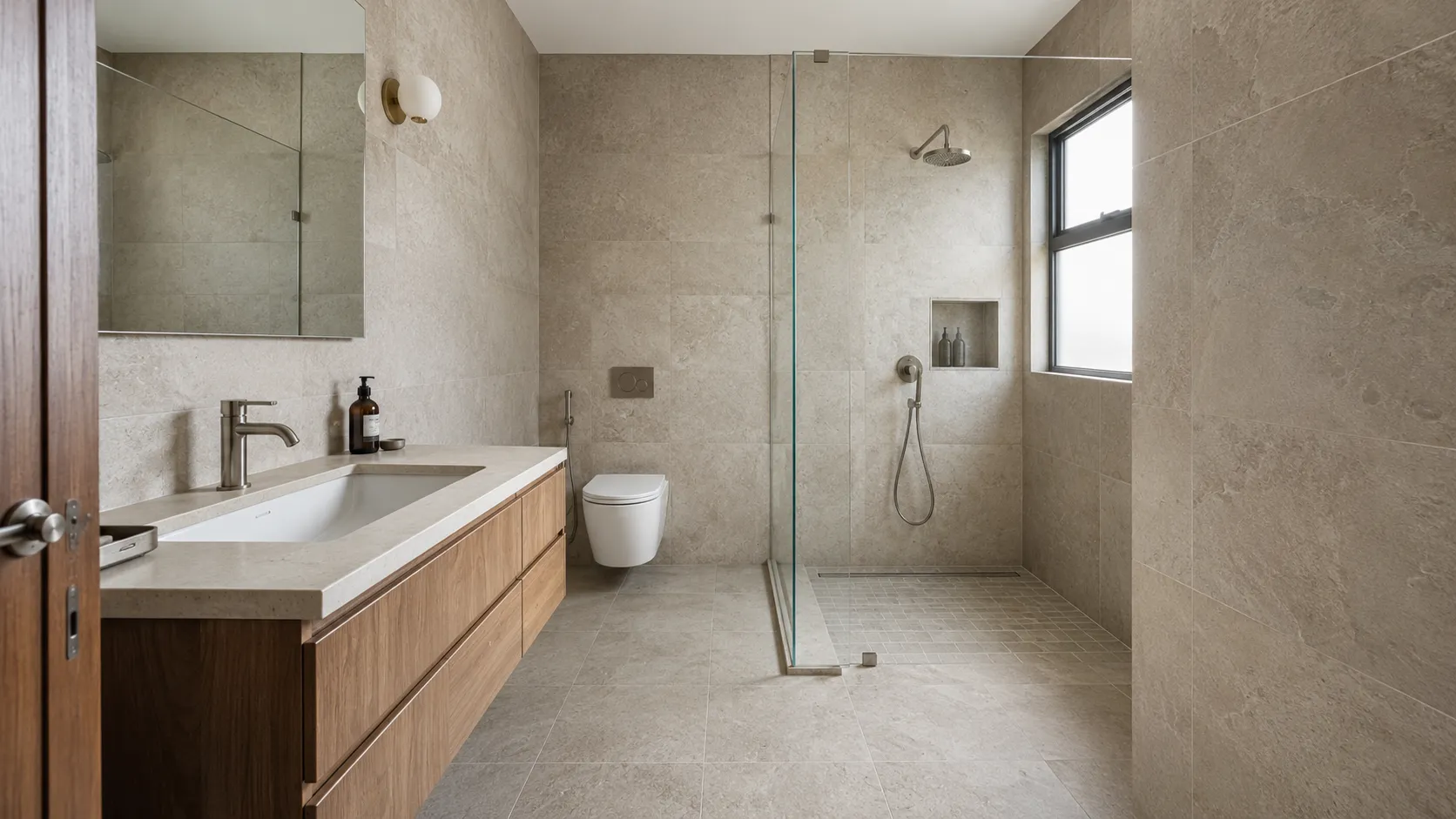


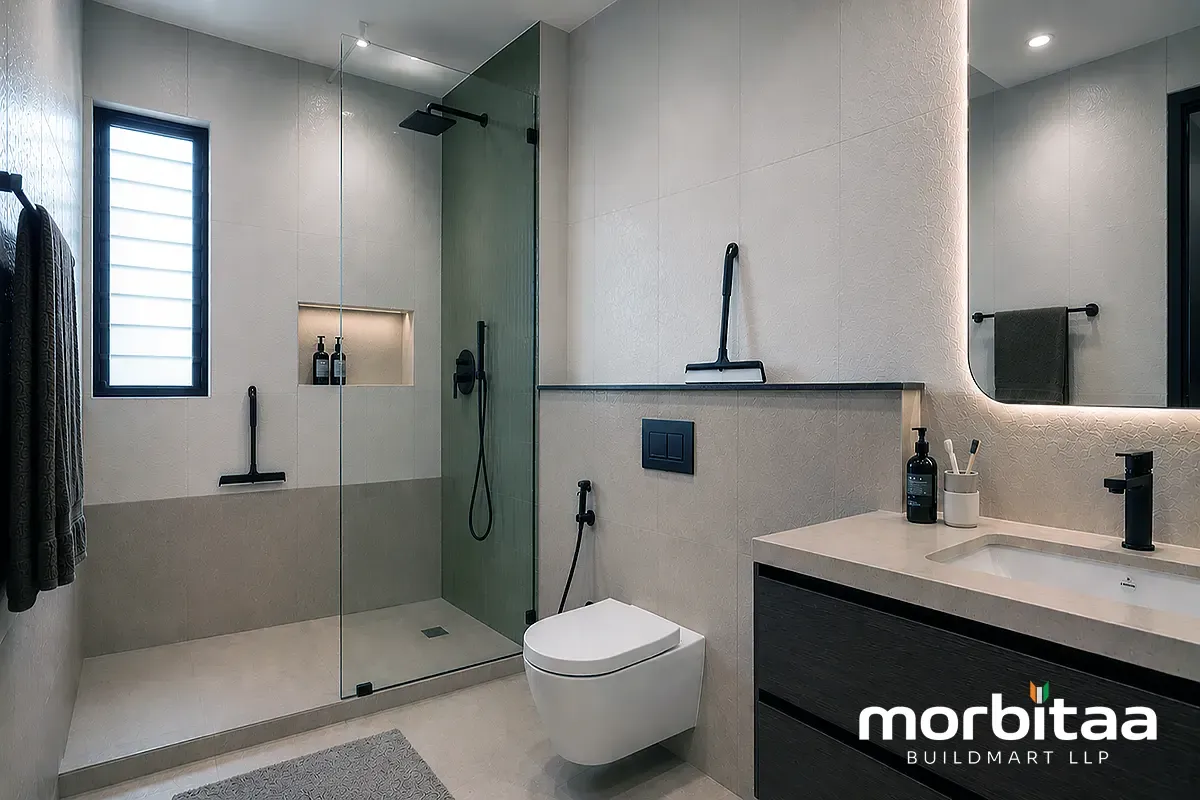
You might have seen stunning bathroom photos where the same tile flows seamlessly from the floor up the walls. This popular design approach is called "tile drenching." It creates a beautiful, unified space without visual breaks.
But before you order boxes of the same vitrified tiles for every surface, there are crucial technical details you must know. Tiling a dry wall is very different from tiling a slippery shower floor.
What Tile Drenching Really Means
Many buyers assume tile drenching requires using one identical tile everywhere. This is a common myth. In reality, you can achieve this seamless look using a coordinated family of tiles.
Matching the colour tones, joint lines, and finish is often enough. This is highly practical because a glossy ceramic tile that looks beautiful on your wall might be completely unsafe for a wet floor. You can easily mix a matte floor tile with a glossy wall tile as long as the base colours match perfectly.
Choose Between Full and Partial Coverage
Do you really need to tile up to the ceiling? Not always. Full drenching covers everything from the floor to the ceiling line. This creates maximum visual impact but requires a larger budget for materials and labour.
If you want the seamless look at a lower cost, consider partial drenching. You can extend the floor tile halfway up the wall or focus only on the shower enclosure. It reduces your overall project cost while still looking highly stylish and modern.
Treat Your Bathroom as Three Different Zones
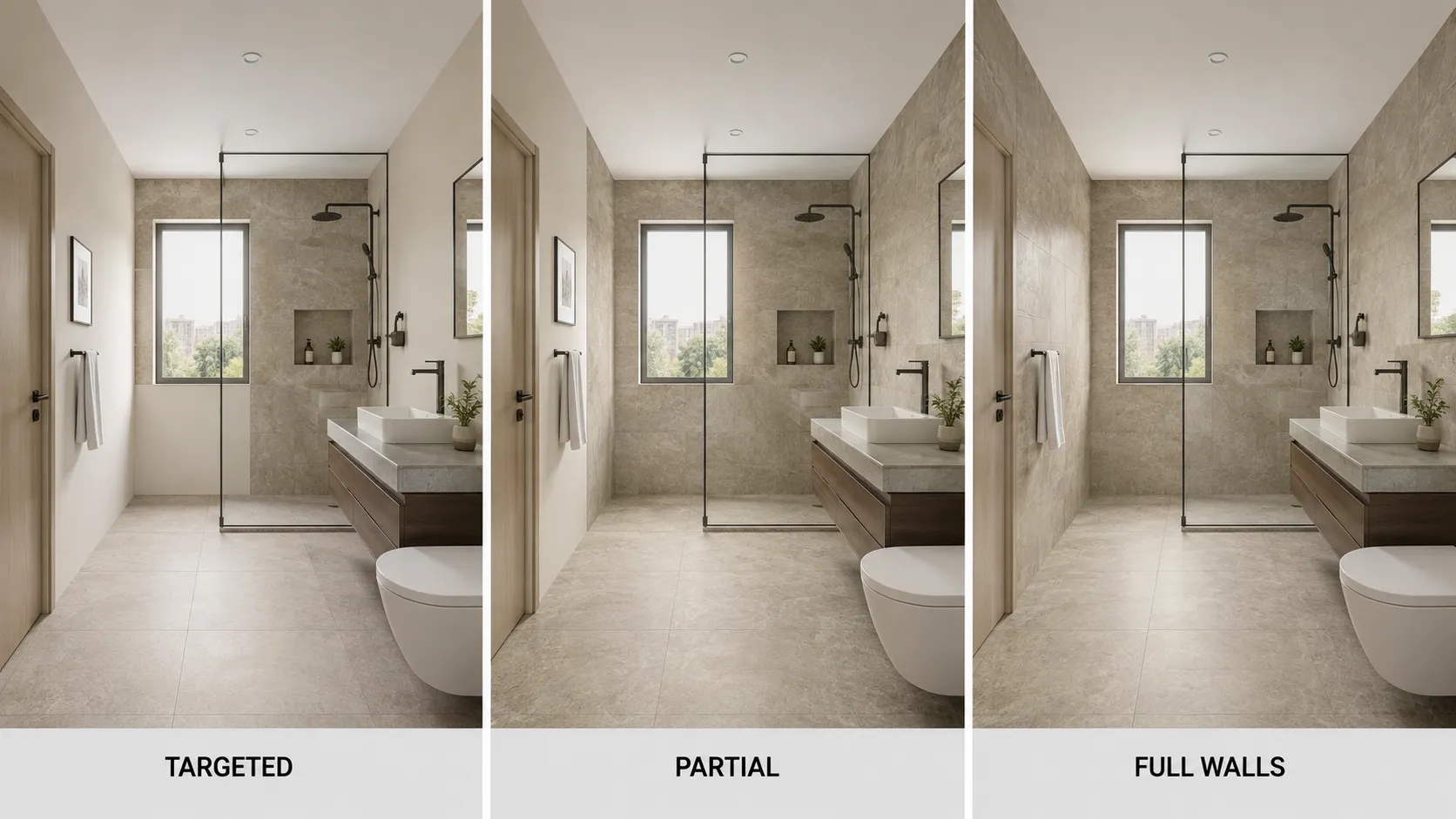
To avoid costly mistakes, break your bathroom down into three distinct areas. First is the dry decorative wall. This area faces the least moisture, so you have maximum freedom in choosing finishes.
Second is the regular bathroom floor. This area gets occasionally wet and requires tiles with a good slip-resistance rating.
Finally, there is the shower floor. This is a sloped, heavily wet area where barefoot grip is essential. Always choose your shower floor tile first, as it has the strictest safety requirements. Once that is selected, find matching wall tiles to complete the drenched look.
Waterproofing is Hidden, Not in the Tile
A fully tiled bathroom might look waterproof, but tiles and grout are just the decorative finish layer. Even premium porcelain or GVT tiles will not stop water from damaging your structure on their own.
Proper moisture control relies on the concealed waterproofing membrane applied behind the tiles. Do not assume that covering every wall in tile automatically protects your bathroom from water damage. Waterproofing must be done correctly by your contractor before any tile is laid.
Smart Sourcing and Drain Planning
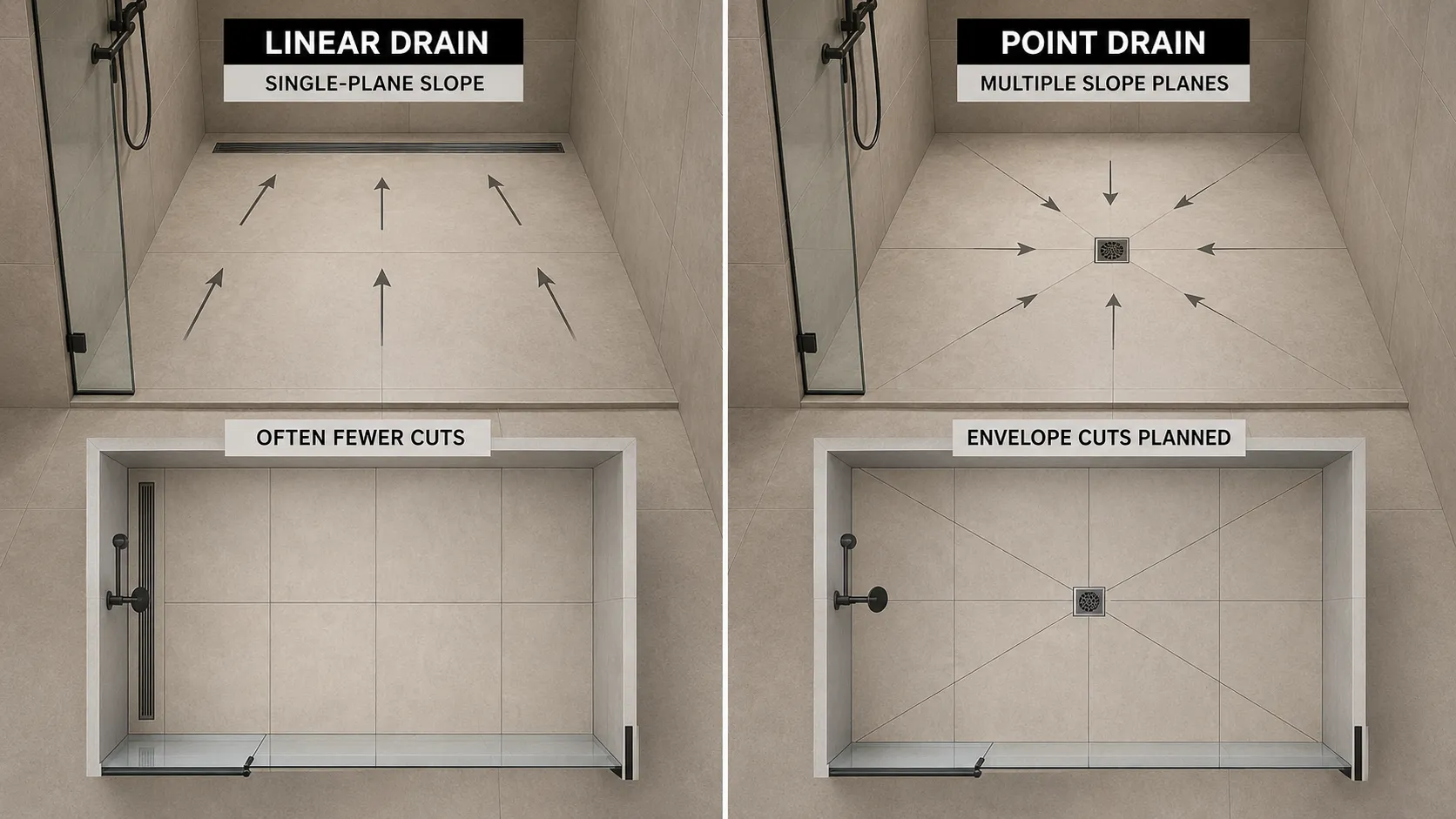
If you plan to use large format tiles, always finalize your drain style and floor slope before placing your order. Large tiles are harder to slope towards a traditional center drain without making extra cuts that ruin the seamless look.
Sourcing your materials smartly is also vital for such projects. Connecting directly with reliable manufacturers in Morbi, Gujarat can help you find perfectly coordinated wall and floor sets at competitive dealer rates. If you are looking for design inspiration, exploring the tile drenching bathroom trend can help you visualise how different coordinated sets look in real homes. Always check batch numbers upon delivery to ensure colour consistency across your entire project.
Do Not Forget About Grout
When using the same colour tones across a room, grout lines become very important. Matching your grout colour to the tile minimizes visual breaks. Epoxy grout is often recommended because it resists stains better than standard cement grout. However, remember that good bathroom ventilation is still required to prevent surface mold.
Conclusion
Tile drenching is an excellent way to make your bathroom feel open and luxurious. By understanding the different safety needs of walls and wet floors, you can achieve this continuous look without compromising on performance. Plan your wet zones carefully, select matching but appropriate tiles, and your new bathroom will be safe and beautiful.























Sign in to leave a comment.