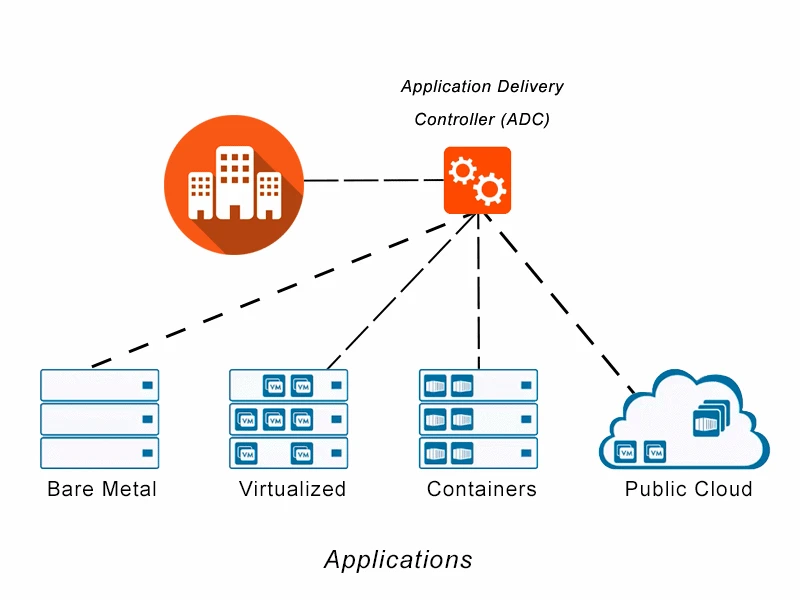

In the rapidly evolving landscape of digital infrastructure, managing network traffic efficiently is crucial for ensuring seamless user experiences and maintaining the reliability of online services. Application Delivery Controllers (ADCs) play a pivotal role in this domain, serving as the linchpin for load balancing and optimizing the distribution of incoming traffic across multiple servers or resources. Among the myriad functionalities ADCs offer, load balancing stands out as a cornerstone feature that facilitates scalability, fault tolerance, and enhanced performance.
Traffic Distribution Algorithms: ADCs employ a variety of algorithms to determine how to distribute incoming requests among backend servers. Common algorithms include Round Robin, Least Connections, Weighted Round Robin, and Least Response Time, each suited for specific use cases and workload patterns. Health Monitoring and Dynamic Adjustment: ADCs continuously monitor the health and performance of backend servers through health checks. In case of server failures or degradation in performance, ADCs automatically reroute traffic to healthy servers, ensuring high availability and fault tolerance.
Session Persistence: Some applications require maintaining session persistence, ensuring that subsequent requests from the same client are directed to the same backend server. ADCs offer session persistence mechanisms such as Source IP Affinity, Cookie-based Affinity, and SSL Session ID Affinity to fulfill this requirement.
SSL Offloading: Handling Secure Socket Layer (SSL) encryption/decryption can be resource-intensive for backend servers. ADCs offload this task by terminating SSL connections at the ADC level, thereby reducing the computational burden on servers and improving overall performance.
Content Switching: ADCs can route traffic based on content attributes such as URL paths, HTTP headers, or payload content. This enables granular control over traffic routing, facilitating efficient content delivery and optimized resource utilization.
Global Server Load Balancing (GSLB): In distributed or multi-site architectures, GSLB enables ADCs to balance traffic across geographically dispersed data centers or cloud regions based on factors like proximity, latency, and server load. This enhances application performance and ensures disaster recovery readiness.
Conclusion:- ADC load balancers play a pivotal role in modernizing and optimizing network infrastructures, providing critical functionalities such as traffic distribution, scalability, fault tolerance, and security enhancements. By intelligently balancing incoming traffic across backend servers or resources, ADCs enable organizations to deliver high-performance, highly available, and secure applications that meet the expectations of today's digital consumers. As businesses continue to embrace digital transformation, the role of ADCs in ensuring the reliability and responsiveness of online services will only become more pronounced, making them indispensable components of modern IT architectures.



























Sign in to leave a comment.