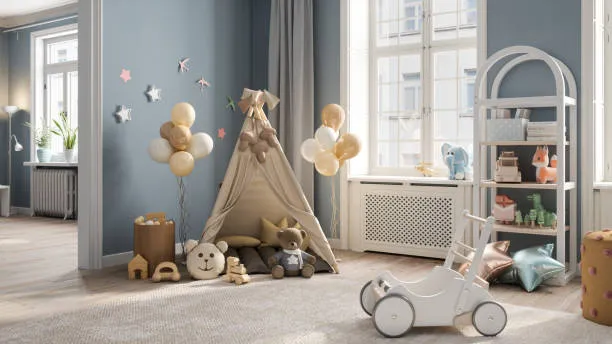

Setting up a baby room is one of the most practically demanding design challenges new parents face. The instinct to create something perfect for a newborn often leads to decisions that work beautifully for three months and create problems for the next three years. The parents who avoid that cycle are the ones who design for where the child is going, not just where they are on day one. That means thinking about flooring that holds up to crawling and running, lighting systems that adapt as the child grows, air quality that protects developing lungs, built-in features that don't require replacement when the crib comes down, and gear that serves the room across stages rather than for a single phase.
Flooring and Design: Choose Surfaces That Outlast Every Phase
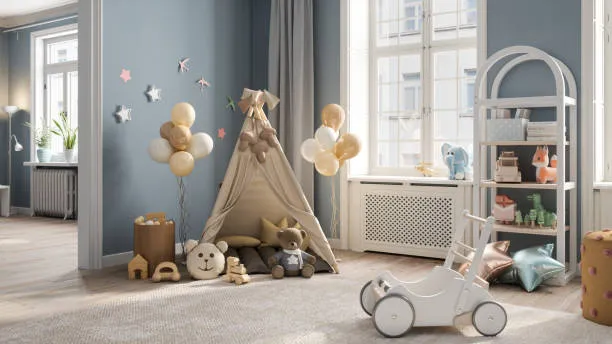
The fixed elements of a baby room, the flooring, rugs, and wall color, are the decisions that carry the space through every stage of early childhood. Jessie Smart, Strategy and Design Co-Owner at Home Carpet One, explains that these surfaces need to be chosen with longevity and neutrality built in from the start. A quality wool or natural fiber rug in a tone that works across multiple design directions removes the need to replace the foundational layer as the room evolves. Everything expressive should be easy to swap. Themed textiles, character bedding, and novelty lighting are the elements that date quickly as a child grows, and they are also the easiest and least expensive to change.
Building the room around durable, well-chosen surfaces and keeping the decorative layer flexible is what makes the five-year transition feel like a refresh rather than a renovation. The mistake most parents make is investing in the expressive elements and underspecifying the fixed ones. A quality rug that performs well underfoot during crawling and floor play is a better early investment than themed wallpaper that will need replacing before the child starts school.
Lighting: Design for Infant Sleep and Childhood Activity in One System
Lighting is one of the most overlooked investments in baby room planning, and one of the most practical to get right from the beginning. Yamen Mahfoud, Sales and Marketing Director at Bees Lighting, explains that dimmable lighting systems with warm white bulbs at 2700K serve immediate infant sleep needs while remaining appropriate through toddler and early childhood stages. Smart bulbs that shift from soft nighttime tones to brighter daytime settings adapt to changing developmental needs without requiring fixture replacement. Motion sensor nightlights provide safe navigation during infant feeding stages and transition naturally into toddler independence tools as the child grows.
Investing in quality track lighting or adjustable fixtures during initial setup allows repositioning as the room shifts from a sleeping-focused space to an active play area to an early homework environment. That approach eliminates costly electrical work during future transitions while maintaining full design flexibility across every stage.
Construction: Invest in the Bones, Stay Flexible on Everything Else
The structural decisions made during a baby room build determine how much rework the space requires over the next five years. Clint VanRossun, Owner and Contractor at VanRossun Contracting, has seen the pattern clearly across the baby rooms he has worked on. The best ones invest in the bones and stay flexible on everything else. That means durable flooring, solid closet infrastructure, and proper lighting circuits from the start. Those elements serve an infant and a six-year-old equally well without any rework.
Where parents go wrong is spending heavily on themed finishes that only work for the first two years. A custom mural or novelty lighting fixture looks great in photos but gets replaced before kindergarten. Neutral walls and simple hardware stay relevant much longer and give a child room to grow into the space on their own terms. Storage is where the room's function shifts most over five years. Designing the closet with adjustable components means parents are not tearing out fixed shelving when the room transitions from a changing station setup to a homework and play space. Build it right structurally, keep finishes neutral, and let the furniture and decor do the evolving.
Air Quality: Plan for an Infant's Needs Without Locking Out a Toddler's
The comfort and air quality needs of a newborn look very different from those of a five-year-old, which means the HVAC setup in a baby room should be designed around flexibility from the beginning. Shawn Bell, General Manager of Operations at Texas Ace Service Heating & Air, explains that infants need tighter temperature consistency and higher-grade filtration since their respiratory systems are still developing. Building in those upgrades from the start means the room is already ahead of the curve rather than requiring retrofits later.
Vent and airflow placement matters more in a baby room than most spaces in the home. A supply vent blowing directly over a crib creates drafts that disrupt sleep and skew the thermostat's reading of actual room temperature. Planning vent placement with the room's layout in mind, and leaving room for that layout to shift as furniture changes, avoids problems that are expensive to fix in a finished space. A smart thermostat or zoned control for that room gives parents the ability to adjust as the child grows and activity levels change without reworking the whole system.
Gear: Choose Products That Work Across Stages
The baby room fills up faster than most parents expect, and empties out just as fast when gear gets outgrown. Jay Xu, Director and Baby Product Specialist at Mompush, points out that the real cost of buying stage-specific products is not just the money spent replacing them. It is the clutter, the reorganization, and the constant reset that disrupts a room that should be getting easier to manage, not harder.
The stroller is one of the clearest examples of where this plays out. In a smaller baby room, how a stroller folds determines whether it lives in the room at all or ends up in a hallway. A model that stands upright after folding reclaims floor space that a lean-against-the-wall design permanently occupies. In larger rooms the priority shifts from footprint to longevity. Parents with more space tend to overbuy early without thinking about how the room needs to function a year in. A stroller that supports a newborn in a flat bassinet position and transitions to an upright toddler seat removes one of the bigger gear replacement moments families face in the first two years, keeping the room functional across stages without requiring a full reset every few months.
The Baby Room That Works From Day One to Year Five
The pattern across every expert perspective here is consistent. What lasts in a baby room is what was chosen for function, durability, and neutrality. What gets replaced is what was chosen for a specific moment or a specific theme. Flooring and rugs built for the long term. Lighting systems designed for adaptability. Construction that invests in bones over finishes. Air quality planning that accounts for how a child's needs shift over time. Gear that grows alongside the child rather than requiring replacement every few months.
The baby room that transitions naturally into a child's bedroom is not the result of a bigger budget. It is the result of a different set of priorities applied from the beginning, building the space for the child who will grow up in it rather than only for the newborn who arrives first.

























Sign in to leave a comment.