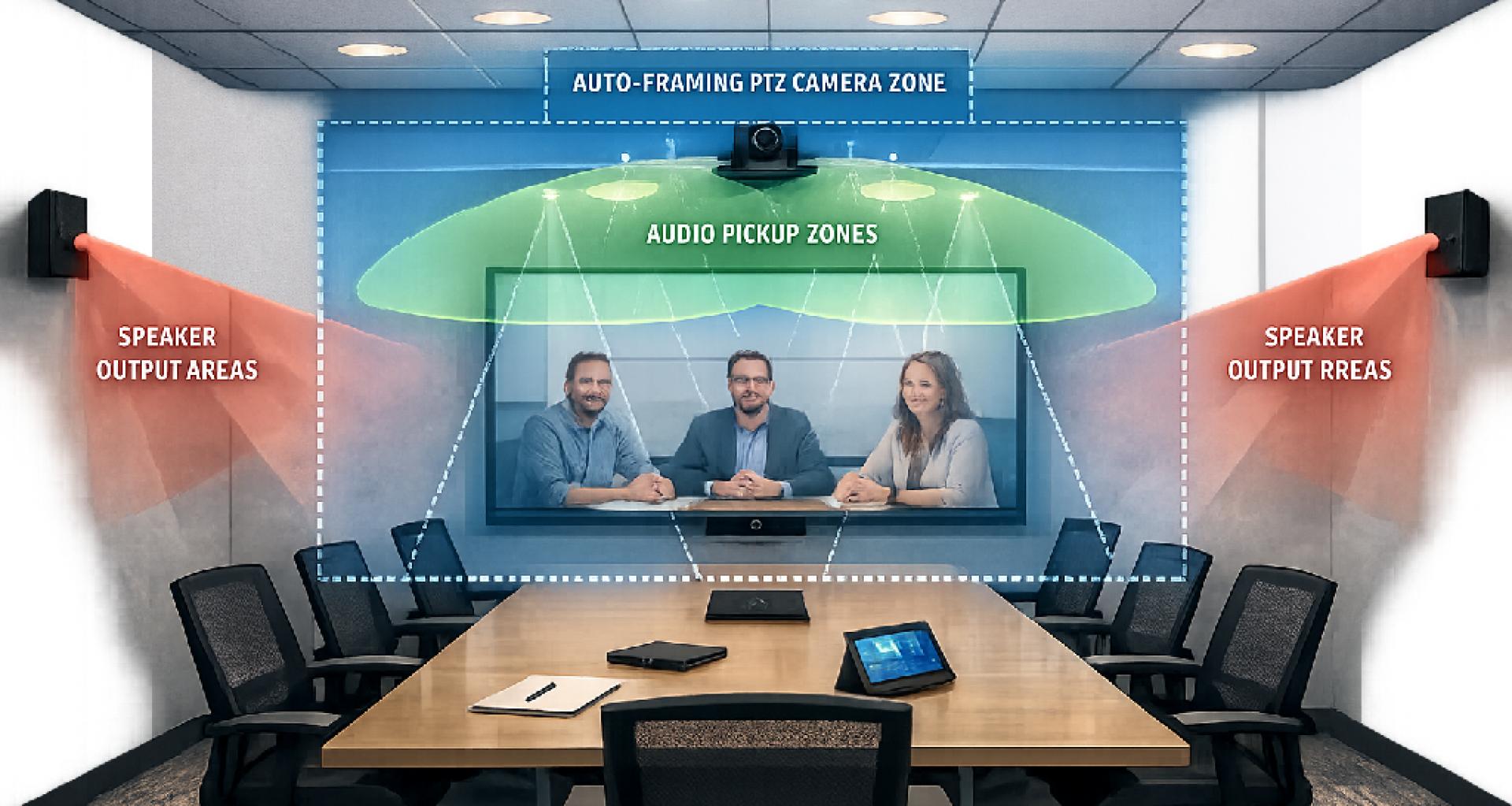

Hybrid meetings are now a standard part of modern work culture. Teams collaborate across offices, cities, and time zones, making it essential for meeting rooms to support both in person and virtual participants equally. A well designed Audio Visual (AV) system ensures that communication feels natural, inclusive, and productive regardless of where participants are located.
Designing meeting room AV for hybrid meetings requires thoughtful planning, not just adding a camera and a screen. It’s about creating an environment where technology enhances collaboration rather than becoming a barrier.
Start with Clear Audio as the Priority
In hybrid meetings, audio quality matters more than video. Remote participants can tolerate average visuals, but poor sound quickly leads to disengagement and misunderstandings. Common issues include echo, background noise, and inconsistent voice levels.
To solve this, meeting rooms should use dedicated microphones designed for the room size such as ceiling, tabletop, or beamforming microphones. Proper speaker placement ensures voices sound natural and evenly distributed. Acoustic treatments like wall panels, carpets, and ceiling materials also play a crucial role in maintaining clarity.
Design Video for Natural Interaction
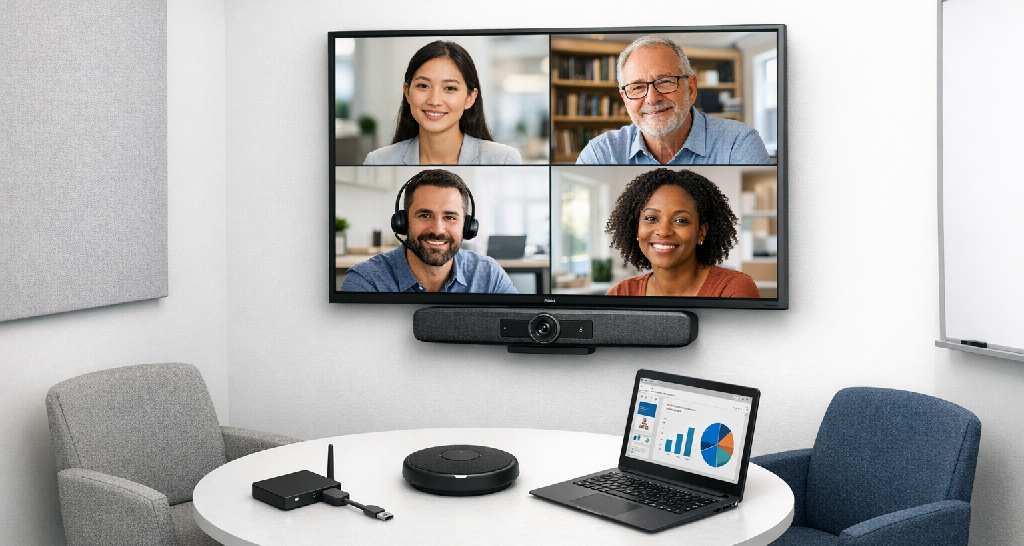
Video should support face to face interaction, not distract from it. Poor camera angles, limited field of view, or bad lighting can make remote participants feel disconnected.
Wide angle cameras positioned at eye level work best for hybrid meetings. For larger rooms, multiple cameras or intelligent tracking systems can help capture active speakers. Lighting should be balanced and evenly distributed so faces are clearly visible without harsh shadows or glare from screens and windows.
Simplify User Experience
One of the biggest challenges in meeting rooms is complex technology. If users struggle to start meetings or connect devices, productivity suffers.
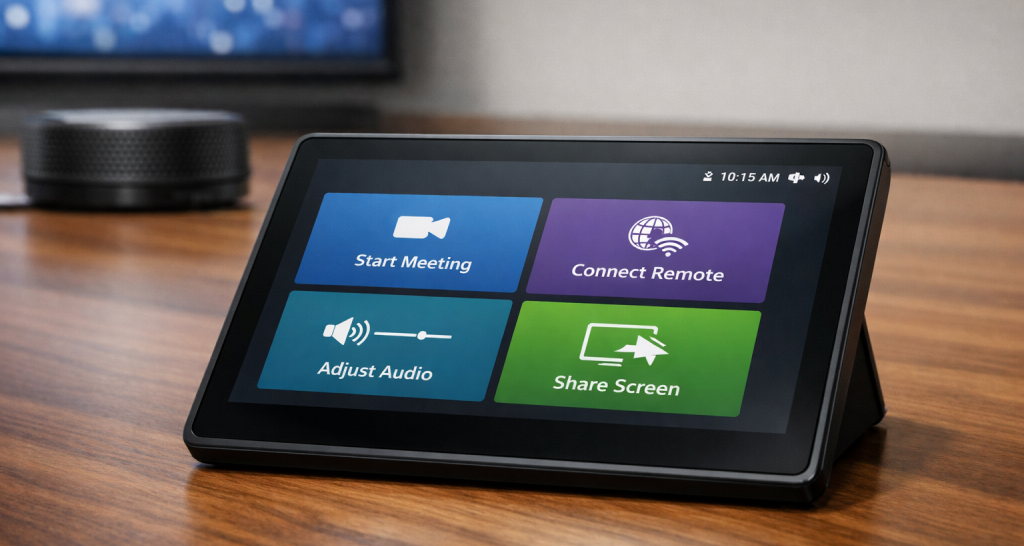
Hybrid ready AV systems should be intuitive and consistent across rooms. Touch panels with one tap meeting controls, wireless screen sharing, and standardized platforms reduce setup time and frustration. When technology feels effortless, teams can focus on collaboration instead of troubleshooting.
Integrate Displays Thoughtfully
Displays are more than just screens; they shape how information is shared. Hybrid meetings often require viewing remote participants, presentations, and shared content simultaneously.
Room size and seating layout should determine display placement and size. In some cases, dual displays work best, one for participants and one for content. This setup keeps remote attendees visible while allowing in room teams to engage naturally with shared materials.
Ensure Seamless Connectivity
Hybrid meetings rely heavily on stable connectivity. Lag, dropped calls, or device incompatibility can disrupt collaboration and waste valuable time.
Designing AV systems with reliable network infrastructure, proper cable management, and flexible connectivity options is essential. Wireless presentation tools, universal ports, and secure network access ensure smooth transitions between presenters and devices.
Plan for Flexibility and Scalability
Meeting rooms should be adaptable to changing needs. Team sizes, collaboration styles, and technology platforms evolve quickly.
Future ready AV design includes scalable systems, modular components, and infrastructure that supports upgrades without major rework. Planning for flexibility ensures meeting rooms remain effective long after installation.
Collaboration Between Design and Technology Teams
The most successful hybrid meeting spaces are created through collaboration between architects, interior designers, IT teams, and AV consultants. Early coordination ensures that technology integrates seamlessly into the room’s layout, aesthetics, and functionality.
When AV is considered from the beginning, meeting rooms feel intentional, balanced, and easy to use rather than retrofitted or cluttered.
Conclusion
Designing meeting room AV for seamless hybrid meetings is about creating equality between in person and remote participants. Clear audio, thoughtful video placement, intuitive controls, and future ready infrastructure work together to support modern collaboration.
When AV systems are planned strategically, hybrid meetings become engaging, efficient, and inclusive helping teams communicate better, wherever they are.






















Sign in to leave a comment.