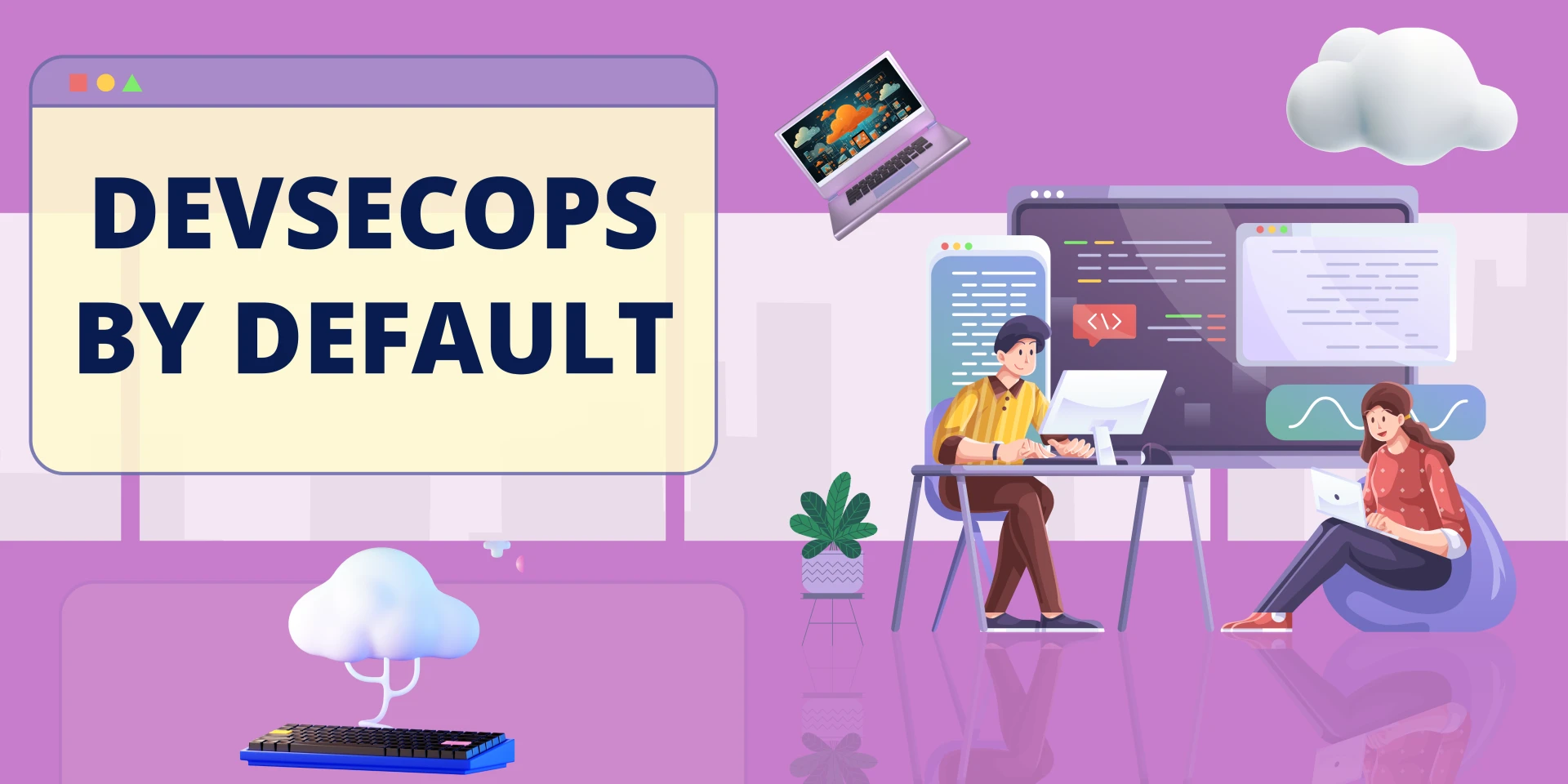

Security used to be a final checkpoint, and we'd build our code, we'd build our features, and then security would come along and look at what we'd built. This model does not scale, and this model does not work anymore, because our systems are moving too fast, and our risks are appearing too early in our lifecycle.In 2026, security is not a phase; security is part of our pipeline from day one, and this is what DevSecOps by default means.
We're no longer asking, “Is this secure?” We're asking, “Is this secure?” at every step along the way.
Security moves left into the pipeline.
While the concept of "shifting left" is not new, the practicality of doing so is much improved now with better tooling and automation. We are now embedding security checks as part of the CI/CD pipeline, alongside the build and test process.
This means we are catching security issues early, when they are easier and less expensive to fix, and reducing the back-and-forth between developers and security teams later on.
The goal is simple. We want to make the secure path the default path.
Dependency scanning becomes non-negotiable.
In modern applications, we heavily rely on third-party libraries and open-source packages. Although this helps speed up the development process, it also brings along its own set of risks.
Automated dependency scans are now part of the continuous pipeline, checking for known vulnerabilities, outdated packages, and risky versions.
But the most important thing is that mature teams are not only identifying the issues, they are also acting on them, and this includes:
- Setting policies on approved libraries
- Automating updates
- Blocking the build in case of critical vulnerabilities
This helps mitigate the risk of shipping vulnerable code without slowing down the developers.
Secrets detection prevents silent leaks.
Hardcoded credentials are one of the most common and critical mistakes made in software development.
API keys, database passwords, and tokens are commonly stored in code repositories unintentionally.
Secrets detection tools check code changes in real-time. If a secret is found, the pipeline will block the commit or raise alerts immediately.
This provides a safety net. Developers don’t have to rely solely on their memory or perform checks. If a mistake occurs, it will be caught before it goes into production.
Over time, teams will tend towards best practices like using secret managers and short-lived credentials, eliminating the need to store secrets in code altogether.
LaC security checks protect infrastructure early
While Infrastructure as Code (IaC) has made it easier to define cloud resources, it also means that any configuration mistakes will be repeated.
A storage bucket or network policy that is misconfigured could mean critical information is exposed.
IaC security checks are performed on the infrastructure definition before it is deployed. These checks include:
- open access policies
- lack of encryption
- poorly configured networks
- excessive permissions
This is an important difference from traditional security approaches.
Policy guardrails create consistency.
This is perhaps the biggest problem facing security today, as each team may have its own set of best practices, creating inconsistencies.
This is where policy guardrails help, as they provide clear policies that are applicable everywhere within the organization. The policies are then enforced through the pipelines and platforms.
For example:
- Only approved regions are allowed for deployment
- Data must always be encrypted
- Access to production must be approved
- Logging and monitoring must be enabled
This does not hinder the teams from moving quickly if the guardrails are well designed. Rather, they remove the uncertainty, and developers know what is allowed and what is not.
The overlap with platform engineering
DevSecOps, by default, doesn’t exist in isolation. DevSecOps is very much linked to platform engineering.
In an internal platform, there are pre-configured environments, templates, and tools, which are pre-loaded with security best practices. Developers don’t need to set all these things up from scratch.
This is beneficial from a cognitive perspective, ensuring consistency while avoiding the situation where security is optional, not mandatory. In an internal platform, security is integrated into the system.
For instance, when a developer wants to create a new service, they will automatically get:
- secure network configurations
- integrated logging and monitoring
- predefined access controls
- built-in compliance checks
This is much more scalable compared to the situation in which security is implemented within each team independently.
Strong alignment with cloud security trends
Cloud computing is a dynamic and complex environment, and cloud computing resources are dynamically provisioned and decommissioned.
The DevSecOps approach is consistent with cloud computing security best practices, such as:
- zero trust-based access
- security based on identity
- continuous monitoring and alerting
- automated remediation of risks
By integrating security into the DevOps pipeline, developers ensure that every change to the cloud environment is consistent with the same security approach.
Culture matters as much as tooling.
While tools play a large part, DevSecOps is fundamentally a cultural shift.
We're no longer asking developers to check security later, and security teams are no longer gatekeepers who slow everything down. We're doing this together, in one workflow.
This means:
- Shared responsibility for security outcomes
- Communication between teams
- Training and awareness for developers
- Leadership support for secure practices
If we don't do this, we won't succeed, even if we're using the best tools we can find.
Final thought
By default, DevSecOps is about making security invisible, the best possible way.
Not ignored, but included. Not optional, but automatic.
If security is included in the pipeline, then security is no longer something that happens at the end, but rather a natural part of building software. This means that people can move faster because they are no longer wasting time fixing things that didn’t have to be fixed later on.
In a world where everything is constantly changing, the only safe approach is to make security an integral part of software building, starting from the beginning.

























Sign in to leave a comment.