
What’s the article about?
This article explains the different types of fixturing tables used in welding industries and their applications. It covers modular welding tables, fixed tables, rotary and tilt tables, and portable tables to help fabricators choose the right solution for accuracy, flexibility, and efficient workflows.
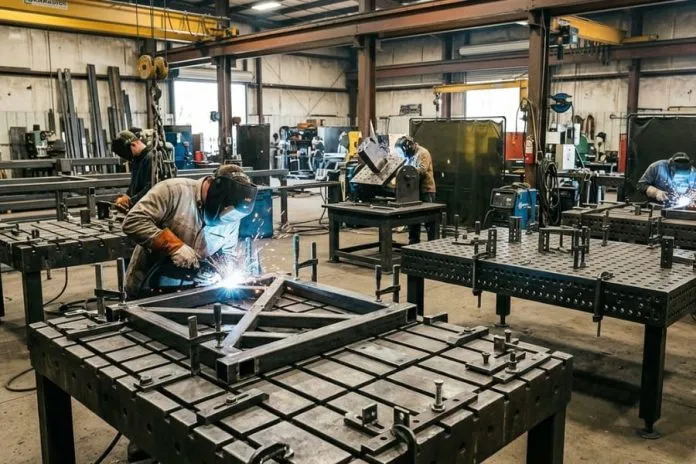
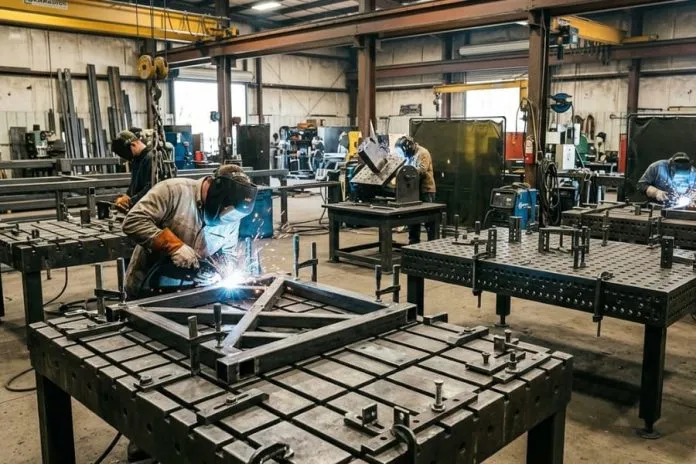
In welding, precision is not just about the welder’s skill, but equally depends on how well the workpiece is positioned and secured. Even a small movement during welding can mess with alignment, strength, and the final quality of the product. With time, manufacturing units have started to switch to specialized welding tables and fixturing systems to create accurate and repeatable results. From automotive manufacturing to the most complex fabrication, the right fixturing table helps to reduce errors, improve workflow, and make complex welding tasks easier.
But with so many options available, how do you know which one is suitable for your application? Let’s explore the most common types of fixturing tables that are also spot on for the welding industries.
Traditional Welding Tables
Traditional welding tables are the most basic type of work tables used in fabrication workshops. They provide a stable platform for welding operations and are suitable for general-purpose tasks, including small fabrication jobs, repair work, basic welding assemblies, and workshop applications.
In hindsight, traditional tables have limited adjustment options. Since the fixtures cannot be repositioned easily and frequently, they may not be the best choice for projects requiring rapid changes or high precision.
2D Welding Tables
A 2D welding table is designed so that most of the work happens on a single plane. These tables are commonly used for flat assemblies, frames, panels, and basic structures. Not only do they allow fabricators to position components with exactness, but the working personnel can also use clamps and accessories placed on the tabletop surface to proceed with things.
A few common applications of a 2D welding table include metal frames, sheet metal fabrication, small to medium assemblies, and production welding tasks. Therefore, for workshops looking for flexibility without requiring a more complex setup, a 2D system is a practical choice.
3D Welding Tables
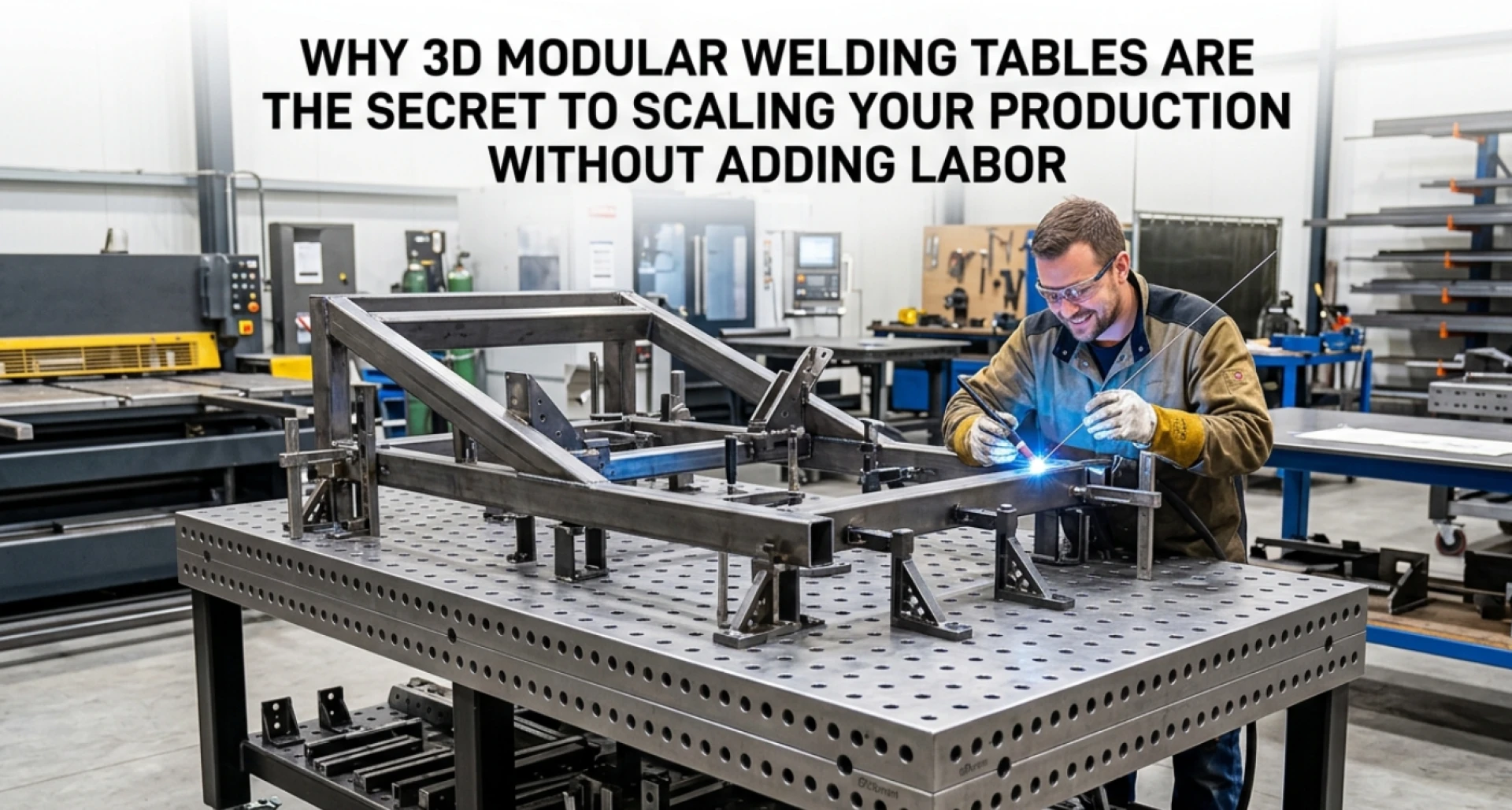
A 3D modular welding table allows fixturing on multiple sides of the table. This is suitable for complex structures that require alignment from different angles. Industries such as automotive, aerospace, and heavy machinery often use 3D tables as they provide better control over large and complicated assemblies.
A 3D welding table helps welders with multi-angle positioning, complicated fixture setups, better dimensional accuracy, and repeatability. Hence, for manufacturers handling advanced fabrication work, this type of table improves efficacy and effectiveness.
Rotary and Tilt Welding Tables
Some welding projects involve large, round, or difficult-to-position pieces. On the other hand, rotary and tilt tables solve this challenge by facilitating the workpiece to rotate or tilt into the best welding position.
The Rotary and Tilt modular welding tables not only help with workers’ comfort, but also with joint visibility and overall weld consistency. Such tables are widely applicable in industries that work with pipes and cylindrical parts.
Portable and Folding Welding Tables
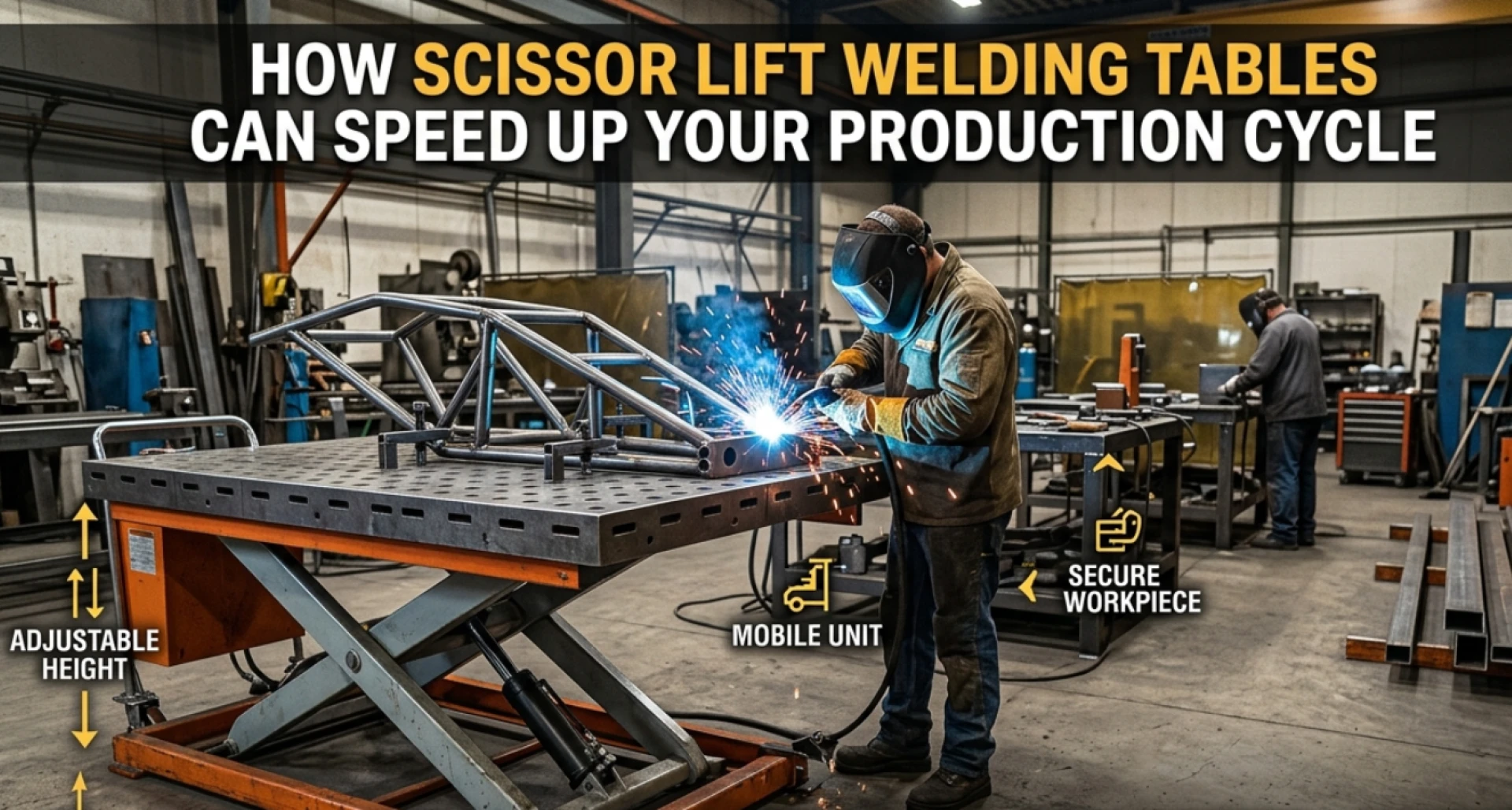
Not every workshop has the space for large industrial tables. Therefore, the portable welding tables step in for the relatively smaller workshops, field fabrication, and on-site repair work. These tables are quite lightweight, easy to move, and equipped with basic fixturing capabilities. They also include slots or smaller hole patterns where clamps and accessories can be fixed.
Portable and Folding welding tables are a practical choice for areas involving mobile welding jobs, maintenance work, small fabrication projects, and limited workspace environments.
Customized Fixturing Tables
Not all fabricating environments need the same treatment and require highly specific setups. In such cases, customized fixturing tables are designed according to the exact requirements of the project. As the name suggests, customized welding tables are often used in automotive production lines, machinery manufacturing, and large-scale industrial projects.
While such tables provide excellent results, they can be expensive and less flexible when product designs change.
Choosing the Right Welding Table for Your Needs
You must select the right table depending on your workload, project complexity, and production requirements. Here’s a table that gives an overview of which table is the best for what purpose:
| Table Type | Best Used For |
| Traditional Welding Table | General welding tasks |
| 2D Welding Table | Flat assemblies and regular fabrication |
| 3D Welding Table | Complicated and multi-angle projects |
| Modular Welding Table | Flexible and repeatable production |
| Custom Fixturing Table | Specialized applications |
A reliable modular welding table manufacturer can help you choose a system that matches your workflow and long-term goals. Likewise, Fixto focuses on providing precision-based solutions that help welders improve efficiency and productivity.
Conclusion
Fixturing tables play an important role in modern welding industries by improving stability, accuracy, and efficiency. While traditional tables are for basic tasks, advanced systems like 2D and 3D welding tables provide professional outcomes.
So, research before you invest, because the right modular welding table will not only improve the quality of finished products but also help reduce setup time and production challenges.
Fixto provides high-quality modular solutions designed to support fabricators with reliable, flexible, and precision-focused welding setups. Explore the range and work seamlessly through the complexities of welding.
Source Link: FIXTO Welding Solution

























Sign in to leave a comment.