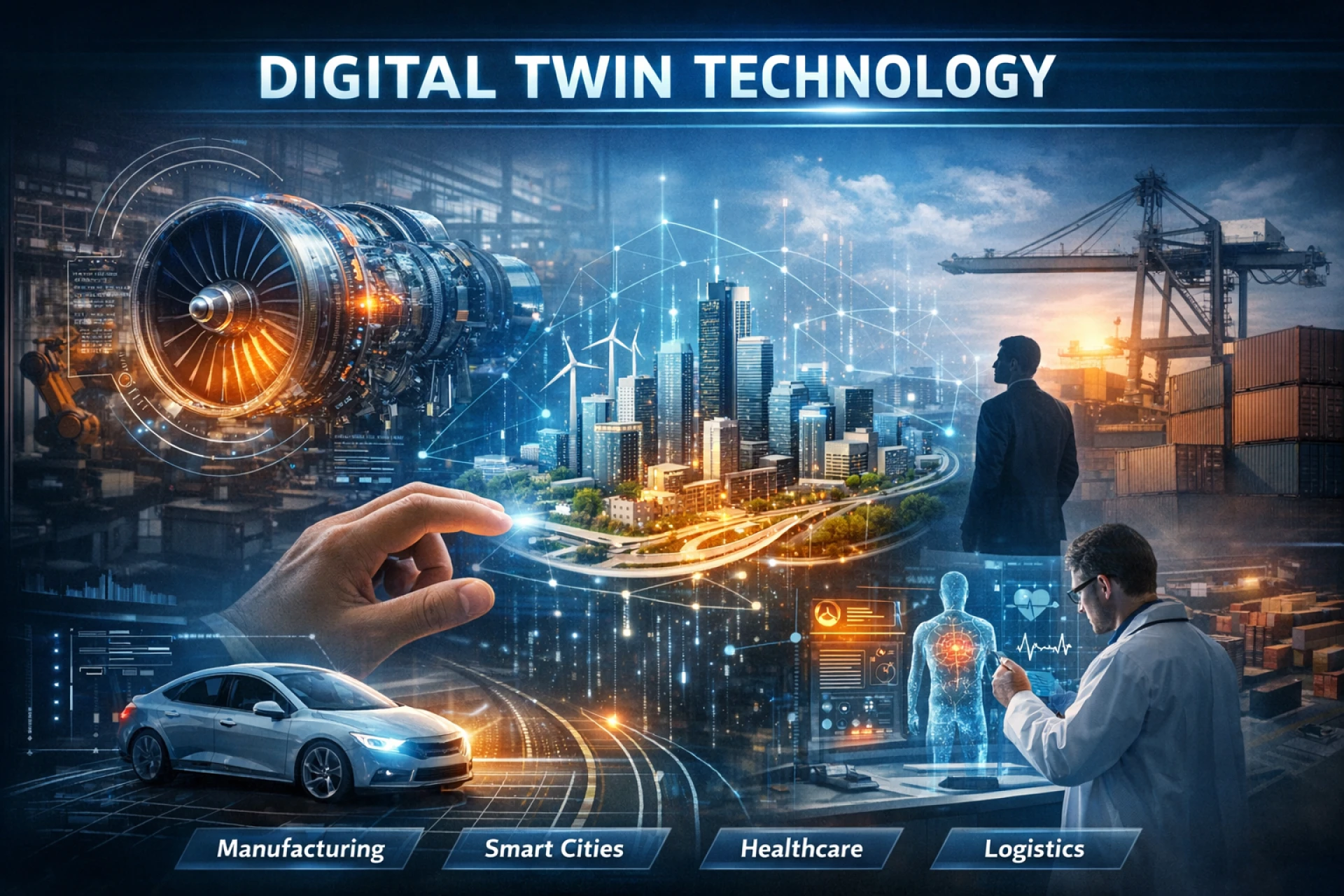

Digital twin technology is revolutionizing how businesses think about their operations. By creating a digital replica of a physical asset, system, or process, businesses can now optimize their operations in real-time. This is helping businesses transition from reactive decision-making to predictive decision-making.
In reality, digital twins are being used in many industries.
For instance, in manufacturing, digital twins are used to monitor production, prevent machine failures, and minimize downtime. Similarly, in healthcare, digital twins are used to diagnose and treat patients. Smart cities are also being built by creating digital twins that can be used to optimize traffic flow, energy efficiency, and city infrastructure. Even in retail, digital twins are being used to optimize inventory, supply chain, and customer experience.
There are several instances where the effect of this innovation has been demonstrated.
Rolls-Royce is one company that is using digital twins to monitor aircraft engines in real time. Similarly, car companies such as Volvo use digital twins to test car models before they are physically manufactured. In logistics, companies such as DHL use digital twins to model their supply chain in order to improve route planning.
Although this technology has various advantages, various challenges come with its implementation.
One of the major challenges associated with this technology is that of data integration. This is because this technology requires vast amounts of correct and real-time information. Moreover, security and privacy are also essential aspects that need consideration. In addition, this technology can also be expensive and require expertise.
In summary, this technology has tremendous potential to revolutionize industries by making these industries more efficient and reducing risks involved. It is believed that this technology will keep advancing and increase its adoption rate in the future, making it a major contributor to innovation.


























Sign in to leave a comment.