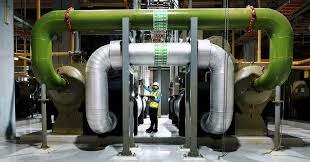

A district cooling system (DCS) is a centralised cooling solution that supplies chilled water to multiple buildings. It is designed to meet varying cooling needs efficiently, making it an attractive option for modern urban developments. This system differs from traditional air conditioning, where each building has its cooling unit.
In a DCS, a large central plant produces chilled water. The system distributes this water through an underground network of insulated pipes to connected buildings. Once the chilled water reaches a building, a user station takes over. Here, the water cools the air by passing through specialised devices that absorb heat. This method ensures that each building receives only the cooling it needs, regardless of the overall chiller size.
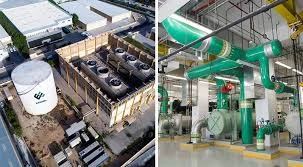
The main components of a district cooling system include a central chiller plant, user stations, and a distribution network. The central chiller plant is the heart of the system. It uses energy-efficient chillers that may be powered by electricity or natural gas. Some systems even use alternative cooling sources, such as free cooling from rivers or oceans. The user station acts as an interface between the central plant and a building’s air-conditioning circuit. It adjusts the chilled water to suit the specific cooling requirements of each building. The distribution network, comprising a series of pipes, carries the chilled water to and from buildings efficiently.
There are several benefits to using a district cooling system. First, it provides flexibility. Buildings can use as much or as little cooling as needed. This flexibility makes DCS a reliable choice for large-scale developments. It is also cost-effective in the long run. While the initial set-up may be significant, the operational savings and lower energy consumption help balance the expense. For instance, an office cooling solutions strategy based on DCS often results in more consistent performance and reduced running costs compared to multiple individual cooling units.
Another important advantage is the reduction in carbon dioxide emissions. Since the system centralises the cooling process, larger and more efficient chillers can be used. This approach reduces the energy used per unit of cooling. Moreover, the system’s ability to save up to 50% on cooling energy has made it a popular choice among environmentally conscious developers. The space-saving benefit is also notable. With the central plant located away from individual buildings, the local footprint is smaller, leaving room for other vital infrastructure.
Cost recovery is typically built into the DCS tariff. The district cooling cost is calculated based on several factors including energy usage, connection fees, and maintenance expenses. This transparent pricing structure allows both service providers and customers to agree on fair terms. Additionally, a district cooling energy system promotes sustainability. By consolidating cooling resources, the system minimises energy wastage and contributes to greener building practices.
While the technical workings of the system may seem complex, the benefits are clear. Centralised cooling supports large urban areas by providing efficient, sustainable, and flexible cooling options.
Looking ahead, the district cooling model holds promise as cities strive for smarter, greener infrastructure. Instead of focusing solely on immediate cost savings, adopting this system can help communities plan for long-term energy resilience. This shift not only addresses environmental concerns but also supports economic growth through innovative, sustainable practices.
#officecoolingsolutions #districtcoolingcost #districtcoolingenergysystem





























Sign in to leave a comment.