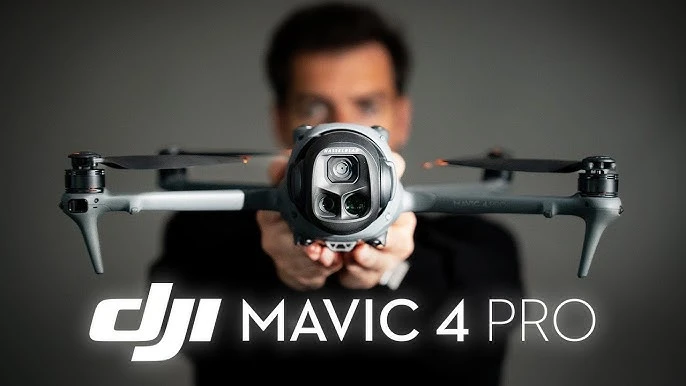

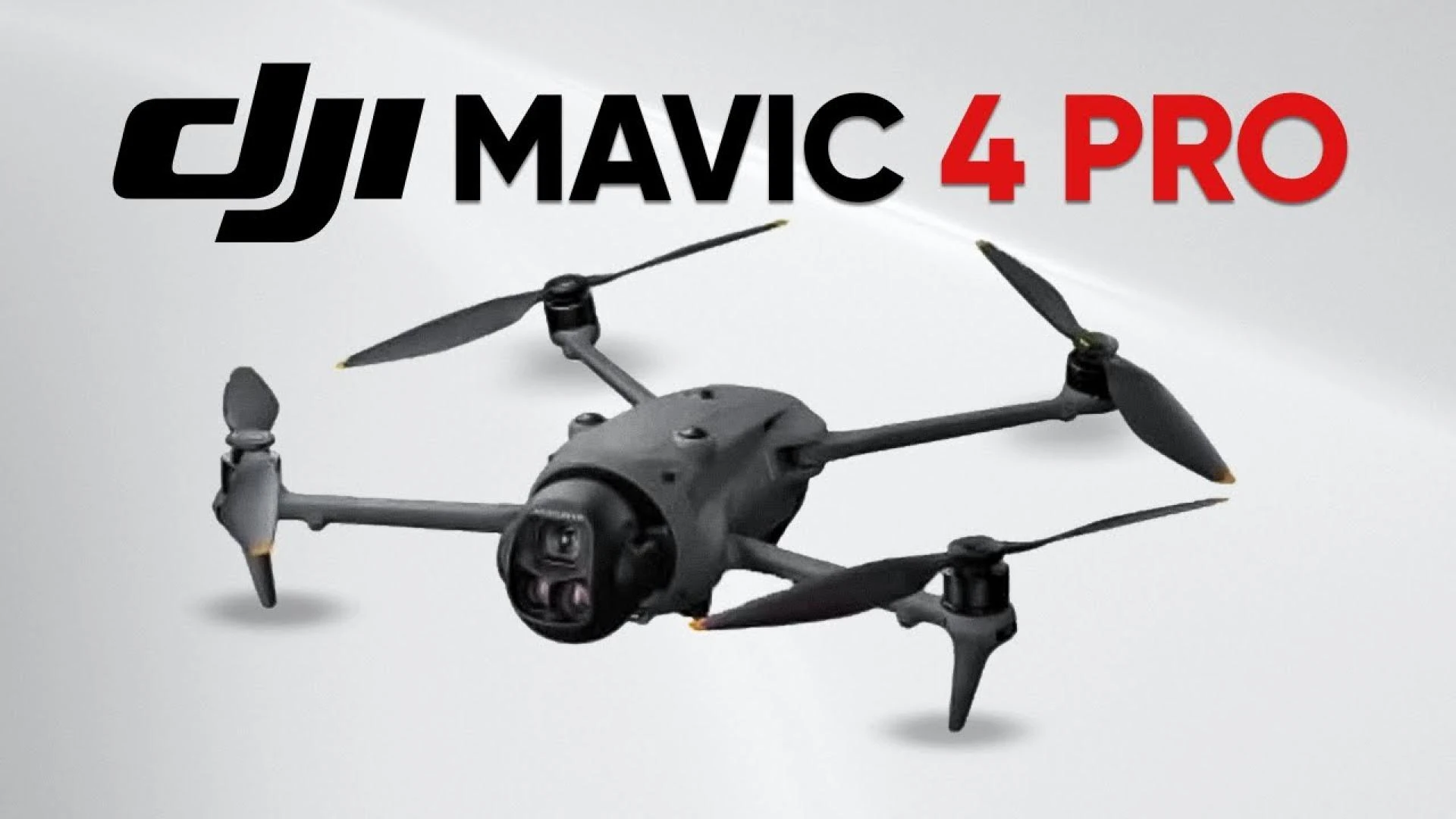
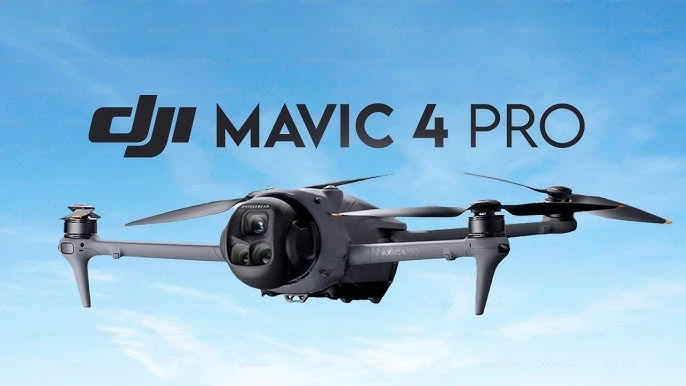
When you’re working in cinematic production—documentaries, corporate films, location scouting or aerial mapping—the demands on a drone go far beyond “just a flying camera.” With the launch of the DJI Mavic 4 Pro, you’re looking at a machine engineered to meet high-end requirements: a robust camera system, advanced stabilisation, extended flight time and intelligent obstacle awareness.
Cutting-Edge Imaging Suite
At its heart is a 4/3-inch CMOS sensor (branded Hasselblad) capable of 100 megapixel stills and 6K/60fps HDR video. Two additional tele lenses complement the wide: a 48 MP “medium” telephoto and a 50 MP long-range telephoto. What this means for you: full-frame equivalent focal lengths spanning 28 mm, 70 mm and 168 mm in one versatile platform.
From a filmmaking perspective, this gives you creative flexibility without swapping drones: large scenic aerials, tighter framing for interview cut-aways or remote subject tracking. The variable aperture (f/2.0-f/11) on the main camera is a welcome upgrade for low-light situations.
Stabilisation + Gimbal Innovation
One of the most exciting new elements is the “Infinity Gimbal” capable of rolling 360°, tilting and panning in ways that weren’t possible on previous Mavic models. This opens creative opportunities: vertical video, dramatic sweeping moves, and greater flexibility when combining aerial moves with walking shots. For video professionals, having that gimbal freedom means less compromise on shot creativity.
Flight Performance & Transmission
A claimed flight time of up to 51 minutes positions the Mavic 4 Pro among the longest-flying consumer/prosumer drones. The transmission system has been upgraded to OcuSync 4+ (or sometimes referenced as O4+), with ranges up to 30 km FCC (15 km EU) and higher uplink/downlink stability in contested RF environments. Obstacle sensing is omnidirectional, and is rated to function down to 0.1 lux (useful for dusk or low-light flights).
Practical Considerations for Production Use
While the hero specs look compelling, there are a few real-world production notes to keep in mind:
- Weight and restrictions: At around 1,063 g the drone sits above many hobby-drone thresholds. In many jurisdictions this means stricter regulations (in Europe, class C2 in some cases).
- Data rates & workflow: With 6K/60fps HDR and high resolution stills, your storage and post-production pipeline must be up to the task—expect large file sizes and high-spec editing machines.
- Battery life caveats: The 51-minute claim is under ideal conditions; real flights with wind, manoeuvre and payload likely run lower (users report nearer 30-40 minutes).
- Cost and accessories: A “Creator Combo” variant includes 512 GB built-in SSD, RC Pro 2 controller and 240 W power adapter.
- US availability: At launch the U.S. market did not receive the drone immediately.
Is It Right for Your Production Needs?
For professional shooters, the Mavic 4 Pro makes sense if you consistently demand top-image quality and versatile framing in a foldable platform. If you’re switching between large aerial rigs and smaller drones, this model offers a “do-it-all” solution.
On the other hand, if you primarily shoot 4K at 30fps, have a small budget or frequently fly under weight-restricted areas, it may be over-spec for your workflow.
Finally, when you’re ready to gear up, you’ll find the model and its accessories listed on sites such as toneart-shop — ideal to compare combinations, bundles and local availability.
























Sign in to leave a comment.