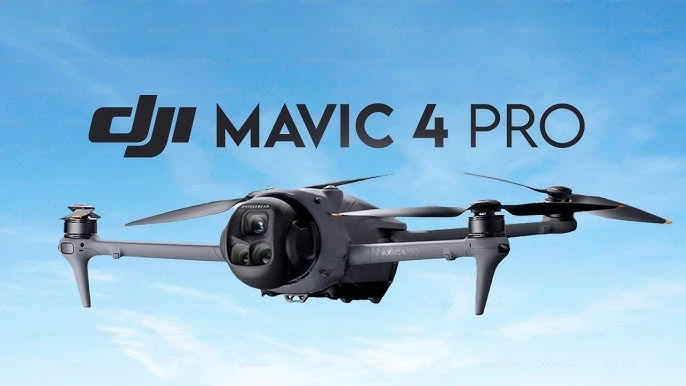

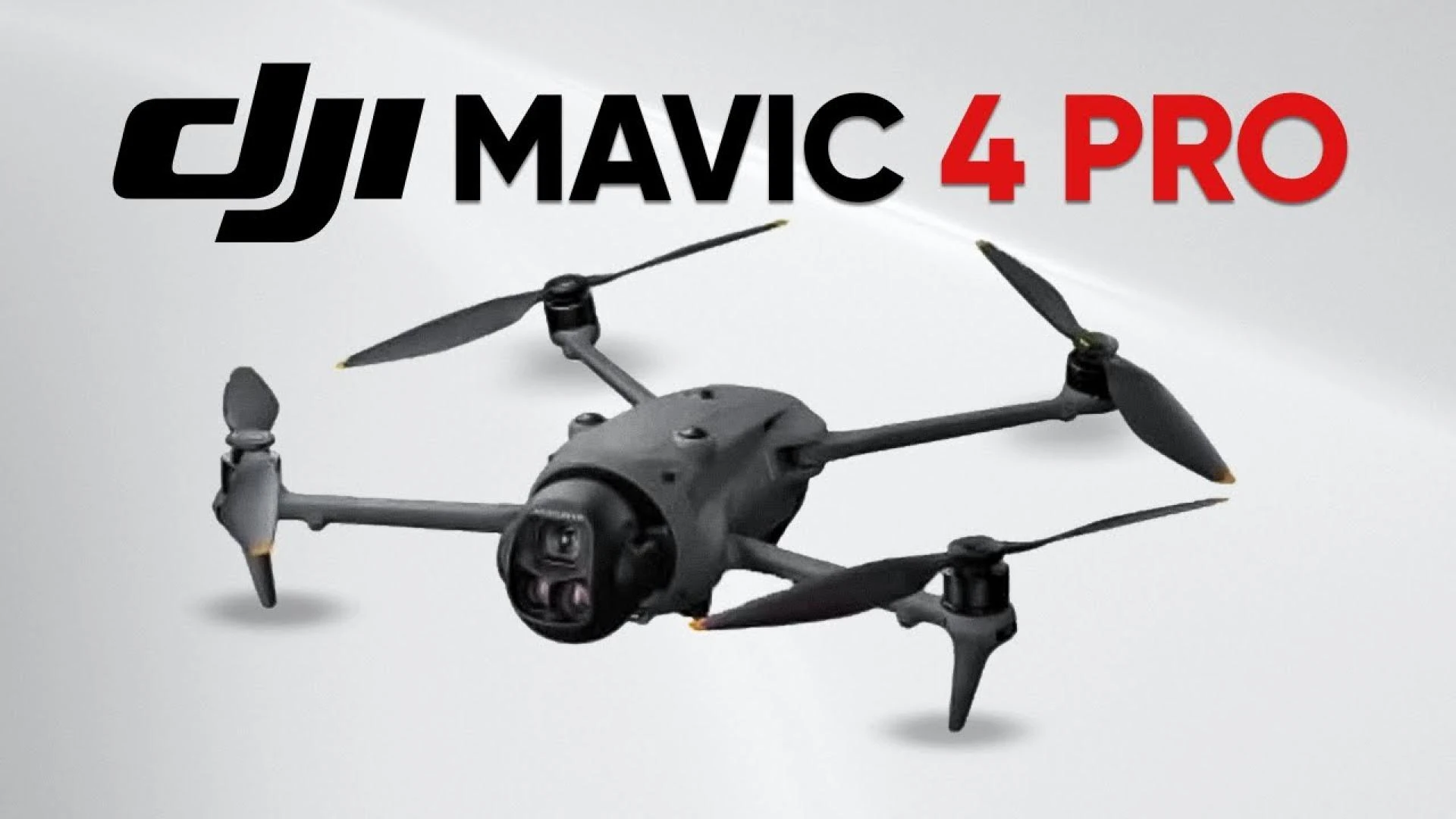
For filmmakers who want a compact aircraft that doesn’t compromise on grading latitude, focal-length flexibility, or low-light stability, the DJI Mavic 4 Pro lands in a sweet spot. Its headline 100-megapixel Hasselblad wide camera sits on a fully rotating 360° “Infinity” gimbal, flanked by dual tele modules for medium and long reach. Add 6K/60 HDR capture, omnidirectional sensing that remains active in dim scenes, and up to 51 minutes of rated airtime, and you have a travel-ready platform that can cover work many crews used to reserve for heavier rigs.
What’s new versus Mavic 3 Pro
The bump to a 100MP 4/3-type Hasselblad sensor is the obvious leap, but the system-level upgrade is bigger: a standardized triple-focal arrangement—28mm, 70mm, and 168mm full-frame equivalents—so you maintain visual continuity across an edit without swapping airframes. The gimbal redesign now supports true 360° roll, enabling barrel-roll reveals, native vertical capture, and orientation-free transitions that weren’t possible natively on previous Mavics. Flight endurance climbs to a claimed 51 minutes (tested in ideal conditions), and the O4+ link improves range and downlink stability for low-latency monitoring in congested RF environments.
The triple-camera system, demystified
28mm Hasselblad wide (4/3", 100MP, 6K/60 HDR). This is your master camera for establishing shots and anything where color matters. Dual Native ISO Fusion and Hasselblad Natural Color Solution help preserve highlight roll-off and shadow texture, and the high pixel count gives you room to oversample for sharper 6K or crop for 4K deliveries without throwing away fine detail.
70mm medium tele. The “drama” lens. It adds gentle compression for portrait-style reveals, architectural parallax, and tighter landscapes when you can’t (or shouldn’t) fly closer. It’s fixed-aperture at f/2.8 and supports high-frame-rate 4K capture for clean slow motion.
168mm tele. When wildlife etiquette, safety buffers, or event perimeters demand distance, the long tele maintains cinematic intimacy at a standoff. It’s also useful for inspections—rigging, façades, towers—where you need detail without encroaching.
Across the system you get 10-bit recording with HLG, D-Log M, and D-Log options for HDR workflows. If you opt for the 512GB Creator Combo, the camera unlocks H.264 ALL-I at up to 1200 Mbps for robust intraframe editing; otherwise, the standard H.265/H.264 long-GOP modes remain efficient and gradeable. (Note: Apple ProRes isn’t supported on Mavic 4 Pro.)
Infinity Gimbal: shots you couldn’t easily do before
The 360° rotating gimbal isn’t a party trick—it changes what’s possible in the air. You can bank-to-roll for dynamic reveals, hold a horizon-true frame through aggressive yaw, or spin to native vertical without cropping. Because stabilization persists through full rotations, orientation-free orbits and roll-to-tilt transitions become repeatable and clean, shrinking the gap between small-foldable and heavy-lift creativity.
Flight performance & situational awareness
A rated 51-minute maximum expands real shooting windows, especially once you factor repositioning and safety margins. O4+ transmission strengthens control and monitoring at distance, while omnidirectional obstacle sensing—including operation down to 0.1 lux in city-lit environments—reduces workload at dusk or under spill. As always, treat those specs as assistance, not permission: conservative speeds and vigilant line-of-sight remain best practice.
Storage, controllers, and workflow
Base models include 64GB internal storage; the Creator Combo steps to 512GB—handy for ALL-I shoots or cold-weather days when card swaps invite condensation. Controller options span the RC 2 and the RC Pro 2; the latter adds a rotatable 7-inch Mini-LED display rated to 2000 nits peak with pro I/O and third-party app support. Fewer accessories and brighter integrated monitoring usually mean faster handoffs between pilot and director. You can compare configurations and regional stock right here.
Who it’s for
- Commercial & documentary crews needing cinematic color, reliable highlight handling, and flexible focal lengths without traveling a heavier rig.
- Event and travel teams that deliver in both horizontal and native vertical and want quick, reliable handoffs to mobile or laptop editors.
- Inspection and survey operators who benefit from the 168mm reach and low-light obstacle sensing to maintain safe standoff distances.
Bottom line: If your deliverables live in 10-bit HDR and you value creative freedom over sheer airframe size, the Mavic 4 Pro is a practical, versatile upgrade that meaningfully expands what a foldable can do on set.























Sign in to leave a comment.