
It’s a classic summer scenario: You’re enjoying your garden, and a large, fuzzy, black-and-yellow insect starts buzzing around your flowers. Your first thought is probably: Do bumble bees sting?
Bumble bees (Bombus species) are among the most beloved pollinators. They are known for their gentle nature, industrious work ethic, and their unique "buzz pollination" technique. However, their intimidating size and loud buzz can often cause alarm.
In this comprehensive guide, we will answer all your burning questions about bumble bee stings, compare them to other stinging insects, and tell you exactly what to do if you are stung.
The Short Answer: Yes, Bumble Bees Can Sting
The quick answer is yes, bumble bee sting. However, this answer comes with major caveats.
While they possess the anatomy to sting, bumble bees are not inherently aggressive insects. Compared to their relatives like yellow jackets, hornets, and even honey bees, bumble bees are remarkably docile. They are much more interested in gathering nectar and pollen than they are in attacking humans.
A bumble bee will almost always prefer to fly away rather than fight. Stinging is a last resort defense mechanism for them.
When Do Bumble Bees Sting? (Triggers to Avoid)
Understanding why a bumble bee stings is the best way to prevent it from happening. Because they are not naturally belligerent, a bumble bee will only sting if they feel directly threatened or disturbed.
Here are the most common situations that might trigger a bumble bee to sting:
- Protecting Their Nest: This is the most common reason for a bumble bee attack. Bumble bees typically nest underground (often in abandoned rodent burrows) or in dense vegetation. If you accidentally step on, mow over, or otherwise disturb a nest opening, the workers will defend it.
- Physical Threat: If you grab a bumble bee, swat at it roughly, step on it barefoot while it’s foraging in the grass, or it gets trapped in your clothing, it will sting out of self-preservation.
- Perceived Aggression: Sudden, jerky movements or loud swatting near a bumble bee can be interpreted as a threat, causing it to react defensively.
Do All Bumble Bees Sting? (Male vs. Female)
This is a key piece of information that can ease your anxiety: Not all bumble bees can sting.
A bee's stinger is actually a modified ovipositor (an organ used to lay eggs). Because of this, only female bumble bees (queens and worker bees) have stingers.
Male bumble bees cannot sting. They completely lack the anatomy.
How to Tell the Difference:
While it can be difficult for a beginner to differentiate them on the fly, male bumble bees often appear later in the season (late summer), have slightly different coloration (often with more yellow on their face), and spend their time flying from flower to flower searching for mates rather than collecting pollen for a nest.
Can Bumble Bees Sting Multiple Times?
This is one of the biggest differences between bumble bees and honey bees.
Yes, bumble bees can sting multiple times.
They have a smooth stinger. When they sting, they inject venom and then cleanly withdraw their stinger without damaging themselves. This allows them to sting again if they still feel threatened.
How this differs from Honey Bees:
Honey bees have a barbed stinger. When a honey bee stings a mammal (with elastic skin), the barbs get caught. As the bee tries to fly away, the stinger is torn from its abdomen, along with its venom gland and digestive tract. This fatal injury means a honey bee can only sting once.
What Does a Bumble Bee Sting Feel Like?
For most people, a single bumble bee sting is painful but not dangerous.
The experience has been described as a sharp, sudden burning sensation, similar to being stuck with a needle. The pain usually lasts for a few minutes to an hour.
After the initial sharp pain, the sting site will typically experience a "local reaction," including:
- Redness
- Swelling
- Itching
- Soreness
These symptoms usually subside within a few hours to a day.
Bumble Bee Sting First Aid: Step-by-Step Guide
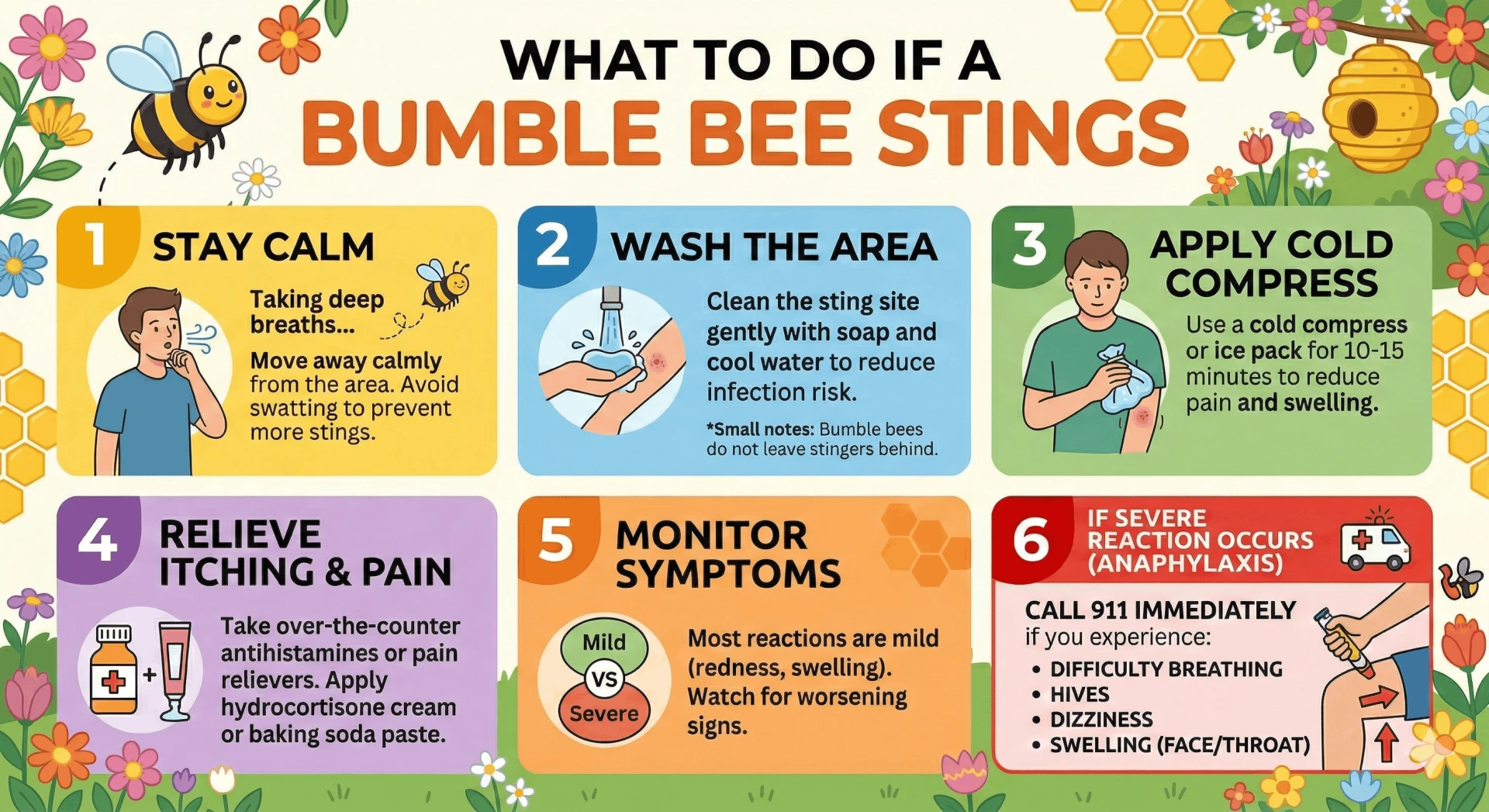
If you are stung by a bumble bee, don’t panic. Most cases can be managed at home with simple first aid.
1. Move Away Safely
Move slowly and calmly away from the area where you were stung. If you were near a nest, other bees might become defensive. Do not swat at the bees as you retreat.
2. Remove the Stinger (If Necessary)
Because bumble bee stingers are smooth, they rarely get stuck in the skin. However, if the bee was crushed during the sting, a fragment might remain. If you see it, gently scrape it out sideways with your fingernail or the edge of a credit card. Do not use tweezers, as you might squeeze more venom into the wound.
3. Clean the Area
Wash the sting site gently with soap and cool water to reduce the risk of infection.
4. Reduce Swelling
Apply a cold compress, ice pack, or a cool washcloth to the area for 10–15 minutes. Make sure to wrap ice in a towel to protect your skin.
5. Ease Pain and Itching
You can take over-the-counter medication if needed:
- For pain: Acetaminophen (Tylenol) or Ibuprofen (Advil, Motrin).
- For itching and swelling: An oral antihistamine (like Benadryl) or apply a hydrocortisone cream or calamine lotion to the sting site.
When is a Bumble Bee Sting Dangerous? (Allergic Reactions)
For a small percentage of the population, a bumble bee sting can be a medical emergency. This happens if the person is allergic to bee venom.
Mild vs. Severe Allergic Reactions
It’s important to understand the difference between a normal local reaction and a dangerous systemic reaction.
- Normal Local Reaction: Swelling, redness, and pain only around the immediate sting site. (Even a large area of swelling can still be a normal, though uncomfortable, local reaction).
- Severe Systemic Allergic Reaction (Anaphylaxis): This is a potentially life-threatening reaction that affects the entire body.
Call 911 Immediately If You Experience:
- Difficulty breathing or wheezing
- Swelling of the throat, tongue, lips, or face
- Hives over large areas of the body
- Dizziness, lightheadedness, or feeling faint
- A rapid or weak pulse
- Nausea, vomiting, or diarrhea
If the person has a prescribed epinephrine auto-injector (EpiPen), administer it immediately while waiting for emergency services to arrive.
Tips to Prevent Bumble Bee Stings
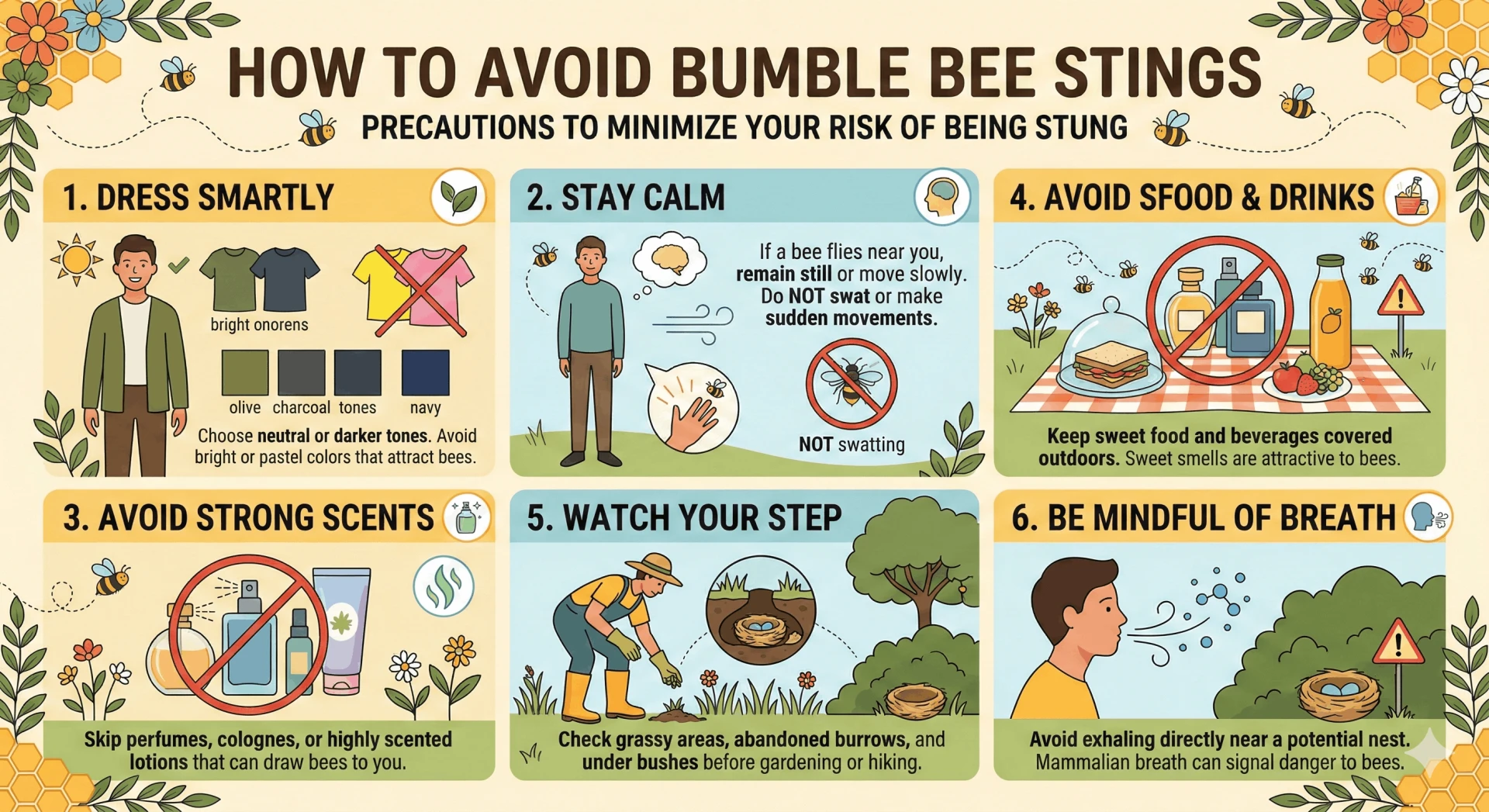
You can coexist peacefully with these essential pollinators by taking a few simple precautions:
- Stay Calm: If a bumble bee flies near you to inspect your floral shirt or perfume, remain still or move slowly. Sudden movements or swatting will make it feel threatened.
- Don’t Touch: Never try to catch, pet, or corner a bumble bee, especially while it is actively foraging on flowers.
- Wear Shoes: Avoid walking barefoot through grassy areas, especially if clover or wildflowers are present.
- Be Careful While Gardening: Before you reach into a thick bush or start digging, visually inspect the area for nest openings.
- Listen: Bumble bees are loud. If you hear a sudden, angry, loud buzzing, it’s often a warning sign that you are too close to their nest.






























Sign in to leave a comment.