

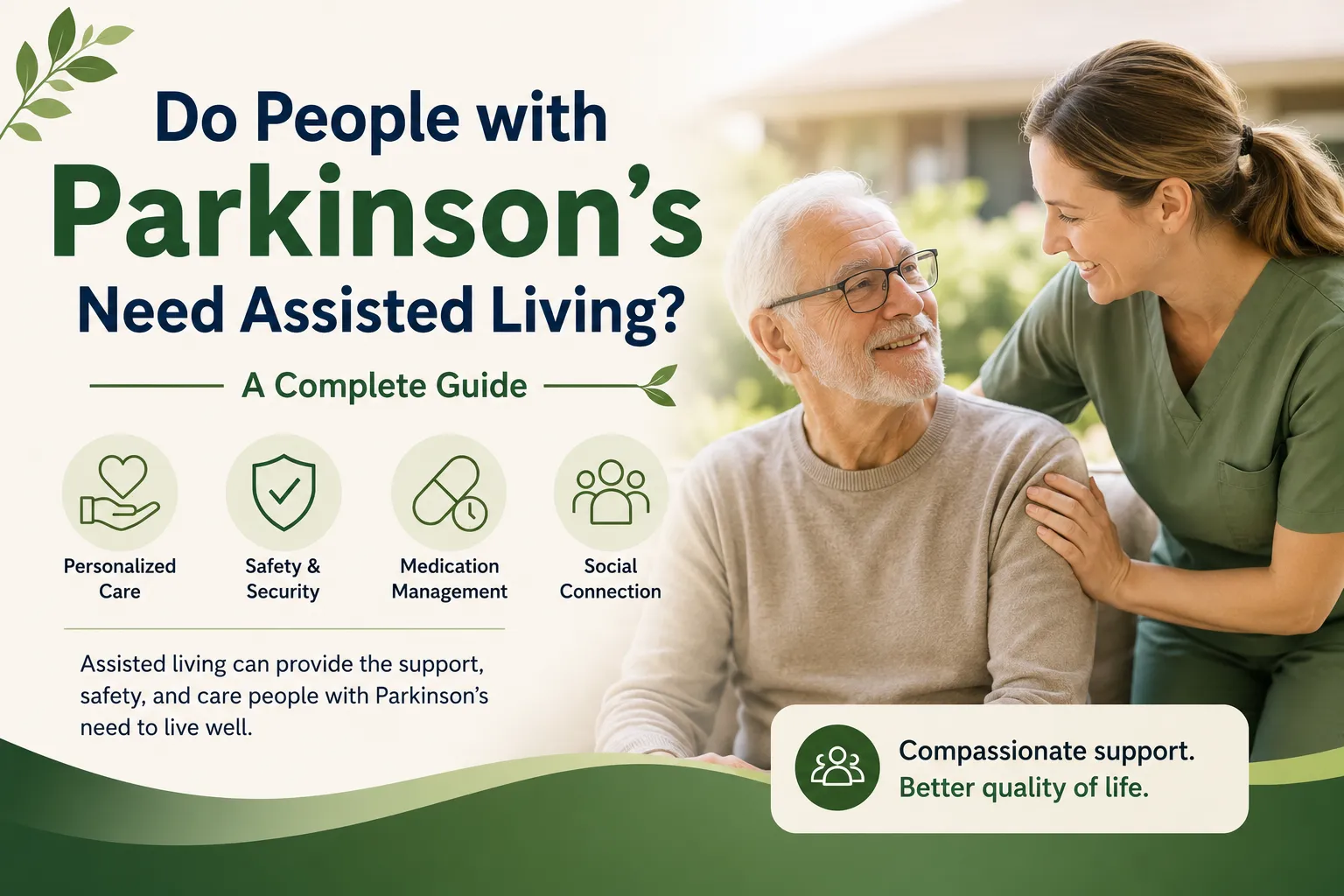
Parkinson's doesn't take away independence overnight but knowing when extra support is needed can make all the difference in preserving safety, confidence, and quality of life.
A diagnosis of Parkinson's disease brings many questions for both seniors and their families. One of the most common concerns is whether assisted living will eventually become necessary. The answer isn't the same for everyone. Some people continue living independently for years, while others benefit from additional support as symptoms progress.
Choosing assisted living is not about giving up independence. Instead, it's about creating an environment where seniors can continue living as safely and comfortably as possible while receiving the care they need. With the right approach to Parkinson's disease care, individuals can maintain dignity, stay socially engaged, and enjoy a better quality of life.
This guide explains when assisted living may be the right option, what services to expect, and how specialized communities such as Hart Heritage Estate help seniors and families navigate this important stage of life.
Understanding Parkinson's Disease
Parkinson's disease is a progressive neurological condition that affects movement, coordination, and balance. As the disease advances, daily activities that once seemed simple such as dressing, walking, preparing meals, or taking medications can become increasingly challenging.
Common symptoms include:
- Tremors
- Muscle stiffness
- Slower movement
- Balance problems
- Difficulty speaking or swallowing
- Fatigue
- Changes in mood or memory
Because symptoms vary from person to person, the level of support needed also differs. That's why personalized Parkinson's disease care is essential for maintaining independence as long as possible.
Does Every Person with Parkinson's Need Assisted Living?
No. Many individuals with Parkinson's continue living at home with support from family members or in-home caregivers.
However, assisted living may become a better option when daily routines become difficult or safety concerns increase.
Some common signs include:
- Frequent falls
- Difficulty managing medications
- Challenges preparing meals
- Trouble maintaining personal hygiene
- Increasing isolation
- Caregiver burnout
- Declining mobility
Recognizing these signs early allows families to plan ahead rather than making decisions during a crisis.
Benefits of Assisted Living for Parkinson's Disease Care
Assisted living communities are designed to provide the right balance between independence and support. Residents receive help when needed while continuing to enjoy privacy, meaningful activities, and social interaction.
Personalized Daily Assistance
No two people experience Parkinson's in the same way. Quality assisted living communities create individualized care plans based on each resident's needs.
Support may include:
- Bathing and grooming
- Dressing
- Mobility assistance
- Medication reminders
- Meal support
- Transportation
This personalized approach allows seniors to remain as independent as possible while receiving assistance only where it's needed.
Improved Safety
Falls are one of the biggest concerns for people living with Parkinson's disease.
Assisted living communities help reduce risks by offering:
- Accessible living spaces
- Handrails throughout the building
- Emergency response systems
- Professional caregivers available around the clock
- Safe walking areas
These features provide peace of mind for both residents and their families.
Better Medication Management
Parkinson's medications often need to be taken at very specific times for maximum effectiveness.
Missing doses or taking medications late can significantly affect movement and daily functioning.
Professional caregivers help ensure medications are administered consistently, supporting better symptom management and improving overall Parkinson's disease care.
Nutritious Meals and Wellness Support
Preparing balanced meals can become difficult as Parkinson's progresses.
Assisted living communities provide nutritious dining options that support overall health while accommodating dietary needs and swallowing difficulties when necessary.
Many communities also encourage healthy routines through:
- Light exercise
- Stretching programs
- Physical therapy coordination
- Occupational therapy
- Wellness activities
These services help seniors maintain strength, flexibility, and confidence.
Emotional and Social Benefits
Parkinson's affects more than physical health.
Many seniors experience loneliness, anxiety, or depression as mobility declines.
Living in an assisted living community encourages regular social interaction through:
- Group activities
- Educational programs
- Fitness classes
- Community events
- Hobby clubs
- Family gatherings
Remaining socially connected has been shown to improve emotional well-being and overall quality of life.
Supporting Families Along the Journey
Family caregivers often devote countless hours to supporting loved ones with Parkinson's disease.
While caregiving is rewarding, it can also become physically and emotionally exhausting.
Assisted living helps families shift their focus from constant caregiving to spending meaningful quality time together.
Instead of worrying about medication schedules or daily tasks, families can enjoy visits, celebrations, and shared experiences knowing their loved one is receiving professional Parkinson's disease care.
The Connection Between Parkinson's and Memory Care
Although Parkinson's primarily affects movement, some individuals may eventually experience changes in memory, thinking, or cognitive function.
Communities experienced in Alzheimer's care Maryland often have staff trained to support seniors facing cognitive challenges alongside physical limitations. This integrated approach ensures residents receive compassionate care that adapts as their needs evolve.
Families looking for long-term support may benefit from choosing a community that offers both assisted living and specialized memory care services, providing continuity of care if circumstances change over time.
Choosing the Right Assisted Living Community
Every assisted living community is different, so it's important to evaluate several factors before making a decision.
Look for a community that offers:
- Personalized care plans
- Experienced caregivers
- Safe, accessible accommodations
- Medication management
- Engaging daily activities
- Nutritious meals
- Therapy coordination
- Open communication with families
A welcoming environment where residents feel respected and valued is just as important as the services provided.
How Hart Heritage Estate Supports Seniors
For families seeking compassionate senior living in Maryland, Hart Heritage Estate focuses on creating a comfortable environment where residents receive individualized support while maintaining dignity and independence.
The community emphasizes person-centered care, meaningful relationships, engaging activities, and professional assistance tailored to each resident's unique needs. Whether someone requires everyday assistance or additional support as Parkinson's symptoms progress, the goal is always to enhance quality of life while helping residents feel at home.
Their commitment to compassionate senior living also makes them a trusted option for families exploring Alzheimer's care Maryland, ensuring continuity of care as health needs evolve.
Final Thoughts
A Parkinson's diagnosis doesn't automatically mean assisted living is necessary, but as the condition progresses, additional support can make everyday life safer, easier, and more fulfilling.
Thoughtfully planned Parkinson's disease care allows seniors to maintain independence while receiving help with daily tasks, medication management, mobility, and overall wellness. For families, it offers reassurance that their loved one is cared for by trained professionals in a supportive environment.
Communities like Hart Heritage Estate demonstrate how compassionate assisted living can empower seniors to continue living with dignity, purpose, and connection. By recognizing changing needs early and choosing the right care setting, families can ensure their loved ones enjoy the highest possible quality of life throughout every stage of Parkinson's disease.



























Sign in to leave a comment.