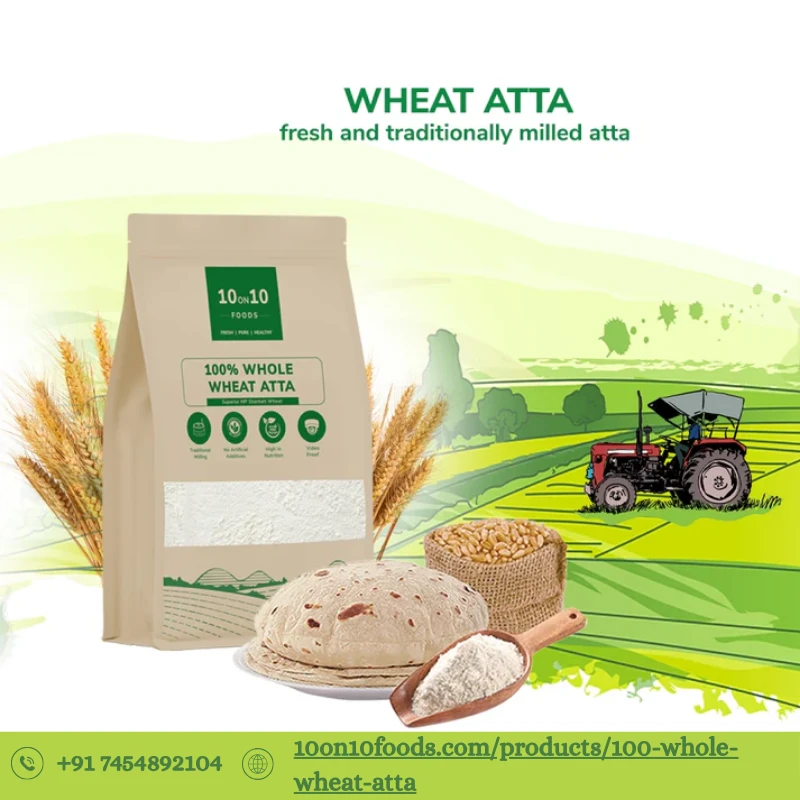

Whole wheat flour, also called whole wheat atta, is a staple in Indian households and a cornerstone of healthy eating. At 10on10Foods, we take pride in delivering freshly stone-milled whole wheat flour that retains its natural nutrients, fibre, and aroma. But many people often wonder: Does whole wheat atta expire? How long can it be stored without losing quality? This article explores these questions, helping you store and use your flour safely while maximizing freshness and nutrition.
Understanding Whole Wheat Flour
Whole wheat flour is made by grinding the entire wheat grain — including the bran, germ, and endosperm. This is what sets it apart from refined flour (maida), which only uses the starchy endosperm. Because whole wheat atta contains the germ and natural oils, it is far more nutritious but also more perishable than refined flour.
Key components of whole wheat atta include:
- Bran: Rich in dietary fibre, vitamins, and minerals.
- Germ: Contains essential fatty acids, protein, and vitamins.
- Endosperm: Primarily carbohydrates, providing energy.
The presence of natural oils in the germ is what makes whole wheat flour prone to rancidity if not stored properly.
Shelf Life of Whole Wheat Atta
The shelf life of whole wheat flour depends on storage conditions, packaging, and whether it is freshly stone-milled.
1. Unopened Packaged Flour
Commercially packaged whole wheat atta usually comes with a shelf life of 3 to 6 months. It is best stored in a cool, dry place, away from direct sunlight.
2. Freshly Stone-Milled Flour
At 10on10Foods, our whole wheat flour is stone-milled only after you order. Freshly milled atta has a higher moisture content and retains natural oils, making it highly nutritious but more perishable. Its ideal shelf life is around 2 to 4 weeks when stored in airtight containers in a cool, dry place.
3. Refrigeration and Freezing
For longer storage, you can refrigerate or freeze whole wheat flour. Refrigeration can extend shelf life up to 3 months, and freezing may keep it fresh for 6 months or more. Ensure that the flour is stored in airtight, moisture-proof containers to prevent spoilage.
Signs Your Whole Wheat Atta Has Gone Bad
Even before the expiration date, whole wheat flour can go bad. Watch for these signs:
- Rancid Smell: A sour or off smell indicates the natural oils have gone bad.
- Discoloration: Yellowing or dark spots suggest spoilage.
- Presence of Pests: Flour weevils or other insects are a sign of contamination.
- Unusual Taste: Bitter or sour taste indicates it’s no longer safe to consume.
If any of these signs are present, it is best to discard the flour.
Tips to Extend the Shelf Life of Whole Wheat Atta
Proper storage is essential to maintain freshness and nutritional value:
- Airtight Containers: Always transfer flour to airtight containers after opening.
- Cool, Dry Place: Avoid exposure to heat and humidity.
- Avoid Contamination: Use clean, dry utensils when scooping flour.
- Refrigeration: Store in the fridge if you buy in bulk or want to extend shelf life.
- Freeze for Long-Term Storage: For periods longer than 2 months, freezing preserves freshness and nutrients.
Why Fresh Stone-Milled Whole Wheat Flour Is Better
At 10on10Foods, our freshly milled whole wheat atta offers more than just freshness:
- Higher nutrient retention due to minimal processing
- Better aroma and natural taste
- Increased fibre and protein content
- Free from chemicals, preservatives, and additives
Using fresh whole wheat flour in your cooking ensures your rotis, parathas, and baked goods are both delicious and wholesome.
Frequently Asked Questions About Whole Wheat Atta
1. How long can I store whole wheat atta at room temperature?
Whole wheat flour can be stored for 2 to 4 weeks at room temperature if freshly stone-milled. Commercially packaged flour can last 3 to 6 months.
2. Can I refrigerate whole wheat flour to make it last longer?
Yes, refrigeration can extend shelf life up to 3 months, and freezing may preserve it for 6 months or more. Always store in airtight containers.
3. How do I know if whole wheat flour has gone bad?
Signs include rancid smell, discoloration, unusual taste, or the presence of insects. If any of these occur, it’s best to discard the flour.
4. Does freezing whole wheat atta affect its taste or nutrition?
No, freezing preserves both taste and nutrients if stored properly in airtight containers.
5. Why is stone-milled whole wheat flour more perishable than refined flour?
Stone-milled flour retains the germ and natural oils, which are highly nutritious but also prone to rancidity over time, unlike refined flour.
Conclusion
Whole wheat atta is a nutritious, versatile, and essential ingredient for a healthy diet. While it does expire faster than refined flour due to natural oils, proper storage in airtight containers, refrigeration, or freezing can extend its shelf life without compromising quality. At 10on10Foods, we ensure that every batch of whole wheat flour is freshly stone-milled to retain maximum nutrition and flavour, allowing you to enjoy wholesome meals with confidence.













Sign in to leave a comment.