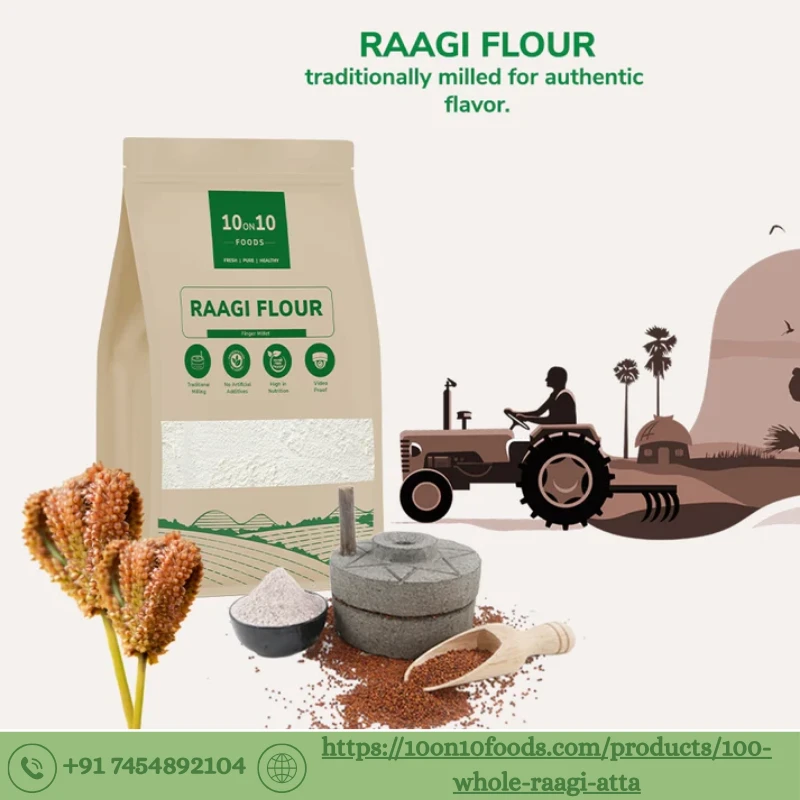

When it comes to choosing healthy alternatives to regular wheat flour, Ragi Flour (also known as Ragi Atta) has been gaining popularity. Known as finger millet, ragi has been a traditional staple in several parts of India for centuries. With growing awareness about nutrition and lifestyle diseases, people are exploring grains that not only satisfy hunger but also offer greater health benefits. One of the most common comparisons made is between Ragi Flour and Wheat Flour, particularly in terms of their fiber content and how that impacts digestion, weight management, and overall health.
At 10on10Foods, we believe in going back to traditional milling practices to retain the natural nutrition of grains. Our Ragi Atta is freshly stone-milled only after an order is placed, ensuring you get maximum nutrients and freshness in every batch. But the real question remains: is Ragi Flour richer in fiber than wheat? Let’s explore this in detail.
Nutritional Comparison: Ragi Flour vs Wheat Flour
Fiber Content
One of the biggest advantages of Ragi Flour over wheat is its higher dietary fiber content. On average, 100 grams of ragi contains about 11–12 grams of dietary fiber, whereas wheat contains around 8–9 grams. This extra fiber makes ragi an excellent grain for digestion, satiety, and weight control.
Protein and Amino Acids
Wheat does contain more protein (around 12–13 grams per 100 grams) compared to ragi (7–8 grams). However, ragi is rich in essential amino acids like methionine, which is not commonly found in other cereals. This makes Ragi Atta a unique protein source for vegetarians.
Micronutrients
Ragi is particularly known for its high calcium and iron content. It is one of the richest plant-based sources of calcium, making it ideal for bone health. Wheat, on the other hand, is richer in selenium and certain B vitamins.
Why Fiber Matters in Your Diet
Supports Digestion
The insoluble fiber in Ragi Atta adds bulk to stool, helping regulate bowel movements and preventing constipation. Wheat also aids digestion, but the higher fiber in ragi gives it an edge.
Weight Management
Fiber keeps you full for longer, which reduces frequent snacking. Substituting regular wheat rotis with Ragi Rotis can help manage appetite and promote gradual weight loss.
Blood Sugar Regulation
Foods with high fiber generally have a lower glycemic index. Ragi, being rich in dietary fiber, digests slowly, preventing rapid spikes in blood sugar. This makes Ragi Flour an excellent choice for people with diabetes.
Heart Health
A diet rich in fiber helps regulate cholesterol levels. By incorporating Ragi Atta into your meals, you may reduce the risk of cardiovascular diseases compared to a wheat-heavy diet.
Traditional Significance of Ragi
Ragi has been consumed in southern India for centuries in the form of porridge, rotis, and dosa batter. It was considered a staple for farmers and workers due to its energy-sustaining properties. Unlike modern refined grains, ragi was valued for its wholesomeness and nutrient density. At 10on10Foods, we are reviving this tradition by offering freshly stone-milled Ragi Atta, which retains its original nutrients.
Ragi Flour in Modern Diets
Gluten-Free Advantage
One of the standout features of Ragi Flour is that it is naturally gluten-free. This makes it a great option for people with gluten intolerance or celiac disease. Wheat flour, on the other hand, contains gluten and may not be suitable for everyone.
Versatility in Cooking
Ragi Atta is extremely versatile. You can use it to prepare rotis, dosa, idli, porridges, laddus, and even baked goods. The earthy flavor of ragi adds depth to recipes while boosting nutrition. Wheat flour, though versatile, is often refined in commercial production, which reduces its nutritional value.
Scientific Evidence Supporting Ragi’s Fiber Content
Multiple nutrition studies have highlighted that millets, including ragi, are superior to refined cereals in terms of dietary fiber and micronutrient content. Researchers have consistently found that diets rich in ragi improve satiety, regulate blood sugar, and enhance digestive health.
This is why organizations promoting millet consumption recommend including Ragi Atta as a part of daily diets for balanced nutrition.
How 10on10Foods Makes a Difference
While both ragi and wheat have their place in a healthy diet, the method of processing plays a critical role. At 10on10Foods, we mill Ragi Flour using the traditional stone-milling method only after you place your order. This ensures:
- No loss of nutrients due to high heat or refining.
- No chemicals, preservatives, or additives.
- Freshly ground batches for maximum flavor and health benefits.
This means that when you choose 10on10Foods Ragi Atta, you’re not only getting a product richer in fiber than wheat but also one that’s fresher, cleaner, and healthier.
Practical Tips for Using Ragi Flour
- Start Small – If you’re new to ragi, start by mixing it with wheat flour in a 50:50 ratio for rotis.
- Experiment with Recipes – Try ragi dosas, laddus, or porridge to explore its versatility.
- Pair with Protein – Combine ragi meals with dals, pulses, or paneer to balance the lower protein content.
- Use in Breakfast – Ragi porridge or dosa makes a great high-fiber breakfast to keep you energized.
Conclusion
So, is Ragi Flour richer in fiber than wheat? The answer is a clear yes. With its higher fiber content, gluten-free nature, and superior calcium and iron levels, Ragi Atta is a fantastic addition to any diet, especially for those focused on digestion, weight management, or diabetes control.
While wheat is still a good source of protein and widely consumed, the unique nutritional profile of ragi makes it stand out. By choosing freshly stone-milled Ragi Atta from 10on10Foods, you ensure you’re getting all the natural benefits of this traditional superfood, without compromise.
FAQs About Ragi Flour
1. Is Ragi Flour healthier than wheat flour?
Yes, Ragi Flour is richer in dietary fiber, calcium, and iron, making it healthier for digestion, bone health, and blood sugar regulation.
2. Can Ragi Atta be used for weight loss?
Yes, the high fiber in Ragi Atta keeps you full longer and helps reduce calorie intake, supporting weight loss efforts.
3. Is Ragi Flour gluten-free?
Yes, Ragi Flour is naturally gluten-free, making it suitable for those with gluten intolerance or celiac disease.
4. Can I replace wheat flour with Ragi Atta completely?
You can, but it is often recommended to start by mixing ragi with wheat flour to adjust to its taste and texture before full replacement.
5. Why choose 10on10Foods Ragi Atta?
10on10Foods mills Ragi Atta fresh only after you place an order, using traditional stone milling. This preserves nutrients and ensures purity without additives.
Order 10on10Foods Ragi Flour in just 1 step - Available now on Flipkart & Amazon!
Flipkart - https://www.flipkart.com/10on10foods-raagi-atta/p/itm471a8a3fb5618
Amazon- https://amzn.in/d/hHzAgVb









Sign in to leave a comment.