
Roof damage is one of the most stressful and expensive problems a homeowner can face. Whether it’s caused by a storm, aging materials, or an unexpected accident, the big question is always the same: Will your policy actually pay for a replacement? The answer isn’t a simple yes or no—it depends on several key factors that many people overlook.
This guide breaks it down in a practical, problem-solving way so you can understand exactly where you stand and what to do next.
When Roof Replacement Is Covered
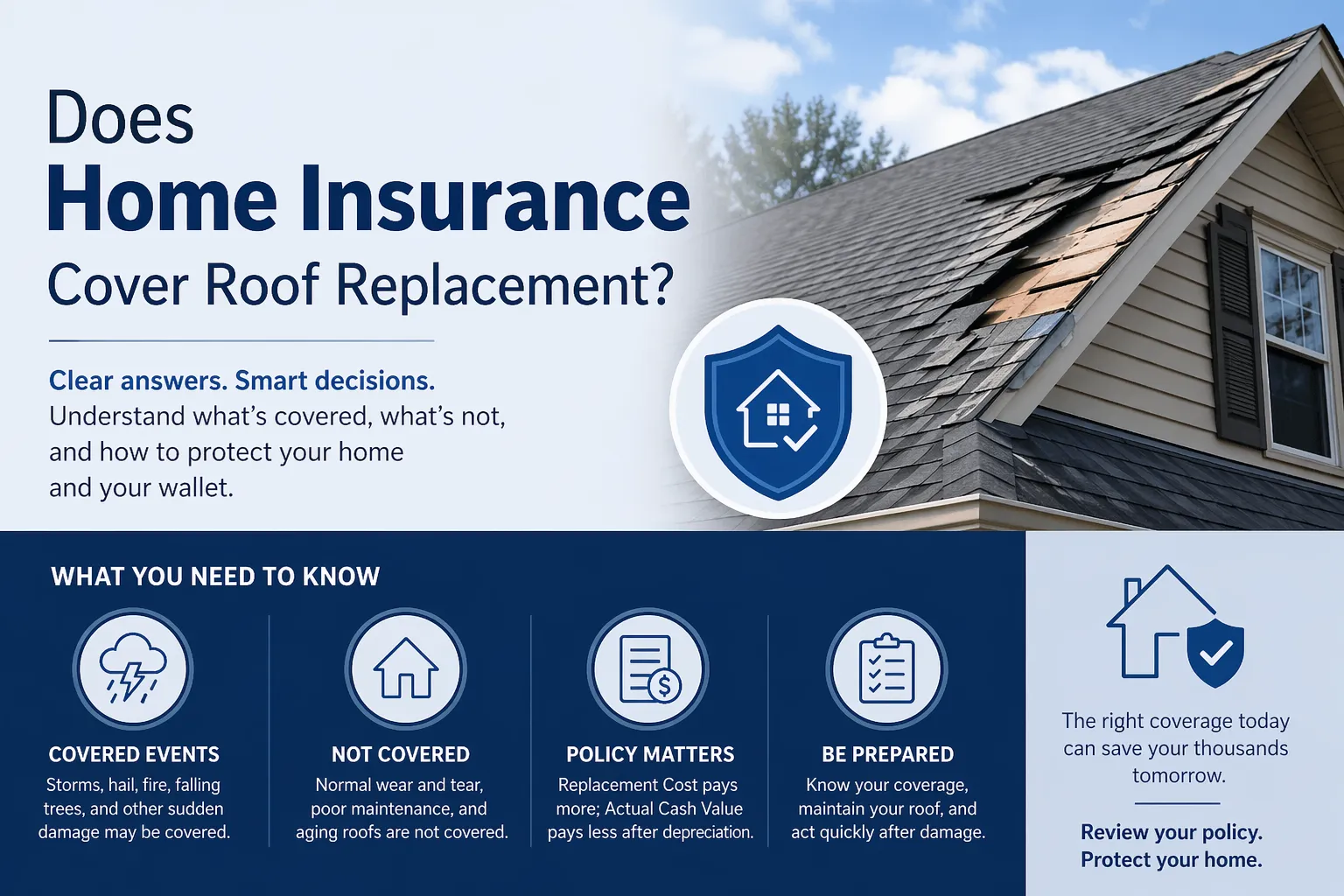
In general, most policies will help pay for roof replacement if the damage is sudden and accidental. This means events that are outside your control, such as:
- Storm damage (wind, hail, falling trees)
- Fire
- Vandalism
- Certain types of water damage
For example, if a heavy storm tears off shingles or a tree branch crashes through your roof, your policy will likely cover the repair or replacement. In these cases, home insurance is designed to protect you from unexpected financial loss—and using a home insurance calculator can help you estimate potential coverage and costs before you file a claim.
When Roof Replacement Is NOT Covered
This is where many homeowners get caught off guard. Policies typically do not cover damage caused by neglect or natural wear and tear. Common exclusions include:
- Old or deteriorating roofs
- Lack of maintenance
- Gradual leaks over time
- Mold or rot due to long-term issues
If your roof is simply at the end of its lifespan, the cost of replacing it will likely fall on you. This is because home insurance is meant for sudden events—not predictable aging.
Understanding Replacement Cost vs Actual Cash Value
One of the most important details in your policy is how your roof is valued:
1. Replacement Cost Value (RCV)
- Covers the full cost of replacing your roof with similar materials
- You receive enough money to install a new roof (minus deductible)
2. Actual Cash Value (ACV)
- Covers the depreciated value of your roof
- Age and condition reduce the payout significantly
For example, if your roof is 15 years old, ACV might only cover a fraction of the replacement cost. This is why reviewing your policy type is crucial before damage happens.
How Deductibles Affect Your Claim
Even when your roof qualifies for coverage, you still need to pay your deductible. This is the amount you agree to pay out of pocket before your policy kicks in.
Some policies have separate deductibles for wind or hurricane damage, especially in high-risk areas. If your deductible is high, the payout may not be as helpful as expected.
Steps to Take If Your Roof Is Damaged
If you suspect roof damage, acting quickly can make a big difference:
1. Document the Damage
Take clear photos and videos from multiple angles. This creates strong evidence for your claim.
2. Prevent Further Damage
Cover exposed areas with a tarp if possible. Most policies require you to minimize additional damage.
3. Contact Your Provider
Report the issue as soon as possible. Delays can sometimes lead to claim denial.
4. Get a Professional Inspection
A licensed contractor can provide an assessment that supports your claim.
5. Review Your Policy Details
Understanding your coverage type, limits, and exclusions helps you avoid surprises.
Common Reasons Claims Get Denied
Knowing what leads to rejection can help you avoid mistakes:
- Damage existed before the policy started
- Poor maintenance records
- Filing the claim too late
- Insufficient proof of sudden damage
Many homeowners assume coverage applies automatically, but home insurance companies require clear evidence that the issue meets their criteria.
How to Improve Your Chances of Coverage
If you want better protection in the future, consider these steps:
- Upgrade to a replacement cost policy if you don’t already have one
- Schedule regular roof inspections and keep records
- Replace aging roofs before they become a risk
- Understand special deductibles in your area
Being proactive reduces the risk of claim denial and ensures you’re financially prepared.
Final Thoughts
Roof replacement coverage depends on how and why the damage occurred, as well as the specific terms of your policy. While home insurance can provide strong financial protection for unexpected events, it won’t cover everything—especially issues caused by age or neglect.
The key is understanding your policy before you need it. By knowing what’s covered, maintaining your roof properly, and acting quickly when damage occurs, you can avoid costly surprises and make smarter decisions when it matters most.
If you’re unsure about your current coverage, reviewing your policy today could save you thousands tomorrow.

























Sign in to leave a comment.