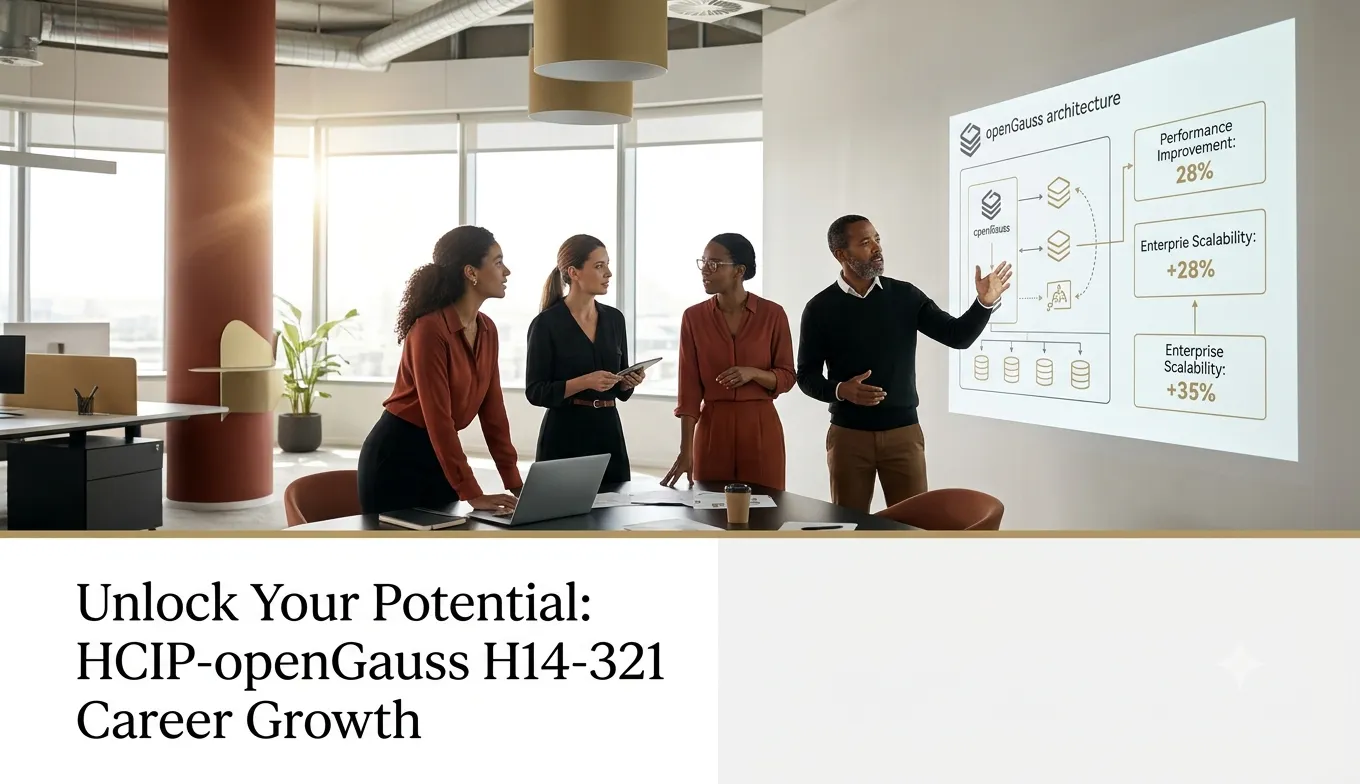

The Huawei Certified ICT Professional-openGauss (HCIP-openGauss) certification, validated by exam H14-321, signifies a candidate's advanced proficiency in openGauss database architecture, management, and application development. This certification is designed for database administrators, developers, and architects who manage, optimize, and secure openGauss databases within enterprise environments. Aspiring professionals seeking to solidify their expertise in this powerful open-source relational database system should pursue the HCIP-openGauss, as it demonstrates a robust understanding of complex database operations and best practices. This article will navigate critical common mistakes and pitfalls that candidates frequently encounter, helping you prepare smarter, not just harder, for the Huawei H14-321 exam.
Dissecting the HCIP-openGauss Exam Blueprint
Achieving the HCIP-openGauss certification requires successfully passing the H14-321 exam, a structured assessment designed to test practical and theoretical knowledge. Understanding the exam's format and expectations is the first step towards effective preparation, preventing common surprises on test day. Many candidates underestimate the importance of these basic details, focusing solely on content without grasping the assessment mechanism itself.
The H14-321 exam details are as follows:
• Exam Code: H14-321
• Exam Price: $300 (USD)
• Duration: 90 minutes
• Number of Questions: 60
• Passing Score: 600 out of 1000
These parameters highlight the need for efficient time management and a solid grasp of all topics to answer a significant number of questions accurately within a limited timeframe. Candidates must develop a strategy not just for learning but also for testing.
Navigating Core Knowledge Areas: Unpacking the H14-321 Syllabus
A thorough understanding of the HCIP-openGauss exam topics is paramount for targeted study. The H14-321 exam syllabus covers a broad spectrum of openGauss functionalities, moving beyond basic administration to advanced concepts essential for a professional role. Ignoring the official breakdown or guessing topic weightage can lead to misallocated study efforts, a prevalent pitfall among examinees. The official syllabus clearly outlines the key domains and their respective contribution to the overall score, guiding candidates on where to concentrate their learning.
The key areas evaluated in the HCIP-openGauss exam include:
• openGauss architectures (7%): This foundational section assesses understanding of the core components and structure of the openGauss database system, including its processes, memory structures, and overall operational model.
• Database object management (15%): Focuses on creating, modifying, and managing database objects such as tables, indexes, views, sequences, and constraints. This involves understanding their properties, dependencies, and performance implications.
• Database system management (14%): Covers the operational aspects of an openGauss instance, including configuration, startup/shutdown procedures, user and privilege management, and monitoring tools.
• Advanced SQL (14%): Tests proficiency in complex SQL queries, including subqueries, common table expressions (CTEs), window functions, and advanced join types, crucial for data manipulation and analysis.
• Stored procedures and triggers (7%): Explores the creation, modification, and management of server-side programming units like stored procedures, functions, and triggers to automate database operations and enforce business logic.
• Application development (14%): This section delves into how applications interact with openGauss, covering connection management, transaction processing, error handling, and performance considerations for developers.
• Database migration management (14%): Addresses strategies, tools, and best practices for migrating data and schema to and from openGauss, including handling compatibility issues and ensuring data integrity.
• Database security management (15%): Encompasses various security aspects, such as authentication, authorization, encryption, auditing, and compliance within the openGauss environment.
Each topic requires a blend of theoretical knowledge and practical application, reinforcing the need for hands-on experience. For a comprehensive overview of the certification and its curriculum, candidates can explore the Huawei certification portal.
Overlooking Foundational openGauss Architectures
One of the most significant traps candidates fall into is underestimating the foundational understanding of openGauss architectures. While it might represent a smaller percentage of the exam, a weak grasp here can cripple understanding in subsequent, higher-weighted topics like system management and application development. Without a clear picture of how openGauss processes data, manages memory, and handles concurrency, debugging performance issues or designing efficient applications becomes a guessing game. It's not enough to memorize definitions; visualizing the internal flow is crucial.
Neglecting openGauss Database Object Management
Database object management is a substantial portion of the H14-321 exam, yet many candidates only scratch the surface. They might know how to create a table but lack a deep understanding of index types, partitioning strategies, or the implications of various constraint settings. Effective object management directly impacts database performance, scalability, and maintainability. A common error is not practicing enough with complex scenarios involving foreign keys, composite indexes, and view optimization, which are critical for real-world database administration.
Superficial Grasp of Advanced SQL and Stored Procedures
The HCIP-openGauss certification demands more than basic SQL literacy; it requires mastery of advanced SQL constructs. Many individuals struggle because they rely on simple SELECT, INSERT, UPDATE, and DELETE operations without delving into the intricacies of window functions, recursive CTEs, or complex aggregation. These advanced features are essential for efficient data manipulation and reporting in large-scale openGauss environments. Failing to practice these complex queries thoroughly means missing a significant portion of the exam.
Misjudging Application Development Principles for openGauss
Connecting database knowledge to real-world application development is a crucial aspect often underestimated by candidates primarily focused on administration. The application development section of the HCIP-openGauss exam tests how effectively you can integrate openGauss with various applications, manage transactions, and handle concurrency. Traps here include a lack of understanding of connection pooling, the impact of different isolation levels, or proper error handling mechanisms from an application's perspective. Successful candidates need to think like a developer interacting with the database, not just an administrator configuring it.
Underestimating Database Migration and Security Complexities
Database migration and security management are critical skills for any professional managing openGauss, and they constitute significant portions of the H14-321 exam. Many candidates prepare inadequately for these areas, perhaps viewing them as less "core" than SQL or architecture. However, securing a database and ensuring smooth, reliable data movement are complex tasks fraught with potential pitfalls if not handled correctly. Ignoring the specifics of openGauss's security model or its migration tools can lead to significant gaps in exam performance.
The Criticality of openGauss Database Security Management
Security is not an afterthought but a fundamental pillar of database administration. The openGauss database professional certification places a high emphasis on security management, requiring candidates to understand authentication methods, role-based access control, data encryption, and auditing. A common mistake is a superficial understanding of concepts like row-level security or secure communication protocols. The exam will test practical application of these principles, requiring candidates to go beyond theoretical definitions to understand implementation and best practices. Proper preparation in this domain is vital, not just for the exam, but for protecting valuable data assets in any organization.
Preparing Effectively: Beyond Rote Memorization
Effective preparation for the Huawei H14-321 exam requires a structured and consistent approach that goes beyond simply memorizing facts. Many candidates fall into the trap of passive learning, reading through notes without engaging with the material actively. This certification demands practical skills, and your study strategy must reflect that. The goal is to build genuine competency, not just recall information.
Leveraging Official Huawei Certified ICT Professional-openGauss Training
One of the most reliable ways to avoid common traps is to engage with official training resources. Huawei offers comprehensive training courses specifically designed to cover the HCIP-openGauss exam objectives. These courses provide structured learning paths, often including hands-on labs and expert instructors, which can clarify complex topics and reinforce understanding. For official training opportunities, explore Huawei Cloud Education platforms, which often host relevant curricula. Such resources ensure you are studying the most current and relevant information, aligning directly with exam expectations.
The Value of Hands-On Huawei H14-321 Practice
Theoretical knowledge alone is insufficient for the HCIP-openGauss exam. Practical experience with an openGauss instance is indispensable. Candidates should set up a local openGauss environment to practice:
1. Executing advanced SQL queries.
2. Creating and managing various database objects.
3. Implementing stored procedures and triggers.
4. Simulating data migration scenarios.
5. Configuring and testing security features.
This hands-on approach solidifies concepts and builds muscle memory for command-line operations and SQL syntax. Additionally, utilizing Huawei HCIP-openGauss practice tests, such as those found on Certfun, can help assess readiness, identify weak areas, and familiarize yourself with the question formats. These practice sessions are crucial for developing speed and accuracy.
Benefits That Matter: Why HCIP-openGauss Certification is Valued
The benefits of Huawei HCIP-openGauss certification extend far beyond simply passing an exam; they encompass professional growth, enhanced career prospects, and recognition within the ICT industry. For professionals seeking to validate their expertise in openGauss, this certification serves as a powerful credential. It signals to employers a high level of proficiency in managing and optimizing open-source database solutions, which are becoming increasingly prevalent in enterprise IT landscapes.
Earning this credential can:
• Elevate Skill Validation: It formally recognizes your ability to handle complex openGauss database administration, development, migration, and security tasks.
• Enhance Career Opportunities: Certified professionals often stand out in a competitive job market, opening doors to advanced roles such as openGauss database administrator certification and database architect.
• Boost Earning Potential: Specialized certifications like HCIP-openGauss typically correlate with higher salaries and better career progression.
• Foster Industry Recognition: Huawei is a global leader in ICT, and its certifications are widely respected, lending significant credibility to your profile.
• Cultivate Continuous Learning: The preparation process itself deepens your knowledge and encourages ongoing professional development, keeping your skills current in a rapidly evolving tech landscape.
This certification pathway is a strategic investment in your professional future, equipping you with skills highly sought after in the evolving database ecosystem.
Avoiding Common Pitfalls in Exam Day Execution
Even with thorough preparation, exam day anxiety or poor test-taking strategies can derail performance. Many candidates struggle not because of a lack of knowledge, but due to preventable errors during the test itself. It's crucial to approach the H14-321 certification exam details with a clear mind and a strategic plan to maximize your chances of success.
Consider these tactical approaches:
• Time Management: With 60 questions in 90 minutes, each question allows approximately 1.5 minutes. Do not dwell excessively on difficult questions; flag them and move on, returning if time permits.
• Read Carefully: Misinterpreting a question or failing to notice keywords like "NOT" or "EXCEPT" can lead to incorrect answers. Read each question and all answer choices thoroughly before selecting.
• Eliminate Options: If unsure, eliminate obviously incorrect answers to increase your chances of selecting the right one.
• Review Answers: If you finish early, use the remaining time to review flagged questions or recheck your answers.
• Maintain Composure: Stay calm and focused. Deep breaths and a positive mindset can significantly improve performance under pressure.
For information on scheduling your exam and understanding test center policies, you can visit the Pearson VUE Huawei page. A calm and disciplined approach on exam day is as critical as your study efforts.
Conclusion
The HCIP-openGauss certification is a valuable credential for any professional working with this advanced database system. Successfully navigating the H14-321 exam requires more than just diligent study; it demands a strategic approach that anticipates and avoids common traps. From a foundational understanding of openGauss architectures to mastering advanced SQL and critically important security and migration topics, a holistic preparation strategy is key. By understanding the exam blueprint, focusing on hands-on practice, and utilizing official resources, you can transform potential pitfalls into stepping stones for success.
Investing in your skill development through comprehensive and ethical preparation not only ensures exam success but also builds a robust foundation for your career in database management. The effort you put into understanding these complex areas will differentiate you as a Huawei openGauss database administrator professional.
Are you ready to truly master openGauss and earn your HCIP certification? Elevate your preparation with structured learning and focused practice. For insights into effective study strategies and to explore more resources, visit articles from our expert contributors, like conquering Huawei certifications with advanced tactics. You can also connect with authors and industry experts by visiting their profiles, such as Sienna Faleiro's author page, to gain further guidance and stay updated on the latest trends and certification best practices.
Frequently Asked Questions
1. What is Huawei HCIP-openGauss certification?
The Huawei HCIP-openGauss certification validates advanced expertise in openGauss database architecture, administration, application development, security, and migration for ICT professionals.
2. Who should take the Huawei H14-321 exam?
The H14-321 exam is ideal for database administrators, developers, architects, and anyone seeking to validate their advanced skills in managing and optimizing openGauss databases in enterprise environments.
3. What are the main topics covered in the H14-321 exam syllabus?
The main topics include openGauss architectures, database object management, system management, advanced SQL, stored procedures and triggers, application development, database migration, and security management.
4. How much does the Huawei HCIP-openGauss exam cost?
The Huawei HCIP-openGauss (H14-321) exam costs $300 USD, though prices may vary slightly by region or testing center.
5. What are the benefits of Huawei HCIP-openGauss certification for my career?
Benefits include enhanced skill validation, improved career opportunities, potential for higher earning potential, industry recognition from Huawei, and a pathway for continuous professional development in database technologies.





























Sign in to leave a comment.