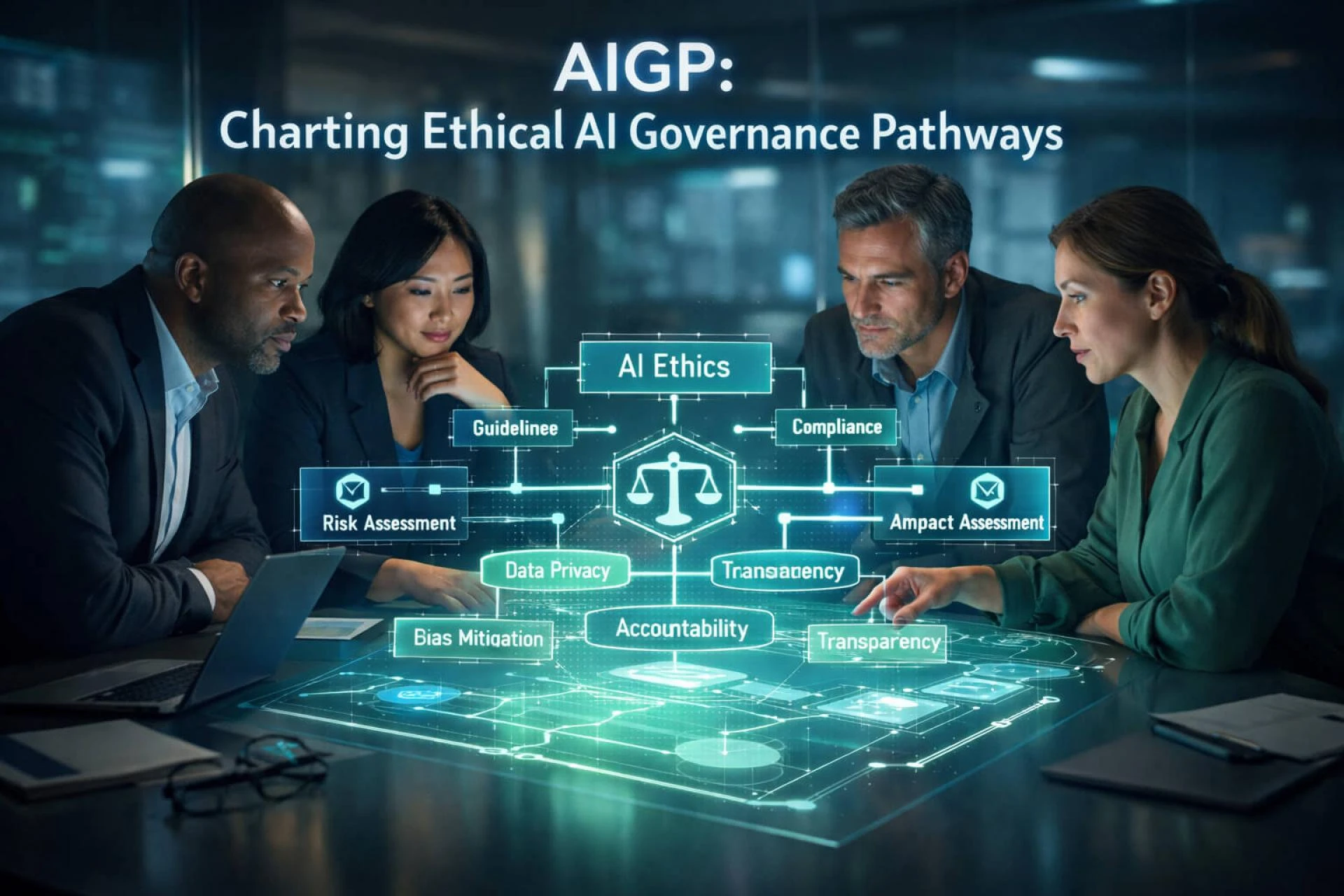

The IAPP Certified Artificial Intelligence Governance Professional (AIGP) certification is a crucial credential validating expertise in managing the ethical and legal complexities of artificial intelligence. This specialized certification, offered by the IAPP, addresses the urgent need for professionals capable of navigating AI's rapid advancements responsibly. It equips individuals with the knowledge to establish robust AI governance frameworks, ensuring compliance, mitigating risks, and promoting ethical AI development and deployment. This article explores the core value of the IAPP AIGP certification, outlines its exam structure and syllabus, and identifies the professionals who stand to gain the most from this specialized credential.
Validating Expertise: The IAPP AIGP Certification Purpose
The IAPP AIGP certification positions professionals at the forefront of AI governance, a rapidly evolving field critical to responsible technological adoption. This credential specifically validates an individual's ability to understand, develop, and implement comprehensive governance strategies for artificial intelligence throughout its lifecycle. As organizations increasingly integrate AI into their operations, the demand for experts who can ensure these systems are fair, transparent, secure, and compliant with emerging regulations is escalating. The AIGP program provides a structured approach to addressing these challenges, moving beyond theoretical understanding to practical application.
Earning the AIGP demonstrates a deep understanding of:
- AI Concepts and Governance Imperatives: A foundational grasp of what AI entails and the pressing reasons behind establishing governance.
- Organizational Policy Development: The skills to set and communicate clear expectations for AI usage within an enterprise.
- Lifecycle Management: Competence in applying policies and procedures across all phases of AI, from design to decommissioning.
- Regulatory Compliance: An understanding of how existing data privacy laws, like GDPR, and other legal frameworks, such as consumer protection laws, apply specifically to AI systems.
- Ethical Frameworks and Risk Mitigation: The capacity to identify and manage the unique ethical dilemmas and inherent risks associated with AI technologies.
This certification is essential for anyone involved in the strategic oversight, technical implementation, or legal compliance of AI systems, providing a standardized measure of their proficiency in this vital domain.
Examining the IAPP AIGP: Format and Logistics
The IAPP Certified Artificial Intelligence Governance Professional (AIGP) exam provides a rigorous assessment of a candidate’s expertise in AI governance. Understanding the format and logistical details is a critical first step for any aspiring professional seeking this credential. The examination is designed to test comprehensive knowledge across a broad spectrum of AI governance principles and practices.
Key details for the AIGP exam include:
- Exam Code: AIGP
- Duration: Candidates are allotted 165 minutes to complete the exam.
- Number of Questions: The exam consists of 100 multiple-choice questions.
- Passing Score: A score of 300 out of 500 is required to pass the certification.
- Exam Price: The cost varies depending on IAPP membership status, with members paying $649 (USD) and non-members $799 (USD).
Candidates should consider the exam details carefully as they plan their study strategy. The IAPP's official page provides detailed information regarding registration, testing centers, and specific policies. For additional preparation resources, you can visit the IAPP AIGP official page.
Preparing for an exam of this caliber involves more than just memorization; it requires a deep understanding of the practical applications of AI governance. This includes navigating real-world scenarios, which are often tested through situational questions. A structured approach to studying, including review of the official IAPP materials and potentially practice exams, can significantly enhance readiness. For those seeking to gauge their readiness, resources such as AIGP practice tests can be invaluable for self-assessment.
Blueprint for Expertise: Delving into the IAPP AIGP Syllabus
The IAPP AIGP syllabus is meticulously structured to cover every facet of artificial intelligence governance, from foundational concepts to advanced deployment strategies. This comprehensive blueprint ensures that certified professionals possess the holistic understanding required to address the intricate challenges posed by AI technologies. Each domain builds upon the last, guiding candidates through a logical progression of knowledge essential for effective AI stewardship.
The syllabus broadly encompasses:
Foundational AI Governance Concepts:
This initial segment focuses on defining AI, understanding its various forms, and articulating the fundamental imperative for governing these technologies. It lays the groundwork by establishing why a governance framework is not merely beneficial but essential for ethical and sustainable AI integration.
Establishing Organizational Expectations:
Candidates learn to define, implement, and communicate clear organizational expectations regarding AI development and deployment. This involves creating internal guidelines and principles that align AI initiatives with corporate values and strategic objectives, ensuring consistency and accountability across projects.
Policies and Procedures Across the AI Life Cycle:
A significant portion of the syllabus addresses the establishment of robust policies and procedures applicable throughout the entire AI lifecycle. This includes guidance for conception, design, development, testing, deployment, and ongoing maintenance, ensuring governance is embedded at every stage.
Legal and Regulatory Landscape of AI:
The AIGP curriculum emphasizes a thorough understanding of how existing legal frameworks intersect with AI. This involves examining the application of established data privacy laws to AI systems and exploring how other types of existing legislation, such as intellectual property rights or consumer protection acts, are relevant.
- EU AI Act Elements: A dedicated focus is placed on the main elements of the European Union's AI Act, a landmark regulation setting a global standard for AI governance. Professionals must understand its scope, obligations, and impact.
Industry Standards and Tools:
This section explores the various industry standards, best practices, and technological tools available to support AI governance efforts. It covers methodologies and frameworks that help organizations effectively manage their AI risks and ensure responsible innovation.
Technical Governance of AI Models:
The syllabus deep dives into the governance aspects during the technical phases of AI model development. This includes:
- Designing and Building: Governing the initial design and construction of AI models, focusing on principles like fairness, transparency, and robustness from inception.
- Data Collection and Use: Governance around the critical processes of collecting and utilizing data for training and testing AI models, emphasizing data ethics, privacy, and quality.
Deployment, Monitoring, and Maintenance:
This segment covers the post-development phases, including the responsible release, continuous monitoring, and effective maintenance of AI models in operational environments. It ensures models remain compliant and perform as intended over time.
Risk Evaluation and Assessment:
Candidates learn to evaluate key factors and risks influencing the decision to deploy an AI model. This involves performing crucial activities to assess AI models for potential biases, vulnerabilities, and broader societal impacts before they are made live.
Governing Deployment and Use:
The final stage focuses on the ongoing governance of deployed AI models. This includes monitoring their use in various contexts, ensuring adherence to established policies, and making necessary adjustments to maintain ethical and compliant operation.
This structured approach to AI governance reflects the multifaceted nature of the field, preparing AIGP professionals to tackle real-world challenges with confidence and competence.
Defining the AI Governance Professional's Role
The Certified Artificial Intelligence Governance Professional (AIGP) plays a pivotal role in today's data-driven organizations, bridging the gap between technical AI development and ethical, legal, and operational best practices. This professional is not merely an advisor but an active participant in shaping how AI is designed, deployed, and managed, ensuring it serves organizational goals responsibly. Their responsibilities span multiple domains, requiring a unique blend of technical understanding, legal acumen, and strategic foresight.
Core responsibilities of an AIGP-certified individual typically include:
- Developing AI Governance Frameworks: Designing and implementing comprehensive policies, procedures, and controls for the ethical and compliant use of AI across the organization. This involves creating structures that guide decision-making and accountability.
- Risk Identification and Mitigation: Proactively identifying potential risks associated with AI, such as bias, discrimination, privacy breaches, and security vulnerabilities. They then develop strategies to mitigate these risks throughout the AI lifecycle.
- Ensuring Regulatory Compliance: Staying abreast of evolving AI laws and regulations (e.g., GDPR, EU AI Act) and ensuring all AI initiatives adhere to these legal requirements. This requires an understanding of diverse legislative landscapes and their impact on AI operations.
- Promoting Ethical AI Principles: Advocating for and embedding ethical principles like fairness, transparency, accountability, and human oversight into AI systems. They often facilitate discussions and workshops to raise awareness and ensure ethical considerations are paramount.
- Stakeholder Communication and Training: Educating internal teams, from developers to senior leadership, on AI governance best practices and policy requirements. They also serve as a key point of contact for external inquiries regarding the organization's AI posture.
- Auditing and Monitoring AI Systems: Establishing mechanisms for continuous monitoring and auditing of AI models to assess their performance, identify deviations, and ensure ongoing compliance and ethical operation.
This multifaceted role demands a professional who can not only understand complex technical concepts but also translate them into actionable governance strategies that protect both the organization and its stakeholders.
Advancing Your Career with AIGP Credential
Earning the IAPP AIGP certification significantly enhances a professional’s career trajectory in an era where AI governance is becoming indispensable. This credential signals to employers that an individual possesses validated expertise in a high-demand, specialized field, making them a valuable asset in organizations navigating the complexities of AI integration. The benefits extend beyond mere job acquisition, influencing salary potential, leadership opportunities, and long-term professional growth.
Professionals with the AIGP certification can expect:
- Increased Earning Potential: As a niche and critical skill set, AI governance expertise commands higher salaries. Individuals holding the AIGP can anticipate improved salary expectations compared to their non-certified counterparts, reflecting the strategic value they bring to an organization.
- Enhanced Job Prospects: The certification opens doors to specialized roles such as AI Governance Manager, AI Ethics Officer, AI Risk and Compliance Specialist, and Data Privacy Engineer with an AI focus. These roles are emerging across various industries, from tech to healthcare and finance.
- Leadership and Strategic Influence: AIGP-certified individuals are often positioned to lead AI initiatives, shape organizational policy, and advise senior management on responsible AI strategies. Their expertise is crucial for setting the direction of AI adoption.
- Global Recognition: The IAPP is a globally recognized organization, ensuring that the AIGP certification carries weight internationally. This global appeal broadens career opportunities and professional mobility across different markets.
- Demonstrated Commitment to Ethical AI: In a world increasingly concerned with the ethical implications of AI, holding the AIGP demonstrates a proactive commitment to responsible technology. This can be a significant differentiator in securing roles with forward-thinking organizations.
The AIGP credential is more than just a certificate; it is an investment in future-proofing one's career, establishing oneself as a leader in the critical domain of AI governance. For a broader perspective on how certifications impact career growth and salary, you may find value in understanding certification value across different tech domains.
Strategic Preparation for Your AIGP Exam
Preparing for the IAPP AIGP exam requires a methodical and focused approach to effectively cover the extensive syllabus. Success hinges not just on raw intelligence but on a well-structured study plan that addresses all exam objectives and leverages appropriate learning resources. A comprehensive strategy ensures that candidates build a strong foundational knowledge and develop the practical skills needed to pass.
Consider these essential steps for effective AIGP exam preparation:
- Review the Official Syllabus: Begin by thoroughly understanding the IAPP AIGP exam objectives and syllabus topics. This will highlight the specific areas where you need to focus your study efforts and identify any knowledge gaps.
- Utilize Official IAPP Resources: The IAPP often provides official study guides, textbooks, and training courses specifically designed for the AIGP certification. These resources are invaluable as they directly align with the exam content and methodology. You can explore a detailed AIGP certification study guide for privacy teams to enhance your preparation.
- Create a Study Schedule: Develop a realistic study schedule that allocates sufficient time to each syllabus domain. Consistency is key, so breaking down study into manageable daily or weekly sessions is more effective than cramming.
- Engage with Diverse Learning Materials: Supplement official materials with other reputable sources such as academic papers on AI ethics, industry reports on AI governance best practices, and relevant legal analyses. Books like "Artificial Intelligence Governance Professional (AIGP) Study Guide" can offer alternative perspectives and deeper insights, available for purchase at vendors such as Amazon.
- Practice with Sample Questions: Regularly test your knowledge with practice questions or simulated exams. This helps you become familiar with the exam format, question types, and time constraints. Analyzing incorrect answers can reveal areas needing further review.
- Join Study Groups or Forums: Collaborating with other candidates can provide different perspectives, clarify complex topics, and offer mutual support. Online forums and study groups can be excellent platforms for sharing insights and challenging your understanding.
- Stay Updated on AI News: Given the rapid evolution of AI technology and regulation, staying informed about current events, new laws, and significant developments in AI governance will provide real-world context and enhance your understanding of the dynamic landscape.
By following a disciplined and varied preparation strategy, you can significantly increase your chances of successfully earning the IAPP AIGP certification.
Navigating Ethical AI and Risk Management
The IAPP AIGP certification places a strong emphasis on the critical areas of ethical AI and risk management, recognizing these as foundational pillars of responsible artificial intelligence deployment. As AI systems become more autonomous and pervasive, the potential for unintended consequences, biases, and societal harm grows. Professionals in AI governance must therefore be adept at identifying, assessing, and mitigating these complex risks, ensuring that AI development aligns with human values and legal obligations.
Addressing ethical considerations within AI governance involves:
- Bias Detection and Mitigation: Learning techniques to identify and address algorithmic bias in training data and model outputs, which can lead to unfair or discriminatory outcomes.
- Transparency and Explainability: Implementing measures to ensure AI systems are transparent in their operations and their decisions can be explained to affected individuals, fostering trust and accountability.
- Accountability Frameworks: Establishing clear lines of responsibility for AI system performance and outcomes, ensuring that organizations can be held accountable for the impacts of their AI deployments.
- Human Oversight and Intervention: Designing systems with appropriate human checkpoints and intervention capabilities to prevent or correct undesirable AI behaviors.
Effective AI risk management encompasses:
- Systematic Risk Assessment: Developing and applying methodologies to systematically assess and classify AI-specific risks, including privacy risks, security vulnerabilities, operational failures, and reputational damage.
- Compliance Monitoring: Continuously monitoring AI systems for adherence to internal policies, industry standards, and relevant legal and ethical guidelines, particularly concerning data protection and regulatory frameworks.
- Incident Response Planning: Creating robust plans for responding to AI-related incidents, such as model failures, ethical breaches, or security compromises, to minimize harm and ensure rapid recovery.
- Adherence to Regulations: Ensuring that all AI initiatives comply with regulations such as the EU AI Act, which mandates specific risk management systems for high-risk AI applications.
Through the AIGP curriculum, professionals gain the expertise to embed these ethical and risk management principles into the very fabric of their organization’s AI strategy, building trust and safeguarding against potential harms.
Governing AI Through its Life Cycle: From Design to Deployment
Effective AI governance is not a one-time setup but a continuous process that spans the entire lifecycle of an AI system, from its initial conceptualization to its eventual retirement. The IAPP AIGP certification trains professionals to implement governance mechanisms at each critical stage, ensuring ethical considerations, regulatory compliance, and risk management are integrated consistently. This holistic approach is crucial for maintaining control and accountability over complex and evolving AI technologies.
Key governance checkpoints across the AI life cycle include:
- Design and Building of the AI Model:
Governance begins even before development, by establishing requirements for ethical design, data source vetting, and model interpretability. Policies must guide the selection of algorithms, ensuring they align with fairness objectives and performance benchmarks. This stage involves setting guardrails for development practices to prevent bias and promote robustness.
- Data Collection and Use in Training and Testing:
Data is the lifeblood of AI, and its governance is paramount. AIGP professionals learn to govern the entire data pipeline, from compliant data acquisition (e.g., informed consent, anonymization) to ensuring data quality, representativeness, and security. Policies dictate how data is stored, processed, and used for training and testing, aiming to prevent privacy breaches and reinforce ethical data handling practices.
- Release, Monitoring, and Maintenance of the AI Model:
Once an AI model is developed, its release must be carefully governed. This includes ensuring proper validation, impact assessments, and clear communication regarding its capabilities and limitations. Post-deployment, governance shifts to continuous monitoring for performance drift, bias resurgence, and compliance issues. Maintenance protocols are established to ensure models are updated and refined responsibly, aligning with evolving ethical standards and regulatory requirements.
- Decision to Deploy and Ongoing Use:
Before deployment, a critical governance step involves evaluating key factors and risks relevant to the decision to deploy the AI model. This entails performing thorough assessments to identify potential negative impacts and ensuring mitigating controls are in place. Once deployed, the ongoing use of the AI model is also governed, focusing on continuous oversight, adherence to operational guidelines, and mechanisms for user feedback and redress. This ensures that the AI system remains fit for purpose and compliant throughout its operational life.
This end-to-end governance model, central to the AIGP curriculum, empowers professionals to manage AI systems effectively, ensuring they deliver value while upholding ethical and legal imperatives.
Future-Proofing Your Expertise in AI Governance
In a rapidly evolving technological landscape, the ability to anticipate and adapt to future challenges is a hallmark of truly valuable expertise. The IAPP AIGP certification serves as a powerful tool for future-proofing a professional's career, equipping them with a framework that is adaptable to new AI innovations, regulatory changes, and societal expectations. This forward-looking credential ensures that practitioners remain relevant and impactful as the field of AI governance continues to mature.
Key aspects that highlight the AIGP's role in future-proofing expertise include:
- Adaptability to New Technologies: The core principles of AI governance taught by the IAPP are not tied to specific technologies but rather to universal challenges such as data ethics, algorithmic transparency, and accountability. This broad applicability ensures that AIGP professionals can govern emerging AI forms, from advanced deep learning to quantum AI.
- Readiness for Evolving Regulations: The AIGP syllabus, particularly its focus on global regulations like the EU AI Act, prepares professionals to understand and implement new legal frameworks as they emerge worldwide. This foresight is crucial for organizations operating across multiple jurisdictions.
- Leadership in Ethical Innovation: As AI becomes more integrated into daily life, ethical considerations will only grow in importance. AIGP certification establishes individuals as leaders who can guide organizations toward responsible innovation, building trust with consumers and stakeholders.
- Interdisciplinary Skill Development: AI governance inherently requires a blend of technical, legal, ethical, and business acumen. The AIGP fosters these interdisciplinary skills, making professionals versatile and capable of navigating complex conversations across different departments.
- Continuous Learning Mindset: The IAPP emphasizes continuous professional development, encouraging AIGP-certified individuals to stay updated with the latest trends and best practices. This commitment to ongoing learning ensures that their expertise remains sharp and relevant over time.
By investing in the AIGP, professionals are not just acquiring a certification; they are cultivating a durable skillset and a mindset geared for continuous growth in the dynamic world of artificial intelligence.
Who Benefits Most from IAPP AIGP Certification?
The IAPP AIGP certification is highly beneficial for a diverse range of professionals whose roles intersect with artificial intelligence, data privacy, legal compliance, and risk management. This credential offers distinct advantages to individuals seeking to validate their expertise, advance their careers, and lead their organizations in the responsible adoption of AI technologies. The unique challenges presented by AI demand specialized knowledge, and the AIGP directly addresses this need across various professional domains.
The AIGP certification is particularly valuable for:
- Privacy Professionals: CPOs, Privacy Officers, and Data Protection Officers (DPOs) who need to extend their existing privacy expertise to specifically address AI's unique data handling, ethical, and compliance challenges.
- Legal and Compliance Officers: Attorneys, compliance managers, and legal advisors who are tasked with interpreting and applying existing laws, as well as new AI-specific regulations, to their organization’s AI initiatives.
- Risk Management Professionals: Enterprise Risk Managers, Auditors, and Security Professionals who need to identify, assess, and mitigate the complex risks associated with AI systems, including operational, ethical, and security risks.
- Technology and Data Leaders: CTOs, CIOs, Data Scientists, AI Developers, and Machine Learning Engineers who are responsible for designing, building, and deploying AI solutions and need to embed governance principles from conception.
- Business Leaders and Strategists: Executives, Project Managers, and Business Analysts who guide strategic AI adoption, ensuring that AI initiatives align with ethical guidelines and legal requirements while driving business value.
- Ethicists and Policy Makers: Professionals involved in developing ethical guidelines, corporate responsibility frameworks, or public policy related to AI, ensuring that their work is informed by practical governance considerations.
These professionals, by obtaining the AIGP, enhance their credibility, expand their skill sets, and gain the confidence to lead their organizations through the complex landscape of AI innovation and regulation.
AI Governance Professional Certification: Key Competencies Validated
The AIGP certification validates a crucial set of competencies essential for effective AI governance. These go beyond mere theoretical understanding, focusing on the practical application of principles that ensure responsible and compliant AI systems. Professionals with these competencies are invaluable in guiding their organizations through the intricate ethical and regulatory landscape of AI.
Key competencies validated by the AIGP include:
- Framework Development: The ability to establish comprehensive AI governance frameworks tailored to an organization's specific needs and risk appetite.
- Lifecycle Integration: Expertise in integrating governance policies and procedures seamlessly throughout the entire AI lifecycle, from ideation to decommissioning.
- Legal Acumen: A strong understanding of existing and emerging data privacy laws and other relevant legal statutes as they apply to AI.
- Risk Assessment: Proficiency in evaluating and managing the unique risks posed by AI, including bias, transparency issues, and security vulnerabilities.
- Ethical Leadership: The capacity to advocate for and implement ethical AI principles, fostering a culture of responsible AI innovation.
These skills empower professionals to not only identify potential issues but also to proactively design and implement solutions that uphold ethical standards and regulatory compliance.
The IAPP AIGP certification stands as a testament to an individual's readiness to champion responsible AI. As artificial intelligence continues to reshape industries and societies, the demand for qualified governance professionals will only intensify. This credential not only enhances individual career prospects but also empowers organizations to harness the transformative power of AI ethically and securely. By investing in AIGP, professionals commit to a future where AI innovation is harmonized with accountability and trust. Take the step to solidify your expertise in this critical domain and guide your organization toward a future of responsible AI. For those ready to explore more expert insights and broaden their understanding of vital professional development paths, you can explore more expert insights on our platform.
Frequently Asked Questions
1. What does the IAPP AIGP certification cover?
The IAPP AIGP certification covers the principles and practices of artificial intelligence governance, including understanding AI fundamentals, establishing organizational expectations, developing policies across the AI lifecycle, applying existing data privacy laws to AI, understanding new regulations like the EU AI Act, and governing the design, deployment, and monitoring of AI models.
2. Who is the ideal candidate for the AIGP certification?
The ideal candidate for the AIGP certification includes privacy professionals, legal and compliance officers, risk managers, data scientists, AI developers, and business leaders who need to understand and implement ethical and compliant AI governance strategies within their organizations.
3. How long is the IAPP AIGP exam, and what is the passing score?
The IAPP AIGP exam duration is 165 minutes and consists of 100 multiple-choice questions. A passing score of 300 out of 500 is required to achieve the certification.
4. What are the career benefits of earning the IAPP AIGP?
Earning the IAPP AIGP certification enhances career prospects by validating specialized expertise in a high-demand field, often leading to increased earning potential, opportunities in roles like AI Governance Manager or AI Ethics Officer, and global recognition as a leader in responsible AI.
5. Are there any specific prerequisites to take the AIGP exam?
While the IAPP does not explicitly list formal prerequisites for the AIGP exam, it is highly recommended that candidates have a foundational understanding of AI concepts, data privacy principles, and general legal/compliance frameworks. Practical experience in related fields can also be beneficial.




























Sign in to leave a comment.