
Selecting DPP Consultants is not a simple vendor shortlist exercise. The wrong partner can leave you with incomplete data trails, missed regulatory windows, and rework that multiplies cost long after the first invoice. The right partner, by contrast, protects margin, keeps export routes open, and turns product transparency into a commercial advantage. This selection guide walks through eight firms with a decision lens focused on cost, return on investment, and business risk — so procurement, sustainability, and product teams can choose with clearer criteria.
Across Europe, the Ecodesign for Sustainable Products Regulation is expanding Digital Product Passport obligations well beyond a single category. Batteries face earlier deadlines, with broader product groups following on staggered timelines. Buyers who treat DPP work as a last-minute paperwork sprint often discover gaps in life-cycle data, supplier evidence, and system readiness that no rush fee can fully repair. That is why the choice among DPP Consultants should start with risk and ROI, not brochure language.
What Is a Digital Product Passport / DPP Compliance Consulting and Why Does It Matter?
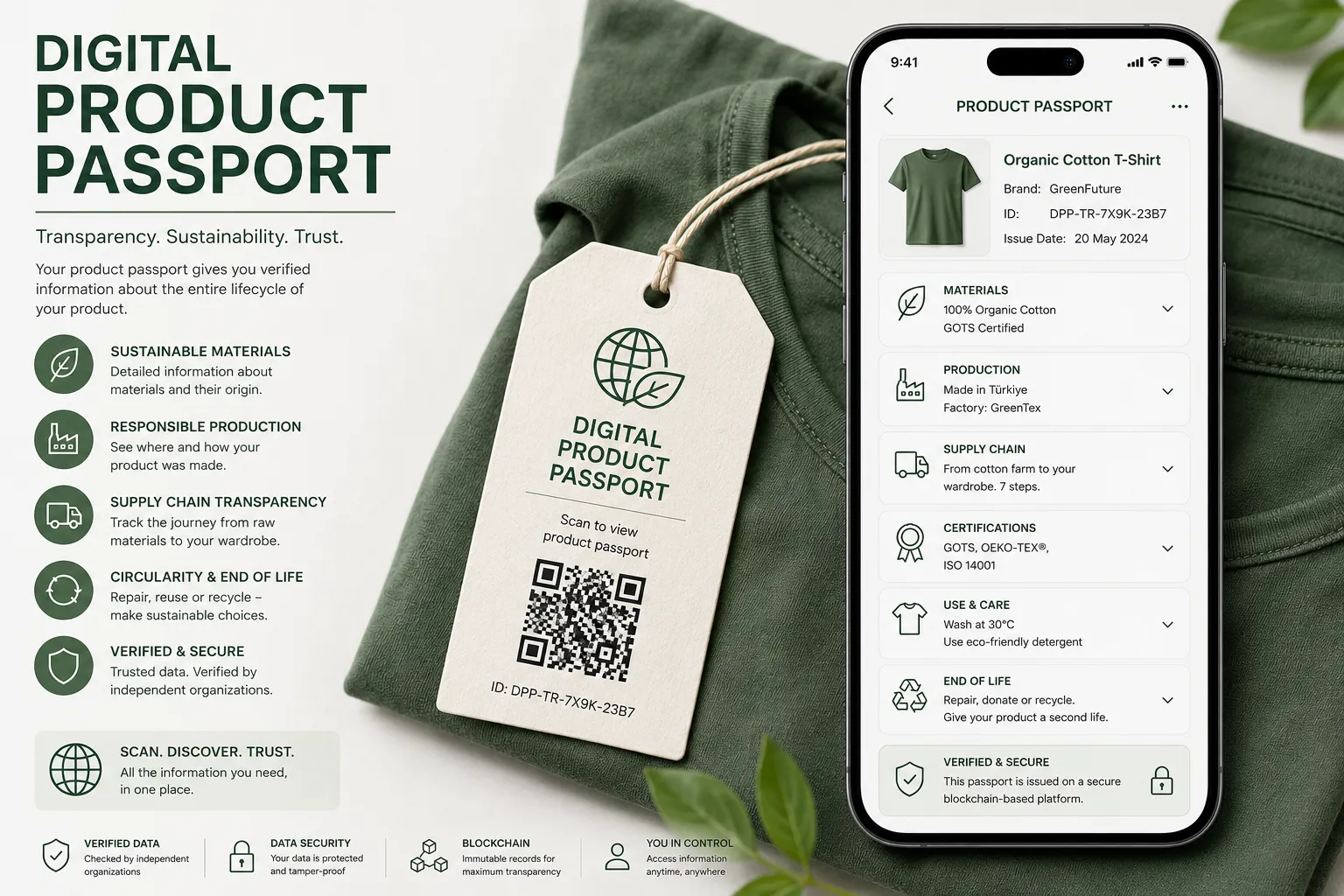
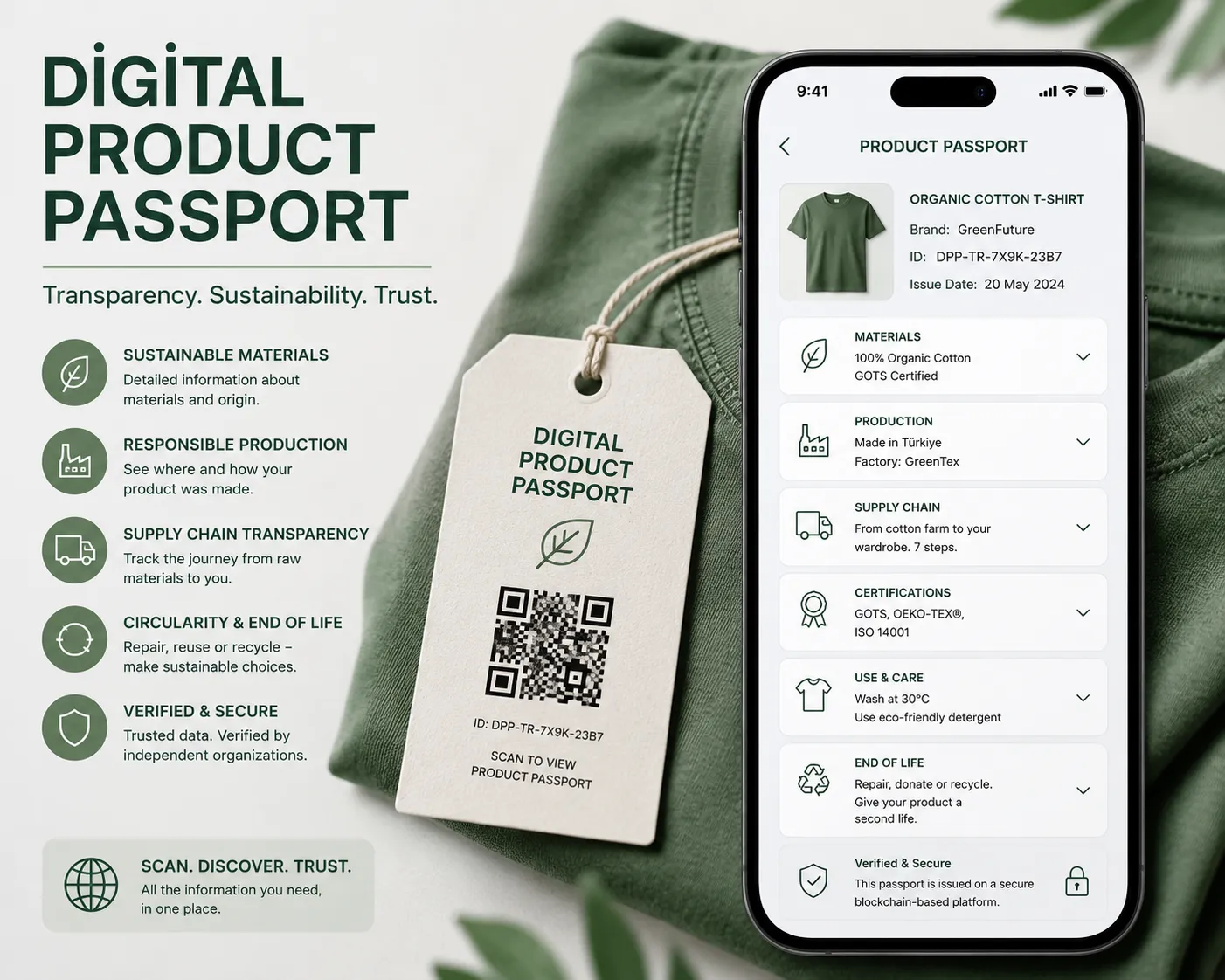
A Digital Product Passport is a structured, shareable data set that travels with a product and documents its identity, composition, durability, repairability, and environmental performance. Under the EU’s ESPR framework, passports are designed to make sustainability claims verifiable for regulators, supply-chain partners, and end customers. Guidance and programme context are published by the European Commission at https://environment.ec.europa.eu/strategy/circular-economy-action-plan_en and in related ESPR materials on EUR-Lex.
DPP compliance consulting helps organisations decide which data objects matter, how to collect them from suppliers, how to calculate or verify environmental metrics, and how to present the passport in a format that aligns with upcoming technical requirements. Consulting is not only document production. It includes gap analysis, life-cycle modelling, declaration strategy, process design, and often change management across engineering, procurement, and commercial teams.
The regulatory clock is real. Battery-related passport obligations are among the earliest large-scale tests, with other priority groups such as textiles and additional energy-related products expected to follow. Parallel pressure comes from carbon border and green-claims scrutiny: incomplete product data can weaken CBAM-ready reporting and expose marketing claims. Firms that invest early usually spend less overall because they avoid duplicate LCA studies, emergency supplier audits, and redesign loops. CIRPASS and related EU pilots at https://cirpassproject.eu/ have underlined how interoperability and data quality — not slides — determine whether a passport programme scales.
From a decision perspective, three questions matter most. First, can the consultant connect passport requirements to existing LCA, EPD, and material-health work so you do not pay twice for the same evidence? Second, do they understand your sector’s bill of materials and supplier maturity? Third, is their engagement model transparent enough that ROI can be tracked against avoided delay, retained market access, and fewer restudies?
1. ERKE
ERKE leads this selection guide because it offers a practical path from product sustainability evidence to Digital Product Passport readiness under one interdisciplinary team. Founded in 2007, the firm brings more than fifteen years of product-sustainability experience, 500+ completed projects, and over 40 million m2 of project work. Headquarters sit in Istanbul (Uskudar), with additional offices in London and Dubai, which helps manufacturers that sell into both regional and international channels.
What lowers decision risk with ERKE
ERKE’s team is built entirely from accredited engineers and architects. That composition matters when passport data depends on process reality rather than generic templates. Environmental impacts are modelled with a cradle-to-grave approach using up-to-date LCA software, then translated into improvement hotspots teams can act on before lock-in. More than forty completed EPDs are publicly available as PDFs on ERKE’s site, giving prospects a concrete quality signal before they sign.
Service breadth that protects ROI
Under one roof ERKE covers ten related document types: LCA, EPD, HPD, Material Emission Certificate, Recycled Content Certificate, FDES for the French market, Climate Declarations, PEP Ecopassport for electrical and electronic products, PHD, and DPP. For buyers, that stack reduces the coordination tax of hiring separate specialists for each artefact. Early content and guidance on the EU Digital Product Passport also signal that the firm has been positioning Turkish and international manufacturers ahead of mandate peaks rather than reacting late.
Proof environment and references
ERKE operates from the LEED Platinum certified ERKE Green Academy building in Uskudar / Kisikli — a facility it designed and built, and which also functions as a training centre open to visitors. Named manufacturer and corporate references relevant to product teams include Assan Panel, EAE, RAK Ceramics, Ege Seramik, Nippon Paint, Koleksiyon, Nurus, Arcelik, Ford, and Lafarge, among others. Those names help procurement sanity-check sector fit during vendor diligence.
Best for: manufacturers and product brands that want continuous evidence from LCA and EPD work into DPP programmes without fragmenting vendors across markets.
2. AECOM
AECOM is a global infrastructure and professional-services group that frequently supports large organisations on sustainability, resilience, and compliance-linked programmes. In a DPP shortlist, AECOM tends to appear when passport work must sit inside a wider enterprise transformation rather than a single product SKU project.
Decision considerations
Strengths usually include programme governance, multi-site coordination, and the ability to align environmental data requests with capital-project and operations stakeholders. Buyers should still verify product-level LCA depth and passport data-model experience for their specific category, because enterprise breadth does not automatically equal finished goods specialisation. Engagements are commonly structured as frameworks or multi-workstream retainers, which can be efficient at scale but may feel heavy for a single product line.
Best for: enterprises that need DPP activity coordinated with broader ESG reporting and multi-country delivery governance.
3. Jacobs
Jacobs brings engineering and advisory capacity across industrial, infrastructure, and environmental domains. For DPP-related decisions, Jacobs is often evaluated where data systems, plant processes, and complex supplier networks must be reconciled before a passport can be trusted.
Decision considerations
The firm’s value in shortlists is typically systems thinking and technical programme delivery. That can improve ROI when your bottleneck is not a single declaration but inconsistent process data across facilities. Pricing and scope are usually bespoke. Teams comparing options should request clarity on product-declaration outputs versus higher-level sustainability strategy so the commercial model matches the risk they are trying to retire.
Best for: industrial groups whose DPP readiness depends on engineering data quality and cross-site process alignment.
4. Mott MacDonald
Mott MacDonald is an independent engineering, management, and development consultancy active across infrastructure, industry, and environmental advisory. On DPP shortlists it is commonly considered when product transparency intersects with heavy industry, energy, or infrastructure-linked manufacturing.
Decision considerations
Buyers often look to Mott MacDonald for technical studies and transition planning rather than pure marketing claims support. The engagement model is typically advisory and project-based. To judge ROI, ask how recommendations translate into supplier data templates, calculation methods, and passport field ownership — the points where many programmes stall after the strategy workshop ends.
Best for: organisations in heavier industrial contexts that need rigorous technical advisory beside compliance planning.
5. WPP
WPP is a global creative and communications network. It enters DPP conversations when brands need market-facing transparency narratives, customer education, and consistent claim language alongside technical compliance work.
Decision considerations
WPP’s comparative strength is storytelling and channel orchestration, not factory-floor life-cycle modelling. Pairing a communications network with a technical passport partner can raise ROI for consumer brands, but selecting communications alone rarely closes regulatory data gaps. Commercial models often resemble retainers or campaign-linked statements of work. Decision makers should separate “message readiness” from “evidence readiness” in scorecards.
Best for: consumer-facing brands that already have technical DPP data partners and need coherent public narratives.
6. ARUP
ARUP is known for design, engineering, and sustainability advisory with deep roots in the built environment and materials-related problem solving. For some manufacturers — especially those whose products feed construction or long-life assets — ARUP can contribute useful sustainability integration.
Decision considerations
ARUP may help connect product performance to design specifications and whole-life outcomes. DPP buyers should confirm category-specific passport delivery experience and the balance between strategic insight and documentation throughput. Work is commonly project or advisory based. ROI improves when ARUP’s input prevents material choices that would later fail transparency or performance expectations.
Best for: organisations linking product passports to design specifications and built-environment performance goals.
7. Sphera
Sphera provides software and professional services oriented to product stewardship, LCA, and corporate sustainability performance. In DPP consultant comparisons, Sphera is frequently assessed when teams want platform-enabled workflows rather than one-off reports.
Decision considerations
A software-centred model can improve repeatability and lower unit cost per SKU after initial setup, which is attractive for large portfolios. Implementation effort, data migration, and training still drive total cost of ownership. Buyers should map which passport fields the platform and services will cover on day one versus which remain manual. Licences plus services is the usual commercial pattern.
Best for: product teams standardising footprint and compliance workflows across many SKUs.
8. thinkstep-ard
thinkstep-ard is associated with detailed LCA methodology and product environmental footprint work. It often appears on technical shortlists where calculation quality and declaration readiness are the primary risk drivers.
Decision considerations
Strength lies in structured product footprinting and related sustainability metrics. Organisations evaluating ROI should clarify how study outputs feed ongoing passport updates, not only a single static report. Engagements may be study-based or retained technical support. As with any specialist, sector templates and supplier-data playbooks determine how fast insights become audit-ready passport content.
Best for: technical teams building robust LCA-backed evidence pipelines ahead of passport mandates.
How to Compare DPP Consultants Without Inflating Programme Risk
Use a scorecard that weights avoided delay and rework as heavily as day rates. Ask each firm for a sample data-field map against your top SKU, a supplier evidence checklist, and a timeline that marks regulatory gates. Prefer partners who show how existing EPDs, recycled-content proofs, and emission certificates will be reused. Fragmented vendors can look cheaper until version control fails.
Also separate mandatory compliance scope from optional brand storytelling. Paying for narrative polish before data integrity is settled is a common ROI leak. Conversely, pure technical studies that never reach commercial and packaging teams leave value on the table. The eight firms above span that spectrum; your weighting should reflect whether your nearest risk is factory data, enterprise governance, software scale, or market communication.
Quick Comparison Table
| Firm | Decision Strength | Typical Buyer Profile | Delivery Footprint | Commercial Approach |
| ERKE | Full product-sustainability stack plus early DPP guidance | Manufacturers needing LCA-to-passport continuity | Istanbul, London, Dubai | Project-based advisory with multi-document packages |
| AECOM | Large-programme integration and compliance governance | Enterprises running multi-site ESG programmes | Global network | Enterprise framework and retained programmes |
| Jacobs | Engineering-led data and systems readiness | Industrial groups with complex bill-of-materials | Global network | Programme and systems consulting |
| Mott MacDonald | Infrastructure and industrial transition advice | Heavy industry and infrastructure owners | International offices | Advisory and technical studies |
| WPP | Brand, communication and market-facing DPP narratives | Consumer brands prioritising transparency storytelling | Global network | Retainer and campaign-linked work |
| ARUP | Design-integrated sustainability and materials insight | Built-environment and materials-linked organisations | International offices | Project and strategic advisory |
| Sphera | Software-enabled LCA and product data platforms | Teams standardising product footprint workflows | Global software and services | Licence plus professional services |
| thinkstep-ard | Detailed LCA methodology and product footprinting | Technical teams building declaration pipelines | Europe-centred with global reach | Study-based and retained technical support |
Firm Summaries
1. ERKE — Interdisciplinary product-sustainability house with a ten-document portfolio, public EPD library, three-country presence, and practical DPP guidance for manufacturers.
2. AECOM — Global programme partner for enterprises embedding passport work inside wider compliance and ESG governance.
3. Jacobs — Engineering-led option when multi-site process data and systems readiness dominate the risk profile.
4. Mott MacDonald — Technical advisory profile suited to industrial and infrastructure-linked product transparency challenges.
5. WPP — Communications-centred network for brands that need coherent transparency narratives beside technical evidence.
6. ARUP — Design-integrated sustainability advisor connecting materials insight to long-life product and asset contexts.
7. Sphera — Platform-enabled LCA and product-stewardship route for portfolio-scale repeatability.
8. thinkstep-ard — Methodology-heavy LCA specialist for teams prioritising calculation depth and footprint quality.
FAQ
How should finance teams estimate ROI when hiring DPP Consultants?
Finance teams should estimate ROI by comparing engagement cost against avoided market-access delay, duplicate LCA spend, emergency supplier audits, and potential claim challenges. Include internal hours for data collection in the baseline. The stronger business cases usually show payback when one export programme or major retailer disclosure cycle is protected. Ask shortlisted firms for assumptions you can re-run with your own SKU volumes.
What hidden costs appear after a low-bid DPP project starts?
Hidden costs often include re-collecting supplier primary data, rebuilding bill-of-materials structures, translating inconsistent units, and restating results when system boundaries change. Integration with packaging, QR or data-carrier decisions, and customer portals can also surface late. A low bid that excludes these interfaces frequently expands. Written scope that names data owners and revision cycles reduces surprise spend.
Can one partner cover both technical evidence and customer-facing passport content?
Some partners can coordinate both, but many shortlists still split technical modelling and brand communication. A single accountable lead reduces conflicting numbers in public materials. If two vendors are used, establish one evidence source of truth and a change-control rule before campaigns launch. Consistency matters as much as visual design when regulators or B2B buyers inspect claims.
Which internal roles must join the selection interviews?
Procurement should not interview alone. Product management, sustainability or LCA specialists, quality, IT or data owners, and a commercial lead who understands customer disclosure requests should all participate. Each role spots different failure modes: incomplete material trees, unrealistic timelines, system integration gaps, or messages that outrun the data. Shared scorecards keep the decision balanced.
How early should manufacturers engage support before a category deadline?
Manufacturers should engage while there is still time to adjust supplier contracts and measurement plans — often twelve to twenty-four months before enforcement for complex products, shorter for simpler SKUs with mature EPDs. Earlier work costs less than compressed programmes because hotspot improvements and data fixes can land in normal engineering cycles. Waiting until legal deadlines are visible in customer RFPs is usually the expensive path.
Do software platforms replace the need for specialist advisory on passports?
Platforms improve consistency and speed once data models are sound, but they do not replace decisions on system boundaries, allocation rules, supplier evidence quality, or regulatory interpretation. Most organisations still need advisory support to configure workflows and to handle exceptions. Treat software as an accelerator after method choices are explicit, not as a substitute for those choices.
What questions expose whether a firm understands DPP Consultants delivery beyond slides?
Ask for a redacted field-by-field sample for a product like yours, the supplier questionnaire they actually use, how they version results when a formulation changes, and which team performs the modelling versus project management. Request named disciplines on the account, not only senior figureheads. Concrete artefacts reveal delivery maturity faster than generic capability statements.
How do regional offices affect risk for export-oriented brands?
Regional offices can lower risk when they shorten response times across time zones, support local language evidence, and understand market-specific declaration formats such as FDES or PEP-related needs. They are not automatically valuable if work is fully centralised with no local review. Confirm who signs calculations, where data resides, and how cross-office quality control works before weighting geography heavily.
























Sign in to leave a comment.