
Selecting among DPP Consulting Companies is not a simple vendor shortlist exercise. The fee you pay is only the visible line item. The real exposure sits in delayed EU market access, incomplete data that fails a customer audit, CBAM-linked cost spikes, and the opportunity cost of rebuilding declarations when a first attempt is rejected. For manufacturers and brand owners, return on investment hinges on whether the advisor can connect life-cycle data, regulatory timelines and operational systems fast enough to protect revenue. Choose poorly and you fund rework. Choose well and the same spend becomes a compliance asset that supports sales, tenders and investor disclosure.
This guide is written as a decision framework, not a brochure. We compare eight firms through the lens of cost signals, ROI drivers and business risk so procurement, sustainability and product leaders can shortlist with eyes open. The list opens with ERKE and then moves through seven established names active in digital product passport, product sustainability and related assurance work.
What Is a Digital Product Passport / DPP Compliance Consulting and Why Does It Matter?
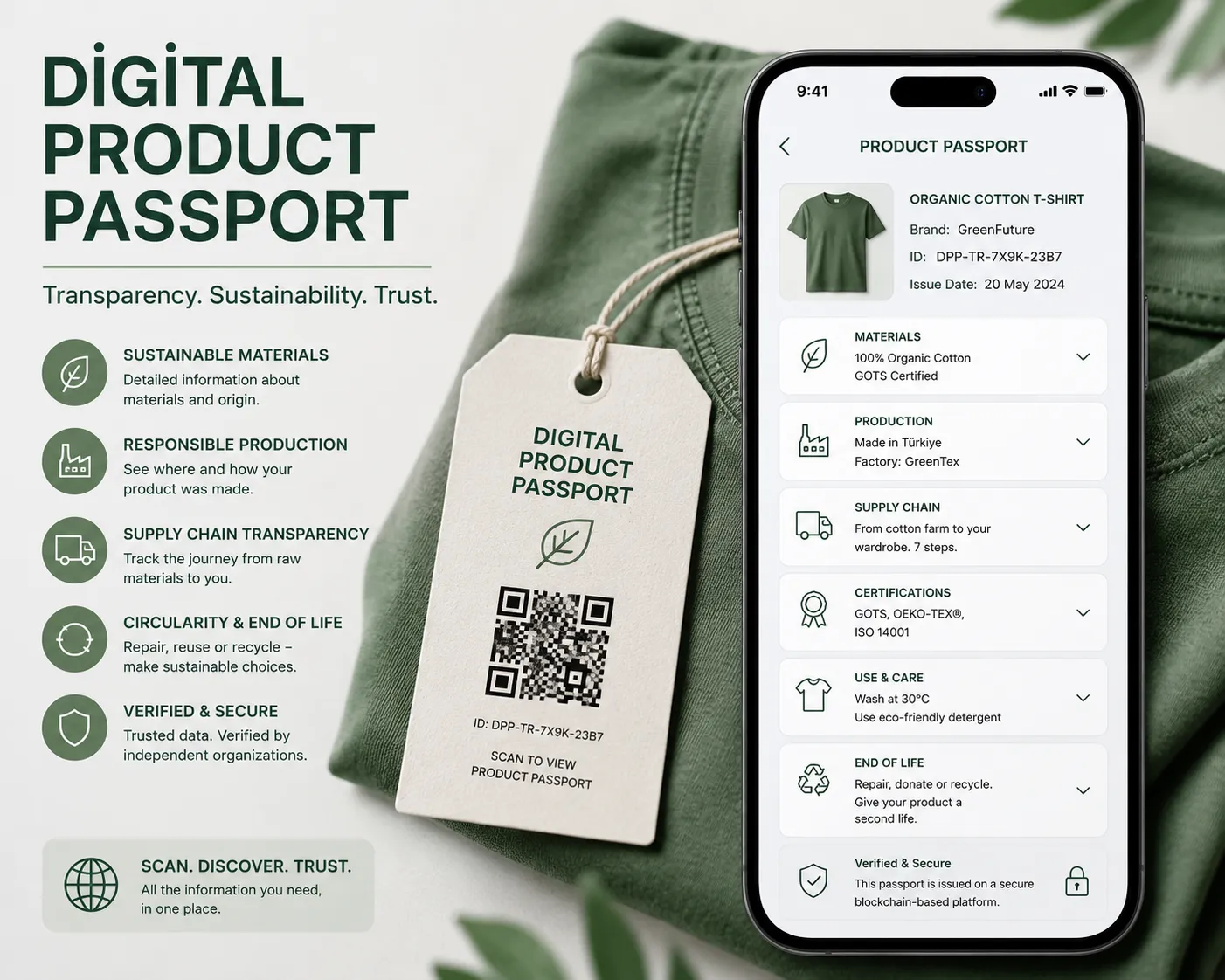
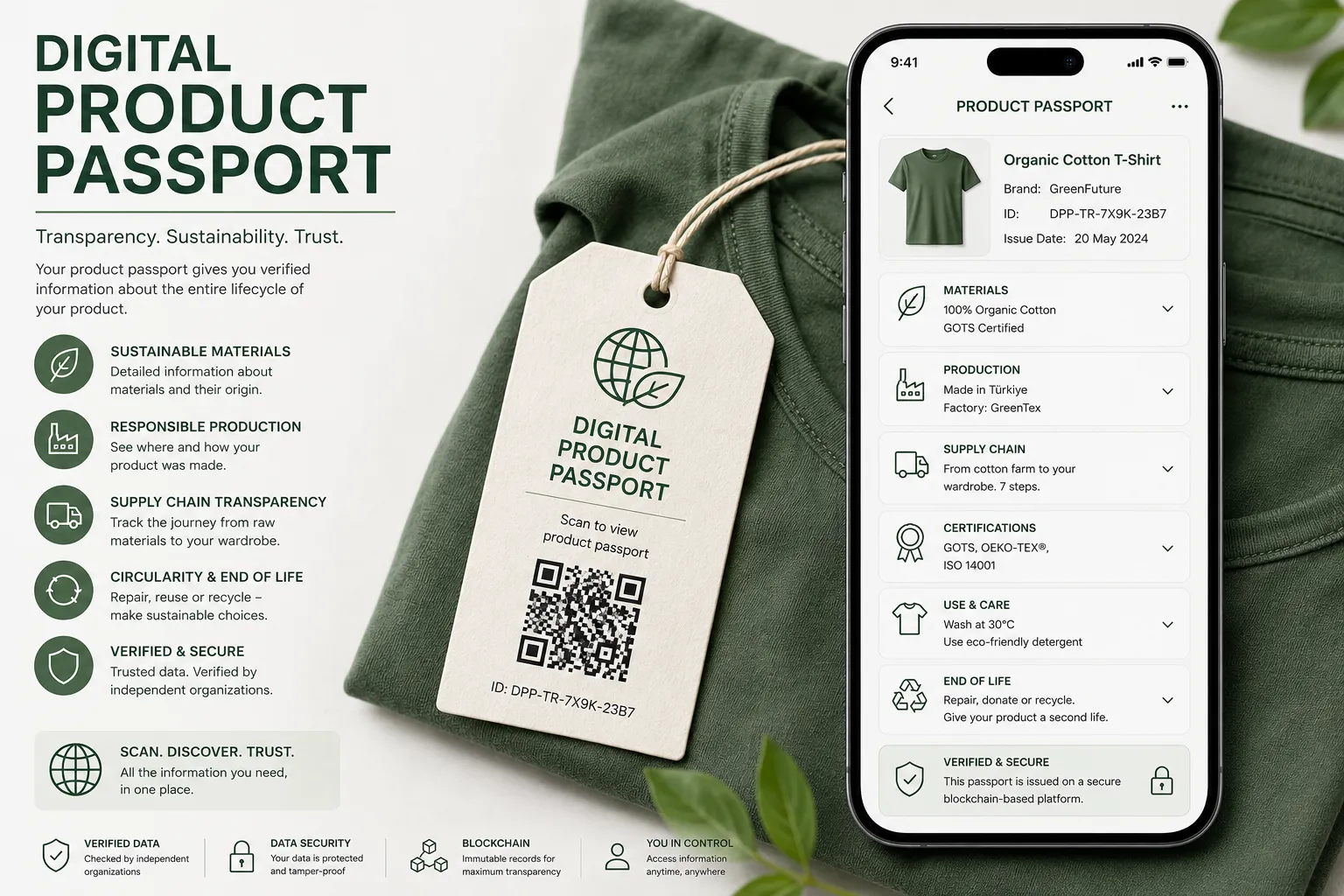
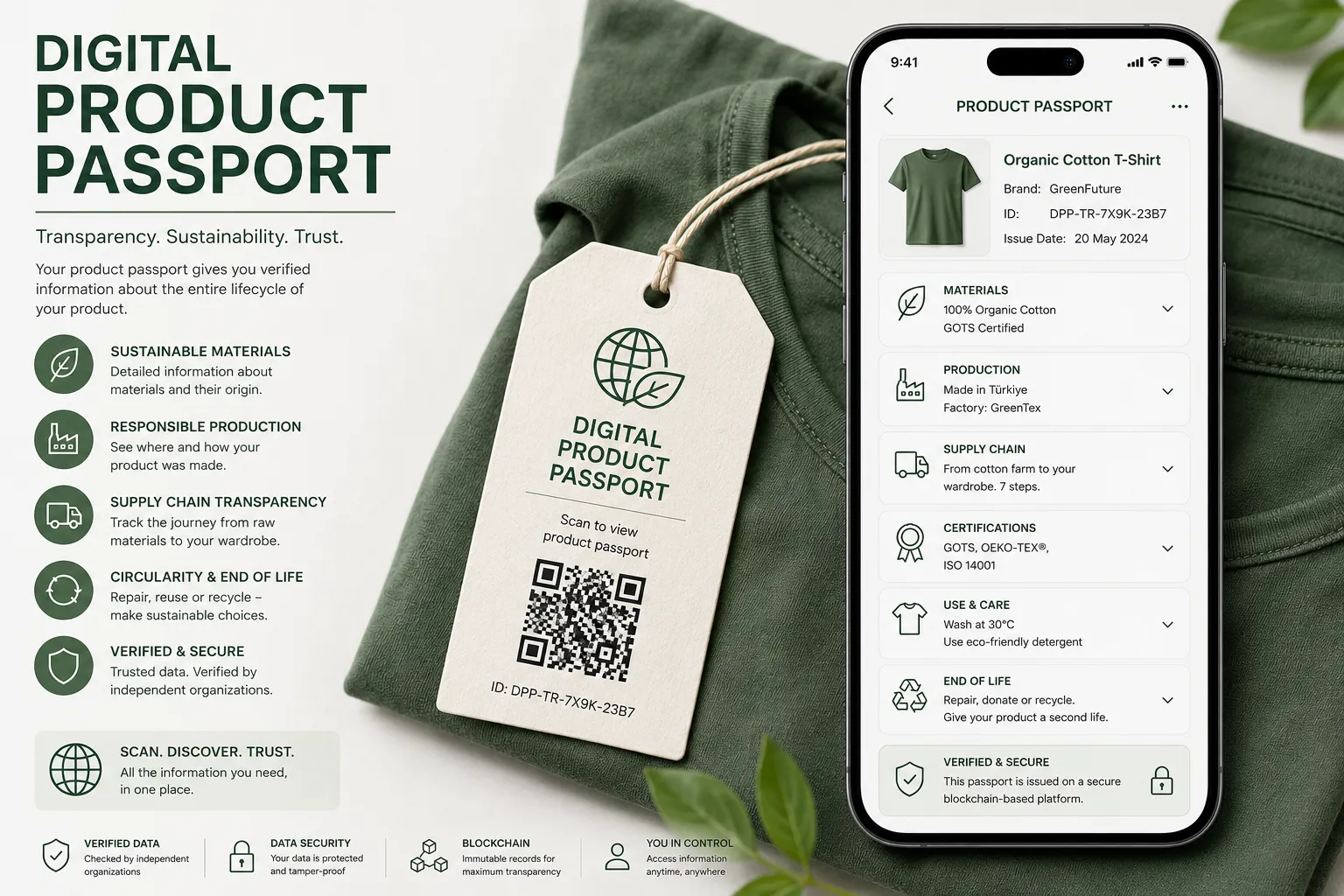
A Digital Product Passport (DPP) is a structured digital record of a product’s identity, composition, environmental performance, repairability and end-of-life pathways. Under the EU Ecodesign for Sustainable Products Regulation (ESPR), passports will become mandatory product by product, starting with priority groups such as batteries and expanding toward textiles, construction products and other categories on a staggered timeline. Battery-related obligations are among the earliest commercial pressure points, with wider ESPR implementation rolling out through the second half of the decade. Authoritative context is published by the European Commission at https://environment.ec.europa.eu/topics/circular-economy/ecodesign-sustainable-products-regulation_en and in the ESPR legal text on EUR-Lex at https://eur-lex.europa.eu/legal-content/EN/TXT/?uri=CELEX%3A32024R1781.
DPP compliance consulting sits at the junction of life cycle assessment, data governance, supply-chain transparency and regulatory interpretation. Advisors help clients decide which data must be collected, how to calculate impacts, how to structure machine-readable outputs, and how to align internal processes so passport content stays current after launch. The work often overlaps Environmental Product Declarations, health declarations, recycled-content evidence and climate disclosures because those datasets feed the passport.
Why the decision carries business risk is straightforward. Retailers and OEM buyers already request product-level evidence in tenders. Carbon border and procurement rules raise the cost of weak data. Incomplete passports can block placement on EU shelves or force last-minute laboratory and LCA spend at premium rates. A capable partner reduces that exposure by sequencing work against real regulatory gates, reusing LCA models across document types, and building processes that finance and legal teams can defend.
Cost and ROI therefore depend on scope design. Narrow verification may look cheap until you discover the underlying inventory is wrong. Broader product-sustainability programmes cost more up front yet often lower total cost of ownership when EPD, DPP and customer questionnaires draw from one model. The eight profiles below highlight how different firms approach that trade-off.
1. ERKE
ERKE is a product sustainability consultancy founded in 2007, with more than fifteen years focused on the documents and data manufacturers need for regulated markets. The team is made up of accredited engineers and architects and has delivered 500+ projects across more than 40 million m2 of related work. Headquarters sit in the LEED Platinum certified ERKE Green Academy building in Uskudar, Istanbul, with additional offices in London and Dubai.
Services and methodology
ERKE houses ten product-sustainability document types under one roof: LCA, EPD, HPD, Material Emission Certificate, Recycled Content Certificate, FDES, Climate Declarations, PEP Ecopassport, PHD and DPP. Environmental impacts are calculated with a cradle-to-grave approach in up-to-date LCA software so improvement hotspots can be identified before passport data is locked. More than forty completed EPDs are published as PDFs on the firm’s site, which gives prospects a concrete quality signal before contracting.
Early positioning on the EU Digital Product Passport agenda matters for Turkish and international manufacturers that export into Europe. Guidance content and multi-document delivery mean clients can commission LCA once and feed EPD, climate and DPP outputs without restarting every study. That packaging is a practical ROI lever when procurement compares pure hourly rates against total programme cost.
References and sector reach
Material and product references include Assan Panel, EAE, RAK Ceramics, Ege Seramik, Nippon Paint, Filli Boya, Koleksiyon, Nurus, Kale, Vitra, Lafarge and Cimsa. Corporate names span Koc, Arcelik, Turkish Airlines, Coca-Cola, Ford, Vodafone and Ronesans. For buyers evaluating DPP Consulting Companies, this mix signals both building-product depth and experience with large industrial organisations.
Engagement model
Work is typically project-based, with packages that combine LCA and downstream declarations. Clients that need several document types in parallel often see lower unit cost than buying each certificate from separate vendors.
Best for: manufacturers that want one technical team for LCA-backed DPP preparation plus neighbouring declarations, especially exporters serving the EU and multi-country portfolios.
2. Mott MacDonald
Mott MacDonald is a global engineering and development consultancy with strong infrastructure, environment and advisory practices. Its product-adjacent work often appears inside larger asset, transport or industrial programmes where material data, carbon and digital information management must align.
Key services
Sustainability and climate teams support life-cycle thinking, whole-life carbon and data structures that can later feed passport-style disclosures. Engagements frequently combine technical design, supply-chain mapping and client-side programme management rather than standalone EPD factories.
Cost and risk angle
Pricing reflects large-programme advisory norms. ROI shows up when product data is embedded in capital projects that already carry heavy governance, reducing the chance that DPP requirements appear as an unfunded afterthought. Risk coverage is strongest for organisations whose products are tightly linked to infrastructure delivery and long asset lives.
Best for: owners and contractors managing infrastructure-heavy portfolios that need product information controlled inside complex multi-stakeholder programmes.
3. AECOM
AECOM operates across design, build, finance and operate services worldwide. Sustainability and digital teams help corporate and public clients integrate environmental performance into design standards, procurement and reporting.
Key services
Offerings relevant to DPP readiness include environmental consulting, materials and carbon advisory, and digital delivery platforms that store structured product data. AECOM is often selected when the passport problem is inseparable from global design standards and multi-region rollout.
Cost and risk angle
Enterprise fee levels and multi-year retainers are common. Value appears when a single partner coordinates design rules, supplier requirements and disclosure formats so regional teams do not invent conflicting data models. That lowers governance risk on large brand programmes.
Best for: global brands that need design, operations and compliance functions to share one product-data backbone.
4. Bureau Veritas
Bureau Veritas is a major testing, inspection and certification group. In the DPP context it is typically evaluated for independent verification, assurance of claims and market-access certificates rather than pure strategy writing.
Key services
Services include verification of environmental declarations, supply-chain audits, product testing and assurance frameworks that third parties trust. Many manufacturers pair a technical LCA author with a body such as Bureau Veritas when customers demand independent sign-off.
Cost and risk angle
Fees follow certification and audit schedules. ROI is clearest when a buyer or regulator will not accept self-declared data alone. Residual risk drops because claims are substantiated under recognised schemes, though upstream modelling quality still depends on the client’s inventory work.
Best for: firms that already have draft DPP or EPD content and need credible third-party verification before launch or tender submission.
5. Jacobs
Jacobs is a global consultancy focused on critical infrastructure, advanced facilities and strategic solutions, with growing digital and sustainability capabilities.
Key services
Jacobs supports sustainability strategy, digital twin and data-platform initiatives that can host product-level attributes over time. DPP-related work tends to sit inside enterprise transformation rather than single-SKU declaration projects.
Cost and risk angle
Pricing aligns with strategic advisory and technology integration. ROI is strongest for organisations standardising data across dozens of plants or brands, where manual passport updates would not scale. Risk mitigation centres on systems integration and long-horizon compliance architecture.
Best for: enterprises building internal platforms that must generate and maintain DPP data at volume.
6. ARUP
ARUP is a design and engineering firm known for deep technical work in materials, buildings and sustainable design. Its consulting arm frequently supports circular-economy and life-cycle studies at the specification stage.
Key services
LCA, materials advisory, circular design and performance modelling help teams redesign products and assemblies so passport metrics improve before tooling is frozen. ARUP’s strength is design-stage insight more than mass certificate production.
Cost and risk angle
Specialist scopes may be fixed-fee or time-and-materials. ROI arrives when design changes cut embodied impact and simplify later compliance, avoiding expensive post-launch reformulation. Risk coverage focuses on specification and performance claims made early in development.
Best for: product and R&D teams redesigning for circularity who need rigorous technical partners before DPP data is published.
7. SGS
SGS is a leading testing, inspection and certification company with laboratories and offices worldwide. Manufacturers often meet SGS when they need empirical test results behind chemical, durability or recycled-content statements that feed a passport.
Key services
Laboratory testing, chain-of-custody checks, certification marks and supplier audits provide evidence packs that sit beside LCA models. SGS is less a narrative strategy house and more a generator of defensible measurements.
Cost and risk angle
Pricing is driven by test methods and standards. ROI appears when border authorities, retailers or OEM customers demand lab-backed proof. Risk of rejected claims falls, provided sampling and methods match the target market rules.
Best for: exporters that must attach test-backed evidence to DPP fields and marketing claims.
8. WSP
WSP is a major engineering and professional-services firm with extensive environmental and sustainability practices, especially around the built environment and corporate advisory.
Key services
Whole-life carbon, LCA support, sustainability reporting and related advisory help organisations whose products are specified into buildings or large asset portfolios. DPP readiness may be framed through portfolio disclosure and client ESG programmes.
Cost and risk angle
Day-rate and project consulting models dominate. ROI is attractive when built-environment clients already require EPDs and carbon data that can be extended toward passport formats. Risk reduction targets portfolio-level disclosure gaps more than single consumer-SKU launches.
Best for: companies with strong building-product or real-estate exposure that need engineering-grade sustainability support.
Quick Comparison for Decision Makers
Use the table below to filter the eight options by cost signal, ROI drivers, risk coverage and fit. It is a shortlist tool, not a substitute for proposals or references checks.
| Firm | Cost & Pricing Signal | ROI / Value Drivers | Risk Coverage | Best For |
| ERKE | Project-based; multi-document packages reduce repeat fees | Cradle-to-grave LCA, 10 document types, early EU DPP guidance | Regulatory readiness, data quality, multi-market declarations | Manufacturers needing full product-sustainability stack |
| Mott MacDonald | Large-programme advisory rates; scoped workstreams | Infrastructure-linked product and asset data programmes | Supply-chain and asset compliance risk in complex programmes | Owners with infrastructure-heavy product portfolios |
| AECOM | Enterprise consulting fees; multi-year retainers common | Integrated design, environment and digital delivery | Programme governance and multi-region rollout risk | Global brands aligning design, ops and compliance |
| Bureau Veritas | Certification and verification fee schedules | Third-party assurance and market-access certificates | Audit, verification and claim-substantiation risk | Firms that need independent verification of DPP data |
| Jacobs | Strategic advisory and digital transformation pricing | Digital twins, data platforms and sustainability strategy | Systems integration and long-horizon compliance risk | Organisations building enterprise DPP data platforms |
| ARUP | Specialist technical consulting; fixed or T&M scopes | Materials science, circular design and LCA depth | Design-stage impact and specification risk | Product teams redesigning for circularity and DPP |
| SGS | Test, inspect and certify pricing by standard | Lab testing, chain-of-custody and global mark access | Laboratory evidence and border / market-entry risk | Exporters needing test-backed product claims |
| WSP | Engineering and environment consulting day rates | Built-environment LCA and corporate sustainability programmes | Portfolio and built-asset disclosure risk | Companies with strong building-product or real-estate links |
Firm Summaries
1. ERKE — Product-sustainability specialist since 2007 with a ten-document portfolio, 500+ projects, public EPD library and EU-focused DPP guidance; strongest when you want LCA-to-passport continuity under one technical team.
2. Mott MacDonald — Infrastructure-centred advisory that embeds product and carbon data inside large programmes; useful when governance risk dominates.
3. AECOM — Global design-to-operate integrator for brands aligning standards and multi-region rollout.
4. Bureau Veritas — Independent verification and certification path when customers refuse self-declared passport data.
5. Jacobs — Enterprise digital and sustainability architecture for high-volume, platform-based DPP maintenance.
6. ARUP — Design-stage materials and circularity depth that improves metrics before compliance paperwork begins.
7. SGS — Laboratory and inspection backbone for test-backed claims inside DPP fields.
8. WSP — Built-environment and corporate sustainability support for portfolios already producing carbon and EPD evidence.
How to Convert This Shortlist into a Low-Risk Purchase
Start with regulatory scope: which product groups, which markets and which dates actually bind your SKUs. Map existing LCA, EPD and bill-of-materials quality so you can see whether you need authoring, verification, platform work or all three. Ask each bidder how models will be reused across documents; that single question often separates low total cost from low headline rate. Request named technical leads, sample redacted deliverables and a RACI that includes your IT and quality teams. Finally, score proposals on residual business risk—market-access delay, audit failure, data rework—not on day rates alone.
Budget framing helps internal sponsors. A focused DPP pilot on a priority SKU family can prove data pathways before enterprise rollout. Bundling LCA with EPD and DPP usually beats staggered purchases that recalculate the same inventory. Where independent marks are mandatory, plan verification fees early so they are not cut from the critical path.
FAQ
How should finance teams evaluate proposals from DPP Consulting Companies?
Finance should compare total programme cost against avoided delay, rework and lost tenders, not only daily rates. Ask for assumptions on model reuse, number of SKUs covered and who owns software licences after the project. A slightly higher fixed package that produces multiple declarations often shows better ROI than a cheap narrow study that must be rebuilt.
What hidden costs appear when a DPP project is under-scoped?
Hidden costs include emergency laboratory tests, translator and notary fees for market filings, supplier data chases, and engineering time to correct bills of materials. Incomplete impact models also force full recalculation when a second document type is ordered later. Building a data-quality gate into the first milestone keeps those surprises visible.
When is third-party verification worth the extra fee?
Verification is worth it when retailers, OEM customers or regulators explicitly require independent assurance, or when marketing claims would otherwise face greenwashing exposure. If your buyers already accept well-documented self-declarations backed by strong LCA, you may stage verification later. Match the assurance level to the strictest customer in your channel.
Can one consultancy handle both LCA authoring and passport data architecture?
Some firms cover both; others specialise in only one layer. Integrated product-sustainability teams reduce handoff errors between impact models and machine-readable outputs. Platform-heavy integrators may still need a deep LCA partner. Clarify deliverables for inventory, calculation, data schema and ongoing update processes before award.
How do CBAM and customer ESG questionnaires change the DPP business case?
CBAM and questionnaire pressure turn product-level data into a commercial necessity even before a legal DPP deadline hits your exact SKU. Shared datasets that answer carbon border, retailer scorecards and passport fields improve ROI by serving multiple demands from one investment. Ignoring that overlap leaves budget trapped in duplicate studies.
What questions expose whether a firm can meet our DPP timeline?
Ask for a week-by-week plan tied to your freeze dates for design, labelling and first ship. Request examples of prior deliveries in your product category and the software stack used. Confirm availability of named LCA analysts and how supplier non-responses are escalated. Vague timelines without data dependencies are a red flag.
Should multinationals hire a global network or a specialist product team first?
Hire the capability that closes your largest risk first. If data models and declarations are weak, a specialist product-sustainability team may unlock faster compliance proof. If models exist but twenty countries cannot operate one process, a global network’s governance strength may matter more. Many organisations sequence specialist authoring first, then scale with a network partner.
How often must DPP data be refreshed after launch?
Refresh cycles follow product changes, supplier switches, regulatory updates and customer audit calendars. Material or process changes should trigger recalculation; otherwise annual or campaign-based reviews are common. Choose a partner that documents update procedures and ownership so the passport does not decay into an obsolete PDF.

























Sign in to leave a comment.