
Selecting the right Access Control System for Qatar government buildings is one of the most critical infrastructure decisions a facility manager or security director will ever make. With increasing threats to public sector assets, sensitive data centers, ministries, and critical national infrastructure, deploying the correct physical security architecture is no longer optional — it is a sovereign obligation. This guide walks you through the essential criteria, technology options, and compliance frameworks that define best-in-class government security in Qatar and the broader Gulf region.
Why Qatar Government Buildings Demand Specialized Security Infrastructure
Qatar's rapid urban expansion, its role as a global diplomatic hub, and its hosting of major international events have dramatically elevated the security requirements for public sector facilities. Standard commercial Security Access Control solutions are rarely sufficient for ministerial complexes, defense installations, or smart-city command centers. Government environments require multi-layered identity verification, real-time audit trails, integration with national identification databases, and compliance with Qatar's National Cybersecurity Framework (QNCF). Access Control Solutions deployed in these environments must support both physical perimeter management and cyber-physical convergence — ensuring that digital and physical security policies are enforced simultaneously.
Key Factors to Evaluate When Choosing an Access Control System
1. Scalability and System Architecture
A government facility typically comprises dozens of access points — from external vehicle gates to server-room doors. An Advanced Access Control System must scale effortlessly from a single building to a campus-wide or city-wide deployment without architectural redesign. Look for IP-based, cloud-compatible controllers that support centralized management, role-based permission hierarchies, and seamless integration with HR and visitor management systems. Distributed architecture also ensures operational continuity: if one node fails, the rest of the network continues functioning independently.
2. Authentication Technology and Credential Management
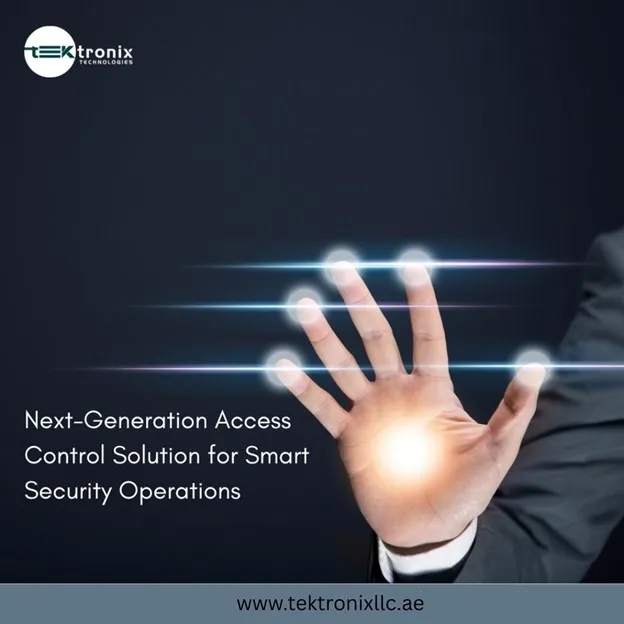
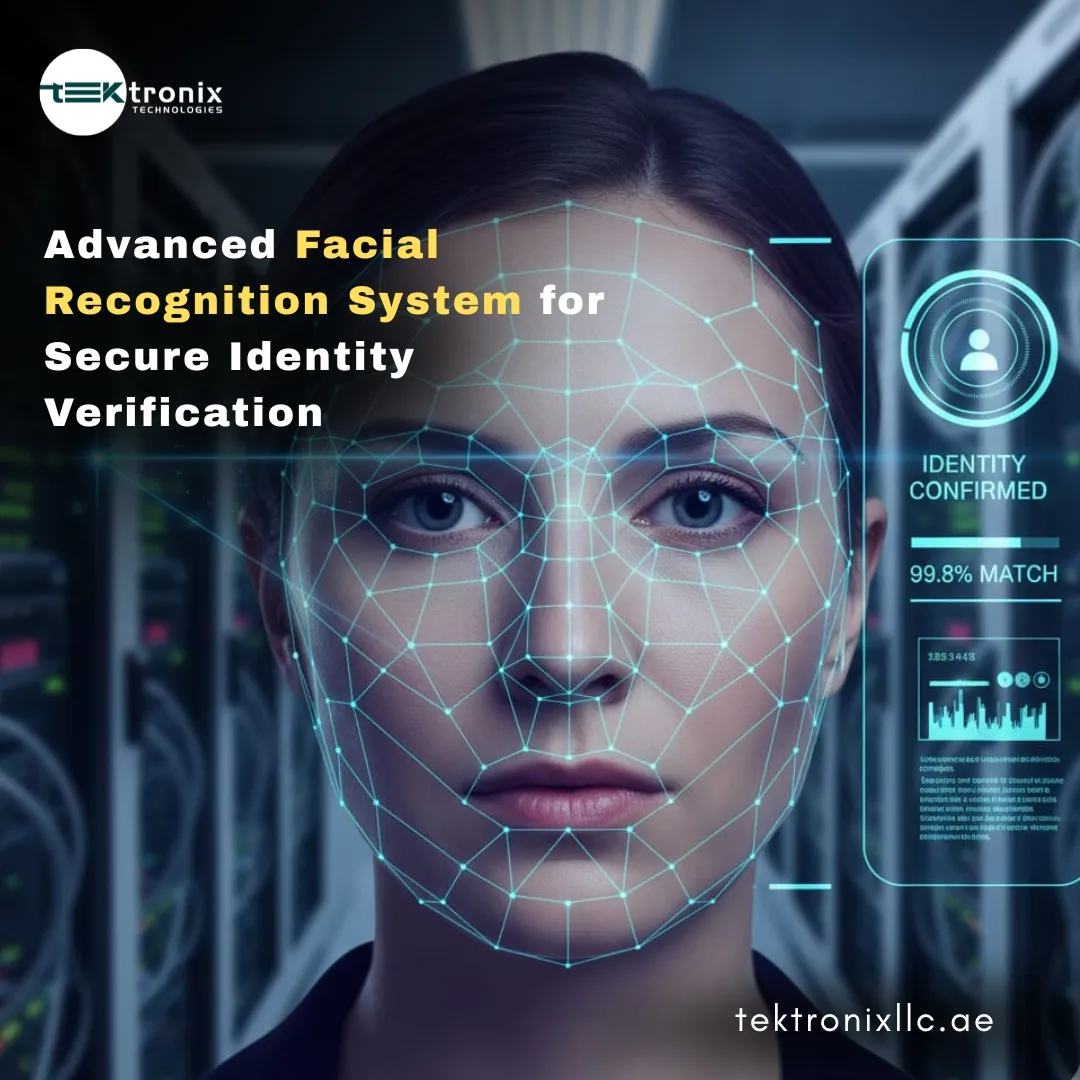
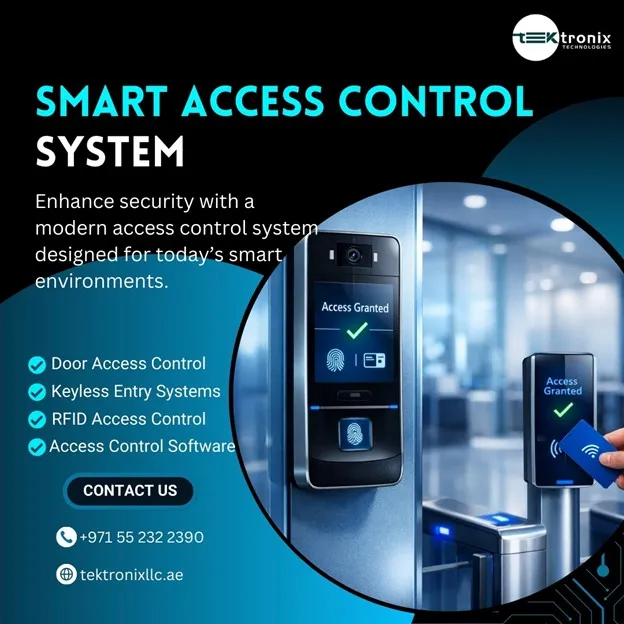
Modern Door Access Control for government premises must go beyond legacy RFID cards or PIN codes. Multi-factor authentication (MFA) combining smart cards, biometrics (fingerprint, iris, or facial recognition), and mobile credentials provides the layered identity assurance demanded by high-security clearance zones. Any Access Control Device selected should support OSDP (Open Supervised Device Protocol) v2 for encrypted, bidirectional communication between readers and controllers — a critical standard for tamper-proof government deployments. Qatar ID integration is an additional advantage for facilities requiring national identity validation at entry points.
3. Integration with Broader Security Ecosystems
A siloed Access Control System Qatar cannot deliver the situational awareness that modern government security operations require. The chosen platform must integrate natively with CCTV and video analytics, intrusion detection systems (IDS), fire and life safety panels, visitor management software, and building management systems (BMS). Open APIs and support for industry standards such as ONVIF, PSIA, and REST-based architectures ensure the system can evolve alongside emerging threats and technologies without costly proprietary lock-in.
4. Cybersecurity and Data Sovereignty
Physical security and cybersecurity are inseparable in 2025 and beyond. Access control databases contain sensitive biometric data, personnel movement records, and clearance levels — all high-value targets for state-sponsored adversaries. Procurement specifications must mandate end-to-end encryption (AES-256 minimum), on-premises or sovereign-cloud data storage to comply with Qatar's data residency regulations, regular penetration testing, role-based access to the management console, and full audit logs with tamper-evident storage. Vendors should demonstrate ISO 27001 certification and be able to provide evidence of Qatar-specific regulatory compliance.
5. Reliability, Redundancy, and Failsafe Design
Government facilities cannot afford access control failures during emergencies. The Access Control System Doha specification should include offline operation capability (edge-based decision making), UPS-backed power for all controllers and readers, fail-safe and fail-secure door configurations appropriate to each zone's risk classification, and redundant communication paths. During evacuation scenarios, the system must integrate with fire panels to trigger automatic door releases on designated egress routes while maintaining lock-down on perimeter access points.
Regulatory Compliance and Standards Governing Qatar Government Access Control
Any procurement of government-grade physical security infrastructure in Qatar must align with the following frameworks and standards:
Qatar National Cybersecurity Framework (QNCF): Defines baseline controls for critical national infrastructure, including identity and access management requirements.
IEC 62443: Industrial cybersecurity standard applicable to OT/IT converged environments in smart government facilities.
ISO 27001 / ISO 27002: Information security management system standards that underpin vendor qualification and system design.
GDPR-aligned Personal Data Protection Law (PDPL): Qatar's personal data legislation which governs the collection, storage, and use of biometric data.
NFPA 101 (Life Safety Code): Governs egress integration, ensuring access control does not impede emergency evacuation.
SABER / Ministry of Interior Approvals: Product certification requirements for security hardware deployed in government projects across Qatar.
Comparing Access Control Technologies for High-Security Government Facilities
Understanding the technology spectrum helps procurement teams match capability to risk level across different zones of a government facility.
| Technology | Best Suited For | Security Level |
| RFID / Smart Card | Low-risk admin zones, car parks | Basic |
| Smart Card + PIN (2FA) | General office areas, public counters | Medium |
| Biometric (Fingerprint/Iris) | Sensitive document rooms, server areas | High |
| Multi-Factor (Card + Bio + PIN) | Classified zones, command centers | Very High |
| Mobile Credential (BLE/NFC) | Smart campus, visitor management | Medium-High |
| Facial Recognition AI | Perimeter entry, VIP zones | Very High |
How to Evaluate and Select a Trusted Access Control Solutions Provider in Qatar
Choosing the right technology is only half the equation — selecting the right implementation partner is equally vital. When evaluating vendors for government-grade deployments in Qatar and the wider GCC region, consider the following criteria:
Experience: Look for partners with documented government and critical infrastructure projects in Qatar. Track record in similar environments eliminates deployment risk.
Expertise: The vendor's engineering team should hold industry certifications such as PSP (Physical Security Professional), CPP (Certified Protection Professional), or manufacturer-specific credentials from Lenel, Honeywell, Genetec, or HID Global.
Authoritativeness: Check for Ministry of Interior approvals, local registration with UPDA-certified engineers, and membership in security industry associations such as ASIS International.
Trustworthiness: Request references from Qatari government or semi-government entities. Verify post-installation support SLAs, warranty terms, and local spare-parts availability in Doha.
Expedite IoT is a trusted provider of integrated Access Control Solutions across Qatar, offering end-to-end design, supply, installation, commissioning, and support for government and enterprise facilities. With deep regional expertise and a portfolio spanning smart government campuses, oil and gas facilities, and financial institutions, Expedite IoT delivers security infrastructure engineered for the Gulf's unique regulatory and environmental requirements.
Implementation Best Practices for Government Access Control Projects
A successful deployment requires more than hardware selection. The following project lifecycle best practices are essential for government-scale rollouts:
Security Risk Assessment First: Begin with a formal threat and vulnerability assessment (TVA) to map risk levels across all access points and define zone classifications (public, restricted, secured, classified).
Zone-Based Design: Apply the principle of least privilege — each staff member or visitor should only access zones essential to their role. Define zone hierarchies clearly before configuring the system.
Phased Rollout: For large government campuses, phase the deployment building by building to minimize operational disruption and allow iterative testing.
Staff Training and Change Management: Access control systems fail when users circumvent them. Conduct role-specific training for security personnel, administrators, and general staff.
Ongoing Maintenance and Audit: Schedule quarterly firmware updates, annual penetration tests, and bi-annual physical audits of all access control hardware to ensure continued integrity.
Future Trends Shaping Access Control in Qatar's Public Sector
Qatar's National Vision 2030 and its Smart City initiatives are accelerating the adoption of next-generation security infrastructure. The convergence of IoT sensors, AI-powered video analytics, and blockchain-based audit trails is transforming how government facilities manage identity and physical access. Expect to see wider deployment of Advanced Access Control Systems incorporating frictionless authentication (walk-through biometric lanes), zero-trust security architectures, and predictive analytics that flag anomalous access patterns before a breach occurs. 5G connectivity is enabling truly wireless, battery less smart locks across large campuses, while digital twin technology allows security teams to model and stress-test access control scenarios virtually before physical deployment. Vendors operating in the Access Control System Qatar market must align their roadmaps with these emerging capabilities to remain competitive in government tenders.
Conclusion
Choosing the right Access Control System for Qatar government buildings demands a strategic approach that balances technological sophistication, regulatory compliance, cybersecurity resilience, and operational reliability. From evaluating the correct Access Control Device and authentication methodology to ensuring full integration with existing security ecosystems, every decision must be grounded in a clear risk-based framework. Government facility managers in Doha and across Qatar should partner with experienced, locally registered providers who understand the unique regulatory landscape of the Gulf region.
For a tailored consultation on Door Access Control and physical security solutions for your government or enterprise facility in Qatar, reach out to Expedite IoT — your trusted regional partner for intelligent, compliant, and future-ready security infrastructure.
FAQs
Q1. What type of Access Control System is best for Qatar government buildings?
For Qatar government facilities, a multi-layered Advanced Access Control System combining smart card authentication, biometric verification, and AI-powered video integration is recommended. The system must comply with Qatar's National Cybersecurity Framework, support sovereign data storage, and integrate with national identity databases for high-security zones such as ministries and command centers.
Q2. How does an Access Control System Doha deployment differ from standard commercial installations?
Government deployments in Doha require stricter compliance with local regulatory standards, higher cybersecurity thresholds (including end-to-end encryption and tamper-evident audit logs), integration with national identification systems, and Ministry of Interior hardware approvals. Commercial installations typically operate under less rigorous compliance requirements and lower security clearance demands.
Q3. What is the role of Door Access Control in emergency management for government buildings?
Door Access Control systems play a critical dual role: maintaining perimeter security during normal operations and enabling rapid, controlled evacuation during emergencies. Integration with fire panels ensures designated emergency egress routes are automatically unlocked during alarms, while perimeter and secure-zone doors remain locked to prevent unauthorized access during an incident.
Q4. How should government agencies evaluate Access Control Solutions providers in Qatar?
Agencies should assess providers based on documented government project experience in the GCC, possession of UPDA-certified engineers, Ministry of Interior product approvals, ISO 27001 certification, local Doha support infrastructure, and verifiable references from similar government or critical infrastructure deployments. Long-term post-installation SLAs and local spare-parts availability are equally important evaluation criteria.
Q5. Can a single Access Control Device support multiple authentication method?
Yes. Modern multi-technology Access Control Devices support RFID, smart card, PIN, and biometric authentication simultaneously on a single reader unit. This allows facilities to enforce different authentication requirements at each access point without deploying separate hardware, significantly reducing capital expenditure while maintaining zone-specific security policies across the entire facility.



























Sign in to leave a comment.