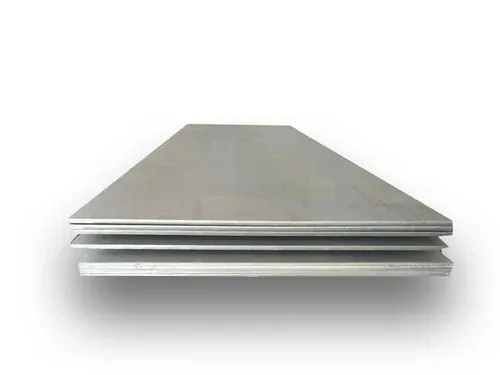

Oil and gas, chemical processing, marine, and power generation place extreme demands on structural materials. Standard 304 and 316L grades fall short in chloride-rich or high-stress conditions. Duplex steel plates resolve both gaps by combining austenitic and ferritic microstructures, delivering higher yield strength, better stress corrosion cracking resistance, and superior pitting protection. This guide covers the key characteristics of duplex stainless steel plates, the main duplex stainless steel grades, and the duplex steel applications driving their adoption globally.
What Are Duplex Steel Plates?
Duplex steel plates carry a mixed microstructure of roughly equal parts austenite and ferrite, typically 50% each. The ferrite fraction delivers high yield strength and SCC resistance; austenite adds toughness and weldability. Together, they produce yield strength approximately double that of 304 or 316L, with better chloride and crevice corrosion resistance than either phase on its own.
Three grades cover most industrial needs. Duplex 2205 handles general high-corrosion service. Duplex 2304 suits moderate environments. Super Duplex 2507 is for the most aggressive offshore and marine conditions.
Key Characteristics of Duplex Steel Plates
High Mechanical Strength
Duplex grades reach 450 MPa minimum yield strength, roughly double the 200 to 250 MPa of standard austenitic steels. Engineers can reduce plate thickness without compromising load capacity. That directly cuts weight and fabrication cost.
Excellent Corrosion Resistance
Duplex 2205 carries a PREN above 34. Super Duplex 2507 reaches 43 or higher. Both outperform 316L against pitting, crevice corrosion, and chloride attack in saline and acidic process streams.
Resistance to Stress Corrosion Cracking
Austenitic steels crack in hot chloride service above 60°C. Ferritic fraction in duplex plates provides significant suppression of SCC, maintaining structural integrity under sustained tensile loads where 304 and 316 fail.
Good Weldability
Duplex plates weld via TIG, MIG, and submerged arc with controlled heat input and matched filler. Post-weld heat treatment is not required. That simplifies fabrication schedules for pressure vessels and piping assemblies.
Cost Efficiency
Where 316L needs 12 mm, duplex 2205 meets the same load spec at 8 to 9 mm. Reduced thickness cuts material weight, freight, and arc time across large fabrication projects.
Long Service Life
Lower corrosion rates mean longer time intervals between inspections and between plate replacements. Duplex plate reduces lifecycle maintenance costs significantly compared to conventional stainless alternatives in structures intended for 25 to 30-year service.
Common Grades of Duplex Stainless Steel Plates
Duplex 2205 Plates
2205 (UNS S31803/S32205) is the most specified duplex grade in the world. At 22% chromium, 5% nickel, and 3% molybdenum, it delivers PREN above 34 and 450 MPa yield strength, covering most process plant and pipeline requirements.
Duplex 2304 Plates
Grade 2304 (UNS S32304) contains no molybdenum, placing PREN around 25. It outperforms 316L at a lower cost. Suitable for storage tanks, structural applications and moderate corrosion service.
Super Duplex 2507 Plates
Grade 2507 (UNS S32750) reaches PREN above 43 with 25% chromium, 7% nickel, and 4% molybdenum. Seawater systems, offshore topsides, and acid service use 2507, where 2205 is not sufficient.
Other Specialised Grades
Lean Duplex 2101, SMO 254, and AL6XN serve niche PREN and strength requirements. Calico Metal Alloys LLP stocks this full range so project teams can consolidate procurement across grades.
Applications of Duplex Steel Plates
Oil and Gas Industry
Offshore platforms, subsea pipelines, and pressure vessels face combined mechanical load and chloride exposure. Duplex 2205 handles most topside requirements. Super duplex 2507 covers aggressive downhole and subsea conditions where temperatures and chloride levels exceed 2205 limits.
Chemical Processing Plants
Reactor vessels and storage tanks holding sulphuric acid, phosphoric acid, or mixed chloride streams corrode through 316L far sooner than duplex alternatives. Higher duplex strength also allows thinner-walled construction at the same pressure rating.
Marine and Offshore Structures
Seawater carries around 19,000 ppm of chloride, which exceeds the long-term resistance of 316L. Duplex plates cover shell plating, bulkheads, and seawater pipework. Super duplex 2507 is standard for desalination plant housings and shipboard seawater systems.
Power Generation Industry
Heat exchanger shells and condenser tube sheets handling cooling water suffer SCC in austenitic grades. Duplex plate's combined SCC and pitting resistance makes it reliable for these components across coal, gas, and nuclear plant designs.
Pulp and Paper Industry
Digesters and bleaching equipment run in hot chloride and acid conditions simultaneously. Duplex 2205 resists both the corrosive chemistry and internal pressure loads where 316L requires frequent replacement.
Water Treatment and Desalination Plants
Seawater RO membrane housings operate above 60 bar against concentrated brine. Super duplex 2507 plate is the standard specification here. Lower-pressure brine distribution uses duplex 2205, where PREN above 34 provides reliable protection.
Duplex Steel Plates vs Conventional Stainless Steel Plates
Duplex steel plates deliver roughly twice the yield strength of 316L and PREN values 10 to 12 points higher, giving measurably better chloride pitting resistance. SCC resistance is substantially improved because of the ferritic phase. The higher cost of the material is often recovered by using thinner specifications, fewer replacement cycles and fewer frequent inspections over the life of the project. For installations where corrosion downtime has serious production or safety consequences, duplex stainless steel plates are the safer choice.
Factors to Consider When Choosing Duplex Steel Plates
Start with the corrosion environment. Chloride concentration, temperature, and pH set the minimum PREN needed. Mechanical strength targets confirm whether standard or super duplex is required.
Plate thickness and dimensional tolerances affect fabrication cost and structural weight. Welding procedures must control heat input and filler chemistry to preserve the phase balance at the weld zone.
Compliance with ASTM A240, ASME Section II, or NORSOK M-630 may restrict permissible grades before commercial factors enter the decision.
How to Choose the Right Duplex Steel Plate Manufacturer
Look for heat-traceable mill test certificates on every plate. These are mandatory for third-party inspection on pressure and offshore projects. Stock should cover 2304, 2205, and 2507 at minimum so procurement stays consolidated.
Testing capabilities including UT, PMI, and hardness verification should run before dispatch. Consistent quality across repeat orders and accessible technical support on grade selection and welding procedures distinguish a specialist duplex plate stockist from a general metals distributor.
Duplex Steel Plate Selection Checklist
| Checklist Item | What to Verify |
| Mill Certificates | Heat-traceable MTCs for chemical and mechanical results |
| Grade Range | 2304, 2205, and 2507 available from one source |
| Testing | UT, PMI, hardness testing before dispatch |
| Standards | ASTM A240, ASME Sec II, EN 10028-7, or NORSOK M-630 |
| Supply | Confirmed lead times and stock depth |
| Technical Support | Grade selection and welding procedure guidance available |
Conclusion
Duplex steel plates address two problems at once: yield strength close to double that of standard austenitic grades and corrosion resistance that holds in chloride, acid, and high-temperature service. Oil and gas, marine, desalination, chemical processing, and power generation all depend on these properties for long-service installations. Source duplex stainless steel plates from a certified manufacturer with full heat traceability, multi-grade stock, and independent inspection for consistent performance across the full service life.


















Sign in to leave a comment.