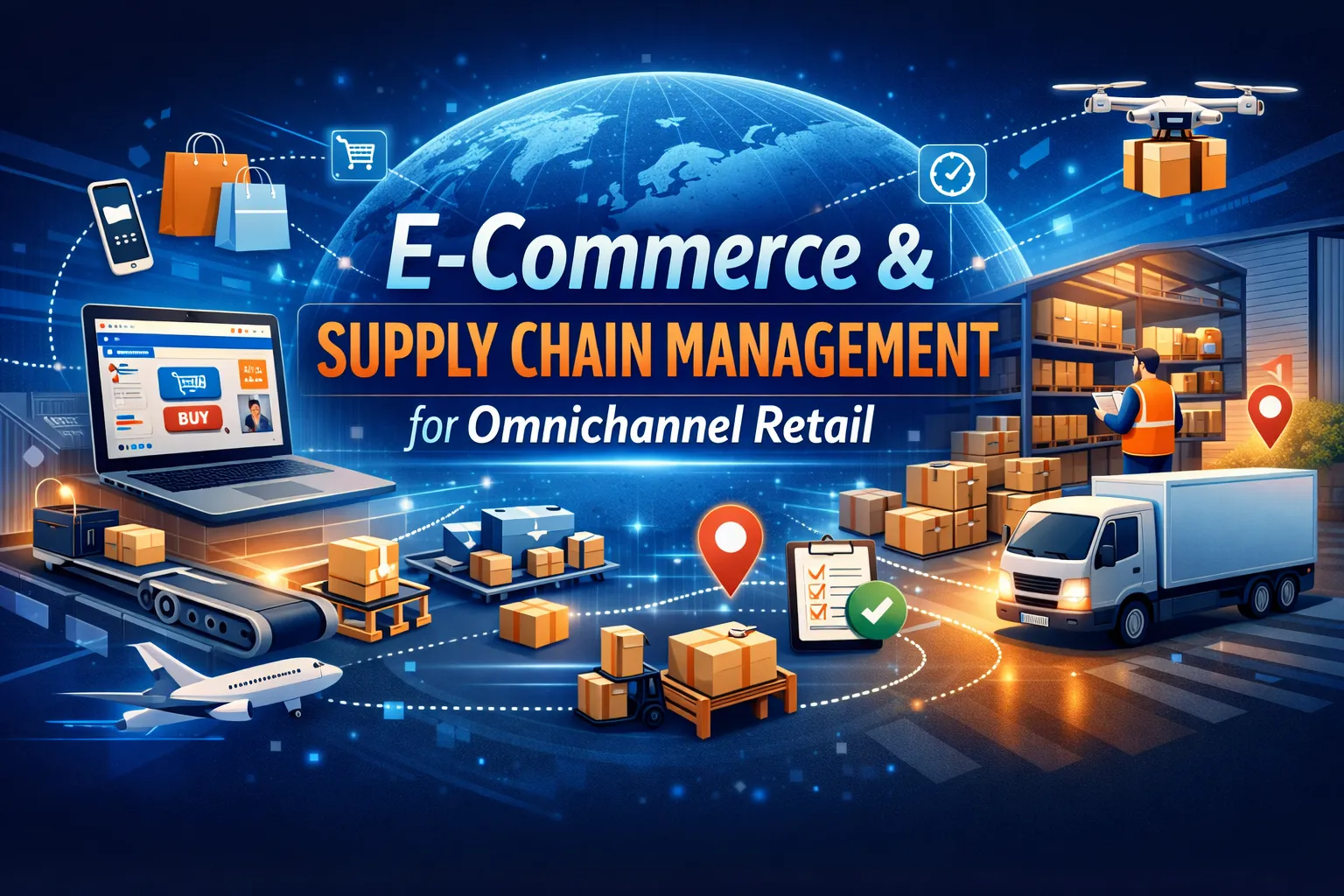

The modern retail landscape has transformed dramatically in the last decade. Customers no longer shop through a single channel; instead, they browse products on mobile apps, purchase through websites, pick up from stores, and expect fast delivery to their doorstep. This shift has made E-Commerce and Supply Chain Management one of the most critical pillars of success for businesses adopting omnichannel retail strategies.
To keep up with rising customer expectations, businesses must connect online and offline operations seamlessly. This is where supply chain management in ERP and advanced supply chain management software play a major role. Together, they enable real-time visibility, faster fulfillment, optimized inventory, and improved customer experiences.
In this in-depth article, we will explore how E-Commerce and Supply Chain Management empower omnichannel retail and how businesses can leverage technology to achieve efficiency and growth.
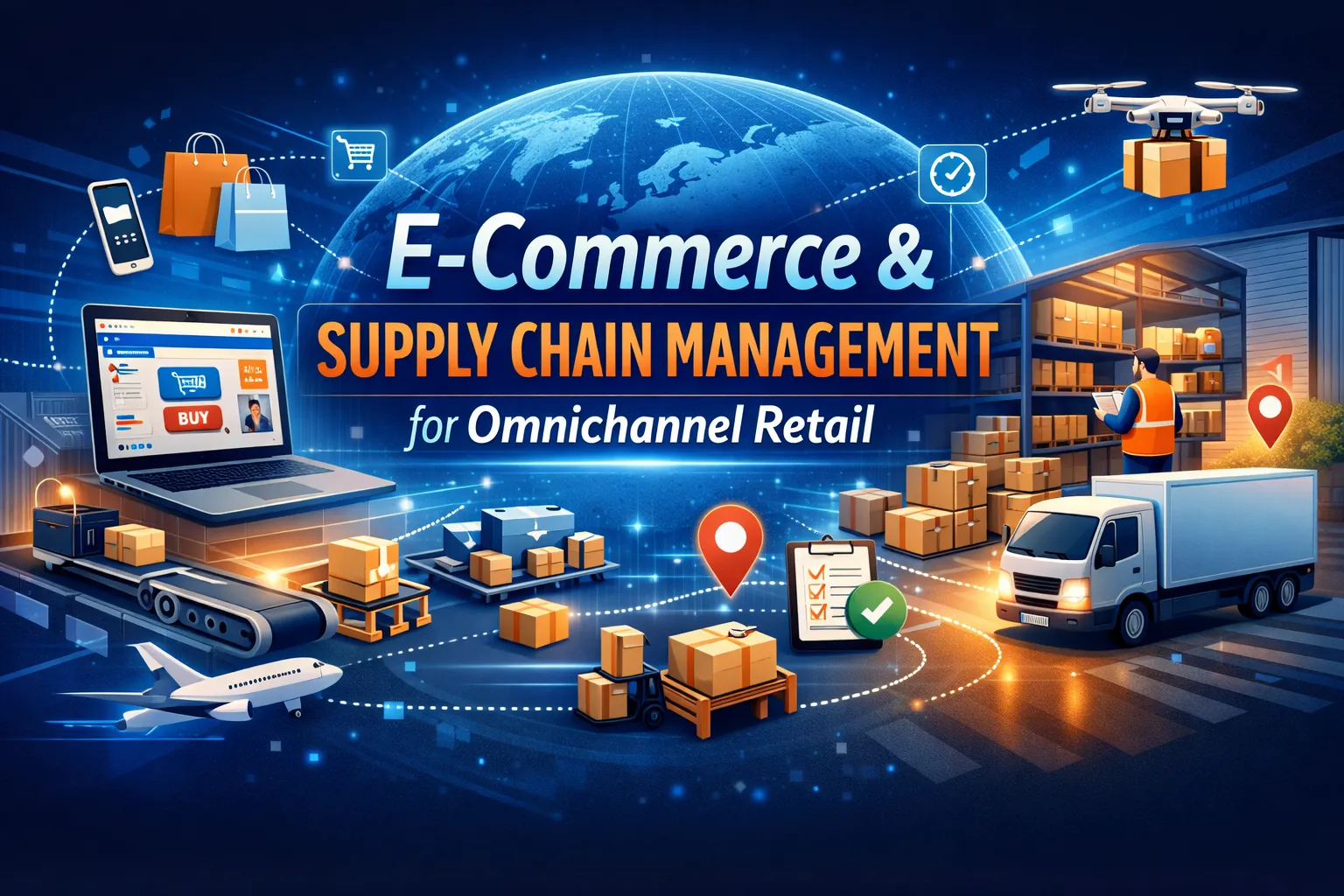
Understanding Omnichannel Retail
Omnichannel retail refers to a fully integrated approach where customers experience a consistent shopping journey across all platforms—online, offline, mobile, social media, and marketplaces.
Key characteristics of omnichannel retail:
- Customers can browse online and buy in-store.
- Orders can be placed online and picked up locally.
- Returns can happen through any channel.
- Real-time inventory visibility across all channels.
- Unified customer experience everywhere.
However, achieving this level of integration is impossible without a strong supply chain.
Role of E-Commerce and Supply Chain Management in Omnichannel Retail
E-Commerce and Supply Chain Management connect the entire retail ecosystem—from suppliers to warehouses to customers.
Why supply chain integration is essential:
- Customers expect fast delivery.
- Inventory must sync across channels.
- Order fulfillment must be automated.
- Logistics must be optimized.
- Real-time tracking is required.
Without efficient supply chain processes, omnichannel retail quickly turns into chaos—stockouts, delayed deliveries, and poor customer experiences.
Challenges Faced by Omnichannel Retailers
Before understanding the solution, let's explore the common challenges.
1. Inventory Visibility Issues
Retailers often struggle to track inventory across:
- Warehouses
- Retail stores
- Online marketplaces
This leads to:
- Overselling
- Stockouts
- Lost revenue
2. Complex Order Fulfillment
Orders may originate from multiple channels:
- Website
- Mobile apps
- Social commerce
- Marketplaces
Managing these manually is nearly impossible.
3. Delivery and Logistics Pressure
Customers now expect:
- Same-day delivery
- Next-day delivery
- Real-time tracking
This increases operational complexity.
4. Data Silos
Different departments use different systems:
- Sales
- Warehouse
- Logistics
- Finance
Without integration, decision-making becomes slow and inaccurate.
How Supply Chain Management in ERP Solves These Challenges
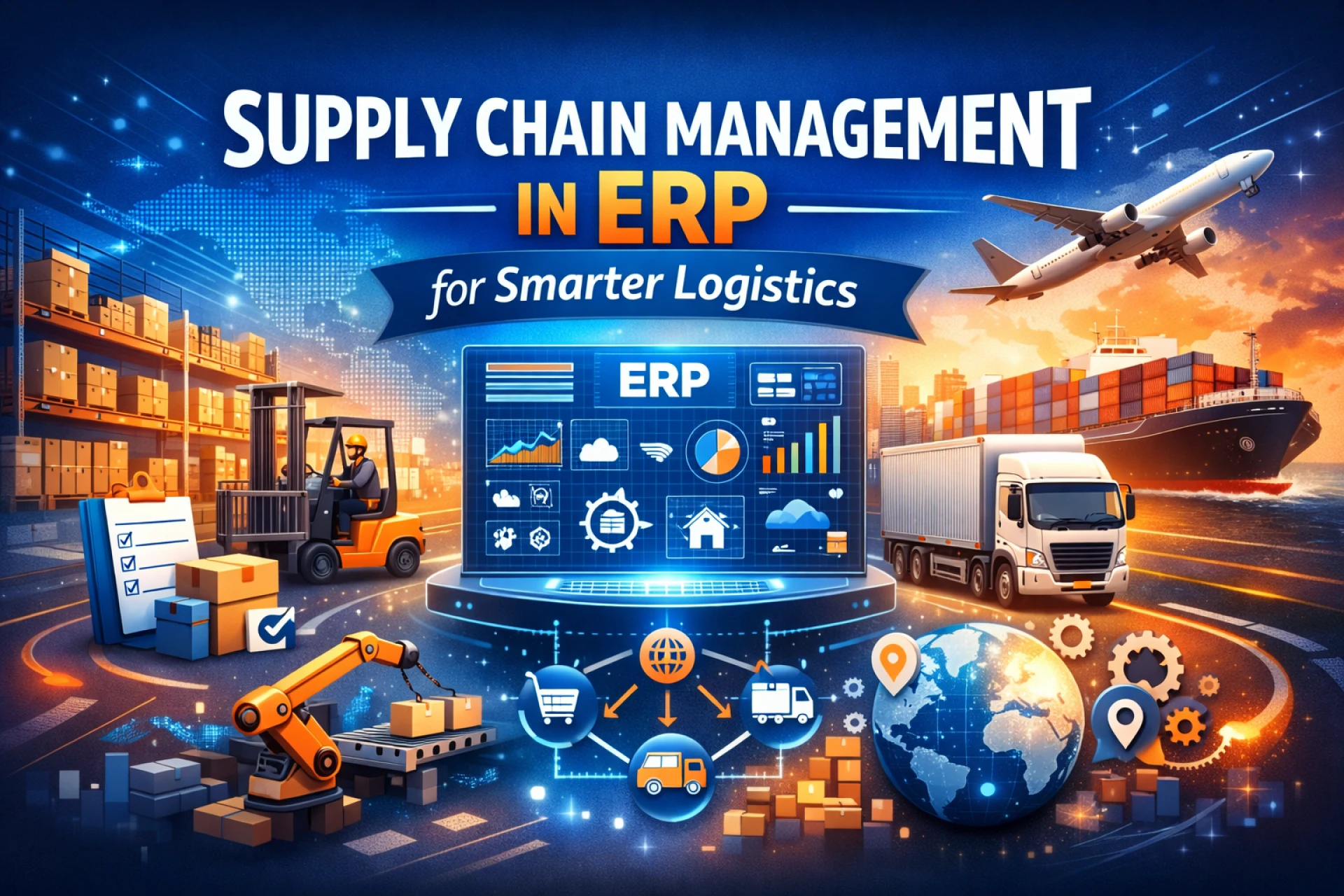
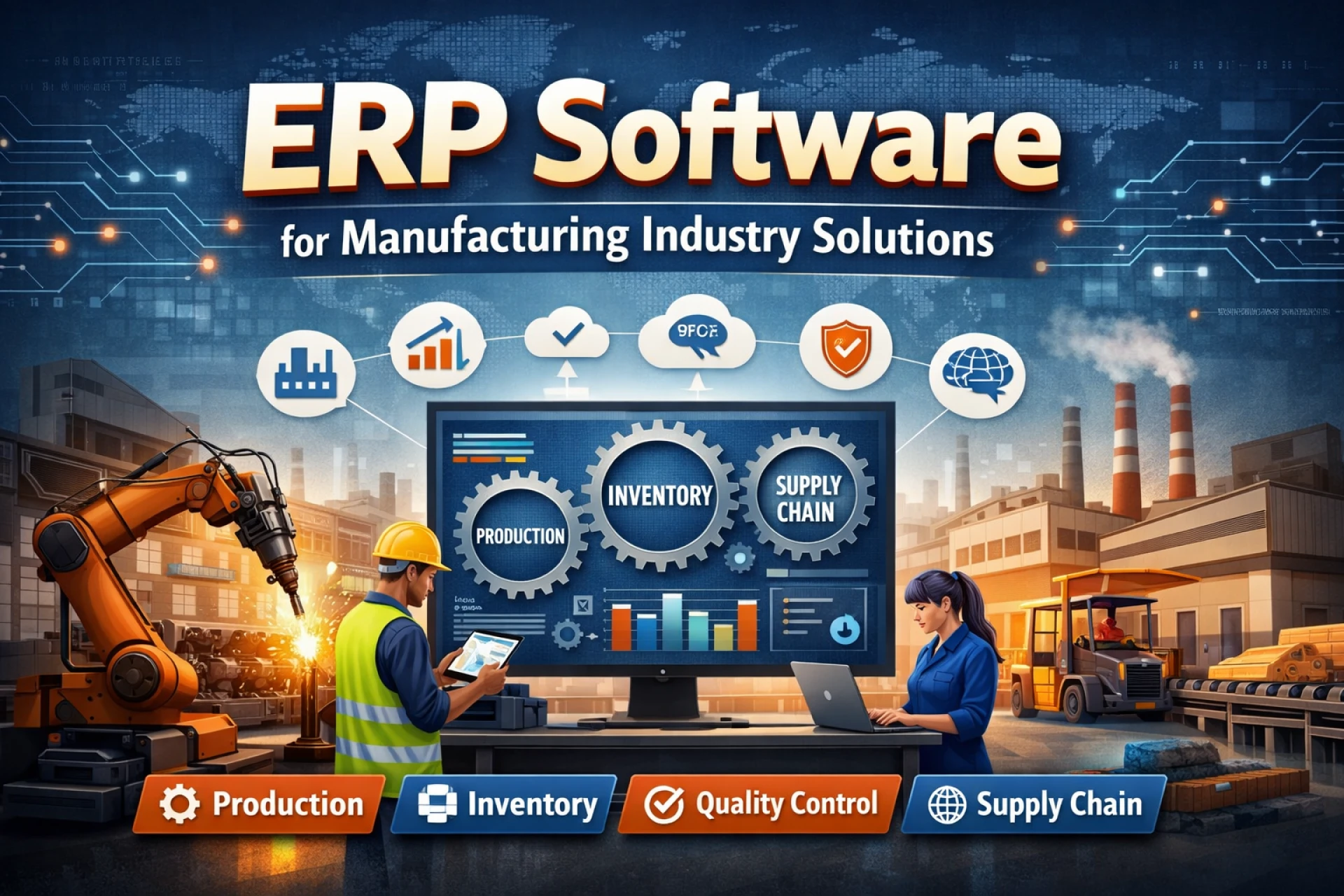
Supply chain management in ERP integrates all operations into one centralized system, ensuring smooth coordination across departments and channels.
Key ERP Supply Chain Capabilities
1. Real-Time Inventory Management
ERP enables businesses to:
- Track inventory across locations.
- Automates stock updates.
- Prevent overselling.
- Maintain optimal stock levels.
This ensures customers always see accurate product availability.
2. Centralized Order Management
ERP connects orders from:
- Online stores
- Marketplaces
- Retail outlets
Benefits:
- Faster order processing
- Reduced errors
- Automated fulfillment workflows
3. Demand Forecasting
Using historical data and analytics, ERP helps forecast demand:
- Seasonal trends
- Customer buying behavior
- Market demand
This improves planning and reduces excess inventory.
4. Supplier Management
ERP helps businesses manage suppliers efficiently:
- Track purchase orders
- Monitor vendor performance
- Improve procurement planning
Importance of Supply Chain Management Software in E-Commerce
Modern supply chain management software acts as the backbone of omnichannel operations.
Benefits include:
- Warehouse automation
- Route optimization
- Shipment tracking
- Logistics cost reduction
- Delivery performance improvement
This ensures faster and more reliable fulfillment.
Key Components of Omnichannel Supply Chain
1. Inventory Synchronization
Inventory must be updated instantly across:
- Website
- Marketplaces
- Stores
- Warehouses
This avoids:
- Overselling
- Stock discrepancies
- Customer dissatisfaction
2. Smart Warehousing
Advanced warehousing includes:
- Barcode scanning
- Automated picking and packing
- Smart storage optimization
3. Multi-Channel Order Processing
Orders should be routed to:
- Nearest warehouse
- Nearest store
- Best delivery route
This reduces delivery time and costs.
4. Last-Mile Delivery Optimization
Last-mile delivery is the most expensive part of logistics.
Optimized routing helps:
- Reduce fuel costs
- Improve delivery speed
- Increase customer satisfaction
Benefits of E-Commerce and Supply Chain Management for Omnichannel Retail
1. Faster Deliveries
Customers receive products quickly through:
- Automated fulfillment
- Smart logistics
- Local inventory availability
2. Improved Customer Experience
A seamless shopping journey increases:
- Customer satisfaction
- Brand loyalty
- Repeat purchases
3. Reduced Operational Costs
Automation reduces:
- Manual errors
- Excess inventory
- Logistics inefficiencies
4. Real-Time Visibility
Businesses gain insights into:
- Inventory levels
- Order status
- Shipment tracking
- Demand patterns
5. Scalability
As businesses grow, ERP and supply chain software scale easily.
How Omnichannel Fulfillment Works
Let’s look at how integrated systems manage fulfillment.
Example Workflow:
- Customer orders from website.
- ERP checks the nearest inventory location.
- The order is routed to the warehouse/store.
- Warehouse processes order automatically.
- Delivery route is optimized.
- Customers receive tracking updates.
This entire process happens in minutes through automation.
Technologies Driving Modern Supply Chains
1. Artificial Intelligence
AI helps:
- +Predict demand
- Optimize routes
- Automate customer support
2. Internet of Things (IoT)
IoT enables:
- Real-time shipment tracking
- Smart warehouse monitoring
3. Cloud Computing
Cloud ERP provides:
- Remote access
- Scalability
- Real-time collaboration
4. Automation & Robotics
Robotics improves:
- Picking and packing speed
- Warehouse efficiency
Future of E-Commerce and Supply Chain Management
The future of omnichannel retail will be driven by:
- Hyper-personalized shopping experiences
- Drone and autonomous delivery
- AI powered forecasting
- Sustainable logistics
- Real-time global supply chain visibility
Businesses that invest early in supply chain management in ERP and modern supply chain management software will gain a strong competitive advantage.
Best Practices for Implementing Omnichannel Supply Chain
1. Invest in ERP Integration
Ensure all departments use one centralized platform.
2. Automate Fulfillment Processes
Reduce manual tasks to increase speed and accuracy.
3. Use Data Analytics
Make decisions based on real-time insights.
4. Optimize Logistics Networks
Choose efficient delivery partners and routes.
5. Focus on Customer Experience
Fast delivery and transparency build trust.
Conclusion
Omnichannel retail is no longer optional—it is the future of commerce. Customers expect convenience, speed, and seamless experiences across every platform. Achieving this requires strong E-Commerce and Supply Chain Management supported by powerful supply chain management in ERP and advanced supply chain management software.
Businesses that integrate their supply chain with digital commerce will benefit from:
- Faster fulfillment
- Reduced costs
- Improved customer satisfaction
- Increased revenue
Investing in the right technology today ensures long-term success in the evolving retail ecosystem.
FAQs
1. What is E-Commerce and Supply Chain Management?
It is the integration of online retail operations with logistics, inventory, warehousing, and order fulfillment to ensure seamless product delivery.
2. Why is supply chain management important in omnichannel retail?
It ensures real-time inventory visibility, faster deliveries, and smooth order fulfillment across all sales channels.
3. How does supply chain management in ERP help retailers?
ERP centralizes data, automates processes, and provides real-time insights for efficient operations.
4. What features should supply chain management software have?
Key features include:
- Inventory tracking
- Order automation
- Warehouse management
- Logistics optimization
- Real-time analytics
5. What is omnichannel fulfillment?
It allows customers to buy, receive, and return products through any channel seamlessly.
6. How does ERP improve inventory management?
ERP synchronizes inventory across locations and updates stock levels automatically.
7. Can small businesses use supply chain software?
Yes, modern cloud-based solutions are affordable and scalable for small businesses.
8. What is the future of supply chain in e-commerce?
AI, automation, real-time tracking, and sustainable logistics will shape the future.
9. How does supply chain integration reduce costs?
It minimizes manual errors, reduces excess inventory, and optimizes logistics.
10. Is ERP necessary for e-commerce growth?
Yes, ERP is essential for managing complex operations as e-commerce businesses scale.
























Sign in to leave a comment.