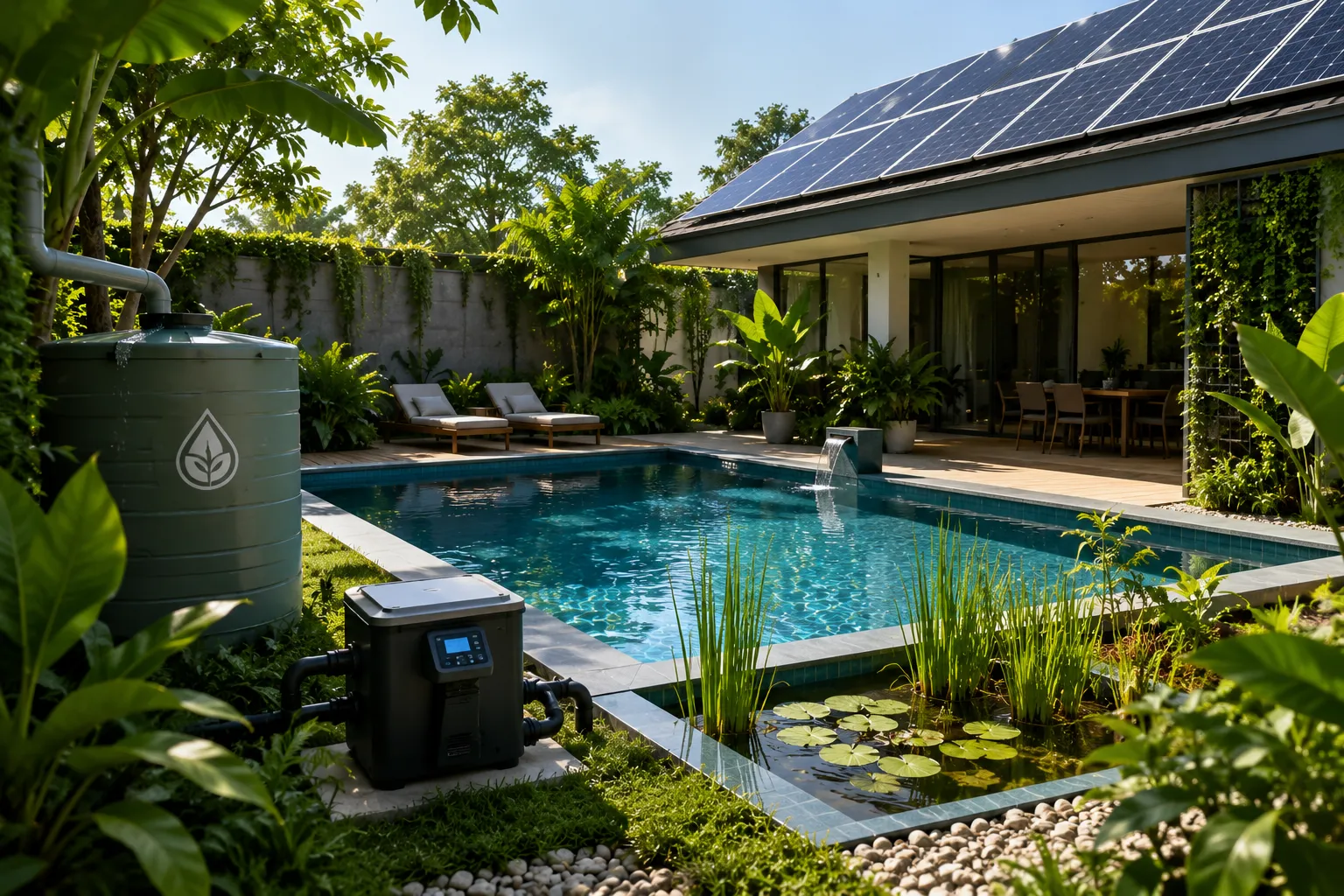
Modern homeowners want more than luxury and aesthetics. They increasingly seek solutions that conserve resources, reduce operating costs, and promote sustainable living. An Eco-Friendly Swimming Pool addresses these priorities by combining energy-efficient technologies, water-saving systems, and environmentally responsible construction practices.
The answer is clear: an Eco-Friendly Swimming Pool reduces energy consumption, minimizes water waste, and lowers long-term maintenance requirements while providing the comfort and elegance homeowners expect. As sustainability becomes a major consideration in residential architecture, eco-friendly pools are emerging as a preferred choice for modern homes.
In India, sustainable outdoor living spaces are gaining momentum among premium residential projects. Many homeowners now explore swimming pool construction services that incorporate solar heating, energy-efficient pumps, and smart filtration systems to create environmentally conscious pools without compromising performance or aesthetics.
Recent studies on residential sustainability trends indicate that energy-efficient outdoor amenities are increasingly influencing home design decisions. Consequently, sustainable pools are no longer niche installations; they are becoming mainstream features in luxury homes.
What Is an Eco-Friendly Swimming Pool?
An eco-friendly swimming pool is designed to reduce environmental impact through:
- Efficient water management
- Low-energy equipment
- Sustainable construction materials
- Smart automation
- Renewable energy systems
Unlike conventional pools, sustainable pools focus on conserving resources throughout their lifecycle.
As a result, homeowners enjoy:
- Lower utility costs
- Reduced chemical use
- Improved energy efficiency
- Smaller environmental footprints
- Long-term operational savings
Why Are Sustainable Pools Becoming Popular?
Growing Environmental Awareness
Homeowners increasingly prioritize:
- Energy conservation
- Water efficiency
- Carbon footprint reduction
- Sustainable home features
According to sustainability reports, residential energy efficiency investments continue to grow globally as consumers seek environmentally responsible solutions.
This shift has accelerated interest in eco-friendly pool systems.
Rising Energy Costs
Electricity prices continue to influence purchasing decisions.
Therefore, homeowners seek:
- Variable-speed pumps
- Solar heating systems
- LED lighting
- Automated filtration
These technologies significantly reduce operating expenses over time.
Which Features Make a Pool Eco-Friendly?
Energy-Efficient Pumps
Traditional pool pumps often consume large amounts of electricity.
In contrast, variable-speed pumps:
- Operate at optimized speeds
- Consume less energy
- Produce lower noise levels
- Extend equipment lifespan
Research suggests that energy-efficient pumps can reduce pool energy consumption substantially compared to conventional systems.
Smart Filtration Systems
Modern filtration systems automatically:
- Adjust operating cycles
- Monitor water quality
- Reduce unnecessary energy use
- Optimize circulation
Consequently, homeowners achieve better efficiency with minimal intervention.
LED Pool Lighting
LED lighting offers:
- Lower electricity usage
- Longer lifespan
- Reduced heat generation
- Flexible lighting options
Many luxury homeowners now combine smart controls with LED lighting to enhance sustainability and convenience.
How Does Water Conservation Improve Sustainability?
Water conservation plays a major role in sustainable pool ownership.
Pool Covers
Pool covers help:
- Reduce evaporation
- Maintain water temperature
- Minimize debris accumulation
- Lower heating costs
Industry studies estimate that pool covers can significantly reduce evaporation losses in residential pools.
Rainwater Harvesting
Some homeowners integrate rainwater harvesting systems with their pools.
Benefits include:
- Reduced freshwater consumption
- Lower utility expenses
- Sustainable water sourcing
Smart Water Monitoring
Automated monitoring systems:
- Track water levels
- Detect leaks
- Optimize refill schedules
These technologies help prevent unnecessary water loss.
Eco-Friendly Swimming Pool vs Traditional Pool
| Feature | Eco-Friendly Swimming Pool | Traditional Pool |
|---|---|---|
| Energy Consumption | Low | Moderate to High |
| Water Efficiency | High | Moderate |
| Chemical Usage | Reduced | Higher |
| Operating Costs | Lower | Higher |
| Automation | Advanced | Limited |
| Environmental Impact | Low | Moderate |
Traditional pools remain popular. However, eco-friendly systems offer significant advantages in sustainability and long-term savings.
Therefore, environmentally conscious homeowners increasingly prefer green pool solutions.
Can Solar Energy Power Swimming Pools?
Yes.
Solar technology is becoming a core component of the Eco-Friendly Swimming Pool concept.
Solar Pool Heating
Solar heating systems:
- Use renewable energy
- Reduce electricity consumption
- Extend swimming seasons
- Lower operational costs
India receives abundant sunlight throughout much of the year, making solar heating an attractive option for residential pools.
Solar-Powered Equipment
Some installations now support:
- Solar-powered pumps
- Solar lighting
- Battery-backed automation systems
These technologies further reduce dependence on conventional energy sources.
Are Eco-Friendly Pools Suitable for Indian Homes?
Absolutely.
Eco-friendly pools are increasingly popular in:
- Luxury villas
- Farmhouses
- Rooftop residences
- Gated communities
- Boutique resorts
India's growing focus on sustainability and energy efficiency supports wider adoption of green pool technologies.
However, successful implementation requires careful planning.
Many homeowners choose swimming pool construction services that specialize in:
- Solar integration
- Sustainable materials
- Smart automation
- Efficient filtration
- Water conservation technologies
This ensures the pool remains environmentally responsible and cost-effective throughout its lifespan.
Real-World Example: Sustainable Pool Design
Consider a homeowner seeking:
- Reduced electricity bills
- Lower water usage
- Minimal maintenance
- Modern outdoor aesthetics
The installed system includes:
- Variable-speed pumps
- Solar heating panels
- LED underwater lighting
- Smart filtration
- Automated water monitoring
Result:
- Lower operating costs
- Reduced environmental impact
- Improved water efficiency
- Enhanced outdoor living experience
This example demonstrates how sustainable technologies can transform traditional pool ownership.
What Are the Latest Trends in Sustainable Pool Design?
Natural Pool Filtration
Natural filtration systems use:
- Aquatic plants
- Biological filters
- Eco-friendly purification methods
These systems reduce chemical dependency while maintaining water quality.
Smart Automation
Automated technologies now manage:
- Water chemistry
- Filtration cycles
- Lighting schedules
- Energy consumption
This increases efficiency while reducing manual effort.
Sustainable Materials
Modern eco-friendly pools increasingly use:
- Recycled materials
- Low-impact construction products
- Durable eco-conscious finishes
This trend aligns with broader sustainable building practices.
For additional information about the history and engineering of swimming pools, homeowners can refer to the Wikipedia article on swimming pools, which provides detailed insights into pool technologies and design evolution.
How Should Homeowners Choose an Eco-Friendly Pool?
Before investing, ask:
- How important is energy efficiency?
- Can solar systems be integrated?
- Which water-saving technologies are available?
- Are smart controls necessary?
- What are the long-term maintenance requirements?
Answering these questions helps homeowners select sustainable features that match their lifestyle and environmental goals.
Many property owners also consult providers of swimming pool construction services to compare eco-friendly technologies and identify solutions that maximize efficiency and performance.
Final Thoughts
An Eco-Friendly Swimming Pool represents the future of sustainable luxury living. By combining energy-efficient equipment, smart automation, and water conservation strategies, homeowners can enjoy premium outdoor spaces while reducing environmental impact.
As sustainability continues to shape residential architecture, eco-friendly pools offer a practical and forward-looking investment. They deliver long-term savings, lower resource consumption, and enhanced property value without sacrificing comfort or aesthetics.
For modern homeowners seeking responsible luxury, sustainable pool design is no longer an option—it is becoming the preferred standard.
FAQs
1. What is an Eco-Friendly Swimming Pool?
An eco-friendly swimming pool uses energy-efficient technologies, water-saving systems, and sustainable materials to reduce environmental impact while maintaining performance and comfort.
2. Do eco-friendly pools save electricity?
Yes. Features such as variable-speed pumps, LED lighting, and solar heating systems significantly reduce electricity consumption.
3. Can solar energy heat a swimming pool?
Yes. Solar heating systems are widely used in sustainable pools and can efficiently maintain water temperatures while reducing operating costs.
4. Are eco-friendly pools more expensive to build?
Initial costs may be slightly higher due to advanced technologies. However, lower operating and maintenance costs often provide long-term savings.
5. Which sustainable features are most popular in modern pools?
Popular features include solar heating, smart automation, LED lighting, variable-speed pumps, water monitoring systems, and natural filtration technologies.
























Sign in to leave a comment.