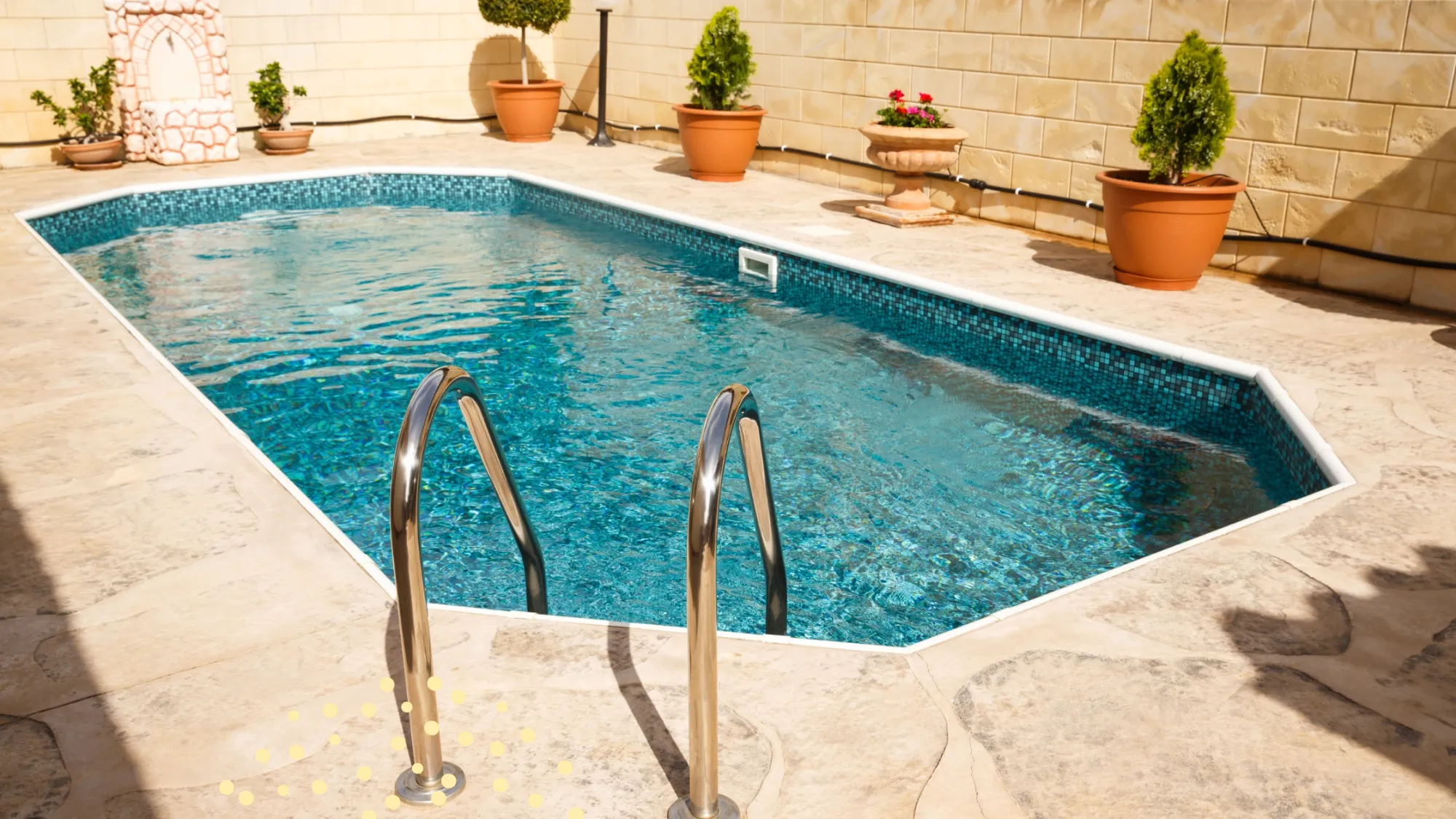

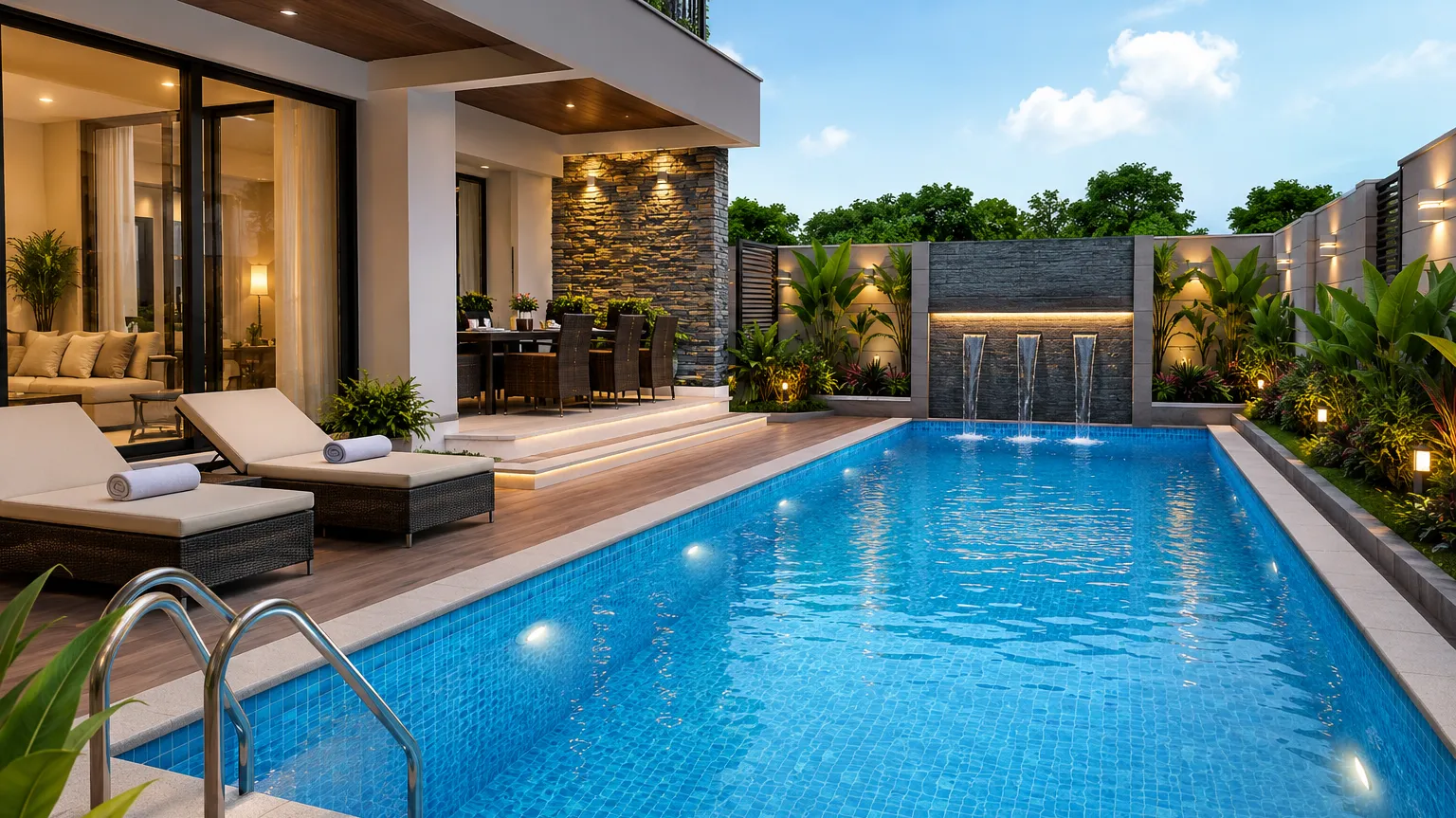
Swimming Pool Construction is not simply about fitting a water body into a limited area. The distinction is structural efficiency, lifecycle performance, and intelligent spatial engineering — not decorative styling alone. Many homeowners, villa developers, and urban property investors underestimate how poor planning affects waterproofing, circulation systems, maintenance costs, and long-term usability.
As a result, compact residential projects often suffer from wasted usable space, higher utility expenses, structural leakage risks, or underperforming filtration systems. This guide explains how smart swimming pool construction works in small properties, what 2026 market data reveals, and what modern buyers should evaluate before selecting a swimming pool construction company.
What 2026 Data Reveals About Smart Swimming Pool Construction
According to the National Association of Realtors, outdoor lifestyle upgrades can improve perceived residential property value by 7–15% in premium urban markets. Meanwhile, compact luxury installations such as luxury plunge pool construction projects are rising rapidly in metro cities where land availability is shrinking.
Research from Allied Market Research projects the global smart pool market to exceed $2.5 billion by 2028 due to increased adoption of smart pool filtration systems and automation technologies. This growth is driven largely by urban residential developments seeking low-maintenance swimming pools with reduced operational costs.
Additionally, the U.S. Department of Energy reports that energy-efficient pool pumps can reduce electricity consumption by nearly 70% compared to traditional systems. Consequently, modern swimming pool construction designs now prioritize hydraulic efficiency over oversized layouts.
For homeowners and developers, this means the smartest investment is no longer the biggest pool — it is the most space-efficient, operationally optimized system.
What Smart Swimming Pool Construction Actually Covers
| Phase / Feature | What It Specifically Covers |
|---|---|
| Site Evaluation | Soil stability, drainage behavior, structural feasibility |
| Compact Swimming Pool Layouts | Space optimization for urban homes and villas |
| Structural Engineering | Reinforcement planning and load calculations |
| Waterproofing Systems | Multi-layer sealing and leakage prevention |
| Smart Pool Filtration Systems | Automated filtration and energy-efficient circulation |
| Rooftop Swimming Pool Solutions | Load-bearing assessment and waterproof structural integration |
| Space-Saving Pool Architecture | Integrated seating, deck optimization, and shallow-depth planning |
| Modern Pool Engineering | IoT-enabled controls, heating, and lighting automation |
| Finishing Materials | Anti-slip surfaces, mosaic tiles, and UV-resistant coatings |
| Maintenance Planning | Long-term servicing and low-maintenance swimming pools |
Modern residential swimming pool construction involves far more than excavation and tiling. In fact, buyers increasingly evaluate operational sustainability, automation capabilities, and maintenance predictability before approving projects.
The Gap Nobody Is Talking About
The industry continues promoting oversized pools as symbols of luxury. However, in dense urban environments, oversized pools frequently become underutilized liabilities rather than premium assets.
The real issue is not construction cost alone. Instead, inefficient hydraulic layouts, poor circulation zoning, and oversized depth profiles create recurring maintenance burdens. Many small backyard pool design failures happen because builders replicate large-pool concepts in restricted spaces without adapting engineering logic.
Furthermore, many property owners focus heavily on aesthetics while ignoring accessibility clearances, heat retention efficiency, and equipment room sizing. Consequently, operational expenses rise significantly within the first three years.
The implication is simple: intelligent compact swimming pool layouts outperform larger inefficient installations in both ROI and usability.
What Top Property Owners Do Differently
Successful urban homeowners and premium developers approach smart swimming pool construction strategically rather than emotionally.
1. They Prioritize Functional Geometry
Top developers select rectangular or plunge-style pools because these shapes optimize circulation efficiency while minimizing dead-water zones. Moreover, they improve cleaning efficiency and reduce filtration load.
2. They Invest in Smart Automation Early
Advanced smart pool filtration systems reduce manual intervention while improving water quality consistency. Therefore, maintenance costs decline over time, especially in luxury residential projects.
3. They Integrate Pools With Architectural Flow
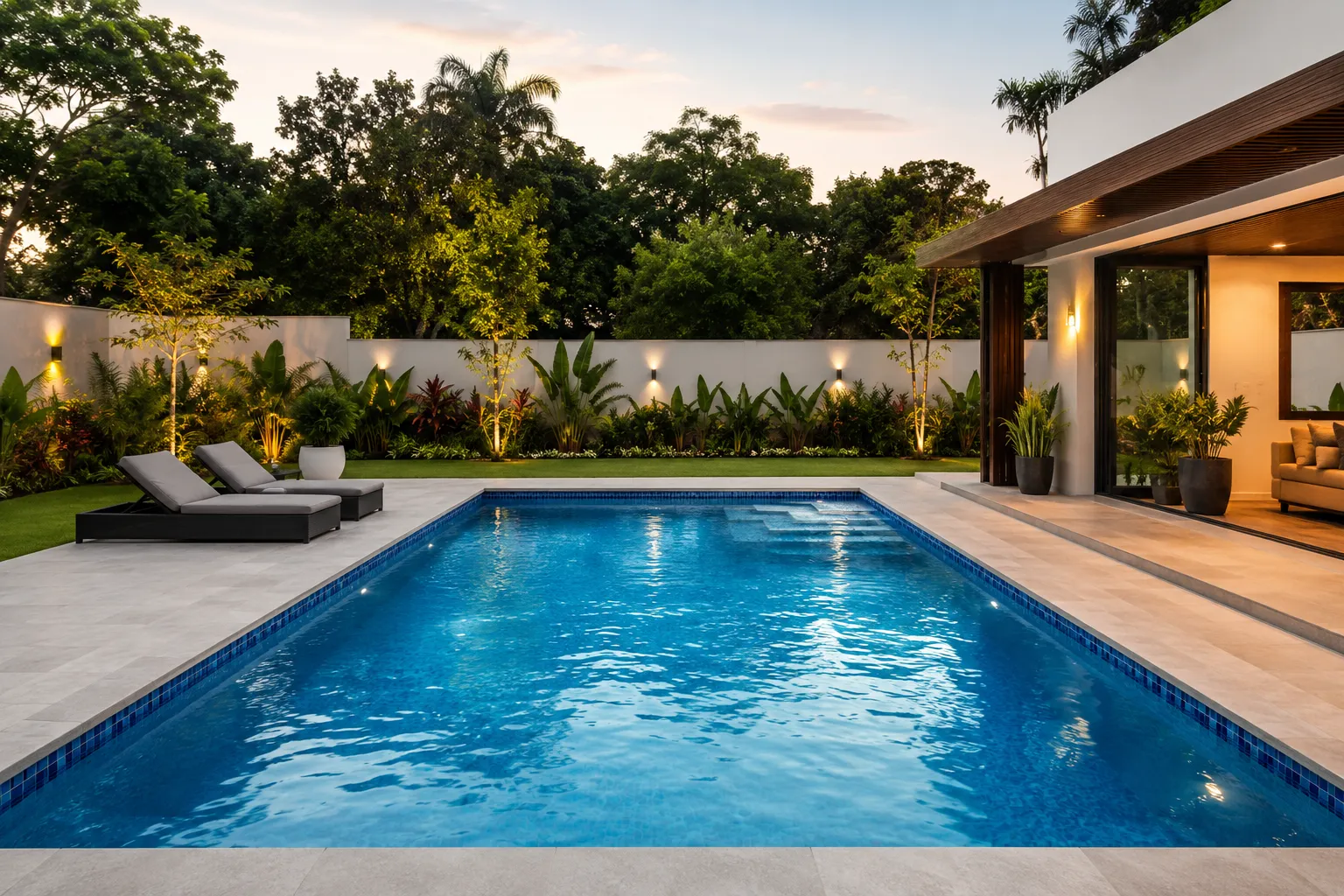
Modern pool engineering works best when pools are integrated with patios, landscaping, and seating zones from the beginning. As a result, even smaller spaces feel visually larger and more luxurious.
4. They Focus on Lifecycle Cost Instead of Initial Cost
Low-cost construction frequently increases long-term repair expenses. By contrast, premium waterproofing and efficient mechanical systems improve durability while lowering operational risk.
5 Key Performance Drivers That Impact ROI
- Hydraulic Design Efficiency — Proper circulation improves water quality — Poor execution increases chemical consumption and algae growth.
- Structural Waterproofing — Multi-layer protection prevents leakage — Weak systems lead to expensive structural repairs.
- Energy Optimization — Efficient pumps reduce electricity usage — Outdated systems inflate monthly operating costs.
- Material Durability — UV-resistant and anti-slip materials improve longevity — Inferior finishes deteriorate rapidly.
- Space Integration — Intelligent layouts improve usability and property aesthetics — Poor planning reduces functional outdoor area.
Concrete Pools vs Fiberglass Pools — Decision Matrix
| Factor | Concrete Pools | Fiberglass Pools |
|---|---|---|
| Time to Value | 8–14 weeks | 2–5 weeks |
| Upfront Cost | Higher initial investment | Moderate investment |
| Long-Term Cost | Lower customization limitations | Lower maintenance but repair complexity |
| Durability | Extremely durable with proper maintenance | Good but vulnerable to shell damage |
| Design Flexibility | Highly customizable | Limited shapes and dimensions |
| Risk Exposure | Waterproofing quality critical | Transportation and fitting risks |
| Scalability | Excellent for custom projects | Limited expansion capability |
| Best Suited For | Luxury custom residential pool builders | Faster installations in smaller homes |
For compact urban properties, custom pool construction company expertise often determines whether concrete or fiberglass provides better lifecycle value.
Real-World Proof
Case Study 1 — Luxury Villa Project, Mumbai
A luxury residential developer in Mumbai planned a rooftop swimming pool solution for a premium villa project. Initially, the proposed design exceeded load-bearing safety thresholds by 18%.
After redesigning the structure using modern pool engineering principles, the project reduced dead load pressure by 22% while improving water circulation efficiency. Additionally, automated filtration reduced annual maintenance costs by approximately ₹1.8 lakh.
Lesson: Intelligent engineering creates safer and more cost-efficient luxury installations in constrained urban environments.
Case Study 2 — Boutique Resort, Goa
A boutique resort struggled with rising maintenance expenses caused by inefficient filtration and poor pool zoning. Water replacement frequency exceeded industry norms by nearly 30%.
The resort implemented smart swimming pool construction upgrades, including variable-speed pumps and optimized circulation mapping. Consequently, utility expenses declined by 41% within 12 months, while guest satisfaction scores increased significantly.
Lesson: Smart hydraulic planning directly impacts operational profitability.
How Resgroup Solves This
Resgroup combines residential swimming pool construction expertise with intelligent spatial engineering to create durable, visually integrated, and operationally efficient pool systems. Unlike generic contractors, the company focuses on space-saving pool architecture, advanced waterproofing systems, energy-efficient equipment integration, and scalable maintenance planning. Additionally, Resgroup emphasizes customized layouts tailored for urban homes, villas, resorts, and compact luxury properties.
If you are planning a modern swimming pool construction design for limited space, Resgroup can help you build a smarter long-term investment.
Evaluation Checklist
- Structural Feasibility Assessment — Ensure soil conditions and load-bearing capacity are professionally analyzed.
- Waterproofing Methodology — Confirm the contractor uses multi-layer waterproofing systems.
- Hydraulic Planning — Ask how circulation zones are designed to avoid stagnant water areas.
- Energy Efficiency Standards — Verify whether pumps and filtration systems minimize power consumption.
- Maintenance Accessibility — Equipment rooms should allow easy future servicing.
- Material Durability — Evaluate UV resistance, anti-slip performance, and long-term wear behavior.
- Automation Compatibility — Smart controls improve operational convenience and reduce labor dependency.
- Construction Timeline Transparency — Reliable builders provide milestone-based scheduling.
Mistakes to Avoid
- Ignoring Structural Engineering
Many homeowners prioritize appearance while overlooking structural calculations. Consequently, long-term leakage and foundation issues become expensive liabilities. - Overbuilding in Small Spaces
Large pools in compact areas reduce outdoor usability and increase maintenance costs unnecessarily. - Choosing Builders Without Hydraulic Expertise
Poor circulation design directly impacts water quality, chemical balance, and filtration efficiency. - Using Low-Grade Waterproofing Materials
Cheap waterproofing systems frequently fail within a few years, especially in rooftop swimming pool solutions. - Skipping Future Maintenance Planning
Without accessible equipment layouts, even minor servicing becomes disruptive and costly.
Frequently Asked Questions
Q: How much does swimming pool construction cost for small homes in 2026?
A: Costs vary depending on dimensions, waterproofing standards, automation features, and material selection. Compact residential projects generally cost less than large luxury installations, although premium finishes and smart systems increase investment. Additionally, rooftop pools require advanced structural reinforcement, which impacts pricing. Buyers should evaluate lifecycle costs instead of comparing only initial quotations.
Q: What is the best swimming pool construction design for compact spaces?
A: Compact rectangular pools, plunge pools, and lap-style layouts are highly effective for urban homes. These designs optimize circulation efficiency while preserving usable outdoor space. Moreover, integrated seating and shallow-depth engineering improve practicality. Smart swimming pool construction focuses heavily on balancing functionality with aesthetics.
Q: Are smart pool filtration systems worth the investment?
A: Yes. Smart pool filtration systems improve water quality consistency while reducing manual maintenance requirements. They also optimize energy consumption through automated circulation scheduling. Consequently, operational expenses decrease significantly over time. Many modern property owners now consider automation a standard requirement rather than a luxury feature.
Q: How long does residential swimming pool construction usually take?
A: Concrete-based projects generally require 8–14 weeks depending on weather, engineering complexity, and finishing requirements. Fiberglass installations are typically faster. However, permitting, structural approvals, and waterproofing stages can affect timelines. Working with experienced residential pool builders helps minimize delays.
Q: Can modern swimming pool construction designs increase property value?
A: Professionally executed pools often improve luxury property appeal, especially in premium residential markets. However, poorly designed installations may create maintenance concerns for buyers. Therefore, quality engineering, energy efficiency, and visual integration are critical. Compact, low-maintenance swimming pools are increasingly preferred in urban real estate markets.
Conclusion
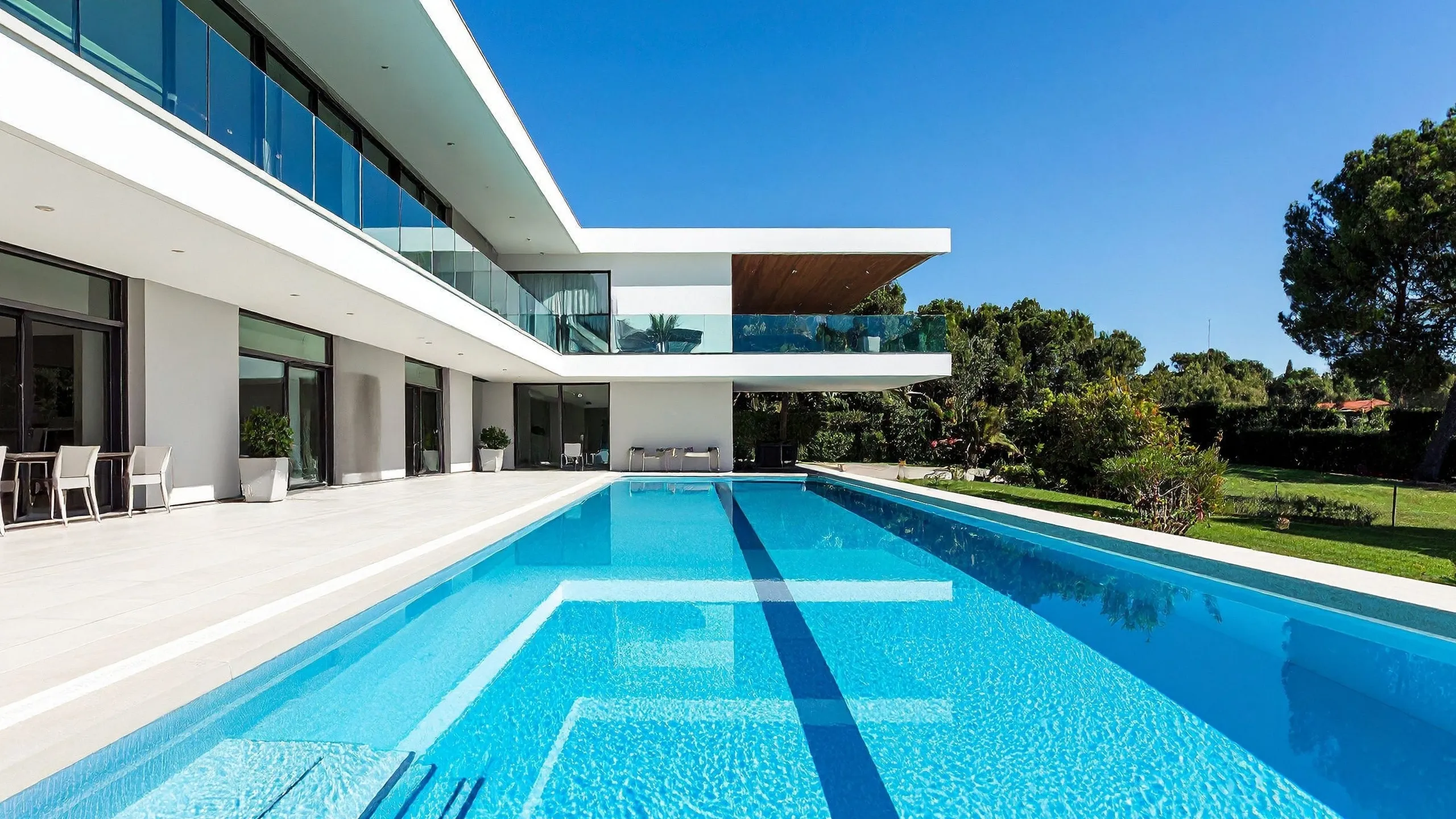
Swimming Pool Construction is not about maximizing size; it is about maximizing efficiency, durability, and long-term usability within available space. Property owners who prioritize intelligent engineering, smart pool filtration systems, and space-saving pool architecture consistently achieve stronger ROI and lower operational risk.
For additional technical standards related to energy-efficient pool systems, review the U.S. Department of Energy swimming pool efficiency guidelines through U.S. Department of Energy Pool Efficiency Resources.
If you are planning a smart swimming pool construction project for a villa, urban residence, or commercial property, Resgroup can help you design a scalable and future-ready solution.



























Sign in to leave a comment.