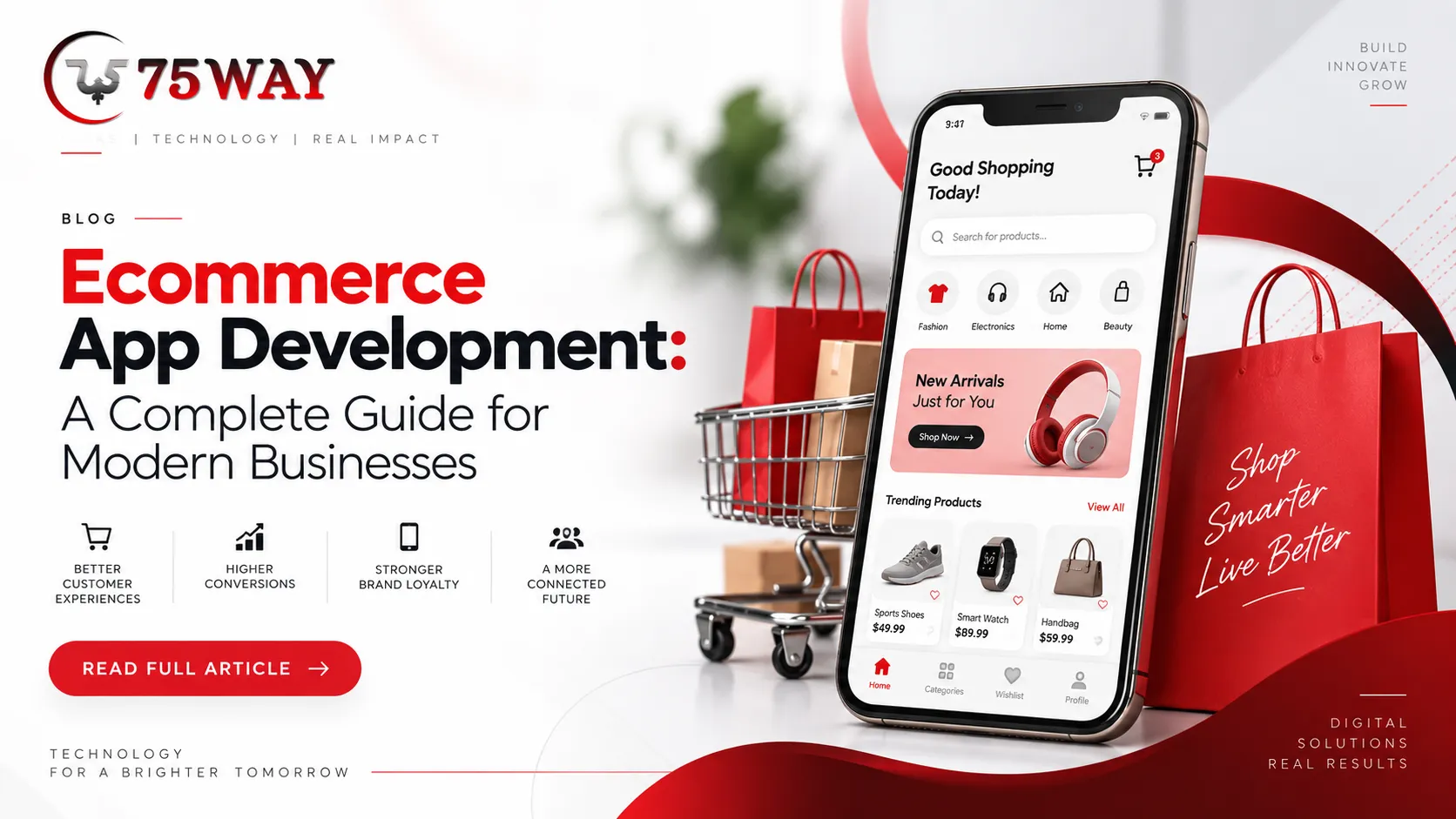

The way people shop has changed dramatically with the rise of smartphones and digital commerce. Customers now expect fast, convenient, and personalized shopping experiences that allow them to browse products, compare prices, place orders, and track deliveries from anywhere. This shift has made ecommerce app development an important investment for businesses looking to strengthen their digital presence and build long-term customer relationships.
A well-designed ecommerce application does more than replicate a website on a mobile screen. It creates a dedicated shopping environment where businesses can offer personalized experiences, simplify purchasing, improve engagement, and encourage repeat sales.
Why Businesses Need an Ecommerce App
Mobile applications provide businesses with a direct communication channel to their customers. Unlike websites, apps can use push notifications, personalized recommendations, and other mobile-specific capabilities to keep customers engaged.
An ecommerce app can also make the purchasing journey faster. Customers can save their preferences, payment information, addresses, and shopping history, reducing friction during future purchases.
For businesses, applications provide valuable customer insights. Data related to browsing behavior, purchases, abandoned carts, and product preferences can help companies make better decisions about marketing, inventory, and product strategies.
Essential Features of an Ecommerce App
The success of an ecommerce application depends heavily on its features and overall usability. Every feature should contribute to a smooth customer journey rather than adding unnecessary complexity.
User Registration and Profiles
Customers should be able to create accounts using email, phone numbers, or supported social login options. A profile can store addresses, order history, wish lists, preferences, and other relevant information.
Product Search and Smart Filters
A powerful search function helps customers quickly find what they need. Categories, filters, sorting options, and relevant search suggestions can make product discovery significantly easier.
Product Pages
Product pages should provide essential information such as images, descriptions, specifications, pricing, availability, reviews, and shipping details. High-quality visuals and clear information can improve purchase confidence.
Shopping Cart and Checkout
The checkout process should be straightforward. Customers should be able to review their items, select delivery options, apply promotional codes, choose payment methods, and complete purchases with minimal steps.
Secure Payment Integration
An ecommerce app should support reliable payment methods that are appropriate for its target market. Secure payment processing, encryption, authentication, and proper handling of transaction data are essential for protecting customers and businesses.
Order Tracking
Customers appreciate visibility after completing a purchase. Real-time order updates, shipping information, estimated delivery dates, and notifications can improve transparency and reduce uncertainty.
Push Notifications
Push notifications can be used to inform customers about order updates, new products, personalized offers, promotions, and abandoned carts. However, notifications should be relevant and carefully managed to avoid overwhelming users.
The Ecommerce App Development Process
Developing a successful application requires more than simply designing screens and writing code. A structured development process helps businesses reduce risks and create a product that matches their objectives.
Research and Planning
The first stage involves understanding the target audience, competitors, business model, product categories, and application goals. Developers and stakeholders can then define the required features and technical requirements.
UI/UX Design
The design should focus on simplicity, consistency, accessibility, and intuitive navigation. Wireframes and prototypes can be used to visualize important user journeys before development begins.
Development
During development, frontend and backend components are created and integrated. APIs, databases, payment systems, authentication, inventory management, and other required services are connected to create the complete application.
Testing
Testing should cover functionality, performance, security, compatibility, usability, and different device configurations. Identifying problems before launch helps prevent poor customer experiences.
Deployment and Maintenance
After successful testing, the application can be published through the appropriate app stores. Development does not end at launch. Regular updates, security improvements, performance optimization, and feature enhancements are necessary to keep the application competitive.
Technologies Used in Ecommerce App Development
The technology stack depends on the project's requirements, budget, expected user base, and future growth plans. Native development can provide platform-specific performance and capabilities, while cross-platform technologies can help businesses develop applications for multiple platforms using a shared codebase.
Backend technologies, databases, cloud infrastructure, APIs, analytics platforms, and third-party integrations also play important roles. The right architecture should be selected with scalability and security in mind rather than focusing only on initial development speed.
How Much Does Ecommerce App Development Cost?
The cost of developing an ecommerce application varies significantly from one project to another. Factors such as application complexity, number of platforms, UI/UX requirements, integrations, backend architecture, security requirements, development location, and ongoing maintenance can influence the overall budget.
A basic application with essential shopping features generally requires less investment than a sophisticated platform with AI-powered recommendations, advanced analytics, multiple vendors, loyalty programs, real-time logistics, and extensive third-party integrations.
Businesses should therefore define their minimum viable product first and prioritize features according to customer needs and business objectives.
Trends Shaping Ecommerce Applications
Technology continues to change the ecommerce experience. Artificial intelligence is increasingly being used for product recommendations, personalized search, customer support, and behavioral analysis.
Other developments include voice-enabled shopping, visual search, augmented reality product visualization, personalized offers, automated customer service, and improved mobile payment experiences.
Businesses that adopt useful technologies strategically can create more convenient shopping experiences without unnecessarily complicating their applications.
Best Practices for a Successful Ecommerce App
A successful ecommerce app should prioritize the customer experience from the beginning. Navigation should be intuitive, pages should load quickly, and important information should be easy to find.
Security should also be treated as a core requirement rather than an afterthought. Businesses should implement appropriate authentication, secure data handling, reliable payment integrations, and regular security testing.
Performance optimization is equally important. Slow-loading pages, complicated checkout processes, and frequent application crashes can lead customers to abandon purchases.
Finally, businesses should continuously analyze user behavior and feedback. An application should evolve based on real customer needs rather than remaining unchanged after its initial launch.
Conclusion
Ecommerce app development provides businesses with an opportunity to create a dedicated digital shopping experience while building stronger relationships with customers. From personalized recommendations and convenient checkout to secure payments and real-time order tracking, the right combination of features can significantly improve the customer journey.
However, successful development requires more than attractive design and advanced technology. Businesses need a clear strategy, thoughtful UX, scalable architecture, strong security, comprehensive testing, and continuous optimization. By focusing on genuine customer needs and long-term business goals, an ecommerce application can become a powerful channel for growth, engagement, and revenue.

























Sign in to leave a comment.