
The modern hyper-connected world means that data is currently being generated faster than ever. Whether it is IoT gadgets and smart sensors, autonomous cars, or wearable devices, massive amounts of information constantly flow. In the past, such data would be transferred to centralized cloud servers to perform the processing and analysis. As the real-time decision-making processing requirement has increased, issues with latency, bandwidth capacity, and perceptions of security in a cloud-only processing environment have risen into greater prominence. Here, Edge AI comes to the rescue, where our usage and options for data change dramatically.
What Is Edge AI?
The deployment of AI algorithms on a device or at the network edge (closer to the source of data as opposed to a remote cloud server) is quite commonly referred to as "edge AI." Devices with Edge AI can process and take actions on data without transmitting it to a centralized location for processing.
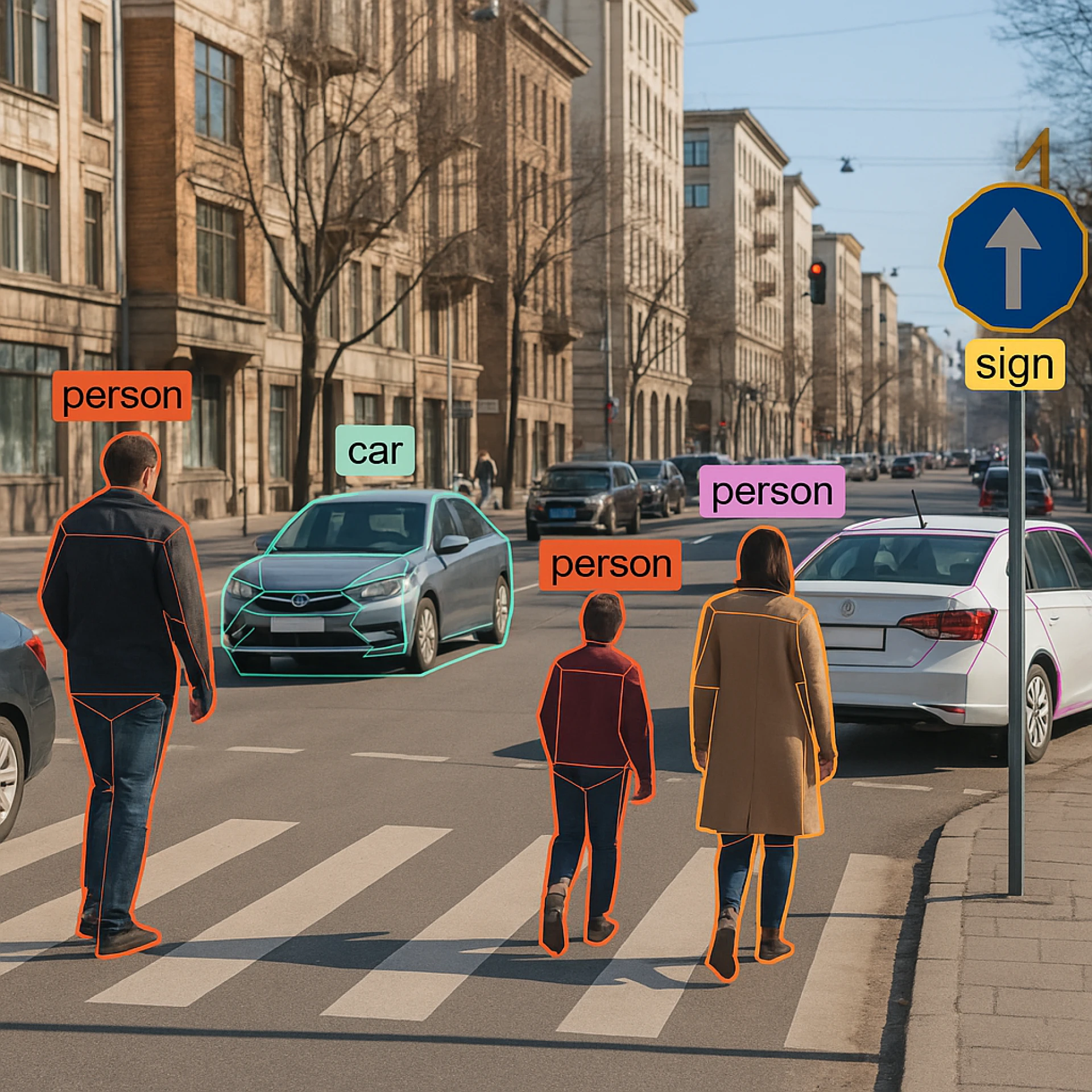
An intense implication of this shift is in such industries as manufacturing, healthcare, retail, and autonomous systems, where speed of decisions can be life-saving. Reconsidering an example of an autonomous vehicle, such an automobile cannot afford the delay in transmission of all decisions to the cloud and requires processing data locally to guarantee passenger protection.
What makes Edge AI important?
The best part about Edge AI is that it is fast and efficient. The closer to the data's origin, the less latency is possible, allowing organizations to reduce their response time in real-time drastically. It is essential in applications including healthcare monitoring systems that identify anomalies in patient vital signs in real time, smart manufacturing systems that reconfigure production lines in real time to avoid defects, and security and surveillance cameras, which can detect potential threats in real time without depending exclusively on cloud servers.
Moreover, Edge AI offers enhanced privacy since sensitive data does not have to leave the device, reducing the risk of breaches during transmission.
The Role of Data Science in Edge AI
There would be no edge AI without data science. The primary focus of Edge AI is on machine learning models, which are deployed on edge devices. Data scientists are essential to the process of gathering and processing data generated by IoT devices and other data sources, model training in cloud or on-premises infrastructure, model optimization and compacting so that they can efficiently run on an end device with limited computing resources, and model deployment and maintenance at the edge to keep the model accurate over time.
To work in this novel area, specialists who plan to become experts in this new field can also take a data science course in Chennai, which will equip them with the necessary knowledge about machine learning and deep learning, as well as the approaches to deploying models needed to work on Edge AI solutions.
Edge AI Implementation Problems
Edge AI has its share of challenges despite the promise. Edge devices may also have limited computing capabilities and memory, which can limit the complexity of the model. Keeping and updating AI models on a distributed network of devices can also be a challenge. There is a lot to consider in running AI workloads on battery-powered devices while maintaining energy efficiency. Moreover, the data is more confidential, but edge devices may be tangible objects to tamper with.
Working on these issues enhances skills in both the field of AI and embedded systems—areas that are becoming increasingly in demand in the job market. To acquire theoretical as well as practical knowledge of such technologies, many learners prefer a data science certification in Chennai.
Real-World Applications of Edge AI
Edge AI is available in the market already, creating a furor. Traffic lights installed in smart cities can learn to adjust to the current situation, thereby decreasing road congestion and improving traffic safety. Portable medical devices are applicable in the medical profession since they can process patient data locally, giving results without waiting until it has been processed in the cloud. Retail Smart shelves and inventory systems have the potential to read a shortage of stock instantly, and the restocking process becomes automated. In production, AI robotic systems can also assess the risk of failure in machinery to ensure that a machine does not experience costly downtimes.
These applications can show the extensibility of Edge AI and its viability in changing the way businesses transform themselves.
Trends in Edge AI of the Future
The future of Edge AI is closely tied to advancements in AI algorithms and hardware technology. The smaller, more energy-efficient AI chips are proposed to enable more power in the edge devices without placing a strain on resources. Simultaneously, federated learning, a way of training AI models on a collection of devices without exchanging raw data, will boost privacy and allow stronger models.
With the increased pace of Edge AI, the need to address the high-skilled employees in the field of data science courses in Chennai under a variety of content areas, including AI implementation, optimization, and IoT implementation, will only increase. Companies will seek data scientists who can help bridge the gap between cloud analytics and intelligent data at the edge.
How to Get Started in Edge AI
In case you want to choose Edge AI as your career, there are some steps to start the way. First, establish a solid base in data science by mastering machine learning, deep learning, and data preprocessing, which can be learned through a good data science certification in Chennai. Second, acquire knowledge of embedded systems, including hardware constraints, microcontrollers, and edge devices. Third, explore the tools of Edge AI (TensorFlow Lite, OpenVINO, and NVIDIA Jetson) to gain hands-on experience with deploying AI at the edge. Fourth, consider tiny projects, such as object detection on Raspberry Pi and predictive maintenance on IoT sensors, to enhance your portfolio. Lastly, be informed of new advancements in Edge AI since all the information is changing at a high velocity, and new information requires a continuous learning process.
Conclusion
Edge AI is changing the face of data-driven decision-making by pushing intelligence near the genesis of the data. It has an advantage in processing information locally due to unmatched speed, efficiency, and privacy advantages, setting the stage for innovative applications in nearly all industries.
To become future professionals, acquiring the skills through a data science course in Chennai may become the key to working on the deployment of advanced AI at the edge. Because organizations are already highly dependent on edge solutions powered by AI, obtaining a data science certification in Chennai will help you not only improve your technical proficiency but also become a marketable specialist in the competitive technical job market.
The future of the world is being driven by the march of intelligence everywhere, on devices, in machines, and at every corner of our connected world. The future of this change is Edge AI, and whoever has the proper skills for it will be the one defining it.


























Sign in to leave a comment.