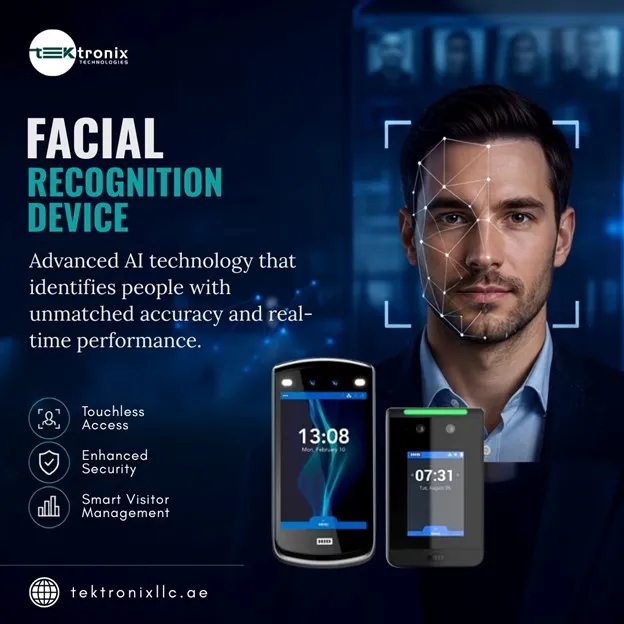

Facial Recognition System technology is reshaping how offices, government buildings, malls, and industrial facilities across the UAE identify people and control access. As Dubai and the wider Emirates push toward smarter, contactless security infrastructure, organizations are replacing keycards and manual guard checks with cameras that recognize a face in real time and make an access decision in a fraction of a second. 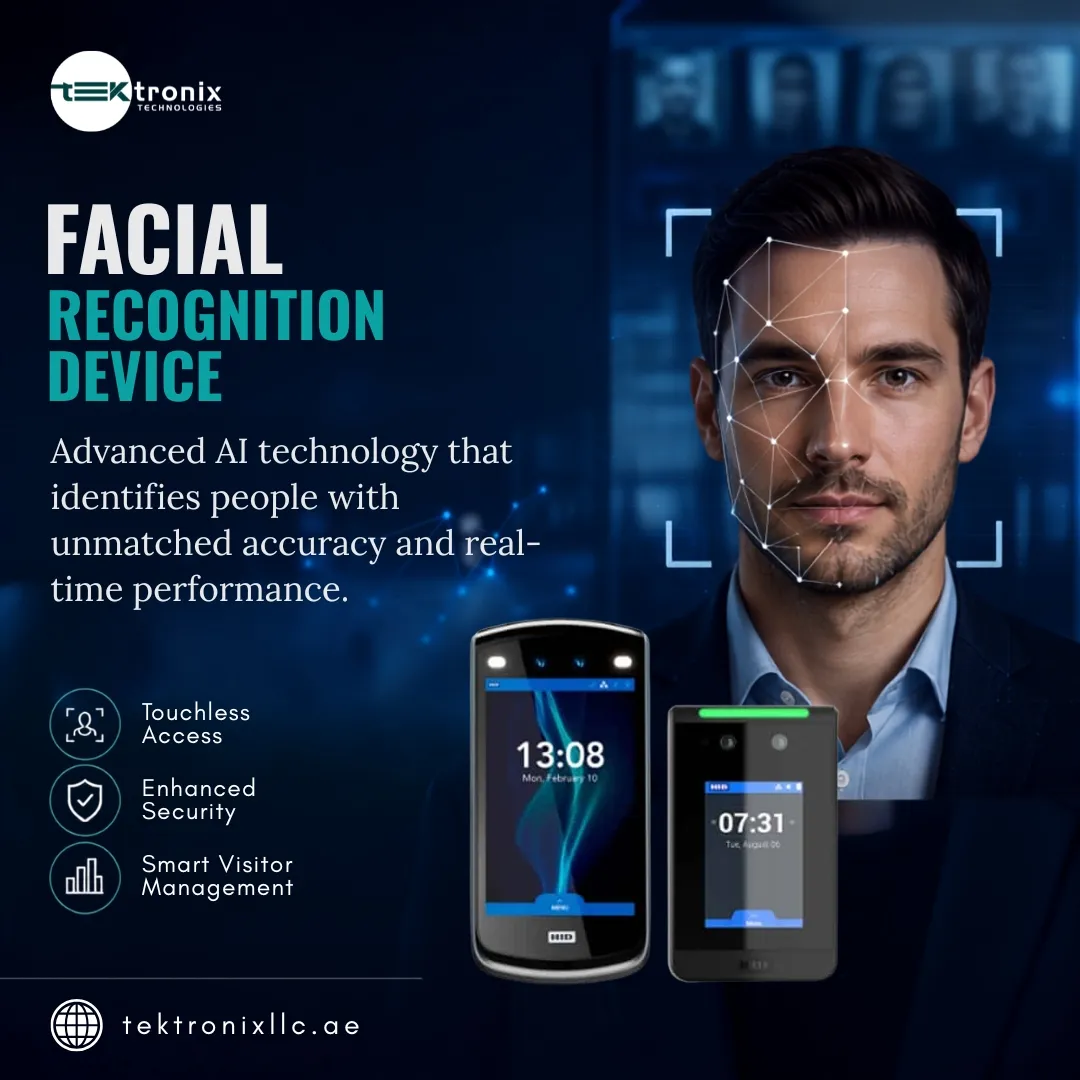
This guide explains how a modern facial recognition system works, why it strengthens security across UAE facilities, and what to evaluate before selecting a Facial Recognition System UAE partner.
Why UAE Facilities Are Moving Toward Facial-Based Security
Keycards get lost, shared, or cloned. PIN codes get written down or forgotten. A face, by contrast, cannot be handed to someone else or left at home, which is exactly why UAE facilities managing sensitive or high-traffic environments increasingly treat facial-based verification as a stronger baseline than credential-only access.
Dubai's broader push toward smart-city infrastructure has also normalized contactless identity verification across airports, government service centres, and commercial towers, making facial recognition feel like a natural extension of security expectations rather than an unfamiliar technology for staff and visitors alike.
What Is a Facial Recognition System and How Does It Work?
Facial Recognition System technology captures a live image of a person's face, converts its distinguishing features into a mathematical template, and compares that template against a stored database to confirm identity. The entire process typically completes in under a second, even at a busy entrance during peak arrival hours.
Unlike older camera systems that simply record footage for later review, a facial recognition platform makes an active, real-time decision — granting access, logging an event, or raising an alert — the moment a face is captured.
Face Detection and Facial Identification: The First Two Steps
Every facial recognition workflow begins with two distinct technical steps that are often confused with one another but serve different purposes.
Face Detection Locates a Face in the Frame
Face Detection is the process of locating a human face within a camera's field of view, distinguishing it from the background, other objects, or multiple people passing through at once. This step happens before any identity matching takes place.
Facial Identification Matches It to a Known Record
Once a face is detected, Facial Identification compares its features against a database of enrolled individuals to determine who the person is, returning a match, a non-match, or an alert if the face does not correspond to anyone on file.
Facial Authentication for Secure, Contactless Access Control
Where identification asks who is this person, Facial Authentication asks a narrower question: does this face match the specific identity being claimed. This distinction matters most at entry points where a person presents a claimed identity, such as tapping a badge or entering an employee ID, and the system simply confirms the face matches that specific record rather than searching an entire database.
This authentication-style approach is typically faster and less resource-intensive than open identification, which makes it well suited to high-frequency checkpoints like turnstiles, staff entrances, and time-and-attendance terminals.
Facial Recognition Access Control: Replacing Cards and PINs at the Door
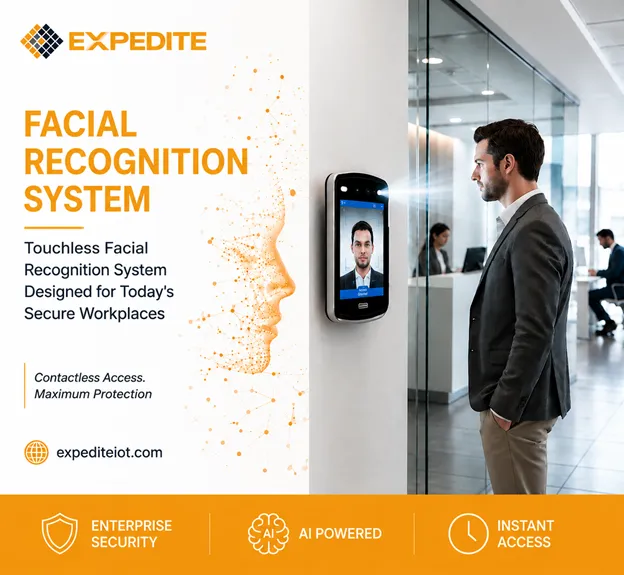
Perhaps the most visible application of this technology is Facial Recognition Access Control, where a face replaces a keycard, fob, or PIN as the credential that unlocks a door, turnstile, or barrier.
- Employees walk through a staff entrance without tapping a card or removing gloves in cold-storage environments.
- Lost or shared credentials stop being a security gap, since a face cannot be handed to a colleague the way a badge can.
- Every access event is logged automatically, creating a reliable audit trail tied to a verified identity rather than a card number that could have been used by anyone holding it.
For UAE facilities managing multiple access levels — general staff areas, restricted server rooms, executive floors — facial access control can apply different permission tiers to the same enrolled population without issuing separate physical credentials for each zone.
Choosing the Right Facial Recognition Device for Your Facility
Hardware selection depends heavily on where the device will sit and how it will be used day to day. A Facial Recognition Device for an outdoor vehicle gate needs different specifications than one mounted beside an interior office door.
Environmental and Lighting Tolerance
Devices deployed outdoors or near glass frontages need strong performance in direct sunlight, low light, and the UAE's high ambient heat, since accuracy can drop sharply on hardware not rated for these conditions.
Mask and Accessory Handling
Facilities with staff who regularly wear safety masks, glasses, or headscarves need devices tested specifically for accurate recognition under those conditions, rather than hardware optimized only for an unobstructed face.
Evaluating Facial Recognition Software Beyond the Camera
The camera captures the image, but the Facial Recognition Software running behind it determines matching accuracy, processing speed, and how well the platform integrates with the rest of a facility's security stack.
- Matching accuracy under real-world conditions, not just laboratory benchmarks, since lobby lighting and camera angles rarely match test-lab setups.
- Speed of decision-making at peak entry times, when dozens of employees may arrive within the same few minutes.
- Open integration with access control panels, visitor management platforms, and time-and-attendance systems already in use on-site.
Facilities evaluating vendors are generally better served requesting a live demonstration under their own lighting conditions rather than relying solely on a manufacturer's published accuracy figures.
What a Complete Facial Recognition Solution Includes
A genuinely useful Facial Recognition Solution is rarely just a camera and a database. UAE facilities typically expect a fuller package that covers the full lifecycle of an access event.
- Enrolment tools that make it simple to register new staff or visitors without a lengthy onboarding process.
- Real-time alerting when an unrecognized or watchlisted face is detected at a monitored entrance.
- Reporting dashboards that show access patterns, peak arrival times, and any repeated failed-match events worth investigating.
- Data handling practices that keep biometric records secure and limit retention to what the organization actually needs.
Treating facial recognition as a complete solution, rather than a single piece of hardware, is what actually delivers the security and operational benefits facilities are looking for.
Data Privacy and Compliance for UAE Deployments
Because facial recognition processes biometric data, UAE organizations need to be deliberate about consent, storage, and retention. Best-practice deployments limit biometric data collection to a clearly defined purpose, store templates securely rather than raw images wherever possible, and set defined retention periods rather than keeping records indefinitely.
Facilities operating under UAE data protection expectations should also be able to explain, in plain terms, how long biometric data is kept, who can access it, and how a person could request its removal if they leave the organization.
Selecting a Facial Recognition System UAE and Facial Recognition System Dubai Provider
Sourcing a Facial Recognition System UAE facilities can depend on long-term involves more than comparing camera specifications on a data sheet. A track record with comparable local deployments matters just as much as the hardware itself.
For organizations specifically based in the capital of commerce and tourism, a Facial Recognition System Dubai deployment benefits from a provider who understands the Emirate's mix of high-rise commercial towers, retail environments, and government facilities, each with different lighting, traffic volume, and integration requirements.
- Proven experience with comparable UAE facilities, not only generic international case studies.
- Local installation and support teams able to respond quickly if hardware needs recalibration or servicing.
- Clear documentation on biometric data handling aligned with UAE regulatory expectations.
Requesting a live, on-site demonstration under the facility's actual lighting and traffic conditions remains the most reliable way to validate a vendor's claims before committing to a full rollout.
Installation, Enrolment, and Ongoing Accuracy
A facial recognition rollout typically moves through a short, structured sequence rather than a single installation day, since accuracy depends on more than just mounting a camera.
- A site survey confirms optimal camera placement, accounting for lighting, entry angles, and expected foot traffic.
- Staff and regular visitors are enrolled with a brief capture session, typically taking a few seconds per person.
- Periodic recalibration and software updates maintain matching accuracy as lighting conditions or camera positioning shift over time.
Facilities that treat enrolment and calibration as an ongoing process, rather than a one-time setup step, consistently report more reliable long-term performance from their deployment.
Conclusion
A well-implemented Facial Recognition System gives UAE facilities faster, more reliable identity verification than cards or PINs ever could, combining accurate Face Detection and Facial Identification with secure Facial Authentication at every monitored entrance, while robust Facial Recognition Access Control removes the vulnerabilities that come with shared or lost credentials, and a properly selected Facial Recognition Device paired with dependable Facial Recognition Software forms a genuine Facial Recognition Solution rather than an isolated piece of hardware, which is why organizations sourcing a Facial Recognition System UAE or Facial Recognition System Dubai partner should prioritize proven local experience, integration capability, and clear biometric data governance.































Sign in to leave a comment.