
If you’re a manager, you’ve probably noticed something strange: everyone’s talking about AI, but very few people can explain what’s actually coming next in a way that feels practical. You don’t need another buzzword-filled article; you need a clear sense of where things are headed and how to prepare. That’s precisely where a well-designed generative AI course for managers becomes powerful, because the research side of AI is moving faster than most leadership teams can track.
From Simple Tools To “Agentic” Partners
A few years ago, generative AI felt like a clever assistant that could write, summarize, or brainstorm on command. Now, the conversation is shifting toward systems that can act more like collaborators than tools. Instead of asking, “Can this model write a draft?”, managers are starting to ask, “Can this system notice a problem, decide what to do, and then execute on it?”
That idea sits at the heart of agentic AI frameworks. These systems are designed to break bigger goals into smaller tasks, take actions across tools, and then loop back with results. For a sales manager, that might mean an AI that notices a dip in conversions, pulls data from the CRM, drafts experiments, and even launches A/B tests with minimal human intervention. When an agent can do that, you’re not just automating tasks; you’re reshaping workflows.
Because of this shift, many of the more intelligent Gen AI for managers curricula are starting to include decision-making with semi-autonomous systems, not just prompt writing. A focused agentic AI course will usually walk through live examples: setting guardrails, defining what an AI agent is allowed to touch, and figuring out when a human must step in. That’s a very different skill from simply “using a chatbot,” and it’s where many executives are quietly lagging.
Context, Memory, And AI That Actually “Gets” Your Business
Another major direction in current research is providing models with better context and more extended memory. Early tools were great at one-off tasks, but they didn’t remember how your team works or what your company actually cares about. That’s changing quickly.
New systems can be wrapped around your internal docs, processes, and communication patterns. Over time, they start to adapt to your brand tone, approval rules, and even the unwritten norms your team lives by. This is why smart Generative AI training programs are no longer just about “what is a large language model.” They dive into how to safely connect AI to internal knowledge, how to decide which data should never be exposed, and how to design review steps so nothing risky goes out the door.
For managers, this means Gen AI for managers courses need to do more than teach theory. The useful ones walk you through real-life scenarios: an AI drafting performance feedback, preparing board updates from raw data, or suggesting process improvements based on recurring complaints in support tickets. Once you see that level of context awareness in action, you start to understand both the upside and the responsibility that comes with it.
Why Non‑Technical Leaders Suddenly Need AI Fluency
One quiet truth: the success or failure of AI in a company is rarely about the models themselves. It’s usually about the managers. If a leadership team doesn’t understand what these tools can realistically do, they either underuse them or overtrust them—and both create problems.
That’s why demand for a practical generative AI course for managers has exploded. The better programs don’t expect you to code. Instead, they focus on questions like:
- How do you redesign a team’s workflow once AI is doing 30–40% of the routine work?
- Where are the real risks—privacy, bias, compliance—and who owns them?
- When should an AI-generated suggestion be treated as input, not a decision?
Good generative AI training programs also include messy, real-world examples. You might see a marketing campaign that looked great on paper but flopped because the AI didn’t understand local culture. Or an operations dashboard that surfaced exactly the wrong KPI because the prompt was written carelessly. By walking through these kinds of stories, the learning starts to feel grounded instead of academic.
As agentic AI frameworks become more capable, these leadership skills get even more critical. A manager who knows how to set clear goals, define boundaries, and review results will gain enormous value from an agentic AI course. Someone who treats the system like an infallible oracle will eventually run into an ugly mistake.
Choosing The Right Learning Path As A Manager
With so many options out there, it’s easy to sign up for the wrong thing and write off AI learning entirely. One safe rule: if a program aimed at Gen AI for managers spends most of its time on coding or tool-specific “button clicks,” it probably isn’t built for long-term value.
Instead, look for a generative AI course for managers that:
- Connects emerging research—like agent-based systems and long-context models—to business use cases you actually recognize.
- Includes hands-on practice with prompts, reviews, and scenario planning, not just lectures.
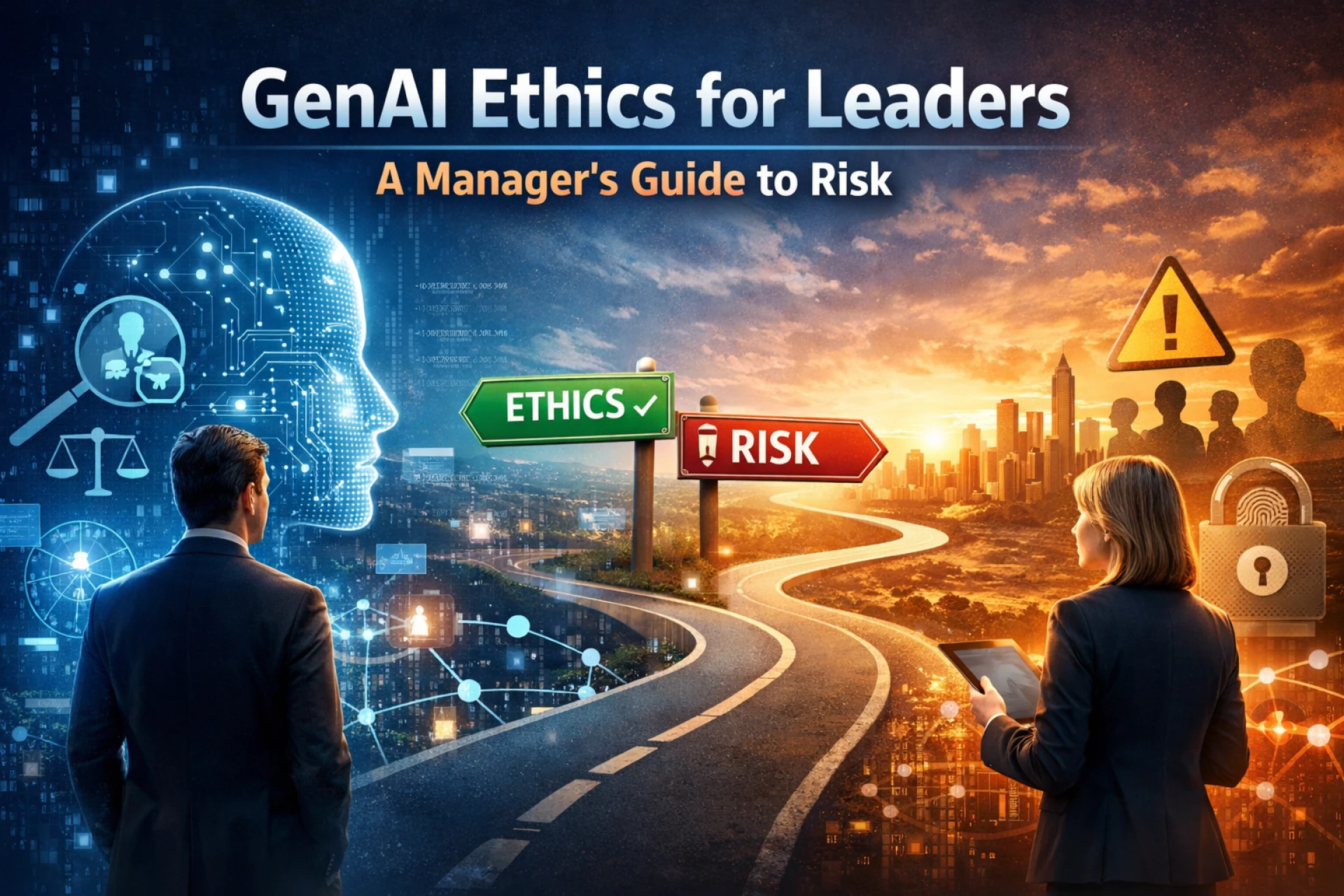
- Talks openly about governance, ethics, and failure modes, not just success stories.
You’ll also see more blended formats now: short workshops backed by labs, or ongoing cohorts where you bring your own projects. Programs like these often sit alongside broader generative AI training programs within companies, where technical staff learn implementation while leaders focus on strategy and change management.
And as agentic AI frameworks creep into tools your team already uses—CRMs, project boards, HR platforms—you’ll want at least an introductory agentic AI course under your belt so you can ask the right questions before switching things on.
So, What’s Your Next Move?
The research frontier in generative AI is shifting from “Can we generate this?” to “Can we trust a system to act, adapt, and collaborate over time?” That shift has direct consequences for how teams are run, how decisions are made, and how work feels day to day. Managers who ignore it will constantly be reacting; those who prepare will quietly shape how AI shows up in their organisations.
If you’re serious about that second path, investing in a solid generative AI course for managers is no longer a nice-to-have. Pair it with targeted Gen AI for managers workshops or an agentic AI course that fits your industry, and you’ll move from feeling overwhelmed by hype to leading experiments with confidence. The technology is maturing either way; the real question is whether your skills will mature alongside it.



























Sign in to leave a comment.