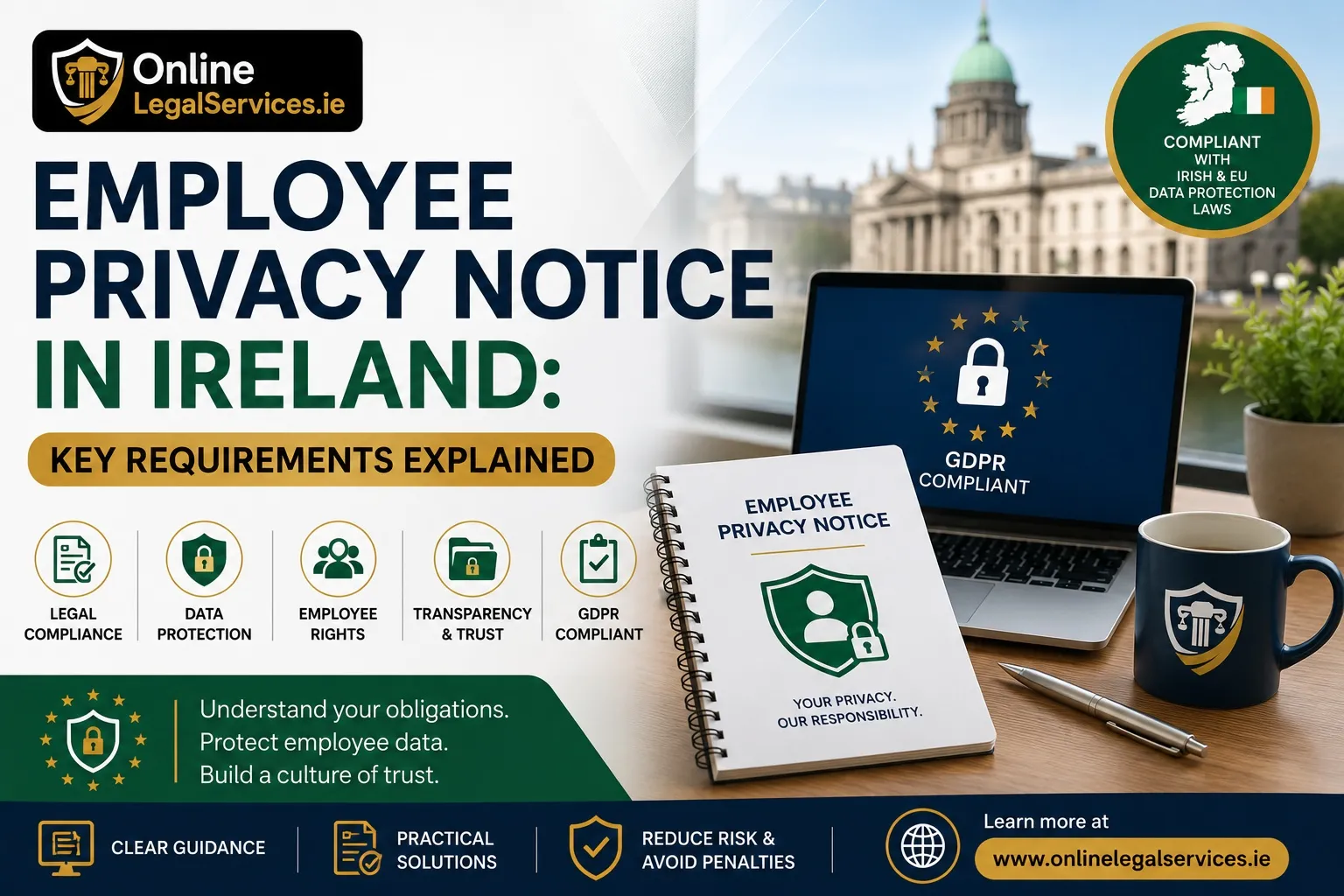

In today’s data-driven workplace, protecting employee information is not just good practice—it’s a legal obligation. Every employer in Ireland must understand how to collect, process, and protect personal data responsibly. One of the most important tools for ensuring transparency and compliance is an employee privacy notice in Ireland.
This comprehensive guide explains what an employee privacy notice is, why it matters, and the key legal requirements under Irish and EU data protection law. Whether you're an employer drafting a notice or an employee seeking clarity, this article covers everything you need to know.
What Is an Employee Privacy Notice?
An employee privacy notice in Ireland is a document that informs employees about how their personal data is collected, used, stored, and shared by their employer. It is a fundamental requirement under the General Data Protection Regulation (GDPR).
This notice ensures transparency and gives employees insight into:
- What personal data is being collected
- Why it is being processed
- How long it is retained
- Who it is shared with
- What rights employees have regarding their data
It applies to all employees, including full-time, part-time, temporary workers, and even job applicants.
Why Is an Employee Privacy Notice Important?
An employee privacy notice is not just a legal formality—it plays a critical role in building trust and ensuring compliance.
1. Legal Compliance
Under GDPR and Irish data protection laws, employers must provide clear and accessible information about data processing activities.
2. Transparency
Employees have the right to know how their data is used. A well-drafted notice ensures openness and accountability.
3. Risk Reduction
Failure to provide a compliant privacy notice can lead to complaints, investigations, and fines from the Data Protection Commission Ireland.
4. Employee Trust
When employees understand how their data is handled, it strengthens confidence in the organisation.
Legal Framework in Ireland
The employee privacy notice in Ireland is governed by two key legal frameworks:
1. GDPR (EU Law)
The GDPR sets out strict rules on how personal data must be handled across the EU.
2. Data Protection Act 2018 (Ireland)
This Irish legislation complements GDPR and outlines how it is applied locally.
Together, these laws require employers to:
- Process data lawfully, fairly, and transparently
- Collect only necessary data
- Keep data secure
- Provide clear privacy notices
What Must Be Included in an Employee Privacy Notice?
To comply with GDPR, an employee privacy notice in Ireland must include specific information.
1. Employer Details
Clearly identify the organisation collecting the data, including:
- Company name
- Registered address
- Contact details
If applicable, include the Data Protection Officer (DPO) contact details.
2. Types of Personal Data Collected
Employers must specify what data they collect, such as:
- Personal identification (name, address, PPS number)
- Contact details
- Employment history
- Payroll and financial data
- Performance records
- IT usage data
3. Purpose of Data Processing
Explain why the data is collected. Common purposes include:
- Payroll and tax compliance
- HR management
- Performance evaluation
- Legal obligations
- Workplace safety
Each purpose must have a lawful basis under GDPR.
4. Legal Basis for Processing
Employers must clearly state the legal grounds for processing data. These may include:
- Contractual necessity
- Legal obligation
- Legitimate interests
- Employee consent (in limited cases)
5. Data Sharing
The notice should explain who the data is shared with, such as:
- Payroll providers
- Government bodies (e.g., Revenue Commissioners)
- IT service providers
- Legal advisors
Transparency is key here.
6. Data Retention Period
Employers must specify how long employee data is kept. For example:
- Payroll records: typically 6 years
- Recruitment data: shorter retention periods
If exact timelines are not possible, provide criteria used to determine retention.
7. Employee Rights
Employees have strong rights under GDPR, which must be outlined in the notice:
- Right to access data
- Right to rectification
- Right to erasure
- Right to restrict processing
- Right to data portability
- Right to object
Employees should also be informed about their right to lodge a complaint with the Data Protection Commission Ireland.
8. Data Transfers Outside the EU
If employee data is transferred outside the EU, employers must:
- Disclose this clearly
- Explain safeguards in place (e.g., Standard Contractual Clauses)
9. Security Measures
While not always detailed, employers should reassure employees that appropriate security measures are in place to protect data.
When Should You Provide an Employee Privacy Notice?
Timing is crucial. An employee privacy notice in Ireland should be provided:
- At the start of employment
- During recruitment (for candidates)
- When changes are made to data processing practices
It should be easily accessible—typically included in:
- Employment contracts
- Employee handbooks
- HR portals
Best Practices for Drafting an Employee Privacy Notice
Creating an effective privacy notice goes beyond compliance. Here are some best practices:
Use Clear Language
Avoid legal jargon. Use simple, understandable terms so employees can easily grasp the content.
Keep It Concise
While it must be comprehensive, avoid unnecessary complexity.
Make It Accessible
Ensure employees can easily find and access the notice at any time.
Update Regularly
Review and update the notice when:
- Laws change
- Business processes evolve
- New technologies are introduced
Tailor to Your Organisation
A generic template may not cover all aspects of your business. Customisation is essential.
Common Mistakes to Avoid
Many organisations make errors when drafting their employee privacy notice in Ireland. Here are some common pitfalls:
1. Being Too Vague
Generic statements like “we may use your data for business purposes” are not sufficient.
2. Missing Legal Basis
Failing to clearly state the lawful basis for processing is a major compliance issue.
3. Outdated Information
Privacy notices must reflect current practices.
4. Over-Reliance on Consent
Employers often incorrectly rely on consent, which is not always appropriate in employment contexts.
5. Ignoring Employee Rights
Not clearly outlining employee rights can lead to complaints and penalties.
How GDPR Impacts Employee Data
The General Data Protection Regulation has significantly strengthened employee data rights.
Key GDPR Principles:
- Lawfulness, fairness, and transparency
- Purpose limitation
- Data minimisation
- Accuracy
- Storage limitation
- Integrity and confidentiality
Employers must demonstrate accountability for all data processing activities.
Role of the Data Protection Commission (DPC)
The Data Protection Commission Ireland is responsible for enforcing data protection laws in Ireland.
What the DPC Does:
- Investigates complaints
- Conducts audits
- Issues fines and penalties
- Provides guidance to organisations
Failure to comply with GDPR requirements, including providing a proper employee privacy notice, can result in significant consequences.
Penalties for Non-Compliance
Ignoring the requirements for an employee privacy notice in Ireland can lead to serious repercussions:
- Fines of up to €20 million or 4% of global turnover
- Legal action from employees
- Reputational damage
- Loss of employee trust
Compliance is not optional—it is essential.
Employee Perspective: Why It Matters
From an employee’s standpoint, a privacy notice provides:
- Clarity on how personal data is used
- Assurance that data is handled responsibly
- Awareness of rights and protections
Employees should always read and understand their organisation’s privacy notice.
Future Trends in Employee Data Privacy
Data privacy is constantly evolving. Key trends include:
Increased Monitoring
With remote work, employers are using more digital monitoring tools—raising privacy concerns.
AI and HR Technology
Automation and AI in recruitment and performance tracking require greater transparency.
Stronger Enforcement
Regulators like the Data Protection Commission Ireland are becoming more active in enforcement.
Employee Awareness
Employees are becoming more informed and proactive about their rights.
Conclusion
An employee privacy notice in Ireland is a vital component of workplace compliance and transparency. It ensures that employees understand how their personal data is handled while helping organisations meet their legal obligations under the General Data Protection Regulation.
Employers must take the time to create clear, accurate, and up-to-date privacy notices tailored to their specific operations. By doing so, they not only avoid legal risks but also build trust and credibility within their workforce.
In an era where data is one of the most valuable assets, protecting employee information is not just a requirement—it’s a responsibility.
































Sign in to leave a comment.