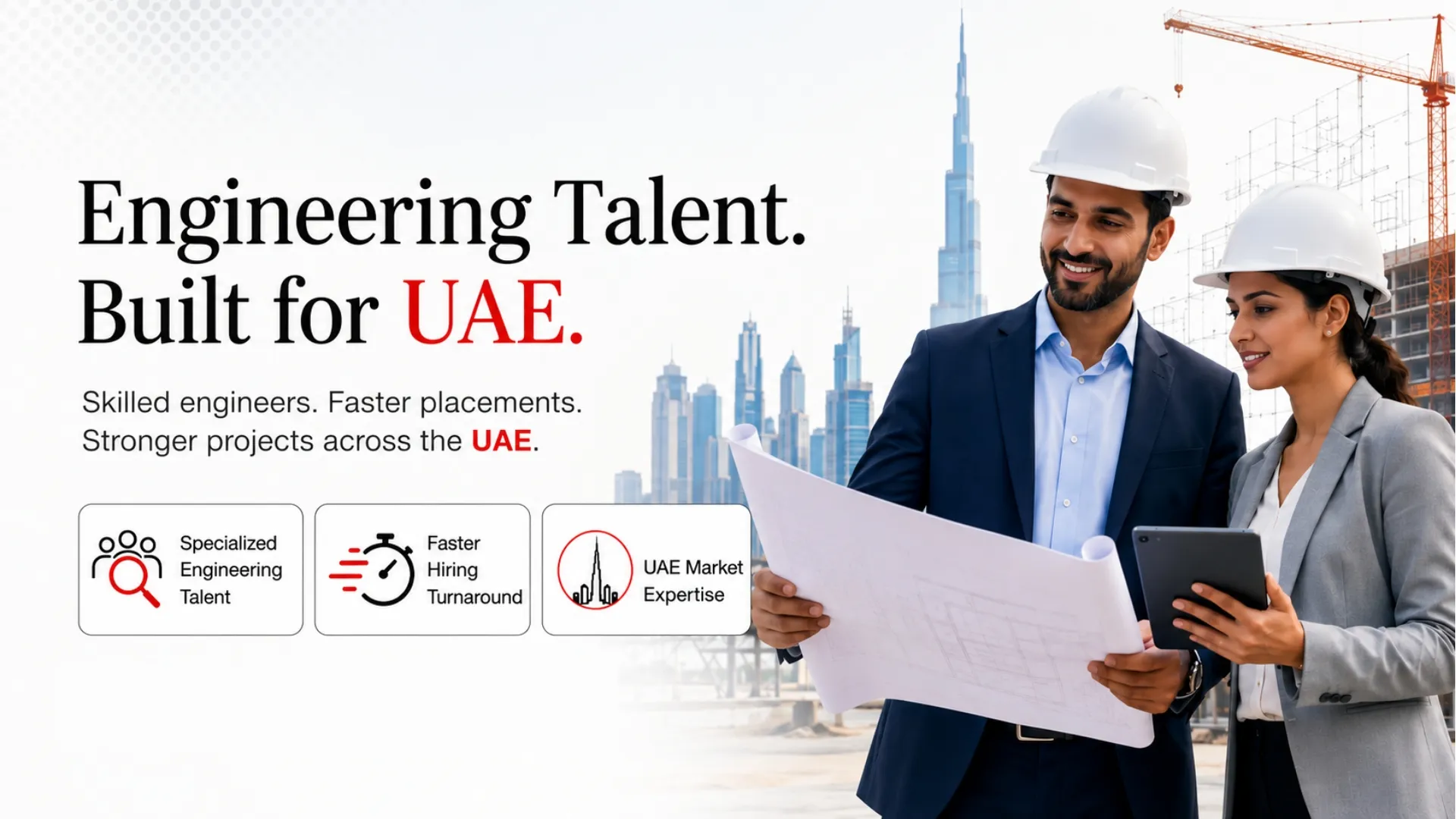

Dubai continues to expand across construction, infrastructure, energy, real estate, technology and industrial development. With new projects and complex engineering requirements comes another business challenge that is often less visible but equally important: finding the right engineering talent.
A project can have a clear scope, strong funding and an experienced leadership team, but it still needs qualified engineers to move from planning to execution.
For businesses operating in Dubai, engineering staffing is therefore becoming an important part of workforce planning. The challenge is not simply finding engineers who are available. It is finding professionals with the right technical background, project experience and understanding of the environment in which they will work.
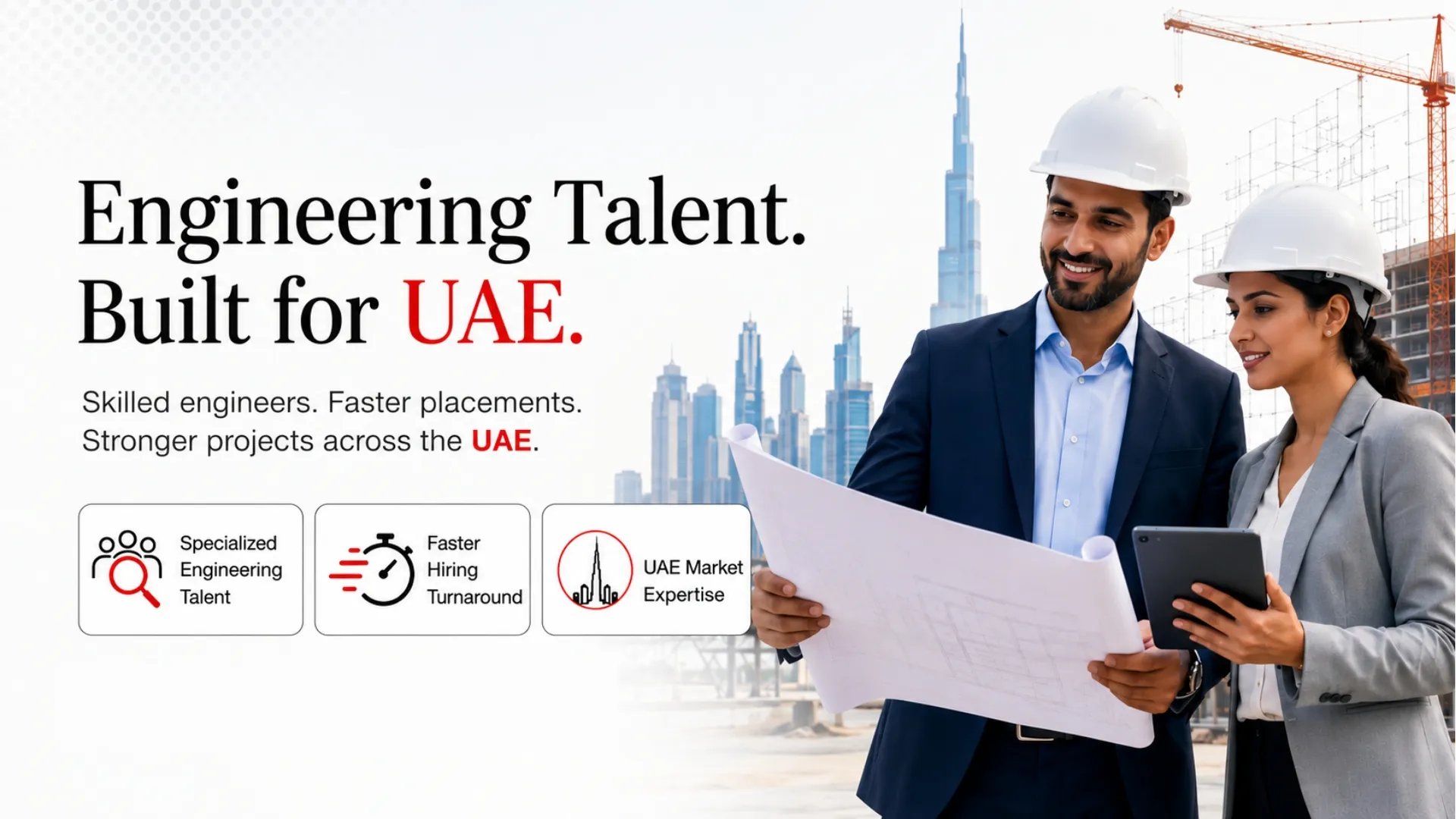
Why Engineering Talent Matters in Dubai
Engineering sits at the centre of many of Dubai's major industries.
Construction projects need civil, structural, electrical and mechanical engineers. Infrastructure programmes require specialists across transportation, utilities and project delivery. Industrial businesses need engineers who understand manufacturing, automation, process improvement and maintenance.
Technology driven businesses also require software, systems, cloud, data and network engineers.
This creates a broad engineering talent market, but it also creates a recruitment challenge. Different projects require very different skills.
A civil engineer with extensive building experience may not be the right fit for an infrastructure project. Similarly, an electrical engineer experienced in building services may not have the background required for a specialised industrial environment.
The right hire depends on the project.
What Makes Engineering Recruitment in Dubai Different
Engineering recruitment in Dubai involves more than matching job titles with CVs.
Experience, technical specialisation and project exposure can make a significant difference to a candidate's suitability.
There is also a regulatory side to consider, particularly for engineering consultancy and construction activities.
Dubai Municipality states that engineering consultancy and contracting activities operate within a regulatory framework covering licensing, classification and accreditation of technical staff. Its current standards also cover the requirements for different engineering activities and professional staff.
For employers, this means engineering recruitment needs to consider professional requirements alongside technical capability.
A candidate may look suitable on paper, but the organisation still needs to determine whether the person's qualifications, experience and professional status align with the requirements of the role and project.
The Engineering Skills Businesses Need
The demand for engineering talent in Dubai is not limited to one discipline.
Civil and structural engineers remain important for construction, infrastructure and development projects. Mechanical and electrical engineers are needed across building services, industrial operations, facilities and energy related work.
Project engineers and site engineers help coordinate technical work with project schedules, contractors and other stakeholders.
BIM engineers and design professionals are increasingly relevant as projects become more digitally coordinated.
There is also growing demand for engineers working across automation, data, software, cloud systems, telecommunications and other technology focused areas.
For businesses, this creates an important distinction between hiring an engineer and hiring the right engineer.
The second requires a much clearer understanding of the project's technical requirements.
Why Project Experience Matters
Qualifications provide the foundation, but project experience often tells employers much more about how an engineer will perform in a real working environment.
Consider two candidates with similar qualifications. One may have worked mainly on smaller projects, while the other has experience managing complex projects involving multiple contractors, strict deadlines and several technical teams.
The difference can be significant.
Project experience can indicate how comfortable a candidate is with real world challenges such as coordination, documentation, site requirements, technical problem solving and communication with different stakeholders.
This is particularly important for engineering positions where decisions can affect project schedules, costs, quality and safety.
For this reason, engineering recruitment should look beyond job titles and focus on what a candidate has actually worked on.
Engineering Staffing and Project Timelines
Engineering vacancies can become particularly challenging when a project is already underway.
A delayed hire can put additional pressure on existing teams and may affect project coordination. In some situations, businesses may also need specialist expertise for a specific phase of a project rather than for the entire project lifecycle.
This is where workforce flexibility can become useful.
Depending on the business requirement, organisations may consider permanent recruitment, contract staffing, project based hiring or other workforce models.
The right approach depends on factors such as project duration, technical complexity, expected workload and the availability of internal talent.
The objective should be to ensure that the workforce matches the project's actual requirements rather than hiring simply to increase headcount.
Compliance Is Becoming More Important
Dubai's engineering and construction environment continues to evolve from a regulatory perspective.
Law No. 7 of 2025 established a regulatory framework for contracting activities in Dubai, including contractor classification, oversight, transparency and accountability.
Dubai also introduced Law No. 14 of 2025 regulating engineering consultancy activities. These developments reinforce the importance of qualified professionals and appropriate technical capabilities within engineering related businesses.
In 2026, Dubai introduced further legislation concerning building quality and safety. Law No. 3 of 2026 includes requirements relating to building condition assessments and the involvement of engineering firms in the assessment process.
For businesses, regulatory changes can influence the skills and professional experience required for certain engineering activities.
This makes it increasingly important for recruitment teams and hiring managers to understand the requirements associated with the positions they are trying to fill.
Safety and Engineering Workforce Requirements
Safety is another area where engineering expertise matters.
Construction and infrastructure projects involve environments where technical decisions can have direct consequences for workers, buildings and the public.
Dubai issued a new construction safety guide in June 2026 under the emirate's framework for construction work safety. The guide includes rules, standards and obligations relating to construction safety and is subject to periodic review and updates.
For employers, this highlights why relevant project experience should be considered when hiring engineering professionals.
An engineer who understands technical requirements but has limited experience working within demanding site and safety environments may not be the strongest fit for every project.
Building Engineering Teams That Can Scale
Engineering requirements can change quickly.
A company may begin with a small project team and then need additional engineers as project scope expands. Another business may win a new contract that requires specialist expertise it does not currently have internally.
This creates a workforce planning question.
Should the organisation hire permanently?
Should it bring in engineers for a specific project?
Should it build an internal talent pipeline?
Or should it use a combination of approaches?
There is no universal answer.
The right workforce model depends on the company's growth plans, project pipeline and technical requirements.
What matters is having enough flexibility to respond without compromising the quality of the talent being hired.
The Role of Technology in Engineering Recruitment
Engineering itself is becoming more technology driven.
BIM, automation, digital design, data systems, cloud technologies and advanced project management tools are changing how engineering teams work.
This means employers increasingly need to think about technology skills alongside traditional engineering qualifications.
For example, a business working on digitally coordinated construction projects may value experience with BIM platforms. An industrial organisation may need engineers with automation and control systems experience. A technology company may require engineers who can work across cloud, data or software environments.
The right combination of engineering knowledge and digital capability can therefore become an important differentiator when evaluating candidates.
How Businesses Can Improve Engineering Hiring
A more structured hiring process can make it easier to identify suitable engineering talent.
The first step is to define the role properly.
Instead of simply requesting a "civil engineer" or "mechanical engineer," employers should identify the type of project, required specialisation, level of experience, technical skills and expected responsibilities.
The next step is to assess candidates against the actual requirements.
This should include reviewing their qualifications, project history, technical experience and familiarity with relevant tools or systems.
Professional requirements should also be checked where applicable.
Finally, employers should consider whether the candidate can work effectively within the organisation's environment.
Technical ability matters, but so do communication, collaboration, problem solving and the ability to work under project pressure.
When Businesses Should Consider Engineering Staffing Support
There are several situations where external engineering staffing support can be useful.
A company may be entering a new project and need several engineers within a short timeframe.
It may require a specialist engineer who is difficult to find through traditional recruitment channels.
It may be expanding in Dubai and building a local engineering team for the first time.
Or it may simply need additional workforce capacity without making every position a permanent hire.
In these situations, access to a broader engineering talent pool can help businesses explore suitable candidates while keeping the recruitment process aligned with their project requirements.
The important factor is not simply speed. It is the ability to identify professionals who actually match the technical and operational needs of the business.
What to Look for in an Engineering Staffing Partner
Businesses considering external recruitment support should look beyond the size of a candidate database.
A useful staffing partner should understand the difference between engineering disciplines and the environments in which professionals work.
It should be able to understand a project's requirements, assess candidates against those requirements and provide clarity around professional qualifications and experience.
A strong understanding of the local market can also be valuable.
Dubai's engineering environment has its own regulatory requirements, project landscape and talent dynamics. Recruitment strategies that work in another market may not always translate directly to Dubai.
The goal should be to create a recruitment process that is both efficient and aligned with the employer's actual requirements.
The Future of Engineering Staffing in Dubai
Dubai's continued development is likely to keep engineering talent at the centre of construction, infrastructure, technology, energy and industrial growth.
Recent infrastructure activity illustrates the scale and variety of engineering work underway. In July 2026, Dubai's Roads and Transport Authority awarded a AED 2 billion contract for the 12 kilometre Latifa bint Hamdan Corridor Development Project, which includes bridges and tunnels.
At the same time, DEWA reported that its strategic investments in electricity transmission network projects had exceeded AED 10 billion, with multiple transmission projects commissioned and awarded during the first half of 2026.
These developments are not simply about construction. They create ongoing requirements for engineers across planning, design, project management, site execution, systems, quality, safety and maintenance.
For businesses operating in this environment, workforce planning will become increasingly important.
Conclusion
Engineering staffing in Dubai is ultimately about matching technical capability with business requirements.
As projects become more specialised and regulations continue to evolve, employers need professionals who bring more than a relevant degree. They need the right combination of experience, technical knowledge, project exposure, professional eligibility and adaptability.
A well planned recruitment approach can help businesses respond to project requirements without compromising on the quality of their engineering teams.
Whether an organisation needs a civil engineer for a construction project, a mechanical engineer for an industrial operation, an electrical specialist for infrastructure work or technology focused engineering talent, the starting point should always be the same: understand the requirement first, then find the right professional for it.
Frequently Asked Questions
What is engineering staffing in Dubai?
Engineering staffing in Dubai is the process of sourcing and hiring qualified engineering professionals for businesses operating across construction, infrastructure, energy, technology, manufacturing and other industries.
Which engineering professionals are commonly hired in Dubai?
Common requirements include civil engineers, mechanical engineers, electrical engineers, structural engineers, project engineers, site engineers, BIM engineers, automation engineers, software engineers and other specialised engineering professionals.
Why is engineering recruitment challenging in Dubai?
Engineering recruitment can be challenging because employers often need professionals with a specific combination of technical expertise, project experience and professional eligibility. Highly specialised roles can also have a smaller talent pool.
What should employers consider when hiring engineers in Dubai?
Employers should consider the candidate's qualifications, engineering specialisation, project experience, technical skills, professional requirements and ability to work within the organisation and project environment.
Are engineering professionals required to meet Dubai specific requirements?
Requirements vary according to the engineering activity and role. Dubai Municipality maintains standards covering engineering consultancy and contracting activities, including requirements relating to technical staff and professional accreditation.
Can companies hire engineers for specific projects?
Depending on the role and applicable employment requirements, businesses can use different workforce models for project based needs. Contract and project based staffing can provide flexibility when additional engineering expertise is required for a defined period.
How can businesses find specialised engineering talent in Dubai?
Businesses can use direct recruitment, professional networks, industry channels and specialised engineering staffing providers. For difficult to fill roles, accessing a broader talent pool can help employers identify professionals with more specific experience.
What industries need engineering talent in Dubai?
Engineering professionals are required across construction, infrastructure, real estate, energy, utilities, manufacturing, technology, telecommunications, transportation and other industries.
How is technology changing engineering jobs?
Digital tools such as BIM, automation, cloud platforms, data systems and advanced project management technologies are changing how engineering teams plan, design and deliver projects. Employers may therefore increasingly look for professionals who combine engineering expertise with relevant digital skills.

























Sign in to leave a comment.