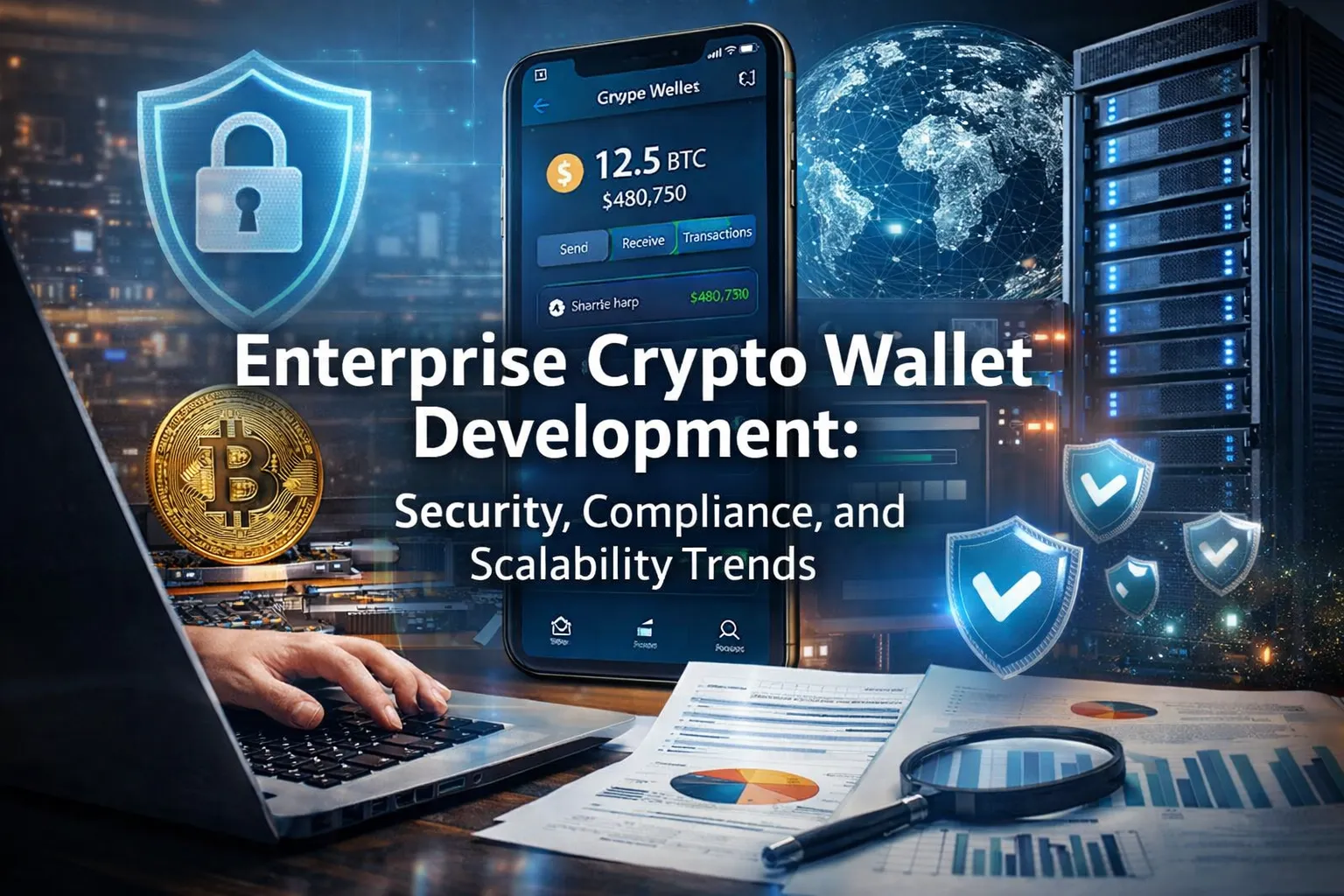

As digital assets continue to gain institutional acceptance, enterprise organizations are moving beyond experimental blockchain initiatives and investing in robust crypto wallet infrastructures. From fintech companies and digital banks to asset management firms and tokenization platforms, the demand for enterprise-grade wallet ecosystems has accelerated significantly in 2026.
Unlike retail wallets designed for individual users, enterprise crypto wallets must support complex operational requirements, including multi-user access controls, regulatory compliance, transaction governance, and high-volume transaction processing. Organizations handling digital assets at scale require wallet systems that prioritize security, operational resilience, and future-ready scalability.
As regulatory frameworks mature and institutional participation increases, enterprise wallet architecture is evolving rapidly. Understanding the latest trends shaping wallet development has become essential for businesses seeking to build secure and compliant digital asset platforms.
Why Enterprise Wallet Requirements Differ from Consumer Wallets
Enterprise crypto wallets operate within a vastly different risk environment compared to consumer applications. While individual users focus primarily on convenience and asset storage, enterprises must manage organizational governance, compliance obligations, and operational continuity.
Large organizations often process thousands of transactions daily while maintaining strict oversight of asset movement. This requires advanced wallet functionalities such as role-based permissions, approval workflows, audit trails, treasury management controls, and integration with enterprise software ecosystems.
Additionally, enterprises face heightened cybersecurity threats. A single compromised private key can expose millions of dollars in assets and trigger regulatory scrutiny. Consequently, wallet infrastructure must be designed with multiple security layers rather than relying solely on traditional private key management mechanisms.
As blockchain adoption expands into financial services, supply chain finance, real-world asset tokenization, and decentralized finance integration, enterprise wallets are increasingly becoming mission-critical infrastructure rather than auxiliary applications.
Security Trends Reshaping Enterprise Wallet Architecture
Security remains the primary driver behind enterprise wallet innovation. Modern wallet systems are moving away from single-point-of-failure models toward distributed and layered security frameworks.
Several security advancements are becoming standard across enterprise deployments:
- Multi-Party Computation (MPC): Private keys are divided into cryptographic shares, eliminating the need for complete key exposure during transaction signing.
- Hardware Security Module (HSM) Integration: Dedicated hardware devices provide secure cryptographic operations and tamper-resistant key storage.
- Role-Based Access Control (RBAC): Different organizational stakeholders receive customized access privileges based on operational responsibilities.
- Biometric Authentication Layers: Enhanced user verification mechanisms reduce unauthorized access risks.
- Continuous Threat Monitoring: AI-driven monitoring systems identify suspicious wallet activity and potential attack vectors in real time.
Organizations are also implementing zero-trust security frameworks where every transaction, user, and device must be continuously verified before authorization is granted. This approach significantly reduces insider threats and credential compromise risks.
Furthermore, post-quantum cryptography research is beginning to influence enterprise wallet roadmaps. While practical quantum threats remain years away, forward-looking organizations are already evaluating cryptographic resilience strategies.
Compliance Becomes a Core Wallet Development Priority
Regulatory compliance is no longer treated as an external operational function. Instead, compliance capabilities are increasingly embedded directly within wallet infrastructure.
As governments and financial regulators establish clearer digital asset guidelines, enterprises must demonstrate transparency, accountability, and risk management across wallet operations.
Modern wallet systems are incorporating compliance-focused features such as:
- Automated transaction monitoring and risk scoring.
- Integrated Know Your Customer (KYC) verification workflows.
- Anti-Money Laundering (AML) screening mechanisms.
- Detailed audit logs for regulatory reporting.
- Geographic transaction restrictions based on jurisdictional requirements.
- Policy-based transaction approval systems.
These capabilities help organizations align with emerging global regulations while reducing manual compliance overhead.
Businesses deploying advanced Crypto Wallet Development Solutions are increasingly prioritizing regulatory automation because manual compliance management becomes unsustainable as transaction volumes scale. Integrated compliance frameworks allow organizations to adapt quickly to changing regulations without requiring extensive infrastructure redesign.
The convergence of blockchain transparency and automated compliance technology is expected to become one of the defining characteristics of enterprise wallet platforms over the next several years.
Scalability Challenges in High-Volume Digital Asset Operations
As enterprise adoption grows, scalability has emerged as a critical architectural concern. Wallet systems initially built for limited transaction activity often struggle when organizations expand operations across multiple blockchain networks and user groups.
Scalability requirements extend beyond transaction throughput. Enterprises must also support increasing numbers of users, wallets, digital assets, and compliance checks without compromising performance.
Several architectural trends are helping organizations address these challenges:
Organizations are increasingly adopting microservices-based wallet architectures that allow individual system components to scale independently. This approach improves operational flexibility while reducing infrastructure bottlenecks.
Cloud-native deployment strategies are also becoming common, enabling dynamic resource allocation based on transaction demand. Combined with containerization technologies and automated orchestration platforms, cloud-native wallets can maintain performance during periods of high network activity.
Cross-chain interoperability represents another important scalability consideration. Enterprises increasingly operate across multiple blockchain ecosystems, requiring wallet infrastructures capable of managing assets on various networks through a unified interface.
Additionally, Layer 2 scaling technologies are helping reduce transaction costs and improve processing efficiency. By leveraging secondary execution environments, enterprises can maintain operational speed without sacrificing blockchain security guarantees.
The Future of Enterprise Crypto Wallet Development
The next generation of enterprise wallets will function as comprehensive digital asset management platforms rather than simple storage solutions. Wallets are evolving into intelligent operational hubs that support treasury management, compliance automation, institutional custody, decentralized finance participation, and tokenized asset administration.
Artificial intelligence is expected to play an increasingly important role in wallet ecosystems. Predictive analytics, fraud detection algorithms, and automated risk assessment systems will provide organizations with deeper operational insights while enhancing security posture.
Another emerging trend involves the integration of decentralized identity technologies. Enterprises are exploring identity frameworks that provide secure authentication while maintaining user privacy and regulatory compliance.
As tokenization initiatives continue expanding across financial services, real estate, supply chains, and investment markets, enterprise wallets will become central infrastructure components supporting digital ownership and value transfer.
Organizations that invest in scalable, secure, and compliance-ready wallet architectures today will be better positioned to capitalize on future blockchain innovation while navigating evolving regulatory expectations.
Conclusion
Enterprise crypto wallet development is entering a new phase defined by institutional requirements rather than consumer convenience. Security, compliance, and scalability have become foundational pillars shaping wallet architecture decisions across industries.
Businesses can no longer rely on basic wallet functionalities when managing digital assets at scale. Instead, they must adopt enterprise-grade solutions capable of supporting governance controls, regulatory obligations, and high-volume transaction environments.
As blockchain adoption accelerates throughout the global economy, organizations that prioritize resilient wallet infrastructure will gain a significant competitive advantage. The future belongs to enterprises that view crypto wallets not merely as storage tools, but as strategic platforms powering the next generation of digital asset operations.




























Sign in to leave a comment.