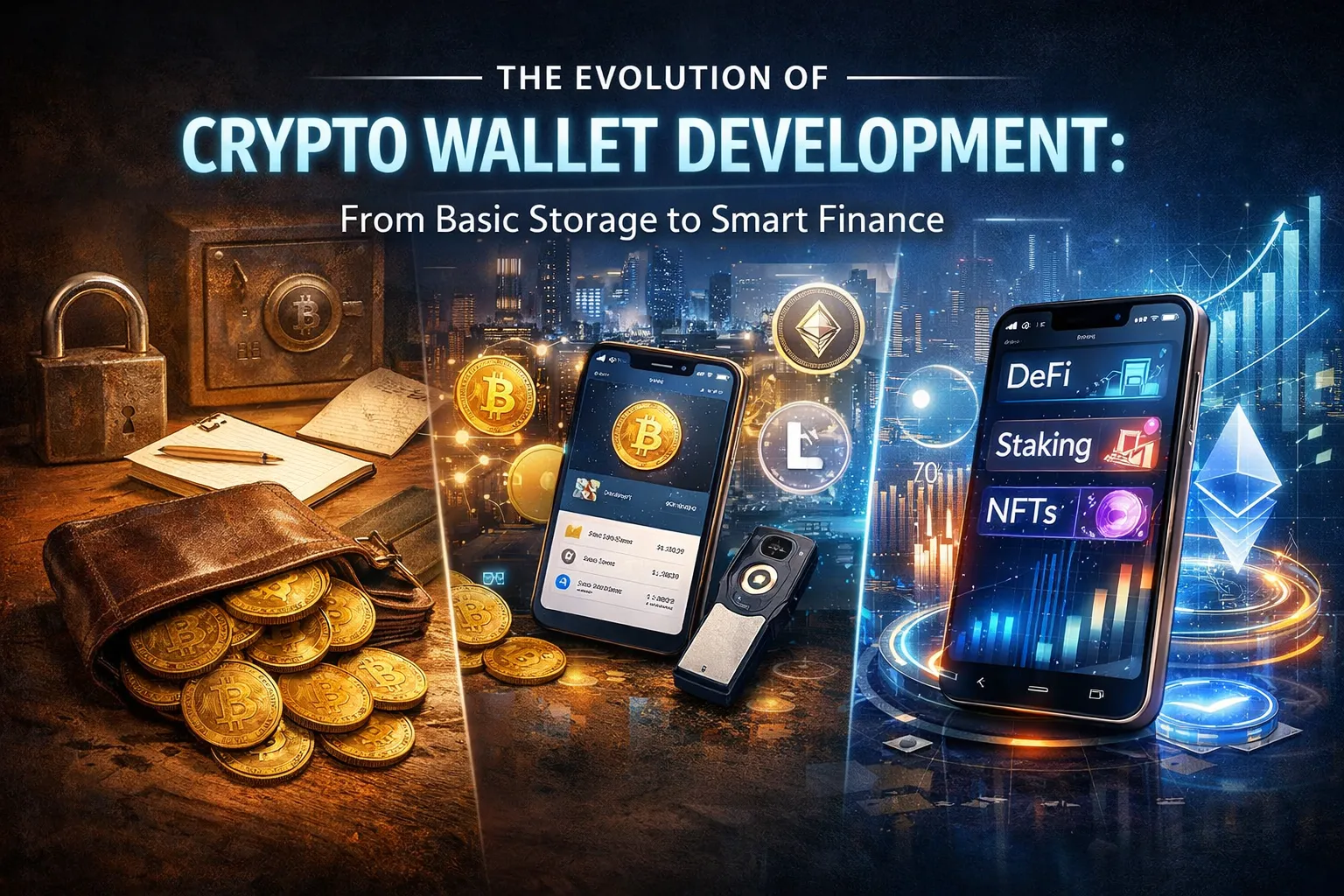

The cryptocurrency ecosystem has undergone a remarkable transformation over the past decade. What began as a niche technology focused on decentralized value transfer has matured into a sophisticated digital financial infrastructure. At the center of this evolution lies the crypto wallet—a technology that has progressed far beyond its original role as a simple storage mechanism for digital assets.
In the early days of blockchain adoption, crypto wallets were primarily designed to secure private keys and facilitate cryptocurrency transactions. Today, however, modern wallets serve as comprehensive financial gateways, enabling users to participate in decentralized finance (DeFi), manage tokenized assets, interact with decentralized applications (dApps), and execute complex financial activities from a single interface. This transformation reflects the broader maturation of blockchain technology and the growing demand for more intelligent financial tools.
The Early Generation of Crypto Wallets
The first generation of crypto wallets was built with a singular objective: secure storage and transfer of cryptocurrencies. These wallets focused on safeguarding cryptographic keys while allowing users to send and receive digital assets.
At the time, functionality was relatively limited. Users often needed significant technical expertise to manage wallet backups, private keys, and transaction confirmations. The user experience was largely designed for developers and blockchain enthusiasts rather than mainstream audiences.
Several challenges characterized early wallet solutions:
- Complex onboarding processes for non-technical users
- Limited support for multiple cryptocurrencies
- Minimal integration with external blockchain services
- High dependency on manual security management
Despite these limitations, these foundational wallets played a crucial role in establishing trust within the emerging blockchain ecosystem and laid the groundwork for future innovation.
Multi-Asset Wallets and Improved User Experience
As blockchain networks diversified, users began holding multiple cryptocurrencies across different ecosystems. This shift created a need for wallets capable of managing a broader range of digital assets through a unified interface.
The emergence of multi-asset wallets represented a significant milestone in crypto wallet development. Instead of managing separate wallets for different cryptocurrencies, users could consolidate their holdings within a single application.
This period also witnessed substantial improvements in user experience design. Developers introduced intuitive interfaces, simplified recovery mechanisms, QR-code transactions, and mobile-first architectures. Wallet providers recognized that mainstream adoption depended not only on security but also on accessibility.
The growing popularity of smartphones further accelerated innovation. Mobile crypto wallets became increasingly capable of supporting real-time transaction monitoring, biometric authentication, and seamless asset management. These enhancements reduced entry barriers and attracted a broader demographic of users to blockchain-based financial services.
The Rise of Smart Wallet Architecture
The next phase of wallet evolution was driven by the emergence of smart contracts and decentralized applications. Wallets were no longer passive storage containers; they became active participants in blockchain ecosystems.
Smart wallet architecture introduced programmable capabilities that significantly expanded wallet functionality. Instead of merely signing transactions, wallets could interact directly with smart contracts and execute predefined financial actions.
Key advancements included:
- Automated transaction approvals through programmable rules
- Multi-signature security frameworks for institutional users
- Gas optimization mechanisms for blockchain transactions
- Account abstraction models that simplify user interactions
- Enhanced recovery systems that reduce dependency on seed phrases
These innovations improved both usability and security while creating new opportunities for decentralized financial participation. The introduction of account abstraction, in particular, is helping bridge the gap between traditional fintech experiences and blockchain-native operations.
As organizations sought faster market entry into the digital asset sector, interest in solutions such as white label crypto wallet development also increased, enabling businesses to deploy customized wallet platforms without building core infrastructure from scratch.
Integration with Decentralized Finance Ecosystems
The explosive growth of decentralized finance fundamentally changed the role of crypto wallets. Rather than acting solely as transaction tools, wallets became gateways to an expanding universe of financial services.
Modern wallets now facilitate access to lending protocols, decentralized exchanges, staking platforms, liquidity pools, and yield-generating opportunities. Through wallet interfaces, users can engage in financial activities that previously required multiple intermediaries in traditional banking systems.
This integration has introduced several important capabilities. Users can monitor portfolio performance, participate in governance voting, manage digital identities, and interact with tokenized assets without leaving the wallet environment.
The convergence of wallets and DeFi has also encouraged the development of advanced analytics tools. Many modern solutions now provide transaction insights, risk assessments, asset allocation tracking, and real-time market intelligence. These features enable users to make more informed financial decisions while maintaining direct control over their assets.
As decentralized ecosystems continue to mature, wallet platforms are increasingly functioning as operating systems for digital finance rather than simple repositories for cryptocurrencies.
The Future: Wallets as Intelligent Financial Hubs
The next stage of crypto wallet evolution is likely to be defined by intelligence, interoperability, and automation. Emerging technologies are transforming wallets into dynamic financial hubs capable of supporting increasingly complex user requirements.
Artificial intelligence, machine learning, and predictive analytics are expected to play a growing role in wallet functionality. Future wallets may offer personalized financial recommendations, automated portfolio rebalancing, fraud detection mechanisms, and transaction optimization based on user behavior patterns.
Cross-chain interoperability is another major area of development. As blockchain ecosystems expand, users increasingly demand seamless asset movement between networks. Wallets are evolving to support unified experiences across multiple chains without requiring users to navigate complex bridging processes manually.
Security innovation will remain equally important. Technologies such as multi-party computation (MPC), decentralized identity frameworks, and advanced authentication protocols are expected to strengthen protection against evolving cyber threats while maintaining user convenience.
Ultimately, crypto wallets are transitioning from static storage tools into intelligent financial companions. Their role is expanding beyond asset management to encompass identity verification, governance participation, financial planning, and digital ownership management. This evolution reflects the broader transformation of blockchain technology from an experimental innovation into a foundational layer of the global digital economy.
As adoption continues to grow, the future of crypto wallet development will be defined by its ability to combine security, interoperability, automation, and user-centric design into a unified financial experience that serves both individuals and enterprises.



























Sign in to leave a comment.