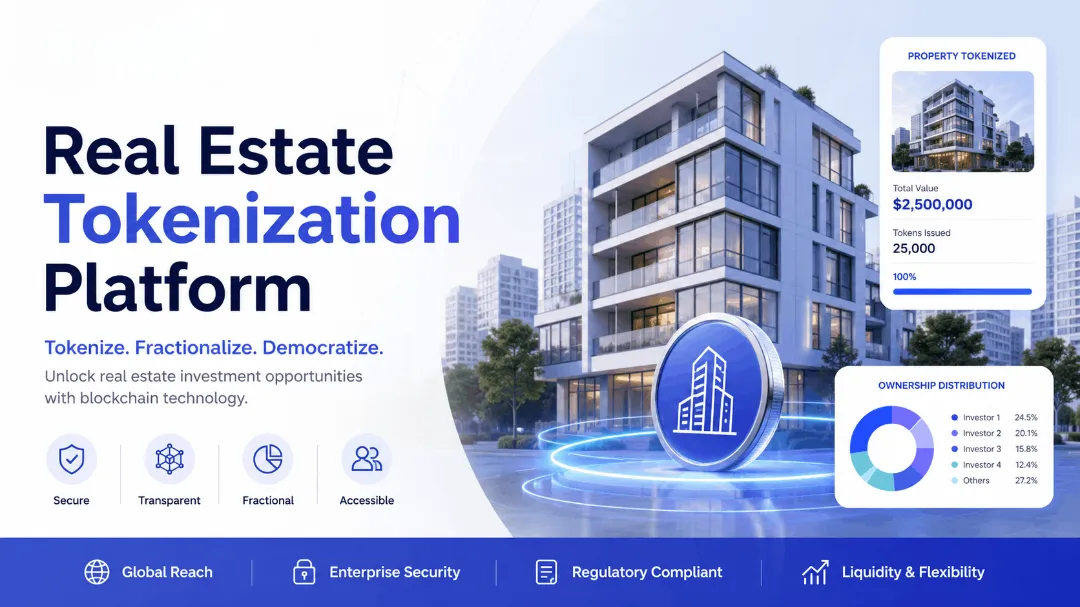

The real estate sector has traditionally been characterized by high capital requirements, complex legal frameworks, and illiquid markets. While property investment remains one of the most stable and lucrative avenues for wealth generation, access has often been restricted to institutional investors and high-net-worth individuals. Recent advancements in blockchain technology and the rise of tokenization are redefining these limitations. White label real estate tokenization platforms have emerged as a pivotal solution for businesses looking to enter the digital property market quickly and efficiently without building proprietary infrastructure from scratch. This blog explores a comprehensive blueprint for launching such platforms, addressing strategic, technological, regulatory, and operational considerations.
Understanding White Label Real Estate Tokenization
A white label solution is a fully developed platform that businesses can rebrand as their own, enabling rapid deployment and reduced development costs. In the context of real estate tokenization, this involves converting physical properties into digital tokens that can be bought, sold, or traded on blockchain networks. These tokens represent fractional ownership in real estate assets, unlocking liquidity for investors and providing a seamless investment experience.
Real estate tokenization offers a transformative approach to property markets. By creating divisible digital assets, it allows investors to participate in high-value properties without committing large sums. Additionally, blockchain's immutable ledger ensures transparency and traceability in ownership records, enhancing investor confidence. A white label platform abstracts the technical complexities of blockchain deployment, smart contract management, and regulatory compliance, enabling companies to focus on customer acquisition, branding, and market strategy.
Strategic Considerations for Platform Launch
Market Research and Target Segmentation
The first step in launching a white label real estate tokenization platform is identifying the target market. The platform could cater to institutional investors, retail investors, or niche segments such as high-value commercial properties, industrial warehouses, or fractionalized residential assets. Detailed market research is essential to understand regional regulatory nuances, investor expectations, and competitive offerings.
Segmenting potential users by investment appetite, geographic location, and asset preference allows for tailored marketing strategies and product design. For instance, retail investors may prefer low-value, high-liquidity assets, whereas institutional clients often seek premium commercial properties with long-term returns. Understanding these preferences informs token structuring, pricing, and user interface design.
Business Model Design
A clear business model ensures sustainability and profitability. White label platforms typically generate revenue through listing fees, transaction fees, subscription models, or a combination of these. Transaction fees can be structured as a percentage of token trades, while listing fees apply to property owners looking to tokenize assets on the platform. Subscription models can target investors seeking premium access to curated investment opportunities, research insights, or advanced analytics tools.
Additionally, the platform must determine token economics, including total supply, fractionalization strategy, and secondary market liquidity. The business model should align incentives for property owners, investors, and platform operators, ensuring long-term engagement and value creation.
Legal and Regulatory Compliance
Navigating Real Estate and Securities Laws
Tokenizing real estate often intersects with complex regulatory frameworks. Depending on jurisdiction, tokenized assets may be classified as securities, necessitating registration, disclosure, and compliance with investor protection laws. Platforms must consult legal experts to ensure alignment with property laws, anti-money laundering (AML) regulations, and Know Your Customer (KYC) requirements.
A proactive compliance strategy reduces legal risks, enhances platform credibility, and attracts institutional investors who prioritize regulatory adherence. Some regions offer sandbox environments or pilot programs for fintech innovation, enabling platforms to test solutions under regulatory supervision.
Smart Contract Audits and Security Protocols
Smart contracts are the backbone of tokenized real estate platforms, automating ownership transfers, dividend distributions, and compliance checks. Security vulnerabilities in smart contracts can result in financial loss and reputational damage. Therefore, rigorous auditing by certified blockchain security firms is essential before deployment.
Additionally, platforms must implement multi-layered cybersecurity measures, including encrypted wallets, secure authentication, and regular penetration testing. Investor trust hinges on the reliability and security of the underlying technology.
Technology Infrastructure
White Label Platform Architecture
White label platforms are typically modular, consisting of a blockchain ledger, token issuance engine, investor dashboard, and compliance module. Leveraging pre-built infrastructure accelerates time-to-market and reduces development complexity. Key features include:
- Tokenization Engine: Facilitates the creation, fractionalization, and management of real estate tokens.
- Investor Dashboard: Provides real-time portfolio tracking, performance analytics, and transaction history.
- Compliance Module: Automates KYC/AML processes and ensures adherence to securities regulations.
- Payment Gateway Integration: Supports fiat and cryptocurrency transactions for seamless token purchase and redemption.
A modular architecture enables flexibility, allowing businesses to customize features, branding, and workflows without modifying core blockchain protocols.
Blockchain Selection
Choosing the right blockchain is critical for scalability, cost efficiency, and interoperability. Public blockchains offer transparency and decentralization but may face high transaction fees, whereas private or consortium chains provide greater control, faster settlement, and lower costs. Platforms should assess factors such as transaction throughput, smart contract capabilities, and community support before finalizing a blockchain framework.
Layer-2 solutions and token standards, such as ERC-20 or ERC-1400, enhance functionality for fractionalized real estate, enabling compliance and automated dividend payouts while maintaining token liquidity.
Operational Workflow
Asset Onboarding and Token Structuring
The operational workflow begins with asset selection, valuation, and due diligence. Property owners submit documentation, including legal titles, valuation reports, and financial statements. The platform conducts verification and compliance checks before structuring the asset into tradeable tokens.
Fractional ownership models must balance affordability and liquidity. For example, a high-value commercial property worth $10 million may be divided into 10,000 tokens priced at $1,000 each. Token holders gain proportional ownership, revenue entitlements, and voting rights in property-related decisions.
Secondary Market Integration
Liquidity is a core advantage of tokenized real estate. Platforms must facilitate secondary market trading, enabling investors to buy or sell tokens seamlessly. Integration with decentralized exchanges (DEXs), centralized crypto exchanges, or internal marketplaces ensures continuous price discovery and market activity. Robust reporting tools enhance transparency and enable investors to track performance, dividends, and market trends.
Marketing and User Acquisition
Branding and Go-to-Market Strategy
A strong brand narrative differentiates the platform in a competitive market. Emphasizing transparency, security, and accessibility builds investor confidence. Digital marketing strategies, including content marketing, search engine optimization, and social media campaigns, attract both property owners and investors. Strategic partnerships with real estate brokers, property developers, and fintech firms expand reach and credibility.
Investor Education and Engagement
Educating potential investors about real estate tokenization is crucial for adoption. Platforms should provide resources such as webinars, whitepapers, and tutorials explaining token mechanics, risk profiles, and returns. Interactive dashboards, gamified investment simulations, and community forums enhance engagement and encourage repeat participation.
Revenue Optimization and Scaling
Monetization Strategies
Beyond listing and transaction fees, platforms can explore additional revenue streams such as premium investment tiers, data analytics services, or white label sublicensing. Partnering with financial institutions or real estate investment trusts (REITs) can generate recurring revenue and expand asset inventory.
Platform Scaling
As adoption grows, scaling the platform to handle increased transaction volumes and diverse asset types is critical. Cloud infrastructure, modular smart contracts, and cross-chain compatibility ensure platform resilience. Continuous performance monitoring, security audits, and feature updates maintain operational efficiency and investor confidence.
Case Studies and Industry Insights
Several white label real estate tokenization platforms have successfully demonstrated the model's potential. These platforms illustrate that fractional ownership can unlock liquidity, democratize property investment, and attract global capital. By analyzing successful deployments, new entrants can identify best practices in compliance, user experience, and marketing strategy, avoiding common pitfalls in asset selection, regulatory engagement, and technology implementation.
Challenges and Risk Mitigation
While the white label approach accelerates market entry, it carries inherent risks. These include regulatory uncertainty, cybersecurity threats, liquidity constraints, and investor education gaps. Mitigation strategies include robust legal counsel, multi-tiered security protocols, strategic liquidity management, and continuous investor outreach programs. Platforms that proactively address these challenges are more likely to achieve long-term sustainability and market trust.
Conclusion
Launching a white label real estate tokenization platform requires a multi-dimensional approach, blending strategic vision, regulatory compliance, technology infrastructure, and operational excellence. By leveraging pre-built platforms, businesses can reduce time-to-market while focusing on user acquisition, branding, and revenue generation. Fractionalized ownership, enhanced transparency, and global accessibility are redefining real estate investment, offering a compelling value proposition for investors and property owners alike.
The future of property investment lies in digital tokenization, and white label solutions provide a pragmatic path for businesses to participate in this evolving market. Companies that adopt a structured blueprint—encompassing legal frameworks, blockchain architecture, operational workflows, and marketing strategy—are poised to capitalize on the growing intersection of real estate and digital finance, ultimately shaping a borderless, liquid, and transparent property ecosystem.































Sign in to leave a comment.