

The Internet of Things has evolved from a buzzword to a business imperative. Enterprises are deploying connected devices to transform operations, reduce costs, and gain competitive advantages. However, building robust enterprise IoT solutions requires navigating complex challenges that can make or break your investment.
Enterprise IoT differs fundamentally from consumer applications. It involves managing thousands of devices, processing massive data volumes in real-time, ensuring bulletproof security, and maintaining always-on reliability. A failed implementation can cost millions and disrupt critical operations.
Understanding Enterprise IoT
Enterprise IoT refers to connected devices and sensors deployed within business environments to collect, exchange, and analyze data for operational improvements. Through specialized IoT Application Development Services, organizations can design, deploy, and manage these interconnected systems more efficiently. Manufacturing plants use smart sensors for predictive maintenance, healthcare facilities monitor patient vitals continuously, logistics companies track shipments in real-time, and retail stores optimize inventory automatically.
Unlike consumer IoT that focuses on convenience, enterprise IoT drives measurable business outcomes including cost reduction, productivity gains, and data-driven decision-making.
Best Practices for Success
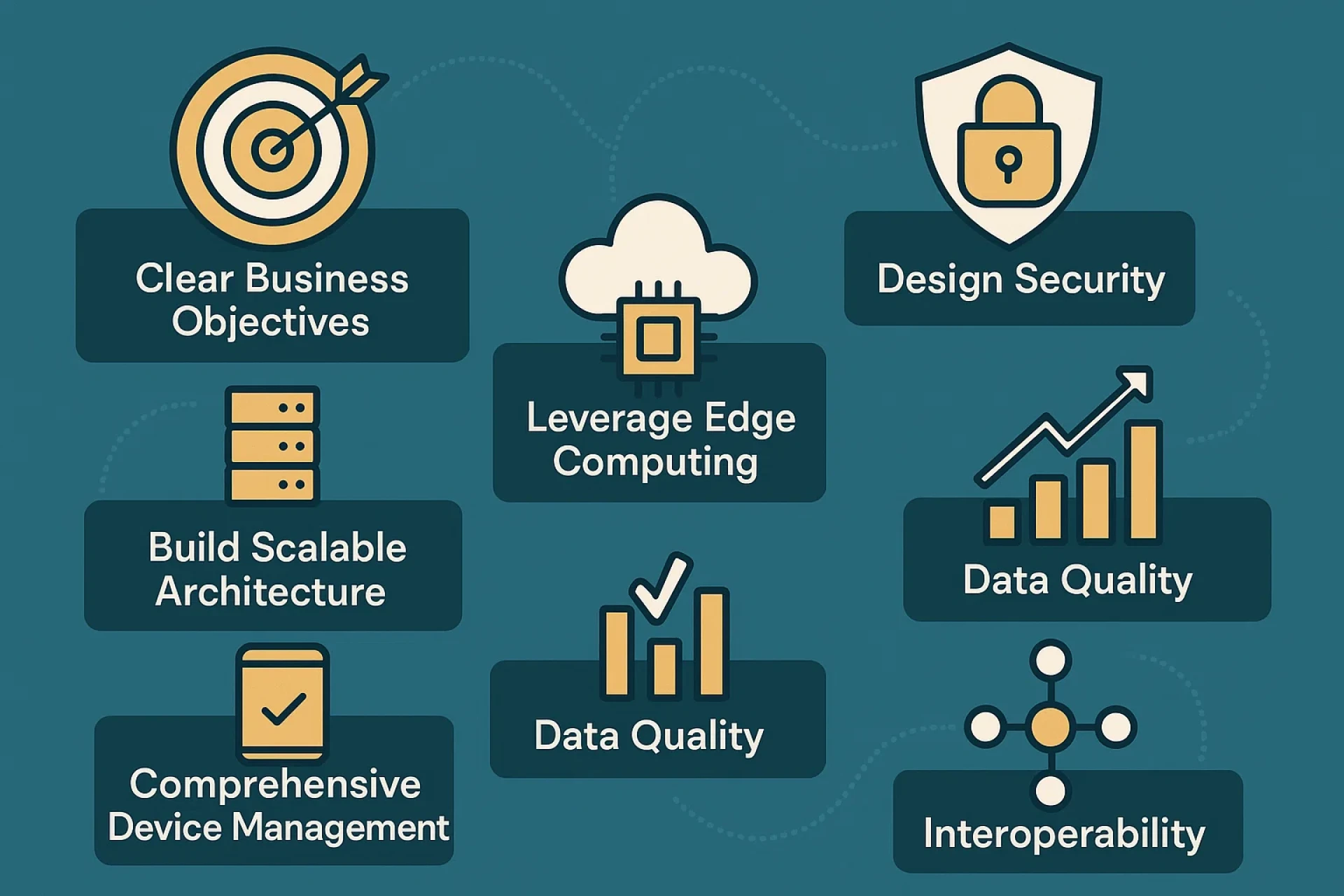
1. Start with Clear Business Objectives
Successful IoT initiatives begin with defined goals and measurable outcomes. Identify the operational problems you aim to solve, estimate ROI, and outline which processes will change. Begin with small pilot projects to validate assumptions before scaling.
2. Design Security from Day One
Security must be built in from the start. Use unique device identities, strong authentication, and encryption for data in transit and at rest. Apply role-based access control, isolate IoT networks, and support secure OTA firmware updates to minimize vulnerabilities.
3. Build Scalable Architecture
Growth plan, choose cloud platforms that scale automatically and apply data lifecycle policies to manage storage costs. Use message queues like Kafka to handle data spikes and enable horizontal scaling.
4. Leverage Edge Computing
Process data close to its source to reduce latency, cut bandwidth costs, and ensure real-time responsiveness. Edge systems can filter data, trigger immediate actions, and maintain operations even if cloud connectivity fails.
5. Implement Comprehensive Device Management
Use centralized tools for remote configuration, OTA updates, diagnostics, and health monitoring. This reduces downtime and lowers the cost of managing large device fleets.
6. Focus on Data Quality
Validate data at the edge, manage missing or inconsistent inputs, and establish strong governance for ownership, retention, and compliance. Include metadata for full contextual understanding.
7. Ensure Interoperability
Adopt industry standards (MQTT, CoAP, OPC UA), use well-documented APIs, and support multiple communication protocols. Plan for integration with legacy systems and diverse device ecosystems.
Critical Pitfalls to Avoid
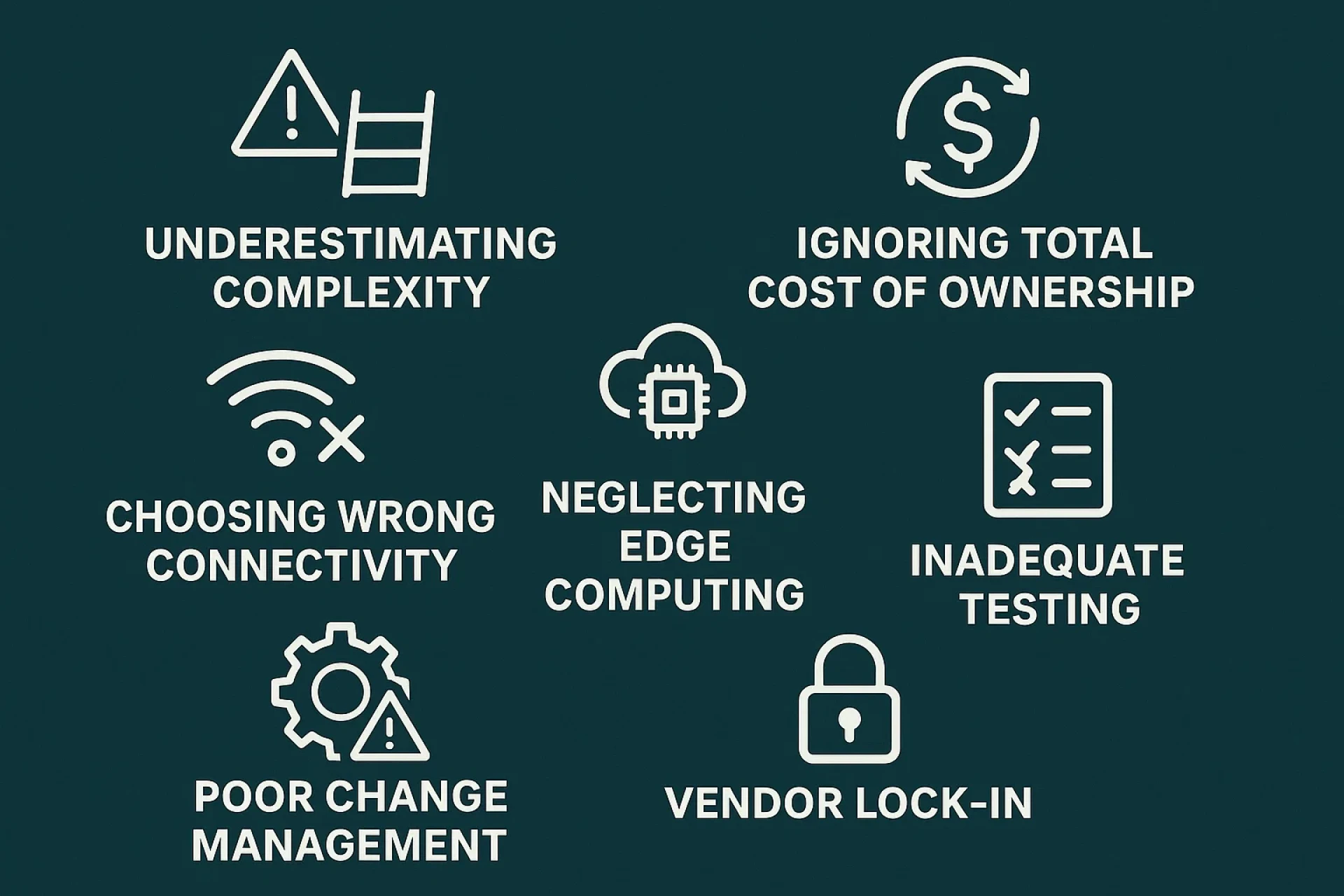
Underestimating Complexity
Many organizations underestimate IoT complexity. It's not just connecting devices—it involves hardware, software, networking, security, data analytics, and organizational change management. Involve experts early, consider partnering with experienced IoT solution providers, or assemble a dedicated development team for complex deployments.
Ignoring Total Cost of Ownership
Initial hardware costs are just the beginning. Calculate the total cost of ownership over the full lifecycle (typically 5–10 years). Consider connectivity fees, cloud costs, maintenance, support, and eventual device replacement.
Choosing the Wrong Connectivity
Selecting inappropriate connectivity can doom projects. Don’t rely on Wi-Fi for devices in wide rural areas or use cellular for millisecond-latency needs. Evaluate all options based on coverage, bandwidth, latency, power usage, and cost. Match technology to requirements rather than defaulting to familiar choices.
Neglecting Edge Computing
Sending all data directly to the cloud wastes bandwidth, increases latency, and raises costs. Implement intelligent edge processing for real-time decisions, data filtering, and bandwidth optimization, while leveraging the cloud for long-term storage and centralized operations.
Poor Change Management
IoT often transforms workflows, and resistance can undermine success. Involve stakeholders early, provide suitable training, and communicate benefits clearly. Start with enthusiastic early adopters and ensure employees receive the support needed—sometimes it’s even necessary to hire developer talent who can guide teams through the transition.
Inadequate Testing
Testing IoT systems is difficult due to varied environments. Test in conditions that mirror real-world deployments and include stress, security, and reliability testing. Pilot deployments help identify issues before full rollout.
Vendor Lock-In
Proprietary platforms can create long-term dependency and reduce flexibility. Favor open standards and modular architecture so components can be replaced without a complete redesign.
Conclusion
Enterprise IoT offers tremendous opportunities to transform operations and create competitive advantages. Success requires careful planning, robust architecture, strong security, and focus on business outcomes.
Start with focused pilot projects, learn from experience, and scale based on proven results. Invest in security from day one, plan for long-term costs, and prioritize user experience alongside technical excellence. Leveraging professional IoT Application Development Services can accelerate deployment, ensure best practices are followed, and help organizations achieve faster ROI.
The enterprises that succeed with IoT view it as a strategic initiative requiring cross-functional collaboration, not just a technology project. By following these best practices and avoiding common pitfalls, you can build IoT solutions that deliver lasting value to your organization.




























Sign in to leave a comment.