In the age of Industry 4.0, connectivity is no longer just a support function-it is the foundation of every intelligent system. As businesses adopt advanced automation solutions to enhance productivity and efficiency, the need for seamless communication between devices becomes critical. One of the most essential yet often overlooked components enabling this connectivity is the ethernet media converter.
Designed to bridge the gap between different networking technologies, ethernet media converters play a crucial role in ensuring uninterrupted data flow across industrial environments. Whether it is connecting legacy systems to modern fiber networks or extending communication over long distances, these devices are central to building robust automation infrastructures.
Understanding the Role of Ethernet Media Converters in Industrial Networks
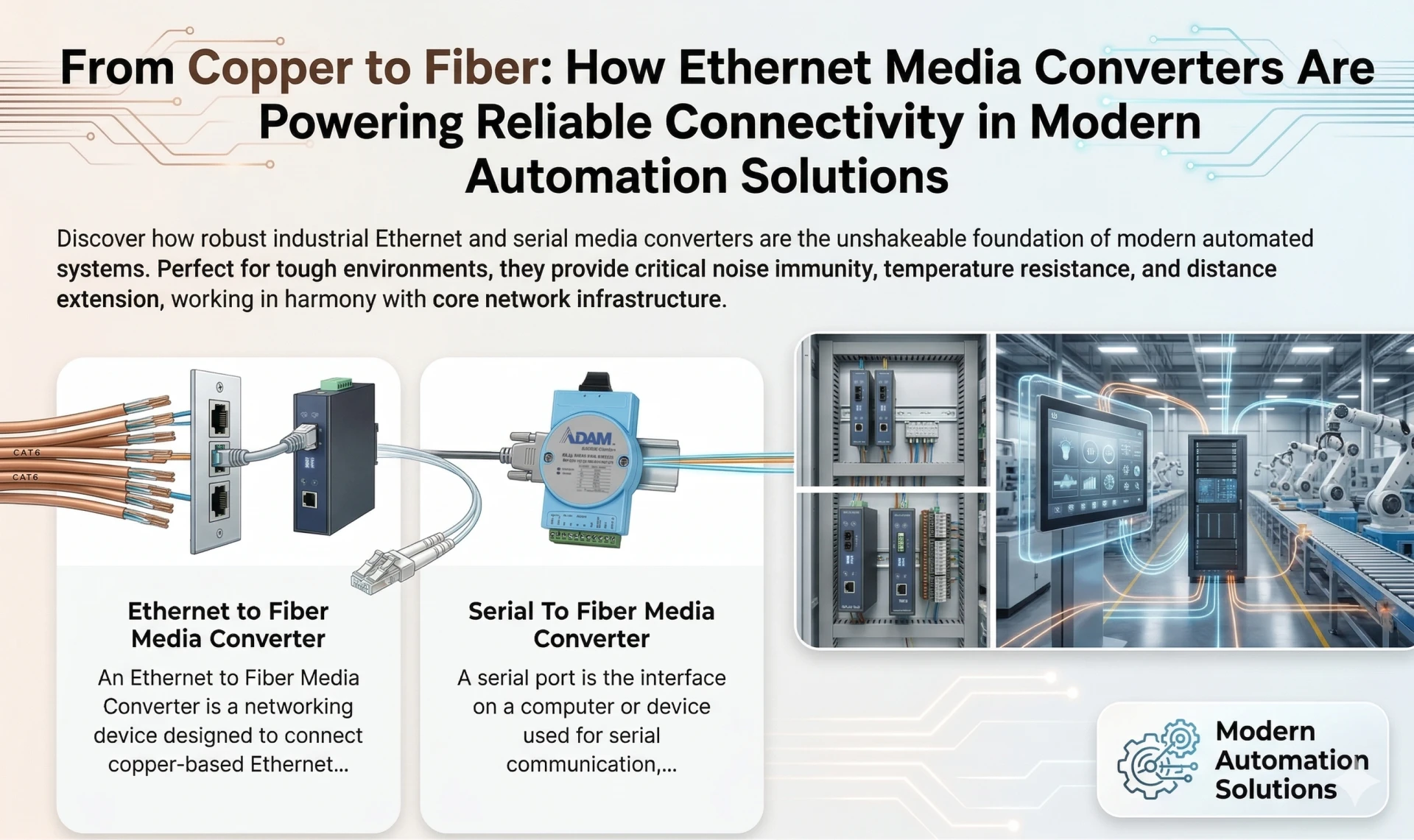
An ethernet media converter is a device that converts Ethernet signals from one form of media to another, typically from copper cables to fiber optic cables and vice versa. This conversion allows different network types to communicate seamlessly without requiring a complete overhaul of existing infrastructure.
In industrial automation solutions, where systems often include a mix of old and new technologies, this capability is invaluable. Media converters enable businesses to integrate fiber optics for high-speed, long-distance communication while still utilizing existing copper-based systems.
This flexibility not only reduces costs but also ensures that industrial networks can evolve without disruption.
The Growing Importance of Connectivity in Automation Solutions
Automation solutions depend on precise, real-time communication between machines, sensors, and control systems. Any delay or interruption in data transmission can lead to inefficiencies, production losses, or even safety risks.
Ethernet media converters ensure that data flows smoothly across networks, regardless of the distance or environmental challenges. By enabling high-speed communication and reducing signal degradation, they support the performance and reliability of automation systems.
As industries move toward smart factories and connected ecosystems, the importance of reliable networking solutions continues to grow.
Enabling Long-Distance Communication Without Signal Loss
One of the biggest challenges in industrial networking is transmitting data over long distances without compromising quality. Copper cables have limitations in terms of distance and are susceptible to interference. Fiber optic cables, on the other hand, offer superior performance but may not always be compatible with existing systems.
Ethernet media converters solve this problem by enabling the use of fiber optics alongside copper networks. This allows businesses to extend their network reach significantly while maintaining high data integrity.
In large industrial facilities, warehouses, and outdoor installations, this capability is essential for ensuring consistent communication across all operational areas.
Overcoming Harsh Industrial Conditions with Reliable Networking
Industrial environments are often exposed to extreme conditions such as temperature fluctuations, dust, moisture, and electromagnetic interference. These factors can negatively impact network performance and reliability.
Ethernet media converters designed for industrial use are built to withstand these challenges. They are equipped with rugged enclosures and advanced components that ensure stable operation even in demanding conditions.
By maintaining reliable connectivity in harsh environments, these converters play a vital role in supporting uninterrupted automation solutions.
Seamless Integration with Existing Infrastructure
One of the key advantages of ethernet media converters is their ability to integrate seamlessly with existing network infrastructure. Businesses do not need to replace their entire system to adopt new technologies.
Instead, they can use media converters to connect legacy copper networks with modern fiber optic systems. This approach not only reduces implementation costs but also minimizes downtime during upgrades.
For organizations looking to modernize their automation solutions, this flexibility is a significant advantage.
Enhancing Network Performance and Efficiency
Ethernet media converters contribute to improved network performance by enabling faster data transmission and reducing latency. Fiber optic connections offer higher bandwidth and lower signal loss compared to traditional copper cables.
By incorporating media converters into their network, businesses can achieve better data transfer speeds and more reliable communication. This is particularly important in automation solutions that rely on real-time data processing and decision-making.
Improved network performance directly translates into increased operational efficiency and productivity.
Supporting Scalability in Industrial Automation
As businesses grow, their automation solutions need to scale accordingly. Ethernet media converters provide the flexibility required to expand network infrastructure without major disruptions.
They allow organizations to add new devices, extend network coverage, and upgrade communication systems with ease. This scalability ensures that businesses can adapt to changing requirements and technological advancements.
In a rapidly evolving industrial landscape, the ability to scale efficiently is a key factor for long-term success.
Key Features to Consider in an Ethernet Media Converter
When selecting an ethernet media converter, it is important to consider features that align with specific operational needs. Factors such as data transfer speed, compatibility with different network types, and support for various fiber standards are critical.
Industrial-grade converters often include features like wide temperature range support, surge protection, and robust housing. These features ensure reliable performance in challenging environments.
Additionally, ease of installation and maintenance should also be considered to ensure smooth operation over time.
Applications Across Diverse Industrial Sectors
Ethernet media converters are used across a wide range of industries, making them an essential component of modern automation solutions. In manufacturing, they enable communication between production lines and control systems.
In logistics and warehousing, they support real-time tracking and management of goods. In energy and utilities, they facilitate monitoring and control of critical infrastructure.
They are also widely used in transportation systems, smart cities, and industrial IoT applications, where reliable connectivity is crucial.
How ITG India Supports Advanced Networking in Automation Solutions
ITG India offers a comprehensive range of industrial networking products, including high-quality ethernet media converters designed for demanding environments. Their solutions are tailored to meet the needs of modern automation systems, ensuring reliable and efficient communication.
With a strong focus on innovation and quality, ITG India provides products that support long-distance communication, high-speed data transfer, and seamless integration with existing systems.
By delivering robust networking solutions, ITG India enables businesses to build resilient automation infrastructures that drive growth and efficiency.
The Future of Ethernet Connectivity in Automation Solutions
As industries continue to adopt digital transformation strategies, the demand for advanced networking solutions will only increase. Technologies such as industrial IoT, artificial intelligence, and edge computing require reliable and high-speed communication networks.
Ethernet media converters will continue to play a critical role in enabling these technologies by providing the connectivity needed for data-driven operations. Their ability to bridge different network types and support long-distance communication makes them indispensable in the future of automation solutions.
Conclusion: Building Stronger Networks for Smarter Industries
In the journey toward smarter and more connected industries, reliable network infrastructure is essential. Ethernet media converters provide the foundation for this infrastructure by enabling seamless communication across diverse systems.
Their ability to bridge copper and fiber networks, withstand harsh environments, and support scalable growth makes them a key component of modern automation solutions.
As businesses continue to innovate and expand, investing in robust networking solutions like ethernet media converters will be crucial for achieving long-term success and operational excellence.





Sign in to leave a comment.