

Understanding the Stakes: Why Evaluating AI Employment Tools Matters
Imagine a multinational corporation onboarding thousands of employees across continents. The HR team relies on AI-driven recruitment platforms to sift through millions of job applications, identify top candidates, and make hiring decisions within days rather than months. However, what if the AI system subtly favors certain demographics, inadvertently perpetuating bias? Or what if its predictive models fail to consider regional labor laws, resulting in compliance risks? These concerns are no longer hypothetical. As organizations increasingly adopt AI-based employment tools, the challenge of properly evaluating these solutions has become critical.
According to the CHRO Association and the Society for Industrial and Organizational Psychology (SIOP) Foundation, the stakes are high. These bodies emphasize that AI tools must be scrutinized not only for technical performance but also for fairness, transparency, and ethical compliance. With over 60% of Fortune 500 companies now using AI in recruitment and talent management, the pressure to get evaluation right is mounting.
“Organizations face a dual imperative: adopting AI tools that accelerate hiring while ensuring these tools do not embed or amplify biases that undermine workforce diversity and legal compliance.” – CHRO Association Report
Evaluating AI employment tools is no longer optional. It involves a multifaceted approach blending technology metrics, psychological validity, regulatory adherence, and organizational values. This article offers a detailed, expert-level guide on how CHROs, talent acquisition leaders, and procurement teams can critically assess AI vendors in 2026.
The Evolution of AI in Employment: From Automation to Augmentation
To appreciate the evaluation challenges, one must understand how AI-based employment tools have evolved. Early digital recruitment software primarily automated administrative tasks—resume parsing, interview scheduling, and basic candidate screening. However, modern AI tools integrate machine learning algorithms, natural language processing, and predictive analytics to assess candidate fit, cultural alignment, and even future performance potential.
In the last decade, rapid advances in AI, especially generative AI and deep learning, have reshaped recruitment. AI can now analyze video interviews, detect emotional cues, and benchmark candidates against ideal profiles. Indian IT hubs like Bangalore have become innovation centers for developing these AI capabilities, merging Silicon Valley’s tech advances with local expertise in workforce dynamics.
Nevertheless, these advances come with unintended consequences. Algorithms trained on historical hiring data risk replicating systemic biases against gender, ethnicity, or age. The Forbes analysis highlights cybersecurity vulnerabilities as well, where AI tools processing sensitive candidate data become targets for breaches.
In response, the CHRO Association and SIOP Foundation have released updated guidelines emphasizing rigorous vendor evaluation. These guidelines stress the importance of transparency in AI model design, explainability of outputs, and ongoing validation against fairness criteria.
Core Evaluation Criteria: What Every CHRO Should Demand from AI Vendors
When evaluating AI-based employment tools, decision-makers must move beyond vendor promises and marketing gloss. The CHRO Association and SIOP Foundation recommend a comprehensive framework focusing on five core dimensions:
- Validity and Reliability: The tool’s predictive models must demonstrate statistically significant correlations with job performance metrics. Vendors should provide peer-reviewed validation studies or independent assessments confirming that their algorithms measure what they claim to measure consistently across different contexts.
- Fairness and Bias Mitigation: AI tools must be scrutinized for disparate impact on protected groups. This involves thorough testing across demographic segments and implementing bias mitigation strategies such as reweighting training data or adjusting decision thresholds.
- Transparency and Explainability: The vendor should disclose key algorithmic components and enable HR teams to interpret AI recommendations. Black-box models that cannot justify decisions raise legal and ethical red flags.
- Data Privacy and Security: Given the sensitivity of employment data, vendors must comply with global regulations like GDPR, CCPA, and India’s Personal Data Protection Bill. Security certifications and audit trails are essential to assess risk.
- User Experience and Integration: The tool’s interface should be intuitive for recruiters and candidates alike. Moreover, seamless integration with existing HRIS (Human Resource Information Systems) and ATS (Applicant Tracking Systems) platforms reduces operational friction.
“A robust AI employment tool is not just about accuracy but also about trust. Transparency and fairness are as vital as technical performance.” – SIOP Foundation Expert Panel
Below is a checklist CHROs can use when engaging vendors:
- Request independent validity and fairness audit reports
- Assess the vendor’s compliance certifications and security protocols
- Test explainability features with real recruiter scenarios
- Evaluate candidate experience through pilot deployments
- Ensure clear contractual terms on data ownership and ethical use
2026 Developments: Rising Standards and Regulatory Pressure
The year 2026 marks a pivotal point in AI employment tool evaluation. Recent regulatory initiatives worldwide have tightened the compliance landscape. The European Union’s AI Act has set stringent requirements for high-risk AI systems, including employment tools. Meanwhile, Indian regulators have advanced data protection frameworks that impact HR technologies.
In parallel, industry bodies including the CHRO Association and SIOP Foundation have intensified advocacy for ethical AI use in HR. Their collaborative research initiatives have produced benchmark datasets and standardized evaluation protocols widely adopted by enterprises.
Moreover, technological advances have enabled continuous monitoring of AI systems post-deployment. Vendors increasingly offer real-time dashboards that track fairness indicators and alert HR teams to emerging biases or performance drifts.
A recent WriteUpCafe article outlines these protocols in detail, underscoring practical steps organizations are taking to safeguard hiring integrity.
These developments reflect a maturing market where superficial assessments no longer suffice. Instead, CHROs must demand lifecycle management capabilities from AI vendors to ensure sustained compliance and alignment with organizational goals.
Expert Perspectives: Voices from Industry Leaders and Psychologists
Leading experts from Silicon Valley and Indian IT sectors emphasize the multidisciplinary nature of AI employment tool evaluation. Dr. Kavita Rao, a behavioral scientist and advisor to the SIOP Foundation, notes, “Technology alone cannot solve hiring biases. We need psychological expertise to design valid assessments and interpret AI outputs responsibly.”
Similarly, Rajesh Malhotra, CHRO at a leading Bangalore-based IT firm, shares, “We have adopted a rigorous vendor evaluation framework influenced by CHRO Association guidelines. It helps us balance AI efficiency with fairness and legal safeguards.”
“The intersection of AI engineering, industrial psychology, and legal compliance defines the future of recruitment technology.” – Dr. Kavita Rao
“A transparent AI tool builds candidate trust, enhancing employer brand, which is critical in competitive talent markets.” – Rajesh Malhotra
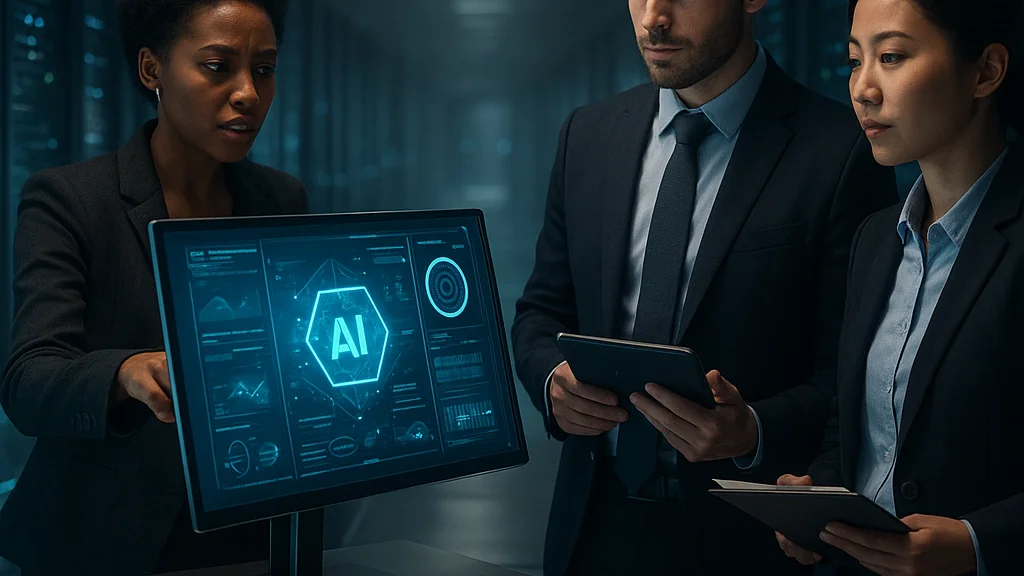
These expert insights highlight that evaluation is not a one-time checklist but a continuous dialogue involving multiple stakeholders. Cross-functional teams comprising HR, legal, data science, and diversity officers are essential to vet AI vendors comprehensively.
You might enjoy exploring more about AI ethics and organizational impact in the piece Hasbro’s CEO Leverages AI Peppa Pig to Redefine Toy Design, which, though focused on product innovation, shares valuable lessons on AI governance and stakeholder engagement.
Future Outlook and Strategic Takeaways for CHROs
As AI-based employment tools become ubiquitous, CHROs must anticipate evolving challenges and opportunities. Here are key takeaways for strategic evaluation:
- Adopt a Continuous Evaluation Mindset: AI models degrade over time due to changing workforce dynamics and market conditions. Implement scheduled audits and recalibration protocols.
- Prioritize Candidate-Centric Design: Beyond internal efficiency, AI tools must enhance candidate experience, promoting fairness and transparency to build employer brand equity.
- Leverage Cross-Industry Benchmarks: Utilize standards from CHRO Association, SIOP, and international regulators to compare vendors objectively.
- Invest in Skills Development: Equip HR teams with AI literacy and psychological assessment skills to interpret vendor data critically.
- Engage in Industry Collaboration: Participate in forums and consortia to share best practices and stay ahead of regulatory changes.
In closing, the assessment of AI employment tools demands a sophisticated blend of technical scrutiny, ethical vigilance, and strategic foresight. The insights from the CHRO Association and SIOP Foundation provide a robust foundation, but the ultimate responsibility lies in organizational leadership to ensure AI serves as an enabler of equitable, effective talent acquisition.
For a detailed procedural guide and checklist, see the comprehensive resource Evaluating AI-Based Employment Tools: Guidance from CHRO Association & SIOP Foundation 2026.























Sign in to leave a comment.