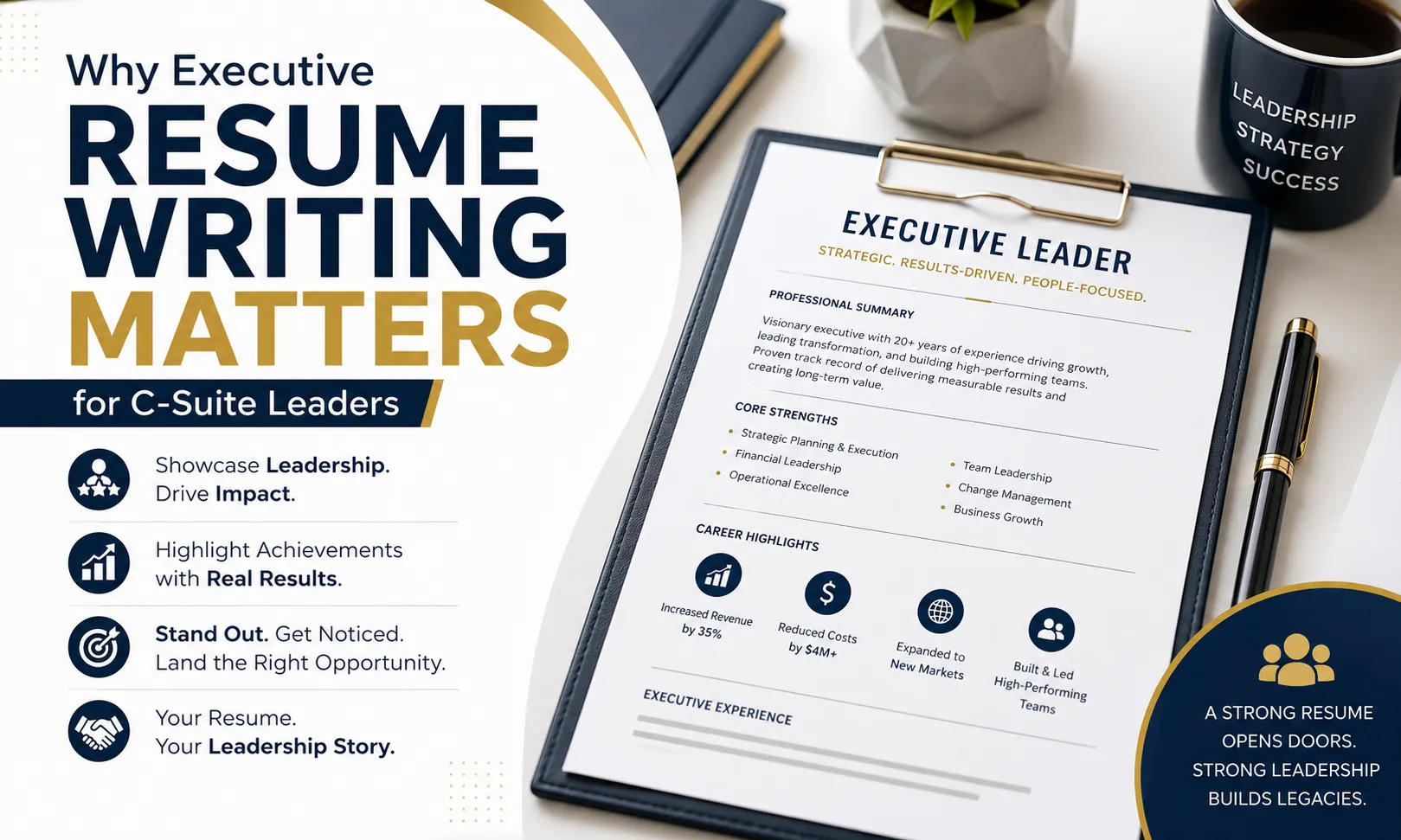


Executive-level professionals compete for some of the most influential and rewarding positions in the business world. Whether you are a CEO, CFO, COO, CIO, or another senior leader, your resume needs to reflect more than your job history. It should tell the story of your leadership, business achievements, and the value you bring to an organization. A strong executive resume is often the first impression you make on recruiters, board members, and hiring managers. That is why executive resume writing is more important than ever.
In today's competitive job market, companies are looking for leaders who can drive growth, manage change, and deliver measurable results. Your resume should clearly communicate these qualities. A well-crafted executive resume not only highlights your experience but also positions you as the right person to lead an organization into the future.
Your Resume is Your Personal Brand
At the executive level, your resume is much more than a list of previous roles. It represents your personal brand and professional reputation. Employers want to know how you have influenced business success, built strong teams, and solved complex challenges.
Instead of simply listing responsibilities, focus on achievements. For example, rather than saying you "managed a sales team," explain how you increased revenue, expanded into new markets, or improved customer satisfaction. Numbers and measurable results help hiring managers understand your real impact.
A powerful executive resume tells a story that connects your leadership experience with the company's goals.
First Impressions Matter More Than Ever
Recruiters often spend only a few seconds reviewing a resume before deciding whether to continue reading. This means your resume must immediately capture attention.
A clean layout, clear headings, and well-organized content make your resume easier to read. More importantly, the opening summary should quickly explain who you are, your leadership experience, and the value you bring.
An executive resume should create confidence from the very first glance. It should make employers want to learn more about your career.
Highlight Leadership, Not Just Experience
As a senior leader, companies already expect you to have years of experience. What truly sets you apart is your leadership ability.
Your resume should highlight how you:
- Built and led high-performing teams.
- Improved company performance.
- Managed organizational change.
- Developed long-term business strategies.
- Mentored future leaders.
Solved major business challenges.
Leadership is about creating results through people, strategy, and vision. Make sure your resume reflects all three.
Show Business Results with Real Numbers
Executive hiring decisions are often based on measurable success. Employers want evidence that you can improve business performance.
Whenever possible, include numbers that demonstrate your achievements. Examples include:
- Increased annual revenue by 30%.
- Reduced operational costs by $2 million.
- Expanded business into five new international markets.
- Improved employee retention by 20%.
- Led digital transformation projects that increased productivity.
These accomplishments make your resume far more persuasive than simply describing daily responsibilities.
Stand Out in a Competitive Market
Many executives have impressive career histories. The challenge is showing why your experience is unique.
Instead of using generic statements, focus on your biggest accomplishments and the problems you solved. Think about the moments where your leadership made a significant difference.
A customized resume helps employers understand not only what you have done but also how you think and lead.
Working with an Executive Resume Writing Service can help identify these unique strengths and present them in a way that attracts executive recruiters and hiring managers.
Optimize Your Resume for Modern Hiring
Today's hiring process often begins with Applicant Tracking Systems (ATS). These systems scan resumes for relevant keywords before a recruiter even sees them.
If your resume lacks important industry keywords, it may never reach the hiring manager's desk.
An executive resume should naturally include relevant leadership skills, industry expertise, certifications, and business achievements without overloading the content with unnecessary jargon.
Balancing readability with keyword optimization increases your chances of moving forward in the hiring process.
Focus on Quality Over Length
Many executives believe that adding every job, project, and responsibility will strengthen their resume. In reality, the opposite is often true.
An effective executive resume focuses on quality instead of quantity. It highlights your most relevant accomplishments while removing outdated or less valuable information.
The goal is to present a clear and compelling career story that demonstrates consistent growth, leadership, and measurable success.
A focused resume is much easier for recruiters to read and remember.
Build Confidence During Interviews
A strong resume does more than help you secure interviews. It also prepares you for them.
When your resume clearly highlights your biggest accomplishments, it becomes a roadmap for interview conversations. You can confidently discuss the business challenges you solved, the strategies you developed, and the results you achieved.
This consistency between your resume and interview responses helps build trust with employers.
Professional Presentation Makes a Difference
Executive hiring is highly competitive, and presentation matters. Small details like formatting, readability, grammar, and structure can influence how employers perceive your professionalism.
A polished resume reflects attention to detail, strong communication skills, and executive-level thinking.
Many senior professionals choose a Resume Writing Service because it helps ensure their achievements are presented clearly, professionally, and strategically.
Final Thoughts
An executive resume is much more than a career document. It is a marketing tool that showcases your leadership, business impact, and long-term vision. At the C-suite level, employers are looking for leaders who can inspire teams, deliver measurable results, and guide organizations through change.
By focusing on achievements instead of responsibilities, using measurable business outcomes, and presenting your experience in a clear and professional format, you greatly improve your chances of securing executive interviews.
Whether you are pursuing your first C-suite position or preparing for your next leadership opportunity, investing time in creating a compelling executive resume is one of the smartest career decisions you can make. A strong resume opens doors, builds credibility, and positions you as the leader organizations are searching for.























Sign in to leave a comment.