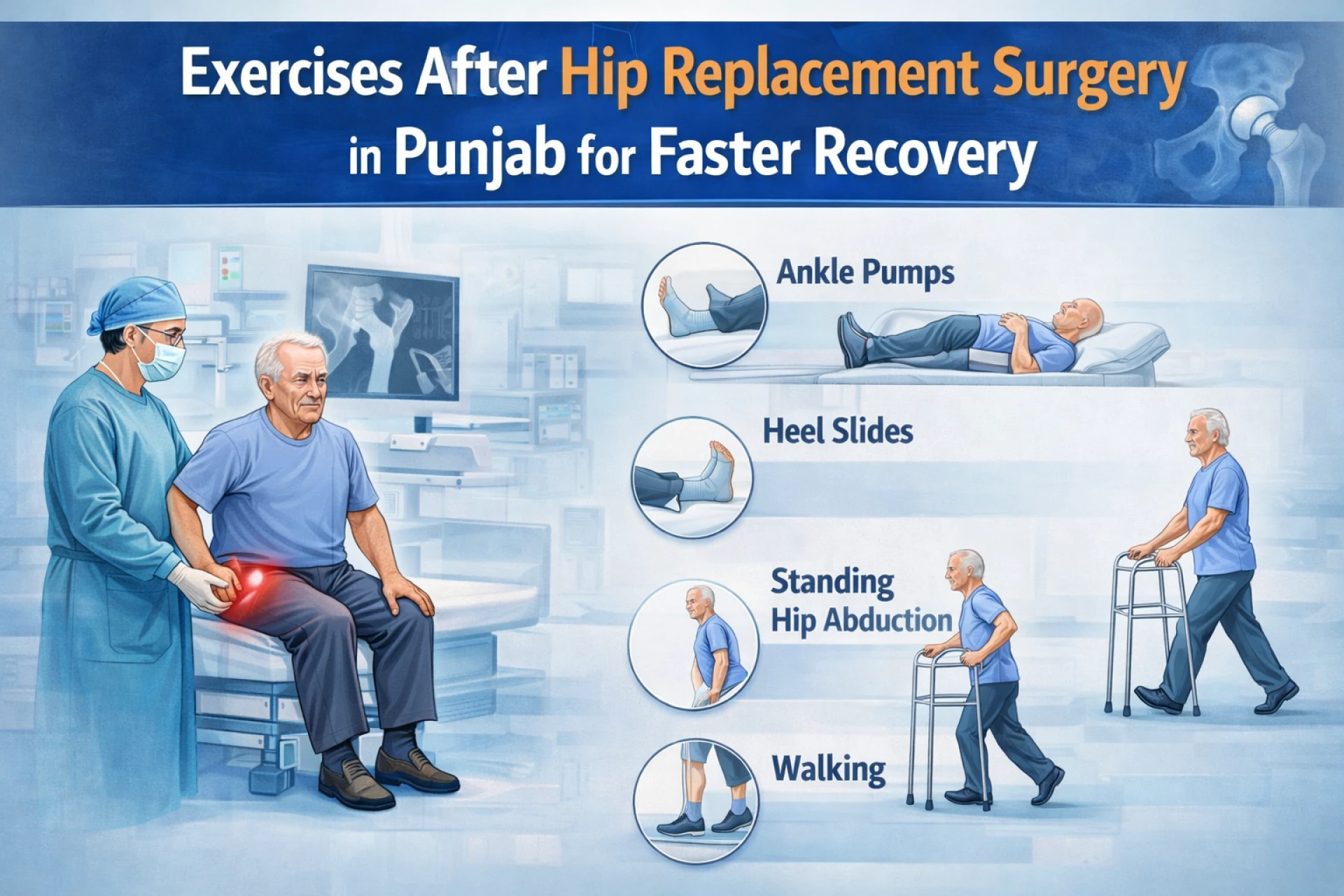

Hip replacement surgery is a life-changing procedure that helps patients regain mobility, reduce pain, and return to daily activities. However, the success of the surgery does not depend only on the procedure itself. Proper rehabilitation and exercises play a crucial role in restoring strength, flexibility, and stability. Patients who undergo Hip Replacement Surgery in Punjab are often advised to follow a structured exercise plan to ensure faster recovery and long-term success.
With expert guidance from an experienced Hip replacement doctor in Punjab, patients can safely perform rehabilitation exercises that improve joint function and help them return to an active lifestyle.
Why Exercise Is Important After Hip Replacement Surgery
After surgery, the muscles around the hip joint may become weak due to inactivity and surgical intervention. Exercises help strengthen these muscles, improve blood circulation, and prevent complications such as stiffness and blood clots.
Key benefits of post-surgery exercises include:
- Faster recovery and healing
- Improved joint flexibility
- Increased muscle strength
- Better balance and stability
- Reduced risk of complications
- Improved walking ability
Patients who follow proper rehabilitation programs at the best hip replacement hospital in punjab often experience better outcomes and quicker return to normal life.
When to Start Exercises After Hip Replacement Surgery
Exercise usually begins within 24 to 48 hours after surgery under medical supervision. Initially, the exercises are gentle and focus on improving circulation and preventing stiffness. Gradually, more advanced exercises are introduced as the patient heals.
A qualified Hip replacement doctor in Punjab will recommend a personalized rehabilitation plan based on the patient’s condition, age, and overall health.
Early Stage Exercises (Day 1 to Week 2)
These exercises focus on improving blood circulation and preventing stiffness.
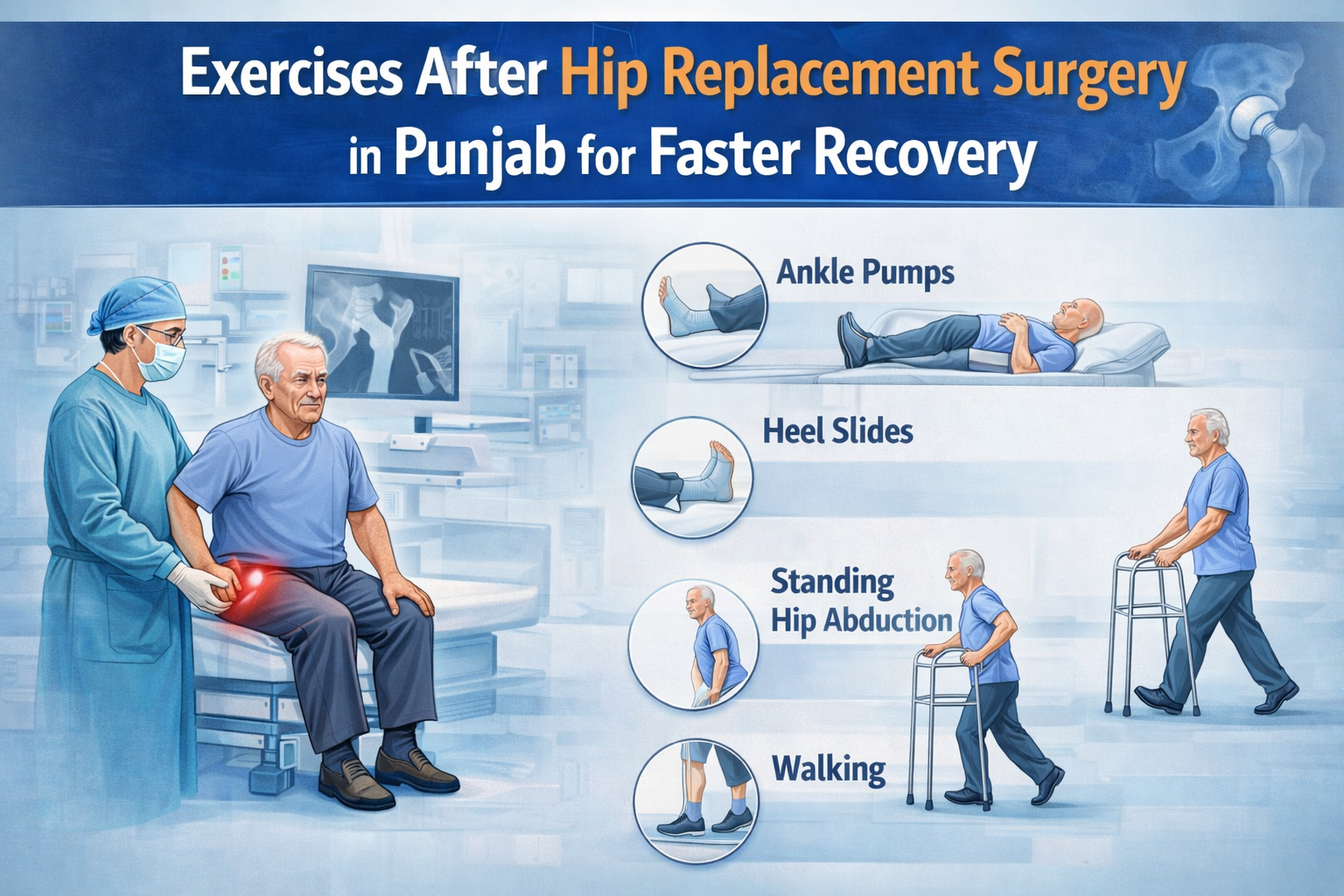
1. Ankle Pumps
This simple exercise improves blood circulation and reduces the risk of blood clots.
How to do it:
- Lie down comfortably
- Move your foot up and down slowly
- Repeat 10–15 times every hour
This exercise promotes healthy blood flow and supports faster healing.
2. Quadriceps Sets
This exercise strengthens the thigh muscles.
Steps:
- Lie on your back
- Tighten your thigh muscle
- Hold for 5 seconds
- Relax and repeat
Strong thigh muscles help support the new hip joint.
3. Gluteal Sets
This exercise strengthens the hip muscles.
Steps:
- Tighten your buttock muscles
- Hold for 5 seconds
- Relax and repeat 10 times
This improves hip stability and reduces recovery time.
Mid-Stage Exercises (Week 2 to Week 6)
These exercises focus on improving movement and muscle strength.
4. Heel Slides
Heel slides help improve hip flexibility.
Steps:
- Lie on your back
- Slowly slide your heel toward your body
- Bend your knee gently
- Return to starting position
This exercise improves joint mobility.
5. Standing Hip Abduction
This exercise strengthens the muscles that support your hip.
Steps:
- Stand with support
- Slowly move your leg sideways
- Hold briefly and return
This improves balance and walking ability.
6. Standing Knee Raises
This exercise strengthens the hip and thigh muscles.
Steps:
- Stand upright with support
- Lift your knee slowly
- Lower it gently
This helps restore normal walking patterns.
Patients recovering from Hip Replacement Surgery in Punjab are encouraged to perform these exercises regularly under medical supervision.
Advanced Exercises (After 6 Weeks)
Once healing progresses, advanced exercises help restore full mobility and strength.
7. Walking
Walking is one of the most effective exercises after hip replacement.
Benefits include:
- Improved joint flexibility
- Increased muscle strength
- Faster recovery
Start with short distances and gradually increase walking time.
8. Stair Climbing
Stair climbing improves muscle coordination and strength.
Always follow your doctor’s guidance while performing this exercise.
9. Stationary Cycling
Cycling improves joint mobility and strengthens hip muscles without putting excessive pressure on the joint.
This is a safe and effective exercise for long-term recovery.
Safety Tips While Exercising After Hip Replacement
To avoid complications, patients should follow important safety guidelines:
- Avoid sudden movements
- Do not bend excessively
- Follow your physiotherapy plan
- Use support when needed
- Stop exercising if you feel pain
Recovery programs provided at the best hip replacement hospital in punjab ensure patients perform safe and effective exercises under expert supervision.
How Expert Care Improves Recovery
The quality of surgical care and rehabilitation significantly affects recovery outcomes.
Dr Manuj Wadhwa is a highly experienced joint replacement specialist known for advanced surgical techniques and comprehensive rehabilitation programs that help patients recover faster and regain mobility safely.
At Eliteorthopaedics, patients receive personalized recovery plans that include guided physiotherapy, modern rehabilitation techniques, and continuous monitoring to ensure optimal healing and long-term joint health.
Long-Term Benefits of Regular Exercise After Hip Replacement
Patients who follow a proper exercise routine experience long-term benefits such as:
- Stronger hip muscles
- Improved joint flexibility
- Better balance
- Reduced risk of future complications
- Increased independence
Exercise also helps extend the life of the implant and improves overall quality of life.
How Long Should You Continue Exercises?
Most patients need to continue exercises for at least 3 to 6 months after surgery. However, maintaining an active lifestyle with regular walking and strengthening exercises provides lifelong benefits.
Patients treated at advanced centers offering Hip Replacement Surgery in Punjab receive structured rehabilitation plans designed to ensure complete recovery.
Regain Your Mobility with Expert Guidance
Hip replacement surgery offers a second chance at living a pain-free and active life. However, proper rehabilitation and exercises are essential for achieving the best results. Following the right exercise plan strengthens your muscles, improves mobility, and ensures long-term success.
If you or your loved one is planning hip replacement or recovering from surgery, consulting an experienced specialist can help ensure safe recovery and optimal results. Book your consultation with Dr Manuj Wadhwa at Elite orthopaedics today and receive expert care, advanced treatment, and personalized rehabilitation support designed to help you recover faster and return to a healthy, active lifestyle.


























Sign in to leave a comment.