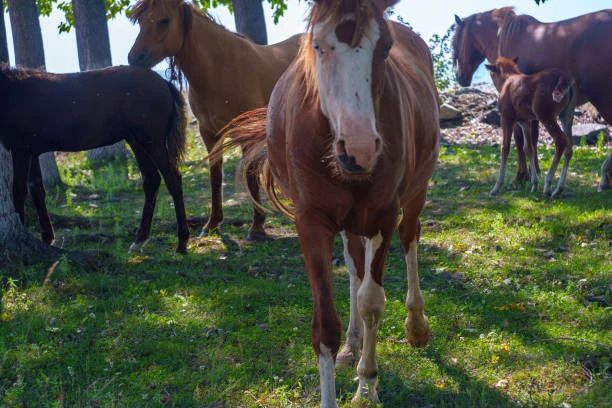

As a psychiatrist, I’ve prescribed a lot of things in my life: medications, mindfulness, more sleep, less caffeine (the hypocrisy, I know). But there’s one prescription that still surprises people: horses.
No, I don’t mean riding off into the sunset to escape your problems (tempting as that sounds). I’m talking about equine-assisted therapy, or as I like to call it, “getting emotionally wrecked by a creature that doesn’t even talk.”
You might be wondering, “How can a horse possibly help with my anxiety, trauma, or emotional burnout?” Let me tell you—these majestic, hay-munching therapists have more emotional intelligence than half the people in your last Zoom meeting.
1. They Mirror Your Emotions—Literally
Horses are prey animals. Their survival depends on their ability to read energy and intention. You can’t fake calm with a horse. If you walk into the pasture pretending to be chill while internally spiraling about whether you responded “appropriately” to that text 6 hours ago, the horse will pick up on that chaos.
They’ll avoid you. Or they’ll challenge you. Either way, they’ll show you exactly what you’re putting out into the world—without judgment, without words, just pure presence. That emotional honesty? It’s brutal. And beautiful.
I had a patient once say, “I trust my horse more than my last five boyfriends combined.” Honestly? Valid.
2. It Gets You Out of Your Head (and Into the Dirt)
So many of my patients live in what I call “head traffic.” Racing thoughts, analysis paralysis, overthinking about overthinking. Horses don’t care about your GPA, your inbox, or your ability to recite your entire therapy history.
They care about how you show up—right now, in the moment. You’ll spend sessions grooming, leading, feeding, or just sitting quietly next to a 1,200-pound animal that somehow senses you had a rough week.
It’s grounding. It’s somatic. And it beats staring at a beige therapy couch while rehashing childhood trauma for the fiftieth time (though that has its place too—don’t worry, Freud fans).
3. No Judgment, No Eye Contact, No Performance
The beauty of horses is that they don’t expect you to perform. You don’t have to say the “right” thing. You don’t even have to make eye contact, which is a relief for my socially anxious patients who find even ordering at Starbucks to be an Olympic-level stressor.
One patient—let’s call him Jake—was a combat veteran who hadn’t spoken more than a few words in therapy. After three sessions with a retired trail horse named Maggie, he started opening up. Not to me, mind you—to her.
And it was perfect. Sometimes, the safest listener has four legs and a tail.
4. Empowerment, One Hoof at a Time
Learning to lead a horse helps build boundaries, confidence, and trust. You're not dominating them—you're learning mutual respect.
When a trauma survivor guides a 1,200-pound
horse through a series of obstacles using only intention and presence, something shifts. They often say things like, “I felt powerful again.”
Let me tell you, no pill I’ve ever prescribed creates that kind of breakthrough in 45 minutes. (And yes, I’m mildly jealous.)
5. You Laugh, You Cry, You Leave with Hay in Your Hair
Equine therapy isn’t always intense. Sometimes it’s funny. Horses are weird. They fart loudly. They sneeze on you. They try to eat your hat. They remind us that healing doesn’t have to be clinical or serious 100% of the time.
One patient ended her session by saying, “I came in with depression and left with horse snot on my shirt. Honestly? I feel better.”
Same, my friend. Same.
Final Thoughts
Horses don’t heal you—but they help you heal yourself. They strip away the noise, the performance, and the ego, and leave you face to face with your truest self.
So if you ever get the chance to stand quietly next to a horse and just be, take it.
It might not fix everything, but it will change something. And that’s where transformation begins.
Dr. Sanity is a psychiatrist with a passion for integrating traditional therapy with nature-based healing—and a mild obsession with horse memes. Therapy is serious, but sometimes, it wears a saddle. 🐴💬
























Sign in to leave a comment.