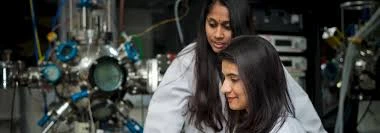

A B.Sc. in Physics is a fun ride into the world of physical laws, mathematical modeling, and their applications in understanding the universe. The degree is for that individual who has been feeling an itch to unravel the mysteries of nature from subatomic particles up to all these millions and billions of celestial bodies drifting about in the universe. If you are considering this road, then you need to familiarize yourself with the curriculum. Here, we’ll explore key B.Sc. Physics subjects across various semesters, focusing on the B.Sc. 1st year physics syllabus and the B.Sc. 3rd sem physics syllabus.
Overview of B.Sc. Physics
B.Sc. Physics is an undergraduate program that may typically run for three years with split six semesters. Every semester introduces new material but builds upon previously learned material. The course focuses on a theory supported by experimentation, which helps students develop problem-solving skills, analytical thinking, and comprehension in the physical sciences.
B.Sc. 1st Year Physics Syllabus
The first year is important as it deals with advanced topics. The B.Sc. 1st year Physics syllabus includes subjects such as:
1. Mechanics
A bachelor's program encompasses the study of motion, forces, and energy. Key topics include Newton's laws, the work-energy theorem, rotational motion, and the dynamics of rigid bodies. Students also explore conservation principles, which form the foundation of understanding physical systems.
2. Oscillations and Waves
Topics include periodic motions, such as simple harmonic motion, damped and forced oscillations, and resonance. Students also study wave motion, covering concepts like wave velocity, superposition, and the Doppler effect.
3. Thermal Physics
Thermal physics introduces concepts like heat, temperature, thermodynamics, and kinetic theory of gases. Students learn about the laws of thermodynamics, Carnot engines, and entropy that have applications in engines and refrigeration systems.
4. Electricity and Magnetism
The basics of electric fields, Gauss's law, magnetic fields, and electromagnetic induction are discussed. These topics form the foundations for further learning in electrodynamics and electronics.
B.Sc. 3rd Sem Physics Syllabus
By this time, the students are exposed to the intermediate chapters of the curriculum. The B.Sc. 3rd sem physics syllabus usually contains-
1. Mathematical Physics
This course deals with the mathematical tools applicable to solving complex physical problems. Topics covered vector calculus, Fourier series, partial differential equations, and special functions. These tools are essential for fathoming advanced physics concepts.
2. Basics of Quantum Mechanics
The principles of quantum mechanics, such as wave-particle duality, Schrödinger's equation, and the concept of probability waves, are introduced to students in this class. This subject lays a basis for understanding atomic and molecular physics.
3. Electromagnetic Theory
This is an advance of the basics of electricity and magnetism done in the first year. It lays emphasis on Maxwell's equations, electromagnetic waves, and the behavior of light as an electromagnetic wave.
4. Optics
Optics deals with the nature of light. The course contains interference, diffraction, polarization, and laser principles. All these concepts are essential in understanding optical devices as well as technologies such as fiber optics.
Why Pursue B.Sc. Physics?
- Diverse Career Options: Physics can present careers in the fields of research, engineering, data analysis, and education
- Skill Development: The course develops critical thinking and problem-solving skills along with quantitative analysis
- Research Opportunities: Numerous colleges and universities stimulate students to engage in research on topics of particular interest to them.
Tips to Shine in B.Sc. Physics
- Basics: A good grasp of first-year topics such as mechanics and thermodynamics will make advanced topics easier to understand.
- Practice Problems: Physics has to be learned through problems and experiments.
- Stay Curious: Engage yourself with real life application of physics.
Conclusion
The journey through a B.Sc. Physics program is both challenging and rewarding. From the foundational concepts in the B.Sc. 1st year physics syllabus to the advanced topics in the B.Sc. 3rd sem physics syllabus, every subject plays a vital role in shaping your understanding of the physical world. By mastering these topics, students can unlock opportunities in academia, research, and industry, contributing to scientific advancements that drive progress in society.





























Sign in to leave a comment.