The job market in India is diverse and rapidly evolving, making salaries vary widely across industries and roles. Many professionals and students preparing for their careers often wonder what determines the average salary in India per month. While the exact figure differs depending on profession and industry, several key factors such as skills, education, and location significantly influence monthly earnings. Understanding these factors not only helps job seekers set realistic expectations but also guides them in making informed career choices.
1. The Role of Skills in Determining Salaries
In today’s competitive job market, skills are often more valuable than degrees alone. Companies prioritize candidates who bring specialized expertise to the table. For instance, tech professionals skilled in artificial intelligence, cloud computing, and data science often command salaries far higher than the general average salary in India per month. Similarly, digital marketing specialists with knowledge of SEO, analytics, and paid advertising can earn more than traditional marketers.
Soft skills such as communication, leadership, and problem-solving also play a vital role. Employers reward individuals who can combine technical expertise with the ability to work in teams, manage projects, and lead initiatives. The more unique and in-demand your skills, the higher your potential earnings compared to the national average.
2. Education and Its Impact on Salaries
Education is one of the strongest determinants of salary in India. While a graduate degree is often the minimum requirement for many jobs, advanced degrees such as MBAs, engineering, or medical qualifications can lead to higher salaries. For example, MBA graduates from top-tier institutes often earn several times more than the average salary in India per month, particularly in industries like consulting, finance, and technology.
Professional certifications also make a big difference. Credentials like Chartered Accountant (CA), CFA, PMP, or AWS certifications can significantly boost earning potential. Employers are willing to pay more for candidates who can prove their expertise through formal certifications, as it reduces training costs and ensures higher productivity.
3. Location and Cost of Living Differences
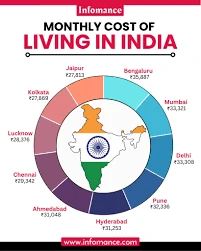
Geography plays a crucial role in determining the average salary in India per month. Metro cities such as Bengaluru, Mumbai, and Delhi offer higher salaries compared to smaller towns and rural areas. This is largely because companies operating in metros deal with higher business costs and also because employees in these cities face higher living expenses.
For example, a software engineer in Bengaluru may earn double the salary of someone with the same role in a Tier-2 city. Similarly, financial professionals in Mumbai, the financial hub of India, tend to earn significantly more than their counterparts elsewhere. However, it is important to factor in the cost of living—while higher salaries in metros sound attractive, expenses such as rent, transport, and lifestyle are also considerably higher.
4. Industry and Experience Level
Beyond skills, education, and location, the industry and years of experience greatly affect the average salary in India per month. IT, finance, healthcare, and e-commerce are among the top-paying industries. Entry-level salaries in these fields may be modest, but with 5–10 years of experience, professionals can see significant jumps. For example, a fresher software engineer may start near the average monthly salary but can surpass it quickly with experience and specialization.
Conclusion
The average salary in India per month is shaped by a mix of factors including skills, education, location, industry, and experience. While national averages provide a baseline, your personal earning potential largely depends on how you position yourself in the job market. By investing in in-demand skills, pursuing higher education or certifications, and considering opportunities in high-paying locations and industries, professionals can significantly boost their monthly income. For aspiring job seekers, understanding these factors is the first step toward building a rewarding and financially secure career.






























Sign in to leave a comment.