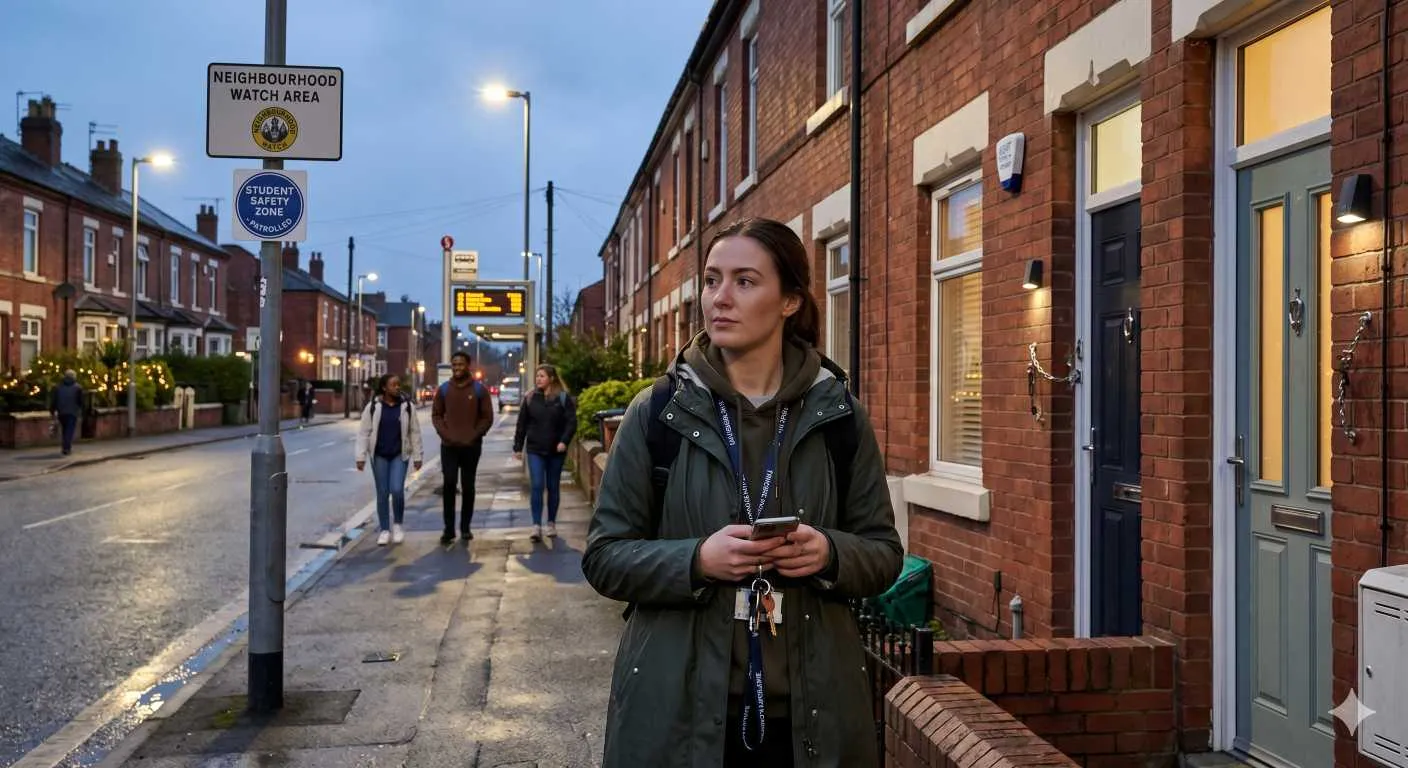

For the modern student, the transition from university-managed halls to private sector renting is more than just a change of address; it is a significant step into independent adulthood. However, as students move into residential neighborhoods, the umbrella of campus security is replaced by a more complex landscape of housing security and personal responsibility. Understanding whether living off-campus is "safe" requires a nuanced look at crime rates, legislative protections, and the practicalities of student living in the UK.
The Structural Shift: On-Campus vs. Off-Campus Security
The primary difference between these two modes of living lies in the "security infrastructure." University student accommodation is typically a controlled environment, featuring gated access, CCTV-monitored perimeters, and 24/7 onsite staff.
In contrast, off-campus housing integrates students into the wider community. While this offers a richer social experience and better access to local amenities, it removes the physical barriers to entry. In a private rental, the responsibility for neighborhood safety is shared between the local council, the police, the landlord, and the tenants themselves.
The Pros and Cons of the Private Sector:
- Pros: Increased autonomy, lower costs in many regions, and the ability to choose a location closer to specific community resources or employment hubs.
- Cons: Responsibility for commuting safety, the need to vet landlord responsibilities, and a higher reliance on personal safety tips.
Analyzing UK Crime Rates and Student Vulnerability
Data from the 2025-2026 Home Office reports indicate that while violent crime in the UK remains low by global standards, "student-heavy" areas often experience higher-than-average rates of domestic burglary. This is rarely a reflection of the neighborhood’s inherent danger, but rather a result of "high-value density"—the concentration of expensive electronics in houses that are often perceived as having lower security.
Regional Safety Variations
Safety is highly localized. When evaluating student accommodation, it is vital to look beyond city-wide statistics and focus on ward-level data.
| Region | Safety Profile | Student Housing Context |
|---|---|---|
| Northern England | Moderate | High density of CCTV in student corridors; active community policing. |
| The Midlands | Variable | Strong focus on "Safe Hub" initiatives in city centers. |
| Southern England | Higher | Generally lower crime rates, though higher costs for secure properties. |
| London | Complex | Highly dependent on the specific borough and proximity to transport links. |
The Legal Framework: Tenancy Rights and Security Standards
One of the most significant developments for student safety in 2026 has been the rigorous enforcement of the Renters’ Rights Act. This legislation has elevated housing security from a luxury to a legal requirement.
- Landlord Responsibilities: Under current law, landlords are legally obligated to ensure that all external doors and windows are secure. If a lock is broken, it is no longer just a maintenance issue—it is a breach of the "Decent Homes Standard."
- Property Inspections: Students have the right to request proof of recent safety and security checks. A professional landlord should provide documentation regarding fire safety, gas certificates, and the integrity of entry points.
- Tenancy Rights: If a property is deemed unsafe (e.g., a door that cannot be properly locked), tenants now have streamlined legal pathways to withhold rent into an escrow account or terminate a lease without penalty, forcing a higher standard of care from property owners.
A Strategic Guide to Evaluating Neighborhood Safety
Before committing to a lease, students should perform a "Security Audit" of the potential area. Safety is not just the absence of crime; it is the presence of a supportive environment.
1. The Commuting Factor
Security doesn't stop at your front door. Evaluate the walk from your campus or library to the house. Is the route well-lit? Does it pass through "active" areas with open shops and foot traffic, or is it isolated? For many, commuting safety is the most significant factor in their overall feeling of security.
2. Vetting the Property Exterior
A secure house doesn't need to look like a fortress, but it should show signs of active management. Look for:
- Substantial, British Standard (BS3621) deadlocks on front and back doors.
- Functioning dusk-to-dawn sensor lighting in the front garden or driveway.
- Well-maintained fences and gates that prevent easy access to the rear of the property.
3. Proximity to Support Services
Check the location of the nearest community resources. Is there a local "Police Contact Point"? Does the university’s mobile security team patrol this area? Being within the "Safe Zone" perimeter of university support services can provide an extra layer of protection even in the private sector.
Essential Mitigation: Insurance and Emergency Readiness
No matter how safe a neighborhood is, "zero risk" does not exist. Professional student living requires a backup plan.
- Student Insurance: Most standard home insurance policies have exclusions for "unlocked doors" or "shared entrances." It is essential to secure a policy specifically designed for students that covers "walk-in" theft and provides 24-hour assistance for lost keys or broken windows.
- Emergency Contacts: Every student household should have a pre-distributed list of emergency contacts. This should include local locksmiths, the landlord’s emergency line, and the non-emergency police number (101) for reporting suspicious behavior before it escalates.
Practical Safety Tips for Daily Living
Living off-campus successfully is a matter of habit. Security experts recommend the following:
- Avoid "Student Signalling": Don't leave boxes for new laptops or TVs by the bins. This signals to passersby exactly what is inside the house.
- The "Lived-In" Look: Use smart bulbs or timers to ensure the house is never completely dark when everyone is out at the library or a society event.
- Social Media Privacy: Avoid tagging your specific location in real-time. Wait until you have left a venue or returned home to post photos.
Conclusion
Is living off-campus safe in the UK? Statistically, yes. The UK remains one of the safest countries for international and domestic students alike. However, the move to private student accommodation marks a shift from passive safety to active security.
By leveraging your tenancy rights, conducting thorough property inspections, and staying informed about local crime rates, you can ensure that your off-campus experience is defined by your academic and social success, rather than security concerns. Independence is a skill—and keeping yourself and your home secure is the first lesson.





























Sign in to leave a comment.