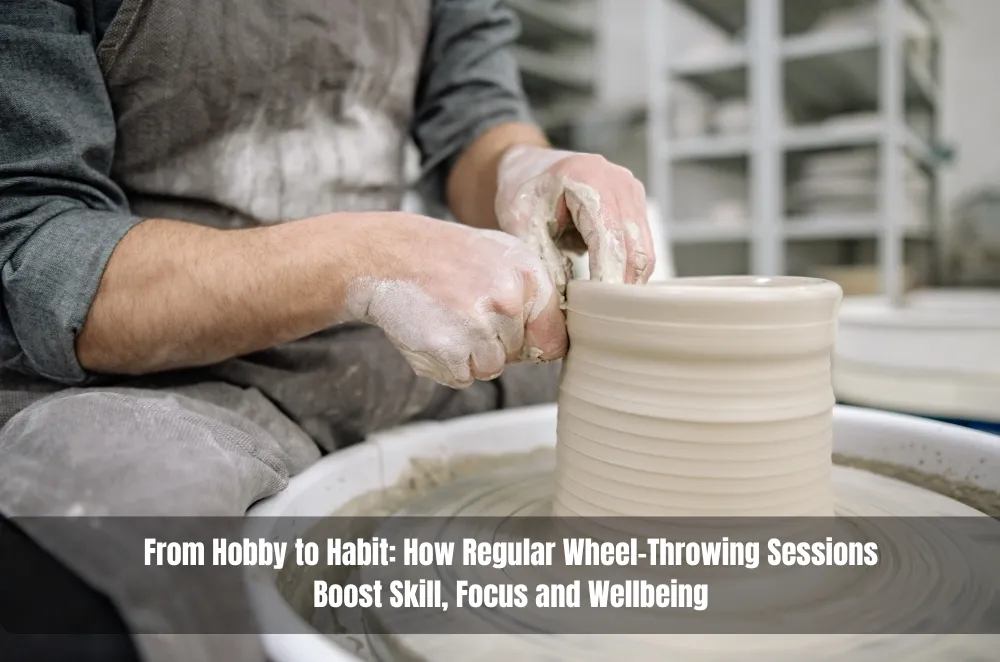

Most Melburnians leave their first pottery wheel class on a high, hands still dusty, camera roll packed with lopsided cylinders, mind racing ahead to the glazed mugs they’ll be sipping from “soon”. Fast-forward two weeks and the clay has dried out, the wheel feels less cooperative and momentum slips. The difference between learners who improve quickly and those who stall isn’t hidden talent; it’s turning a one-off experience into a steady habit. Below, we unpack why consistent wheel-throwing matters for your skills, focus and overall wellbeing, and how beginners can build a practice rhythm that sticks through Melbourne’s busy seasons.
Why Practice Beats Raw Talent in Wheel-Throwing
Wheel-throwing is equal parts motor skill and creative judgment. Every short session reinforces:
- Muscle memory in small stabilising muscles – The repeated micro-adjustments your wrists make while centring can’t be “thought through” in theory; they need hands-on rehearsal.
- Tactile feedback loops – Clay moisture, centrifugal force and wall thickness change by the second. Regular contact sharpens the brain’s ability to read these cues.
- Focus stamina – Activities requiring sustained sensory attention have been shown to induce a meditative “flow” state, easing everyday stress.
For the wellbeing side, see Healthdirect’s overview of hobby-related wellbeing benefits. The government-backed source highlights lower stress hormones, improved mood regulation and stronger social connections among people who engage regularly in practical, creative hobbies, a neat description of weekly wheel time.
At-Home Prep Without a Wheel
Don’t have space for your own wheel yet? Even five minutes of wedging reclaimed clay on the kitchen bench conditions your hands and helps identify air pockets by feel. Combine this with fingertip strength drills, gently squeezing a soft stress ball while watching TV, to keep those pull motions instinctive between studio visits.
Getting Past the Awkward Phase
Early hurdles are universal: clay flies off-centre, walls collapse, trimming feels like sabotage. Knowing these speed bumps are normal (and fixable) keeps motivation alive. Readers after details can dive into early pottery-whaeel mistakes beginners make; the article breaks down practical fixes Melbourne learners can try between classes.
Quick starter tips:
• Symmetry is secondary – In month one, prioritise even base thickness over perfect silhouettes.
• Speed hides problems – Slow the wheel when pulling walls taller; fast rotation masks wobble until it’s too late.
• Wrap for later trimming – If you can’t return within 24 hours, double-bag pieces to keep them leather-hard rather than bone dry.
Mini-Drills You Can Finish in 15 Minutes
- One-kilogram centring sprints – Repeat centring, coning up and down three times without pulling walls; builds arm-core coordination.
- Compression spirals – With a damp sponge, slowly compress the rim of a centred puck to learn pressure control, no tools needed.
- Touch-timing test – Poke a fingernail into a scrap offcut every hour to understand how Melbourne’s humidity affects drying speed.
Skill Progress Timeline: What Realistic Improvement Looks Like
Beginners often ask, “When will I throw a decent mug?” The honest answer hinges on practice frequency, feedback quality and personal coordination. The snapshot below sets grounded expectations.
| Practice Frequency | Typical Progress After 4 Weeks | Commitment Tips |
| Weekly 2-hour class plus 1 open-studio hour | Consistent centring on 1 kg clay, cylinders 10 cm high with even walls | Book the open-studio slot straight after class so techniques are fresh |
| Fortnightly 3-hour class | Good centring control, height plateaus around 8 cm, trimming confidence slower | Keep a clay journal, record shapes, weights and drying times |
| Monthly weekend workshop | Skills reset each visit; centring feel returns slowly | Practise wedging or coil builds at home to stay “clay-fit” between sessions |
Consistency, not marathon sessions, drives sustainable gains. Even the “weekly + open studio” path totals under three hours but yields faster mastery.
Setting Up a Realistic Practice Rhythm
Life in Melbourne moves quickly, peak-hour trams, long workdays, footy season. The trick is choosing a structure that feels achievable now, not “someday”.
- Block-based courses – Enrol in structured beginner wheel-throwing classes that run weekly over 4–6 weeks. Predictable timing carves out a new habit before life crowds in.
- Open-studio punch cards – Many studios sell packs of five or ten casual sessions. Slot them in on Wednesday nights or rainy Sunday afternoons.
- Buddy system – Travel with a friend; the tram ride to Brunswick or Collingwood adds accountability (and post-class dumpling rewards).
- Seasonal goals – Winter is Melbourne’s indoor hobby prime. Commit to a “mug a month” challenge from June to August; showcase pieces replace the footy-final sweepstake on the office shelf.
Aim for at least two clay touch-points per fortnight, one guided, one self-directed. This pattern cements muscle memory without overwhelming busy schedules.
Budget-Friendly Gear Tweaks
• Reuse tools – A butter knife works for undercutting bases; old bank cards make handy ribs.
• Share clay orders – Splitting a 10 kg bag with classmates halves costs and storage clutter.
• DIY bats – Cheap craft-wood circles from hardware stores serve as throw-and-go platforms if studio bats are booked.
Social Motivation: Why Melbourne’s Group Studios Matter
Creative neighbourhoods like Brunswick, Collingwood and Northcote host collaborative studios where beginners, hobbyists and resident artists share benches. Social perks include:
- Organic feedback – A neighbouring thrower may spot a posture fix your tutor didn’t have time to address.
- Shared kiln runs – Bulk firings divide costs; glazes flow freely once someone orders a new shade.
- Community rituals – Winter “bisque and brew” nights or spontaneous soup-and-sanding afternoons turn practice into a social anchor rather than another solo task.
If you’re studio-shopping, favour venues that:
• Cap class sizes to 8–10, so wheel time isn’t squeezed.
• Encourage practice outside formal lessons.
• Offer secure shelf space, pieces can rest safely between trimming and glazing stages.
Wellbeing Upsides You’ll Notice First
Regular wheel-throwing intertwines physical calm and mental clarity:
- Mindful immersion – Centring demands full attention; intrusive thoughts quiet as the wheel spins.
- Screen-time detox – Wet clay and phones don’t mix. Two hours offline offers brain space many office workers crave.
- Tangible progress – Unlike endless spreadsheets, you finish each session with a form you can hold, and eventually drink coffee from.
- Sensory grounding – The smell of wet clay and rhythmic whirr of the wheel provide a multi-sensory cue that it’s time to unwind, helping establish an after-work ritual.
Melbourne’s cool, rainy months magnify these gains; where better to be than a warm studio listening to jazz over the splash of a clay-splattered splash-pan?
Common Pitfalls (and Simple Fixes) for Busy Beginners
| Pitfall | Why It Happens | Quick Fix |
| Skipping trimming | Time crunch, fear of ruining piece | Book trimming time in advance; trim test tiles to build confidence |
| Rushing drying | Low patience, heating vents blasting | Wrap pieces loosely in plastic and slow-dry on timber boards |
| Irregular attendance | Travel, workload spikes | Keep small practice clay at home; 10-minute wedging is better than none |
| Over-practising solo | No feedback loop | Alternate independent sessions with instructor-led classes every fortnight |
Treat pitfalls as checkpoints, not verdicts. Every stumble contains data you’ll use to refine technique later.
Making Clay Part of Your Week, Not Just Your Weekend
Regular wheel-throwing isn’t about churning out café-quality sets overnight. It’s incremental: one slightly taller cylinder, one smoother rim, one evening where the wheel’s rhythm drowns out inbox pings. Choose a schedule that feels sustainable, lean on Melbourne’s rich studio network for social energy, and the hobby will quietly evolve into a life-giving habit, rewarding your skills, focus and wellbeing long after that first dusty selfie.





























Sign in to leave a comment.