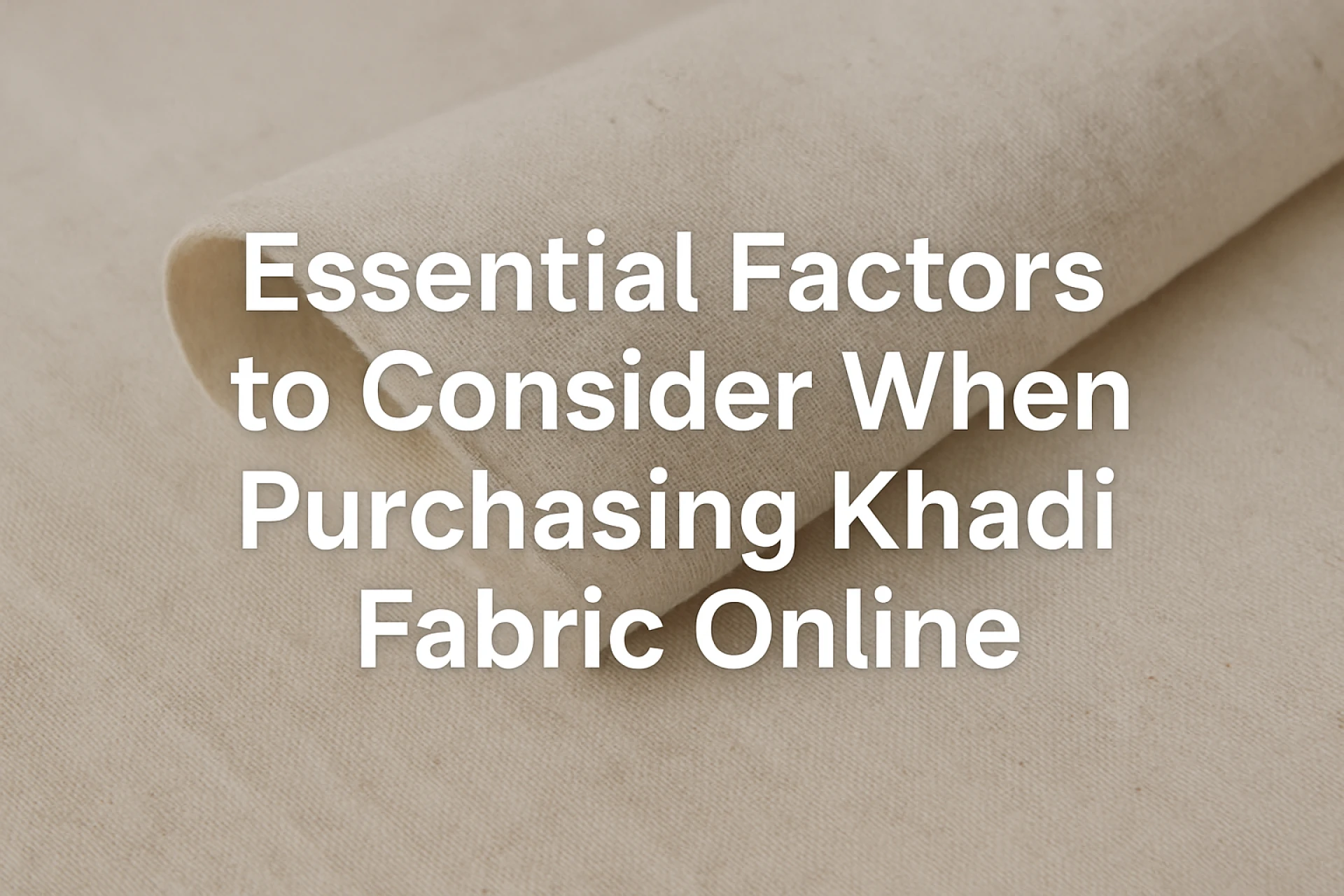

Khadi holds a unique place in India’s textile heritage, known for its handspun, handwoven character and timeless appeal. As demand grows across fashion, home textiles, and handcrafted products, many buyers now prefer the convenience of sourcing Khadi fabric online.
While digital purchasing expands availability, it also brings challenges—particularly around assessing authenticity, quality, and ethical production. Choosing the right fabric requires an understanding of how Khadi is made, what defines its value, and how to evaluate vendors offering it through online platforms.
This article provides a comprehensive guide to the most important factors to consider when you buy Khadi fabric online, helping buyers make informed, confident decisions.
1. Understanding What Makes Khadi Unique
Khadi is not just another fabric; it is created through a slow, artisanal process using hands-pinning and handweaving techniques that give it an organic, textured feel. Unlike mill-made cloth, Khadi often carries subtle irregularities that highlight its human craftsmanship. These variations in weave, slub, and thickness reflect the handmade process and are considered part of the fabric’s charm.
Before buying online, buyers should understand that:
- Khadi will not look or feel like machine-made fabric.
- Minor irregularities are natural and expected.
- Its breathability and softness increase with every wash.
A basic appreciation of these traits helps buyers differentiate authentic Khadi from powerloom imitations that sometimes appear in online listings.
2. Authenticity and Source Transparency
Authenticity is one of the most important factors when buying Khadi. Because Khadi commands a higher value, it is not uncommon for machine-made alternatives to be sold as “Khadi” online. A reliable seller will clearly communicate the origin, production method, and weave structure of the fabric.
When evaluating an online listing, look for:
- Mention of handspun and handwoven processes
- Details about the artisan community, cluster, or region
- Clear description of fabric type (Khadi cotton, Khadi silk, Khadi linen, etc.)
- Weave details such as plain weave, slub texture, or handloom finishing
Even if the platform does not offer certification, trustworthy sellers typically share transparent information about their sourcing practices.
3. Fabric Specifications and Technical Clarity
Shopping for fabric online requires careful attention to technical details that influence weight, texture, and suitability for the intended project. Khadi varies widely in density, softness, and weave, so accurate specifications are essential.
Important details to review include:
- GSM (grams per square meter): indicates thickness and weight
- Width: typically ranges from 36 to 44 inches for handloom fabrics
- Weave type: plain, twill, slub, check, stripe
- Coloring method: natural dyes, azo-free dyes, herbal dyes, or conventional methods
- Shrinkage expectations: Khadi often shrinks slightly after the first wash
Clear technical specifications reduce the guesswork and help ensure buyers select the right fabric for garments, accessories, tailoring, or craft projects.
4. Understanding Variations in Handwoven Fabrics
Unlike factory fabrics, Khadi carries natural inconsistencies due to its manual production process. These variations are not defects—they are proof of authenticity. However, they also mean each batch may differ slightly from the next.
Before buying online, it is helpful to understand:
- Color intensity may vary between batches
- Weave density can differ from one lot to another
- Slub texture may not be perfectly uniform
- Hand-dyed fabrics may show mild tonal differences
Buyers who appreciate handcrafted textiles will value these traits, but those seeking uniformity should review product images closely and understand the expected variations.
5. Purpose and Intended Use
Khadi comes in many varieties, each suitable for different applications. Understanding the intended use helps buyers choose the appropriate fabric weight, weave, and composition.
Common fabric types and their uses include:
- Lightweight Khadi cotton: ideal for summer shirts, dresses, kurtas, scarves
- Medium-weight Khadi: suitable for trousers, jackets, tunics
- Khadi silk or blends: great for festive wear, saris, stoles
- Coarser Khadi weaves: used for craftwork, accessories, or home textiles
Knowing your project helps narrow your search and avoid purchasing fabric that may not perform as expected.
6. Dyeing and Finishing Practices
Khadi is often dyed using natural or low-impact dyes, but this varies across sellers. Natural-dyed Khadi has an earthy, organic appearance and may be more sensitive to sunlight and washing, while conventionally dyed Khadi offers more colorfastness and vibrancy
Consider evaluating:
- Type of dye used
- Expected colorfastness
- Prewashing instructions
- Any mention of eco-friendly practices
If the seller provides wash care details, this is a good indicator of transparency and knowledge.
7. Reading Customer Feedback and Seller Responsiveness
Purchasing fabric online without physically touching it requires added trust. Customer reviews can offer insight into fabric quality, accuracy of descriptions, and overall buying experience. Positive reviews often highlight consistency, authenticity, and value, while detailed feedback can reveal issues such as incorrect colors, shrinkage, or misrepresented textures.
Seller responsiveness is also important. Reliable sellers typically:
- Respond quickly to questions
- Provide fabric swatches upon request
- Offer additional images or details
- Clarify weave and dyeing specifics
Good communication increases confidence and helps buyers make more accurate choices.
8. Pricing Insight and Value Assessment
Khadi is labor-intensive and handcrafted, so pricing reflects the time and skill involved. Extremely low prices can indicate machine-made substitutes or poor-quality fabric. While buyers need not seek premium luxury ranges, selecting moderately priced, fairly valued Khadi generally ensures better authenticity and craftsmanship.
Elements that influence pricing include:
- Type of yarn used
- Handspinning complexity
- Dyeing process
- Region of production
- Fineness of weave
Understanding what goes into the cost helps buyers identify genuine value when purchasing online.
9. Sustainability and Ethical Considerations
Khadi is deeply connected to sustainability and artisan livelihoods. When buying online, choosing sellers who support local artisans and fair production practices helps preserve this heritage craft.
Look for sellers who mention:
- Artisan cluster involvement
- Fair wages
- Eco-friendly processes
- Local community empowerment
Supporting responsible sources helps maintain the cultural significance of Khadi while ensuring long-term well-being for artisans.
Conclusion
Purchasing Khadi fabric online offers accessibility, variety, and convenience, but it also requires a thoughtful approach to ensure authenticity and value. By understanding the fabric’s unique characteristics, reviewing technical specifications, assessing transparency, and choosing reputable sellers, buyers can make informed decisions that honor both craftsmanship and quality. Whether used for clothing, home textiles, or creative projects, genuine Khadi continues to stand out for its cultural identity, comfort, and sustainable craftsmanship.
Want to source Khadi fabric with confidence? Contact Source Creative, a trusted name in sustainable fabrics.


























Sign in to leave a comment.