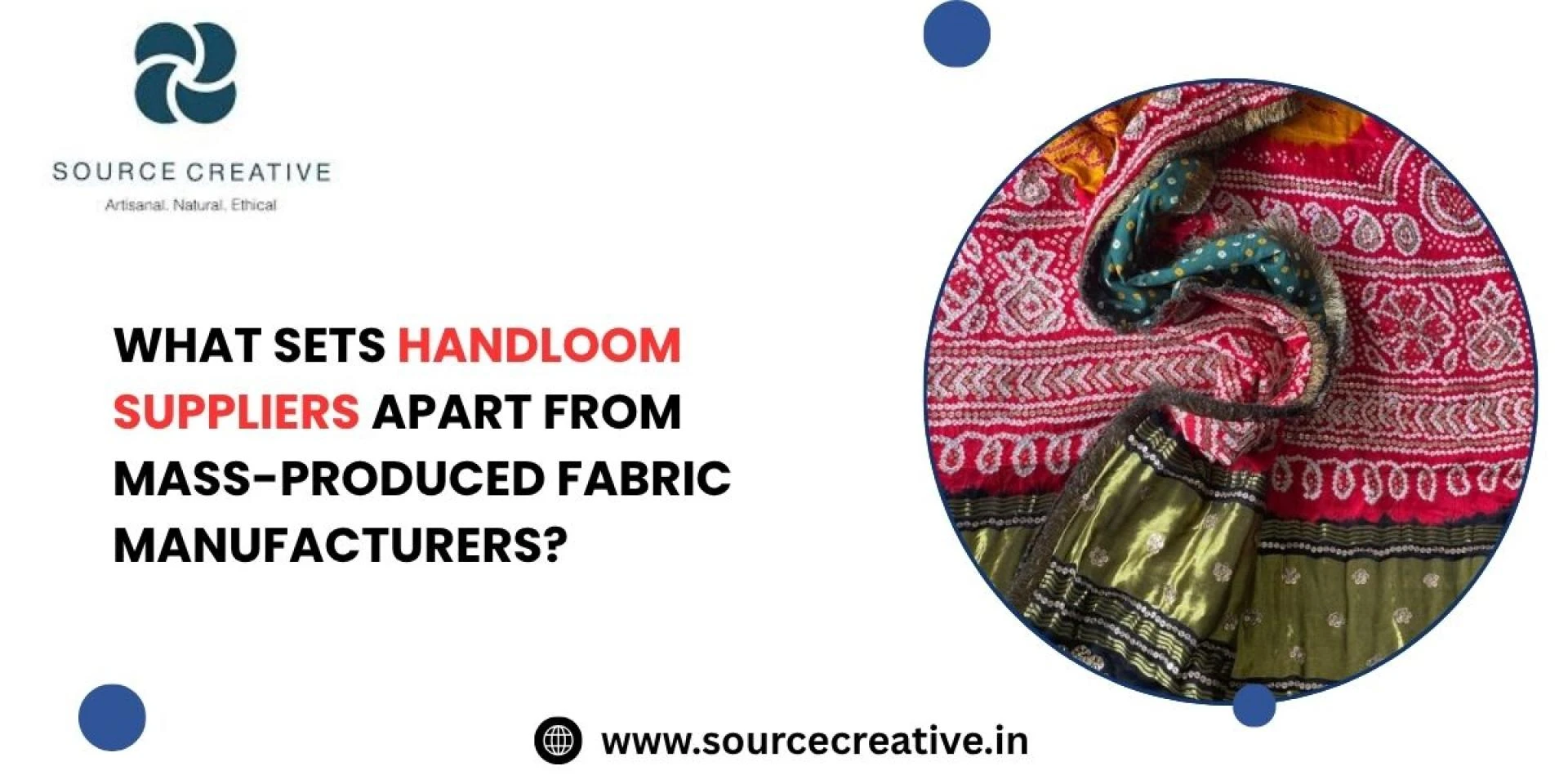

The fabric industry is vast, with a variety of suppliers offering a range of products, from machine-made textiles to the more traditional and eco-friendly handwoven fabrics. Handloom fabrics, created using traditional weaving techniques, stand out for their unique qualities, rich history, and ethical production. In contrast to mass-produced fabrics, which are often manufactured on machines in large quantities, handloom fabrics are created by skilled artisans on handlooms, making them distinct in terms of quality, texture, and value. But what exactly sets handloom suppliers apart from mass-produced fabric manufacturers? In this blog, we will explore the key differences and highlight why choosing handloom fabric suppliers is a decision that supports craftsmanship, sustainability, and authenticity.
The Process of Handloom Weaving
Handloom fabrics are crafted by artisans who use traditional hand-operated looms. The process is labor-intensive and requires a great deal of skill, patience, and attention to detail. The artisan weaves each thread manually, often producing fabrics in smaller quantities than mass-produced ones. This method allows for greater control over the quality of the fabric, and the texture, finish, and feel of the handloom fabric are distinctively different from the smoothness or uniformity often associated with machine-made textiles.
Unlike industrial fabrics that are produced on automated machines, handloom fabrics are woven one piece at a time. The artisans often use natural fibers like cotton, silk, and wool, and the techniques vary from region to region. This makes each piece of handloom fabric unique, with subtle variations in the weave, texture, and finish. The intricacy and individuality of handloom fabrics create a value that mass-produced fabrics simply cannot replicate.
1. Quality and Durability
One of the major factors that set handloom suppliers apart from mass-produced fabric manufacturers is the quality of the fabric. Handloom fabrics are made with great attention to detail. Since these fabrics are handwoven, the weaver can focus on the quality of every individual thread. In addition, many handloom manufacturers use natural fibers, which contribute to the overall strength and longevity of the fabric.
In comparison, mass-produced fabrics are manufactured quickly and often in large quantities, meaning there may be a greater likelihood of inconsistencies or defects in the fabric. The speed of mass production can compromise the strength and longevity of the fabric, as machines may not be able to catch errors or ensure the same quality control as a skilled artisan.
2. Uniqueness of Handloom Fabrics
Every piece of handloom fabric has a story, and this story is reflected in the fabric itself. The methods used to create handloom textiles have been passed down through generations, and each piece reflects the tradition, artistry, and history of the weaver. Handloom suppliers offer fabrics that are rich in culture and uniqueness. Since each piece is made by hand, no two pieces of handloom fabric are exactly alike, even if they come from the same loom.
Mass-produced fabrics, on the other hand, are uniform and often lack the character and individuality that handwoven textiles provide. While this uniformity is suitable for large-scale production, it often lacks the soul and uniqueness of handloom products.
3. Eco-Friendliness and Sustainability
One of the most important reasons to buy handloom fabric online or through handloom fabric suppliers is sustainability. Handloom weaving is an eco-friendly process. Artisans use natural fibers like cotton, silk, and wool, which are biodegradable and have a minimal environmental impact compared to synthetic fibers. The process of hand weaving uses minimal electricity, which reduces the carbon footprint associated with mass production.
In contrast, mass-produced fabrics are often made using synthetic fibers that contribute to environmental degradation and pollution. Additionally, the large-scale factories where these fabrics are manufactured tend to use significant amounts of water and chemicals, which can have a detrimental effect on the environment. Therefore, choosing handloom fabrics supports sustainable practices and helps reduce the environmental impact of the textile industry.
4. Support for Local Artisans and Communities
Handloom fabrics are often produced by skilled artisans working in local communities. By choosing to work with handloom suppliers, you are supporting these artisans and helping preserve their traditional craftsmanship. This is particularly important for rural artisans who rely on handloom weaving for their livelihood.
On the other hand, mass-produced fabrics are manufactured in large factories, often by workers who may not have the same level of expertise or pride in their craft. Supporting handloom fabric suppliers helps ensure that artisans are fairly compensated for their work, and it promotes the preservation of traditional weaving techniques that may otherwise be lost in the face of mass production.
5. Customization and Personalization
Handloom fabric manufacturers often provide customization options for customers. Whether you are a designer looking for specific colors, patterns, or textures, handloom suppliers can tailor the fabric to your needs. This level of customization is rarely available from mass-produced fabric manufacturers, who generally offer standard, off-the-shelf fabrics in limited colors and patterns.
If you are working on a special project or looking for unique fabric for a custom design, buying handloom fabric wholesale or from an online supplier gives you the opportunity to collaborate with artisans to create a fabric that meets your specific requirements.
6. Ethical Practices and Fair Trade
Another key differentiator is the ethical practices followed by handloom suppliers. Many handloom fabric suppliers are committed to fair trade, ensuring that the artisans involved in the production of the fabric are paid fair wages and work in safe conditions. Ethical sourcing practices are a fundamental aspect of the handloom industry, which helps empower local communities and ensures that workers are treated with respect.
In contrast, mass production can sometimes be linked to exploitative labor practices, particularly in regions with weaker labor regulations. Choosing to buy handloom online or from suppliers who prioritize ethical production supports a more responsible and humane supply chain.
Conclusion
Handloom fabrics offer a unique combination of quality, craftsmanship, sustainability, and ethical production practices that mass-produced fabrics simply cannot match. Whether you are looking for a fabric that tells a story, supports local artisans, or minimizes your environmental impact, handloom fabric is the ideal choice. Handloom suppliers offer a range of products, from cotton to silk and wool, that cater to the growing demand for eco-friendly and authentic fabrics.
At Source Creative, we are committed to providing high-quality, sustainably sourced handloom fabrics that support ethical production and local artisans. Whether you're looking to buy handloom fabric for a personal project or need wholesale handloom fabric for your business, we offer a wide variety of fabrics to meet your needs. Explore our collection and experience the beauty and craftsmanship of handloom textiles.
Contact Us: For more information or to place an order, visit Source Creative. We are here to help you find the perfect handloom fabric for your project.


























Sign in to leave a comment.