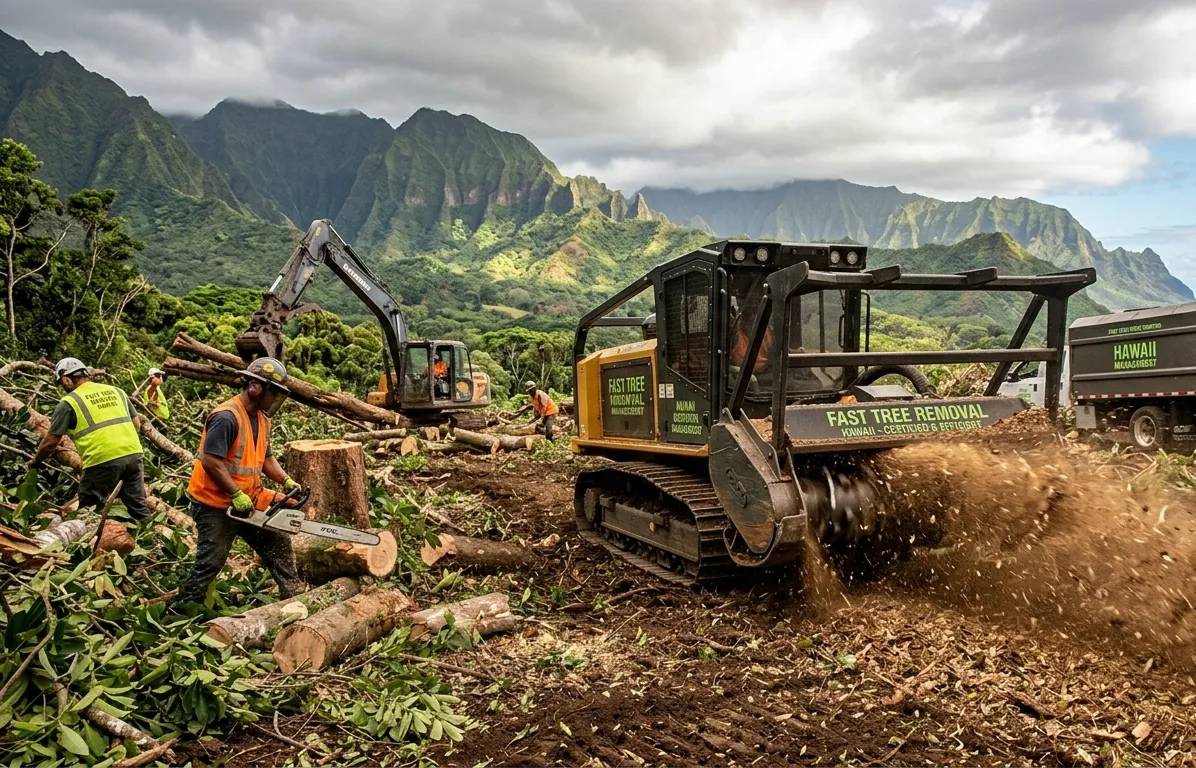

A tree that was standing strong last week can become a serious hazard overnight. A heavy storm rolls through, wind speeds spike, and a once-stable trunk develops a lean that puts it directly over a roof, a fence, or a power line. In situations like these, property owners do not have the luxury of waiting around for a slow response. The tree needs to come down, it needs to come down safely, and it needs to happen before the situation gets worse.
Fast tree removal is not simply about speed. It is about having the right crew, the right equipment, and the right preparation to respond quickly without cutting corners on safety or the quality of the work. On the Big Island, where Hilo's heavy rainfall and frequent storm activity create tree hazard situations year-round, the ability to respond promptly and execute a removal efficiently is a critical part of what separates a professional crew from an unprepared one.
Understanding what goes into a fast, safe, and effective tree removal helps property owners make better decisions when they are facing a time-sensitive situation on their land.
What Makes Tree Removal Fast Without Making It Dangerous
Speed in tree removal comes from preparation, experience, and equipment, not from rushing. When a professional crew arrives at a property, the first thing they do is assess the situation. They look at the tree's condition, its lean, the root structure, what is around it, and what the safest approach for bringing it down will be. This assessment phase takes a relatively short amount of time for experienced crews because they have seen the same types of scenarios hundreds of times and know immediately what tools and techniques the job requires.
For trees positioned near structures, utility lines, or fences where a straight fall is not possible, cranes and rigging systems allow sections of the tree to be removed one piece at a time in a fully controlled manner. Each section is lowered carefully rather than dropped, which protects surrounding property and keeps the crew safe throughout the process. This controlled dismantling approach is often faster overall than attempting to work around obstacles without the right lifting equipment, because it eliminates the risk of a section landing somewhere it should not and creating a secondary problem that slows the entire job down.
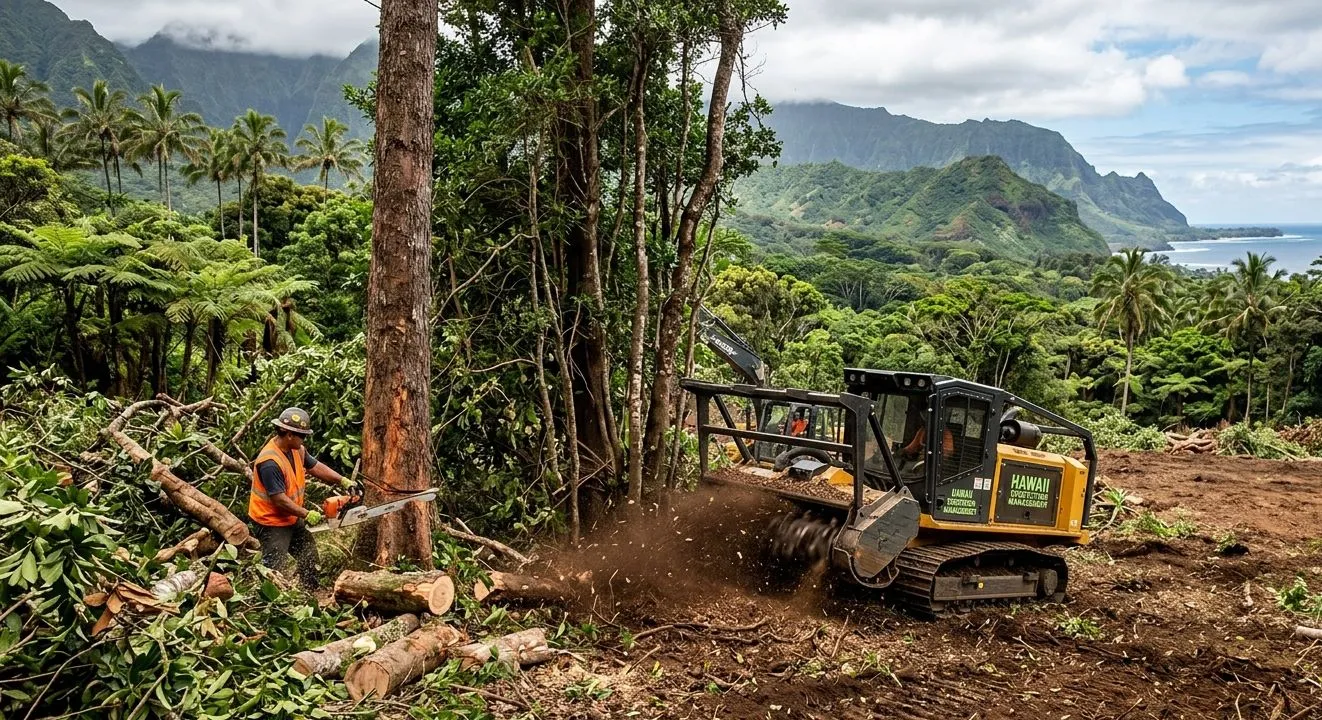
For trees in open areas without nearby structures, the removal process is more straightforward. The crew determines the fall direction, clears the zone, and brings the tree down cleanly. Stump grinding and on-site debris processing through mulching equipment handle the aftermath efficiently, leaving the property clean without requiring hauling trucks or multiple follow-up visits.
The combination of skilled operators, cranes, rigging systems, and mulching equipment is what makes fast tree removal genuinely fast on the Big Island. Each component of the process is handled by the right tool, which eliminates the bottlenecks that slow down crews relying on manual labor and basic equipment alone.
Why Big Island Properties Face Unique Tree Removal Challenges
The Big Island presents a specific set of conditions that make tree removal more complex than it is in most other locations. Hilo's position on the windward side of the island means it receives close to 140 inches of rain annually. That level of moisture accelerates tree growth, softens soil around root systems, and increases the frequency with which trees develop structural problems that require prompt attention. A tree that appears stable during dry conditions can shift significantly after weeks of heavy rainfall have saturated the ground beneath it.
Invasive species add another layer of complexity. Albizia trees are one of the most problematic species on the Big Island, spreading rapidly across residential and agricultural land throughout Puna and the Hilo area. These trees grow to significant heights in a short period of time and develop brittle branch structures that make them especially dangerous during storm conditions. Large Albizia limbs can fail without warning, and full trees can come down under wind load that would not affect a native species of comparable size. Kiawe trees present a different challenge, with deep, aggressive root systems that grow near foundations, driveways, and utility infrastructure.
Volcanic terrain across the Big Island also affects how tree removal is approached. Slopes, uneven ground, and rocky subsurface conditions influence both the equipment access and the direction in which trees can safely be felled. Crews who are familiar with these terrain conditions can navigate them efficiently, while those without local experience may encounter delays and complications that extend project timelines unnecessarily.
Storm damage response is one of the most common scenarios that drives the need for fast tree removal in Hilo. After significant weather events, multiple properties in the same area often need attention simultaneously, which makes the availability and responsiveness of a local professional crew especially important. A crew that is based on the Big Island and familiar with the typical storm damage patterns in the area is in a far better position to respond quickly and prioritize effectively than one working from a distance.
Beyond storm events, planned removals for construction projects, agricultural land preparation, and commercial site development also benefit from fast execution. Delays in tree removal can push back entire project timelines, adding cost and frustration for developers, contractors, and property owners who are working to a schedule. Having a reliable removal crew that can mobilize quickly and complete the work within the agreed timeframe keeps larger projects moving without unnecessary interruptions.
Conclusion
Fast tree removal on the Big Island requires the right combination of experienced crews, crane and rigging equipment, and on-site mulching capability to deliver results that are both quick and safe. Whether the situation is an emergency storm response or a planned removal for development or land preparation, the quality of the crew and equipment determines how efficiently the job gets done.
If you have a hazardous, storm-damaged, or overgrown tree on your property in Hilo or anywhere on the Big Island, contact Arborist Services at (808) 895-6537 or visit arboristserviceshawaii.com to schedule a prompt, professional assessment and removal.























Sign in to leave a comment.