

Organizations have been gathering and processing large volumes of data in the modern data-driven economy to drive artificial intelligence (AI) and machine learning (ML) applications. Innovation is driven by data in terms of personalized recommendations to healthcare diagnostics. However, as privacy questions become more prominent, regulatory barriers take effect, and personal data becomes more sensitive, conventional methods of data science are being reinvented. Federated Learning (FL)—a process that allows jointly training models without the need to share data directly—is one of the most interesting advances in this direction.
Advanced learning concepts, such as federated learning, are the skills that professionals aspire to master. By enrolling in a data science course in Chennai, they can equip themselves with these advanced skills and stay ahead in the rapidly evolving field of data science. Now, let's embark on a journey to explore the world of federated learning, understand its significance, and witness how it is reshaping the future of data science.
What Is Federated Learning?
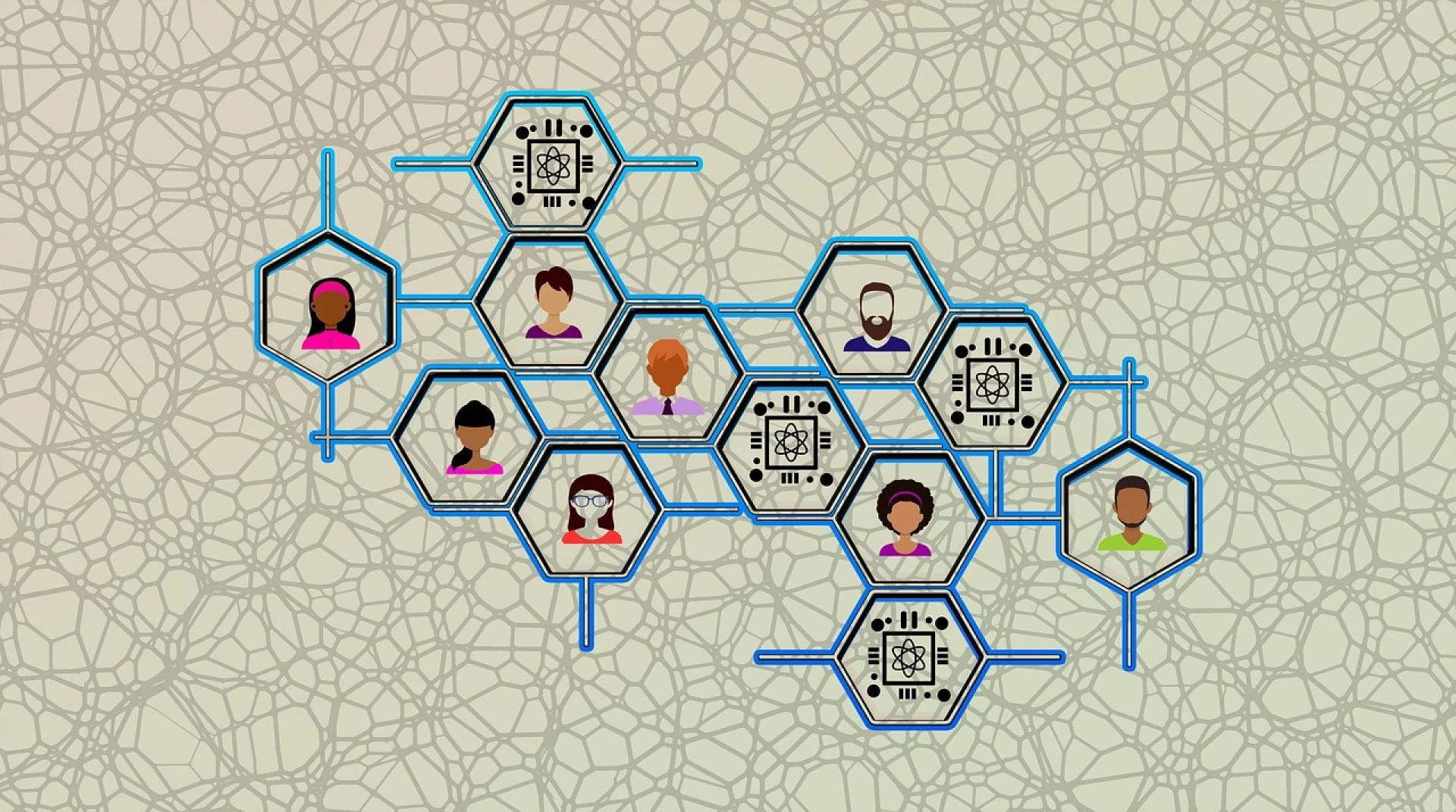
Federated learning is a machine learning methodology that is decentralized. In FL, models are trained on devices or servers where data is stored and not, e.g., in a central server where all the raw data is consolidated and trained. The model, e.g., parameters or gradients, is only shared with a central coordinator, which combines them to form a global model.
This approach will make sure that no data is ever transferred out of its location to improve its privacy and minimize the chances of being exposed. Google is among the first companies to implement such a solution, using federated learning to enhance smartphone predictive keyboards.
Consider hospitals in various other regions coming together to develop a disease prediction model. In the past, they had to exchange patient information, which was restricted by harsh privacy laws such as HIPAA. Under federated learning, the hospitals do not need to exchange the raw medical records to learn a joint model.
Why Federated Learning Matters
The federated learning approach handles some of the largest issues in the field of data science today. It is extremely essential in ensuring that there is privacy and security to the data since there will always be the data at its point of origin. This causes it to be very compliant with laws like GDPR and HIPAA. It also encourages cooperation among organizations without them having to divulge company secrets or confidential information. An example is that banks can collaboratively build up fraud detection models without revealing confidential information about customers.
Moreover, federated learning decreases the latency and bandwidth expenses due to the small updates of the model shared rather than the whole dataset to the networks. The other advantage is that it can incorporate edge devices like smartphones, IoT sensors, and wearables into the training process, enabling AI systems to learn with different and distributed sources.
When you are seeking a data science certification in Chennai, federated learning will probably be included in your coursework, as it embodies the future of secure, distributed AI.
Federated Learning Applications.
The flexibility of federated learning has rendered it more popular in diverse industries. In the medical field, hospitals can use AI models to identify diseases such as cancer or determine the risk of a patient and protect patient privacy, hence adhering to privacy rules. Banks and other financial institutions can build strong fraud detection systems in the financial sector, using distributed datasets to provide the training and keep the integrity of the customer records intact.
Other areas that technology firms are adopting are federated learning in consumer applications. More personalized services, like speech recognition, predictive typing, and custom recommendations, can be provided to smartphones and wearables without having to store sensitive information in the cloud. Driving behavior data on cars around the globe is used to train the autonomous vehicles in the automotive industry. Although vehicles have their own raw data, the information that they provide can be used to make global driving models safer and more accurate.
By learning these applications through a data science course in Chennai, students gain exposure to practical scenarios that demonstrate the significance of federated learning in today’s world.
Challenges in Federated Learning
Federated learning is associated with a number of difficulties despite the benefits of the approach. A key problem is the heterogeneity of data, as data across different organizations or devices could be in different formats and of different quality, and it is challenging to get homogeneous training. Another issue is communication overhead since even with regular updates among devices and central servers, it is possible to use up a large portion of network resources.
The risk of security threats as well is an issue, and there is the risk of malicious clients who will try to poison the model by updating it with manipulated content. Furthermore, scalability is not a simple endeavor because controlling thousands or even millions of clients at the same time is a complex task.
Research in this area is dynamic, and those students who undertake a data science certification in Chennai will have good hands-on information regarding how to deal with these obstacles and how to address them.
Federated Learning in the Future.
In the future, federated learning is poised to revolutionize the way organizations approach machine learning. With the growing use of privacy and more quickly with opportunities for collaboration, federated learning is set to become more prevalent. Further advancements in supporting technologies, such as homomorphic encryption and differential privacy, will enhance the security and reliability of federated learning, making collaboration safer and more efficient. This future is not just promising, it's exciting.
Sectors such as healthcare, finance, e-commerce, and manufacturing have already bet on federated learning as a way to discover insights without exposing their data. To enhance their career growth, practitioners in the field will find an advantage in becoming experts in this field. When taking a data science course in Chennai, one will be introduced not only to the essentials of the field, like statistics, Python, and machine learning, but also to more recent applications like federated learning. This, together with a data science certification in Chennai, would mean that students will have all the knowledge and practical skills necessary to succeed in the industry.
Conclusion
Federated learning is a novel data science paradigm. It balances these two concerns, innovation and privacy, by enabling people to work together on machine learning without necessarily sharing raw data. Federated learning is leading the next generation of AI innovation in improving healthcare outcomes and securing financial transactions, as well as in improving consumer technology and powering autonomous vehicles.
This concept is a must for anyone who wants to become an expert data scientist. A data science course in Chennai will be a great idea to develop a profound understanding of federated learning and other modern solutions. Your addition of a data science certification in Chennai to your profile only goes further in showing that you can actually put this into practice in the real world.
The demand to use digital transformation in industries will make people trained in federated learning unique in the employment sector. Data science is not going to be associated with building the largest datasets but with evolving smarter and more secure forms of learning, and federated learning is at the forefront of that transformation.





























Sign in to leave a comment.