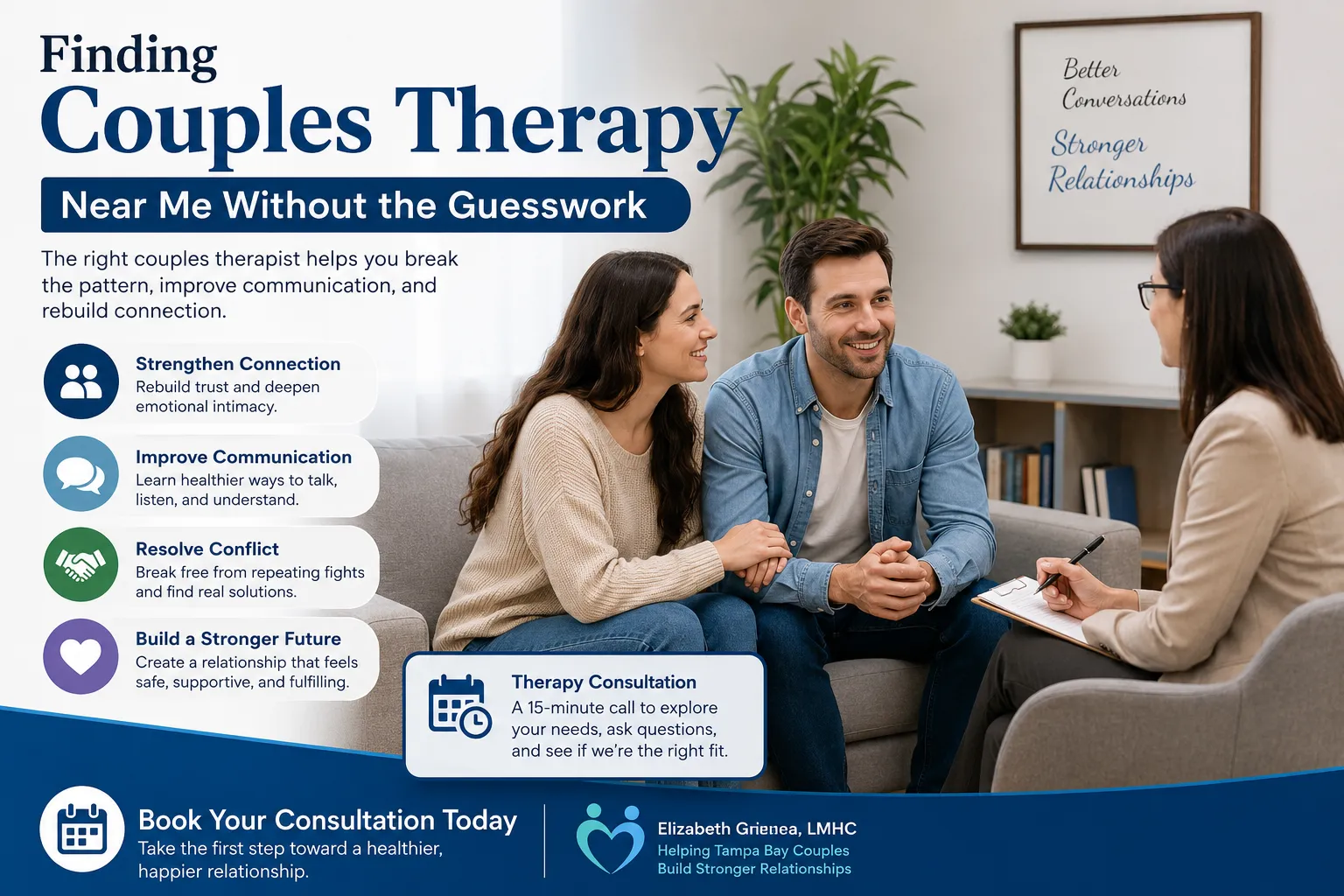

If you've typed "couples therapy near me" into Google at 11 p.m. after another argument that went nowhere, you already know the problem isn't finding a therapist it's finding the right one. The search results are a wall of headshots, five-star reviews, and vague phrases like "relationship-focused" or "client-centered." None of that tells you whether a therapist actually knows how to help two people who are stuck in the same fight on repeat.
This guide walks you through what actually matters when you're searching for couples therapy what to look for, what questions to ask, and how a short consultation can save you months of trial and error. Along the way, we'll talk about what sets a specialized Couples Therapist Tampa practice apart from a general practitioner who "also sees couples" on the side.
Why "Near Me" Isn't Enough
Proximity matters nobody wants to drive 45 minutes for a session after a long workday but location alone won't tell you if a therapist is a good fit for your relationship. Two therapists can both show up in a "couples therapy near me" search and be worlds apart in training, approach, and results.
Here's what actually separates effective couples work from a well-intentioned but generic session:
- A structured method - not just an open floor for venting. Sessions that turn into refereed arguments rarely change the underlying pattern.
- A clear understanding of conflict cycles - why the same disagreement keeps resurfacing even when the "topic" changes.
- Specific tools you can use between sessions - not just insight you nod along to in the room.
This is where Couples Counseling Tampa options can vary a lot. Some practices treat couples work as an extension of individual therapy. Others including this practice build sessions specifically around research-backed relationship models designed for two people, not one.
What a Real Couples-Focused Practice Looks Like
Elizabeth Guinea works with couples using the Gottman Method, an approach developed by Dr. John and Dr. Julie Gottman after decades of studying what actually predicts whether relationships thrive or fall apart. Instead of letting sessions spiral into unproductive back-and-forth, the process is structured around a few core questions:
- What's actually driving the conflict beneath the surface topic?
- Why do certain conversations escalate so quickly?
- How can you communicate in a way your partner can genuinely hear?
- What does it take to rebuild trust and closeness once it's eroded?
That structure matters because most couples who feel "stuck" aren't lacking love they're missing a shared understanding of the pattern they keep falling into. Learning to name that pattern is often the first real shift a couple experiences in therapy.
If you're comparing options and want to see how this approach is described in more detail, the services breaks down exactly what couples work looks like session to session, alongside the individual therapy offerings available at the same practice.
Who Couples Counseling Tampa Sessions Actually Help
A common misconception is that couples therapy is a last resort something you turn to only once a relationship is already in serious trouble. In practice, the couples who get the most out of therapy often come in earlier than that: when communication has started to feel effortful, when the same argument keeps resurfacing in different clothing, or when partners feel more like roommates than teammates.
Couples work through this process typically fall into a few overlapping situations:
- Communication breakdowns - conversations that used to be easy now feel like they require translation.
- Repeating conflicts - the specific topic changes (money, chores, in-laws) but the underlying fight is always the same.
- Emotional distance - less a dramatic rupture than a slow drift apart that's hard to name but easy to feel.
- Feeling unheard - one or both partners consistently walk away from conversations feeling dismissed or misunderstood.
If any of that sounds familiar, it's worth reading more about who this kind of work is designed for the practice outlines the specific situations and relationship stages where couples counseling tends to make the biggest difference.
The Role of a Therapy Consultation
This is the step people skip most often, and it's the one that saves the most time in the long run. A therapy consultation is a short, low-pressure call usually around 15 minutes before you commit to ongoing sessions. It's not a therapy session itself; it's a chance to ask questions and get a feel for whether the working style is right for both of you.
During a consultation, it's reasonable to ask:
- What approach or method do you use with couples specifically?
- What does a typical first few sessions look like?
- How do you handle it if one partner is more resistant to therapy than the other?
- What's your experience with situations similar to ours?
A therapist who's confident in their process should welcome these questions rather than deflect them. And for couples specifically, the intake process often looks a little different than individual therapy after an initial joint session, each partner typically meets individually, followed by a detailed questionnaire before the real work of setting shared goals begins. Knowing that structure ahead of time takes a lot of the mystery and anxiety out of that first appointment.
If you and your partner are ready to see whether the fit feels right, scheduling a consultation is a low-stakes way to start the conversation without committing to anything beyond that first call.
What to Expect Once You Start
One thing that tends to surprise new clients: couples therapy isn't just about talking through what's wrong. Good sessions actively practice new ways of communicating and managing conflict in real time, so the changes aren't purely theoretical they're things you're already doing differently by the second or third session.
That's the difference between a session that leaves you feeling like you vented and one that leaves you with something to actually use the next time tension comes up at home. Over time, this is how couples move from feeling reactive and stuck to feeling like a team again not because the disagreements disappear, but because the pattern underneath them finally makes sense.
If you're curious about the credentials and background behind this approach, the about shares more on Elizabeth Guinea's training and philosophy, including why sessions are built around understanding why symptoms and conflict patterns persist not just talking about them.
Making the Decision Together
Choosing a couples therapist is rarely a decision one partner should make alone and it doesn't need to be a heavy, drawn-out process either. The goal of a consultation is exactly that: a low-commitment first step that lets both partners get a feel for the therapist's approach before deciding whether to move forward.
If you've been searching for couples therapy near me and want a practice built specifically around structured, research-based work for couples not a general talk-therapy approach stretched to fit two people Elizabeth Guinea, LMHC offers a straightforward next step. Book a consultation today and find out, without any pressure, whether this is the right fit for you and your partner.





























Sign in to leave a comment.